TL;DR:
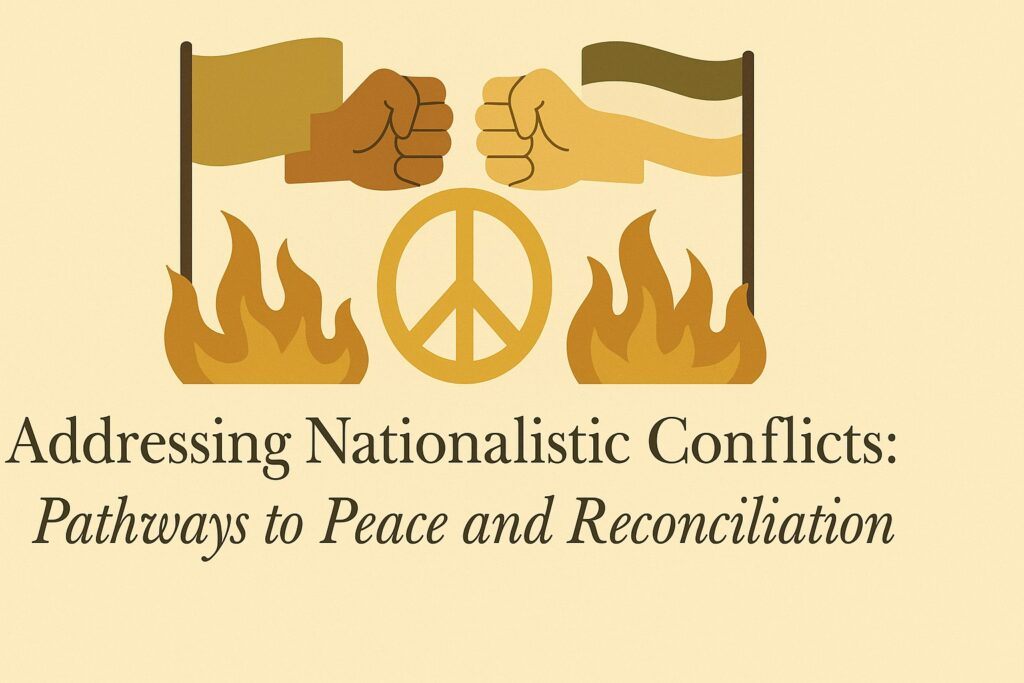
Nationalism can unite—but when misused, it can also divide. These ideas on peace and reconciliation reveal that healing begins when pride gives way to empathy. True patriotism builds bridges, not borders, and peace is never weakness—it’s wisdom in action. Reconciliation starts when nations remember their shared humanity.
Nationalistic conflicts have shaped human history, leaving in their wake a legacy of division, suffering, and resilience. These conflicts, rooted in identity, culture, and territorial claims, often challenge the fabric of societies and demand concerted efforts for resolution.
As someone deeply invested in understanding and contributing to peacebuilding, I have found that addressing nationalistic conflicts requires a nuanced approach that prioritizes dialogue, inclusivity, and structural reforms.
Here, I share insights and pathways that can guide us toward sustainable peace and reconciliation.
FAQs: Nationalism and Peacebuilding
1. What causes nationalistic conflicts?
They often arise from historical grievances, ethnic tension, political manipulation, or economic inequality.
2. How can nations move toward reconciliation?
Through truth-telling, forgiveness, inclusive dialogue, and fair systems that rebuild trust among divided communities.
3. What role can faith play in resolving conflict?
Faith promotes forgiveness, compassion, and moral courage—key ingredients for lasting peace and national healing.
4. Are there successful examples of national reconciliation?
Yes. South Africa’s Truth and Reconciliation Commission and Rwanda’s post-genocide recovery offer powerful lessons.
5. How can individuals contribute to peacebuilding?
By rejecting hatred, listening with empathy, and choosing unity over division in daily life and civic engagement.
Understanding the Roots of Nationalistic Conflicts
To resolve nationalistic conflicts, it is essential to understand their origins. Nationalism, at its core, is an allegiance to a shared identity, often based on ethnicity, language, or history. While nationalism can foster unity, it can also exacerbate divisions when groups perceive threats to their identity or sovereignty.
Take, for instance, the case of the Balkans in the 1990s. The disintegration of Yugoslavia unleashed a wave of ethnic nationalism, fueled by historical grievances, economic disparities, and political manipulation. These dynamics are not unique to the Balkans but resonate globally, from the Israeli-Palestinian conflict to tensions in Kashmir. In each case, the interplay of history, identity, and political aspirations creates a volatile mix that can ignite violence.

The Role of Dialogue in Peacebuilding
One of the most effective tools for resolving nationalistic conflicts is fostering open and inclusive dialogue. In my experience, dialogue is not merely about communication but about creating a shared space where conflicting parties can express their grievances, aspirations, and fears.
For instance, South Africa’s Truth and Reconciliation Commission (TRC) demonstrated the transformative power of dialogue. By giving voice to victims and perpetrators alike, the TRC fostered understanding and paved the way for healing. While not without criticism, the process underscored the importance of acknowledging past injustices and committing to a shared future.
Building Inclusive Institutions
Nationalistic conflicts often stem from perceptions of exclusion or marginalization. Inclusive institutions can mitigate these grievances by ensuring equitable representation and access to resources. I believe that political structures should reflect the diversity of society and promote equal participation.
Bosnia and Herzegovina’s power-sharing arrangement, though imperfect, offers valuable lessons. Its consociational model seeks to balance the interests of ethnic groups through shared governance. While challenges persist, the framework underscores the potential of institutional inclusivity to prevent domination by any single group.
The Importance of Economic Equity
Economic disparities frequently exacerbate nationalistic tensions. Addressing these disparities requires policies that promote inclusive development and reduce inequality. In my view, economic initiatives should not only focus on growth but also ensure that all groups benefit equitably.
You might also like: The Ultimate Guide to Political Journalism: Ethics, Challenges, and Impact in the Modern World
For example, post-conflict Rwanda’s emphasis on economic recovery and reconciliation highlights the interplay between development and peace. By investing in infrastructure, education, and entrepreneurship, Rwanda has fostered a sense of shared progress, helping to bridge ethnic divides.

The Power of Education and Cultural Exchange
Education plays a pivotal role in shaping perceptions and fostering mutual understanding. Curricula that promote critical thinking, empathy, and awareness of diverse histories can counteract the narratives that fuel nationalism. As an advocate for educational reform, I emphasize the need to challenge stereotypes and promote intercultural dialogue.
Cultural exchange programs also serve as powerful tools for reconciliation. Initiatives like the Erasmus Program in Europe have shown how exposure to different cultures can break down prejudices and foster a sense of shared identity.
Addressing Historical Grievances
History often looms large in nationalistic conflicts. Unresolved historical grievances can perpetuate cycles of violence and mistrust. I believe that acknowledging and addressing these grievances is crucial for reconciliation.
Germany’s post-World War II reparations and public acknowledgment of its Nazi past exemplify how confronting history can facilitate healing. Similarly, initiatives to address colonial legacies and indigenous rights in countries like Canada and Australia underscore the importance of reckoning with the past.
The Role of International Mediation
International actors often play a critical role in mediating nationalistic conflicts. Neutral third parties can facilitate negotiations, provide resources, and monitor agreements. In my opinion, international involvement should prioritize local ownership and align with the aspirations of the affected communities.
The Good Friday Agreement in Northern Ireland highlights the effectiveness of international mediation. Facilitated by the United States and the European Union, the agreement addressed political and cultural divisions, leading to a durable peace framework.

The Challenges of Sustained Peace
While peace agreements mark significant milestones, sustaining peace requires ongoing commitment. Post-conflict societies must address lingering inequalities, rebuild trust, and foster a culture of coexistence. I have observed that peacebuilding is not a linear process but a continuous journey that demands resilience and adaptability.
You might also like: The Ultimate Guide to Political Journalism: Ethics, Challenges, and Impact in the Modern World
For instance, the reconciliation process in Colombia following the peace deal with the FARC demonstrates the challenges of implementing agreements. Issues such as land reform, reintegration of ex-combatants, and addressing rural inequality remain contentious. Yet, the process underscores the importance of persistence and collaboration.
My Vision for a Peaceful Future
Addressing nationalistic conflicts requires a comprehensive approach that integrates dialogue, inclusivity, and structural reforms. My vision for a peaceful future is one where societies embrace diversity as a strength rather than a threat. This vision demands empathy, courage, and a willingness to confront difficult truths.
As individuals, we can contribute by promoting understanding within our communities, advocating for equitable policies, and supporting initiatives that bridge divides. Together, we can build a world where nationalistic conflicts give way to a shared commitment to peace and reconciliation.
References
Mamdani, M. (2001). When victims become killers: Colonialism, nativism, and the genocide in Rwanda. Princeton University Press.
Sisk, T. D. (1996). Power sharing and international mediation in ethnic conflicts. United States Institute of Peace Press.
Tutu, D. (1999). No future without forgiveness. Doubleday.
United Nations Development Programme. (2015). Human Development Report 2015: Work for human development. United Nations.
Van der Merwe, H., Dewhirst, P., & Hamber, B. (1999). Truth and reconciliation in South Africa: Attributions of blame and the struggle over apartheid. Peace and Conflict: Journal of Peace Psychology, 5(1), 1-21.
Wallensteen, P. (2015). Understanding conflict resolution: Peace, war, and the global system (4th ed.). SAGE Publications.