
TL;DR:
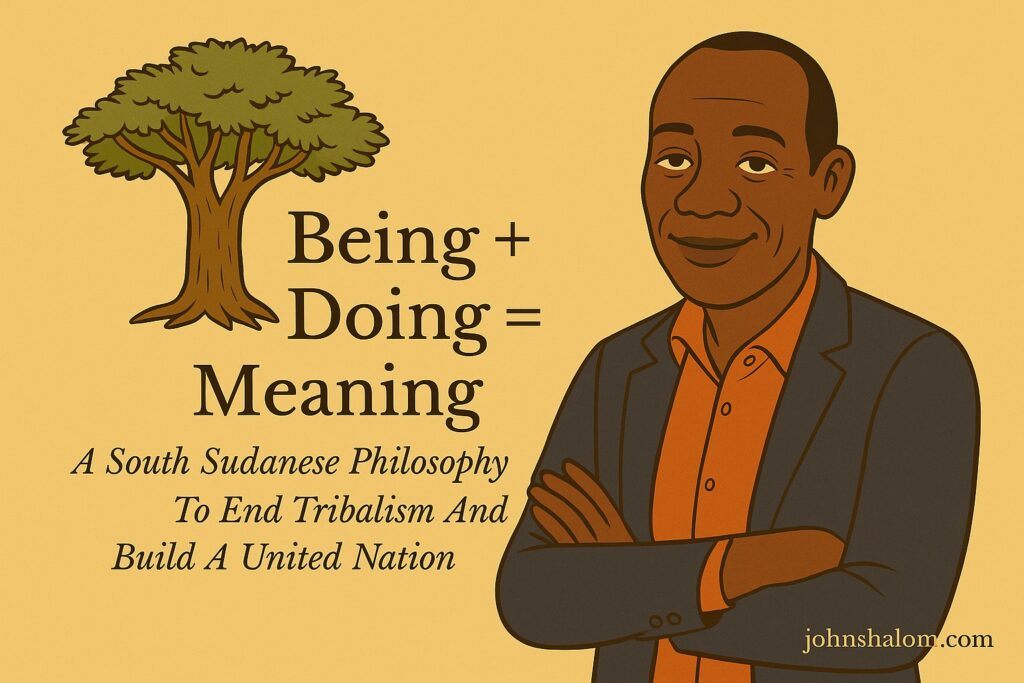
South Sudan’s healing begins with identity and action. “Being + Doing = Meaning” teaches that true purpose comes when we know who we are (Being) and live that truth through service (Doing). When every tribe values contribution over division, meaning is born—a shared identity that builds unity, peace, and nationhood beyond tribe.
The magic of ‘Being + Doing = Meaning’ isn’t just a catchy phrase. This South Sudanese philosophy has deep roots in the everyday life of its people. It highlights a simple truth: when your identity aligns with your actions, life feels more purposeful and fulfilling. It’s about merging what feels innately you with what you choose to actively do. In a land as culturally rich and diverse as South Sudan, this wisdom helps navigate the complexities of identity while offering a roadmap to genuine personal satisfaction.
FAQs
1. What does “Being + Doing = Meaning” mean?
It’s a philosophy that says purpose comes from knowing who you are and living out that identity through positive action for others.
2. How can this idea help end tribalism?
By shifting focus from tribe to contribution. When people define themselves by what they give, not where they come from, unity becomes natural.
3. Why is this philosophy important for South Sudan?
Because division has cost the nation too much. This mindset calls citizens to rebuild relationships, integrity, and trust across tribes.
4. How can individuals practice it daily?
Start with empathy, fairness, and service. Let your work, words, and attitude reflect who you are and what you believe in.
5. What’s the ultimate goal of this philosophy?
To move South Sudan from survival to significance—where identity fuels purpose, and unity becomes the nation’s true strength.
Every tribe and community in South Sudan carries unique traditions and values, but this philosophy finds common ground. It asks individuals to reflect on who they are and couple it with what they do daily. Here lies the potential to break down the barriers of tribalism, using a shared purpose to transcend division. By understanding the core of their being and channeling that into positive actions, individuals can promote acceptance where divisions once stood.
Imagine a village where everyone, regardless of tribe, comes together for the common good. Implementing ‘Being + Doing = Meaning’ leads to less emphasis on tribal differences and more on shared goals, contributing to community projects, and fostering an environment where collective growth thrives. Communities across South Sudan have embraced this approach, seeing real changes in unity and cooperation. It’s not just theory—it’s a practical tool that can be adopted by anyone, anywhere.
Real-world examples from local communities show just how transformative this philosophy can be. For instance, in certain areas, community leaders have promoted cooperative projects that bring together diverse groups who might not typically collaborate—like building schools or creating marketplaces. Through actions rooted in a shared purpose, the barriers of tribalism begin to crumble.
The influence of ‘Being + Doing = Meaning’ expands beyond individual and tribal limits, reaching towards a national identity that’s inclusive and unified. This warmly invites reflections for anyone working towards social harmony, urging them to embrace personal responsibility in shaping a larger, cohesive South Sudan. Whether it’s in bustling towns or remote villages, this philosophy promises a path where tribal ties can blend into a rich national tapestry.
The Role of ‘Being + Doing = Meaning’ in Shaping Unity in African Politics
Cultural philosophies hold the power to transform society, influencing everything from personal goals to national policies. Within the African context, the philosophy of ‘Being + Doing = Meaning’ shines a light on the path towards political cohesion. This approach is all about harmonizing identity with purposeful action, a principle that resonates deeply across the continent.
African politics often battles with challenges of unity and identity, and this philosophy offers a refreshing lens. By redefining political discourse, leaders are encouraged to connect authentically with their own communities before extending this unity to a national level. There’s potential for this philosophy to guide political strategies, moving beyond mere rhetoric to actions reflecting genuine unity.
The African leadership mindset, often perceived as complex, integrates cultural philosophies like this one to foster a sense of shared purpose. It’s about syncing personal leadership values with broader political goals. Leaders who embody these principles inspire trust and collaboration, making it easier to navigate the delicate balance of diverse interests that shape the political landscape.
Linking personal purpose with national identity isn’t just idealistic talk—it’s a practical strategy. When leaders embody ‘Being + Doing = Meaning’, their actions turn into powerful statements of unity that ripple through the layers of governance. This builds a political narrative grounded in authenticity, fostering a sense of pride and belonging among citizens.
Countries such as Botswana and Ghana exemplify how embracing cultural philosophies can lead to political stability and unity. These nations showcase what’s possible when leaders root their actions in shared cultural values. South Sudan can learn from these models, tailoring the philosophy to its unique context, forming a cohesive national identity that respects diversity yet moves in a unified direction.
In a continent as diverse as Africa, aligning personal purpose with collective political ambition can bridge gaps. It smoothens the rough edges of identity politics, paving the way for dialogue and collaboration. This unified vision provides an alternative narrative for African unity, encouraging countries to look within for strength, inspiration, and motivation to craft their shared future.
Building a Unified Nation: Embracing the ‘Being + Doing = Meaning’ Vision for South Sudan
South Sudan stands on the cusp of a transformative journey, where the principle of ‘Being + Doing = Meaning’ acts as a foundation for national unity. This philosophy isn’t just about individual growth; it’s a catalyst for national identity, pushing past tribal lines to forge a collective future. For this vision to materialize, strategic approaches need to shine through.
Promoting this philosophy on a national agenda requires initiative from the top. Leaders have the opportunity to amplify this message, integrating it into educational curricula, public policies, and community initiatives. Publicly endorsing these values not only raises awareness but strengthens the resolve towards a shared national goal. Leaders who genuinely live by these values set a standard, invoking trust and motivation among the people.
You might also like: How to Write Your Life Story: A Complete Guide to Autobiography Writing
Creating a unified national identity involves more than slogans; it’s about actionable steps that resonate on the ground. Encouraging cross-tribal participation in civic duties fosters unity, motivating citizens to collaborate irrespective of their backgrounds. Programs that compel diverse groups to work together for community development can reduce tribal divisions. It’s about blending differences into cohesion that can be celebrated across the nation.
Community leaders and grassroots organizations have crucial roles in championing this cause. By advocating the ‘Being + Doing = Meaning’ perspective at local levels, they spark grassroots movements that capture the essence of unity. These groups are the heart of their communities and can inspire ground-up changes. Their efforts can humanize abstract principles, making them tangible and relatable to everyday lives.
The long-term benefits of a unified South Sudan stretch far beyond immediate social harmony. Economic progress, improved security, and enriched cultural interactions are real possibilities. A unified nation attracts investment, fosters innovation, and improves living standards for all its citizens. By weaving a national narrative that captures the spirit of togetherness, South Sudan can look forward to a future replete with opportunities, forging a prosperous path ahead.

