TL;DR:
Faith and therapy are not opposites—they are partners in healing. These books taught me that transformation begins when the soul and mind work together under God’s grace. They reveal how prayer, reflection, and counseling can help us face pain honestly, grow through it, and rediscover peace rooted in faith and understanding.
In today’s world, many individuals seek to integrate their faith and therapy to address mental health concerns within a framework that honors their spiritual beliefs.1
This intersection of faith and psychology offers a unique and powerful approach to healing, drawing upon both spiritual and therapeutic principles to cultivate wholeness and well-being.2
This article explores a selection of essential books that delve into the integration of faith and therapy, providing valuable insights and resources for individuals and professionals alike.
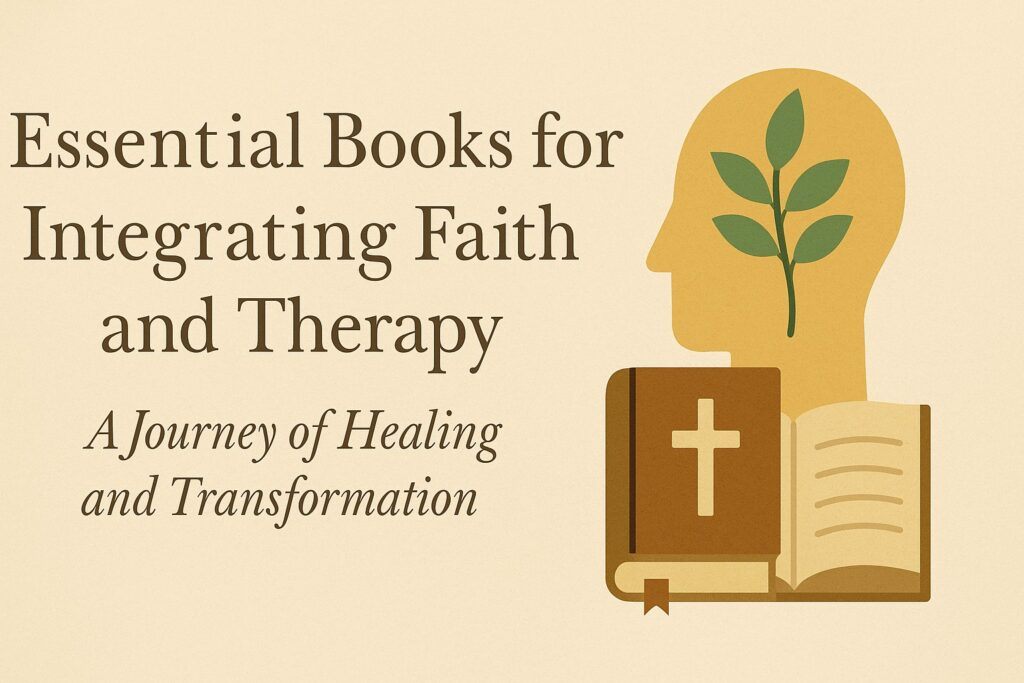
FAQs: Essential Books for Integrating Faith and Therapy — A Journey of Healing and Transformation
1. What does it mean to integrate faith and therapy?
It means combining psychological insight with spiritual wisdom, addressing emotional wounds while nurturing the soul through faith and divine truth.
2. Why is faith important in the healing process?
Faith provides hope, meaning, and moral grounding. It helps individuals find purpose in pain and believe that healing is possible beyond human strength.
3. What are some top books on faith and therapy?
Key titles include The Wounded Healer by Henri Nouwen, Changes That Heal by Dr. Henry Cloud, and Anatomy of the Soul by Curt Thompson.
4. Can therapy and prayer work together effectively?
Yes. Therapy brings awareness and tools for change, while prayer deepens surrender and trust in God’s guidance throughout the healing journey.
5. How does integrating faith and therapy lead to transformation?
By aligning emotional and spiritual growth, people move from brokenness to wholeness. It’s not just recovery—it’s renewal of the heart, mind, and spirit.
1. “The Soul of Psychotherapy: Healing in the Shadow of Suffering” by James W. Fowler
This seminal work explores the profound spiritual and existential dimensions of the therapeutic process. Fowler, a renowned faith development theorist, examines how therapists can cultivate a deeper understanding of their own spirituality and integrate it ethically and effectively into their clinical practice.
2. “Spirituality in Psychotherapy and Counseling” by David B. Myers
This comprehensive text provides a broad overview of the intersection of spirituality and mental health. Myers explores various spiritual traditions, examines the role of spirituality in psychotherapy, and offers practical guidance for integrating faith and therapy in a culturally sensitive and ethical manner.
3. “The Psychology of Religion” by David G. Myers
While not exclusively focused on the integration of faith and therapy, this book provides a valuable foundation in the psychology of religion. Myers explores the psychological dimensions of religious belief, practice, and experience, offering insights into the role of faith in human development and well-being.

4. “The Wounded Healer: Ministry in Contemporary Culture” by Henri Nouwen
This insightful book explores the healing journey of the wounded healer, emphasizing the importance of self-awareness, compassion, and vulnerability in the therapeutic process. Nouwen draws upon his own personal and spiritual experiences to offer profound reflections on the challenges and rewards of ministering to others.
You might also like: The Complete Guide to Theology: Faith, Reason, and Modern Interpretations
5. “The Spirituality of Imperfection” by Ernest Kurtz & Katherine Ketcham
This poignant book explores the concept of “the dark night of the soul,” a period of profound spiritual and emotional distress. Drawing upon the wisdom of 12-Step programs and spiritual traditions, Kurtz and Ketcham offer a compassionate and insightful guide to navigating life’s challenges with grace and acceptance.
6. “Finding God in the Ruins: The Search for Meaning in a World Made Meaningless” by James Finley
This book explores the profound spiritual and existential questions that arise in the face of suffering and loss. Finley draws upon the wisdom of Christian spirituality to offer a framework for finding meaning and hope in the midst of despair.

7. “The Road Back to You: An Enneagram Journey to Self-Discovery” by Ian Morgan Cron & Suzanne Stabile
While not explicitly focused on faith and therapy, the Enneagram, a system of personality typology, offers valuable insights into the human psyche and the motivations underlying our thoughts, feelings, and behaviors.3 This book provides a comprehensive introduction to the Enneagram, offering a framework for self-discovery and personal growth.
8. “The Gifts of Imperfection” by Brené Brown
Brené Brown, a renowned researcher and storyteller, explores the power of vulnerability, shame, and authenticity in this insightful and inspiring work. She encourages readers to embrace imperfection, cultivate wholehearted living, and cultivate courage, compassion, and connection.
9. “Mindfulness in Plain English” by Bhante Gunaratana
This book provides a clear and accessible introduction to mindfulness meditation, a practice that can be integrated into both spiritual and therapeutic practices. Gunaratana guides readers through the fundamentals of mindfulness, offering practical techniques for cultivating present moment awareness, reducing stress, and cultivating inner peace.

10. “The Compassionate Mind” by Paul Gilbert
This book introduces the concept of Compassion-Focused Therapy (CFT), a therapeutic approach that emphasizes the cultivation of self-compassion and inner peace. Gilbert explores the evolutionary roots of our fear-based responses and offers practical strategies for cultivating a more compassionate and accepting relationship with ourselves and others.
You might also like: The Complete Guide to Theology: Faith, Reason, and Modern Interpretations
Ethical Considerations
It is crucial to approach the integration of faith and therapy with careful consideration for ethical boundaries. Therapists must prioritize the client’s well-being and autonomy, ensuring that their own spiritual beliefs do not unduly influence the therapeutic process.
Conclusion
These books offer a valuable starting point for exploring the intersection of faith and therapy. By drawing upon the wisdom of both spiritual and psychological principles, individuals and professionals can cultivate a deeper understanding of the human condition and embark on a journey of healing and transformation.
Disclaimer: This article is for informational purposes only and should not be considered a substitute for professional medical4 or mental health advice. If5 you are struggling with mental health concerns, please consult with a qualified mental health professional.
If you would like to know more about my path as a writer, including the struggles, lessons, and small signs of progress along the way, you can read the full story on my Wealthy Affiliate blog here: https://my.wealthyaffiliate.com/johnmaluth/blog

References
Brown, B. (2010). The gifts of imperfection. Center Street.
Cron, I. M., & Stabile, S. (2016). The road back to you: An Enneagram journey to self-discovery.6 Convergent.
Finley, J. (2006). Finding God in the ruins: The search for meaning in a world made meaningless. HarperOne.
Fowler, J. W. (1987). The soul of psychotherapy: Healing in the shadow of suffering. Harper & Row.
Gunaratana, B. H. (2002). Mindfulness in plain English. Wisdom Publications.
Gilbert, P. (2010). The compassionate mind: A new approach to life with shame and suffering.7 Guilford Press.
Kurtz, E., & Ketcham, K. (1992). The spirituality of imperfection. HarperOne.
Myers, D. B. (2000). Spirituality in psychotherapy and counseling. Guilford Press.
Myers, D. G. (2010). The psychology of religion.