
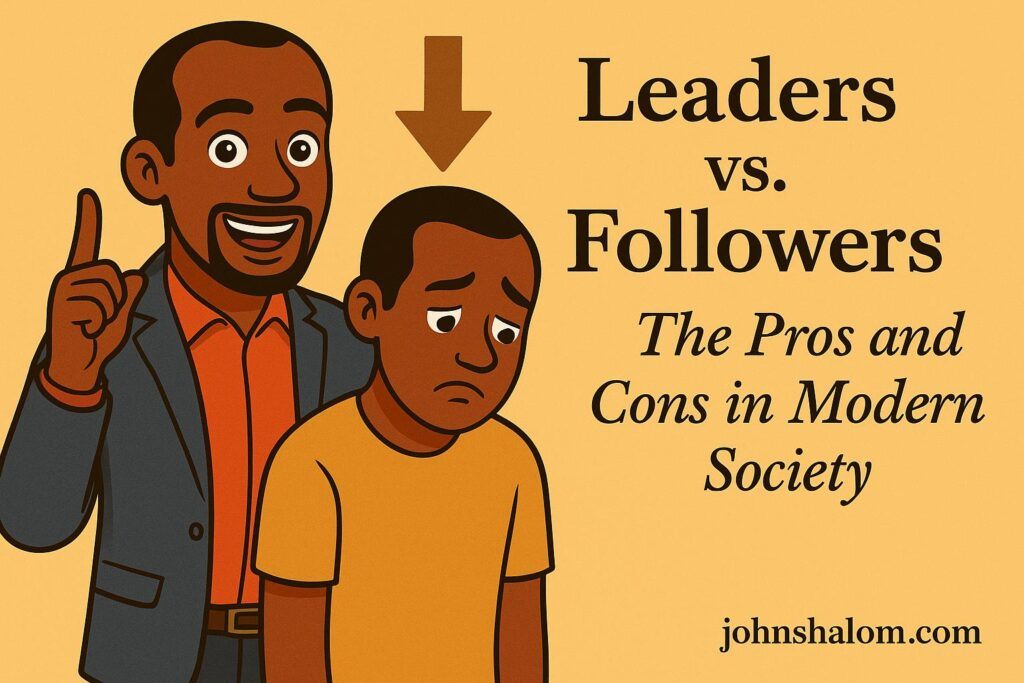
TL;DR:
Every society needs both leaders and followers. Leaders set direction; followers bring vision to life. Problems arise when either role is misunderstood or misused. True progress happens when leadership serves others and followers think critically, not blindly.
FAQs: Leaders vs Followers Explained
1. What defines a leader and a follower?
A leader inspires direction and change, while a follower supports, contributes, and ensures plans are carried out effectively.
2. What are the pros of being a leader?
Leaders influence progress, build teams, and shape the future through vision and decision-making.
3. What are the pros of being a follower?
Followers provide stability, teamwork, and accountability—no movement succeeds without their dedication.
4. What are the challenges of leadership?
Leaders face pressure, criticism, and responsibility for others’ outcomes, which can lead to stress or isolation.
5. How can leaders and followers work better together?
Through respect, communication, and shared purpose—great leaders listen, and great followers think independently.
Introduction
In today’s fast-paced and highly competitive world, understanding leadership and followership is crucial. Are you a natural leader who thrives on taking charge, making tough decisions, and inspiring others?
Or do you find comfort in following a structured path, relying on guidance, and supporting a bigger vision? Perhaps you are both, depending on the situation. In this in-depth analysis, we explore the characteristics, advantages, and disadvantages of leaders and followers, shedding light on their roles in modern society.
With the rise of entrepreneurial leadership, corporate hierarchy, and team-based collaboration, more people than ever are questioning where they fit in. Should you aim to lead, or can you find fulfillment in being a follower? We will examine leadership in different contexts, including business, family, politics, and social structures, while integrating long-tail keywords that are currently trending in leadership and personal development discussions.
Who is a Leader?
A leader is someone who naturally steps up to guide, influence, and inspire others. Leaders often set the vision, make crucial decisions, and take responsibility for outcomes. Leadership is not just about giving orders; it’s about having the ability to motivate a team, make strategic decisions, and adapt to challenges.
Many believe that leaders are born, not made, while others argue that leadership is a skill that can be developed over time. However, one common trait among all leaders is their ability to take initiative. In modern society, leaders are found in many fields—business executives, political figures, sports captains, and even social media influencers.
Types of Leaders in Modern Society
- Transformational Leaders – These individuals bring innovation and change, inspiring their followers with a compelling vision. (Example: Elon Musk, Oprah Winfrey)
- Transactional Leaders – They focus on structure, organization, and performance, rewarding or disciplining based on results. (Example: Military generals, corporate managers)
- Servant Leaders – These leaders prioritize the needs of their team, ensuring personal growth and well-being. (Example: Non-profit founders, social activists)
- Autocratic Leaders – They make decisions independently, often in high-pressure environments. (Example: Some political leaders and CEOs)
Advantages of Being a Leader
- Authority and Decision-Making Power – Leaders have the power to shape the direction of organizations and influence society.
- Career and Business Growth – Strong leadership skills open doors to higher positions and entrepreneurial success.
- Personal Fulfillment – Many leaders find great satisfaction in mentoring others and seeing their vision come to life.
- Networking Opportunities – Leaders often interact with influential people, expanding their reach and impact.
- Financial and Social Rewards – Many leaders gain wealth, prestige, and recognition for their contributions.
Disadvantages of Being a Leader
- High Responsibility and Stress – Leaders are accountable for their decisions, which can be overwhelming.
- Criticism and Opposition – Leadership invites scrutiny, and not everyone will agree with your choices.
- Loneliness at the Top – Many leaders struggle with isolation as they carry the weight of decision-making.
- Risk of Failure – Every leader faces setbacks, and the pressure to succeed can be intense.
- Time and Energy Demands – Leading requires constant attention, leaving little room for personal life.
Who is a Follower?
A follower is someone who supports and executes a leader’s vision. Contrary to negative stereotypes, followers play an essential role in every organization and movement. Without dedicated followers, even the best leaders would struggle to implement their ideas effectively.
Types of Followers in Modern Society
- Passive Followers – They follow instructions without questioning, relying entirely on leadership direction.
- Active Followers – These individuals contribute ideas, engage with leaders, and help refine strategies.
- Exemplary Followers – Independent thinkers who support leadership but also challenge ideas for the betterment of the group.
- Conformist Followers – They avoid conflict and follow orders without hesitation, even if they disagree.
Advantages of Being a Follower
- Less Pressure and Responsibility – Followers do not bear the weight of leadership decisions.
- Opportunity for Learning and Growth – Following a great leader allows for skill development and mentorship.
- Job Stability and Security – Many followers in structured careers enjoy long-term employment without leadership stress.
- Work-Life Balance – Without leadership burdens, followers can maintain a more balanced lifestyle.
- Flexibility in Career Choices – Unlike leaders who must commit fully, followers can transition between roles more easily.
Disadvantages of Being a Follower
- Limited Control and Influence – Followers must adhere to leadership decisions, even if they disagree.
- Risk of Being Overlooked – Many followers do not receive the same recognition as leaders.
- Dependency on Leadership Quality – A bad leader can negatively impact a follower’s experience and growth.
- Potential for Exploitation – Some leaders misuse their authority, leading to unfair treatment of followers.
- Lower Financial and Career Advancement Opportunities – Many high-paying roles favor leadership experience.
Can You Be Both a Leader and a Follower?
Yes! Many successful individuals balance leadership and followership, depending on the context. For example, a manager may be a leader at work but a follower within a larger corporate structure. A student may follow a professor’s teachings but lead a study group. Being adaptable is key.
Situations Where Followership and Leadership Intersect
- Corporate Environments – Employees follow executives but may lead small teams.
- Entrepreneurship – Business owners lead their ventures but follow market trends and mentor guidance.
- Politics and Social Movements – Activists may lead campaigns but follow larger ideological figures.
- Family Dynamics – Parents lead their children but may follow elders’ wisdom.
How to Improve Your Leadership and Followership Skills
Regardless of where you fall on the spectrum, both leaders and followers can develop skills that enhance their effectiveness.
Leadership Development Tips
- Improve Communication Skills – Clarity and persuasion are essential for strong leadership.
- Build Emotional Intelligence – Understanding people’s emotions fosters better decision-making.
- Take Initiative – Leaders step up when challenges arise.
- Develop Strategic Thinking – Seeing the bigger picture helps leaders navigate complex issues.
- Embrace Continuous Learning – The best leaders evolve with time and experience.
Followership Development Tips
- Be Proactive – Engaged followers contribute ideas and actively support leadership.
- Cultivate Critical Thinking – Don’t just follow blindly; ask questions and seek understanding.
- Support Ethical Leadership – Align yourself with leaders who share your values.
- Learn to Adapt – Flexibility makes you a valuable asset in any team.
- Know When to Lead – Even followers have moments where leadership is required.
Conclusion: Finding the Balance
Whether you identify as a leader, a follower, or both, your role in society is vital. Leadership offers power and influence but comes with immense responsibility and stress. Followership provides stability and learning opportunities but may limit personal autonomy and career advancement.
You might also like: The Self-Help Roadmap: Proven Strategies for Personal Growth and Healing
Ultimately, success comes from understanding when to lead and when to follow. By developing self-awareness, enhancing decision-making skills, and embracing adaptability, you can navigate life’s challenges effectively.
What do you think? Are you a natural-born leader, a dedicated follower, or both? Share your thoughts in the comments below!
Keywords: Leadership vs. Followership, leadership skills development, benefits of being a leader, qualities of a good follower, successful leadership traits, career growth strategies, personal development tips.

