TL;DR:
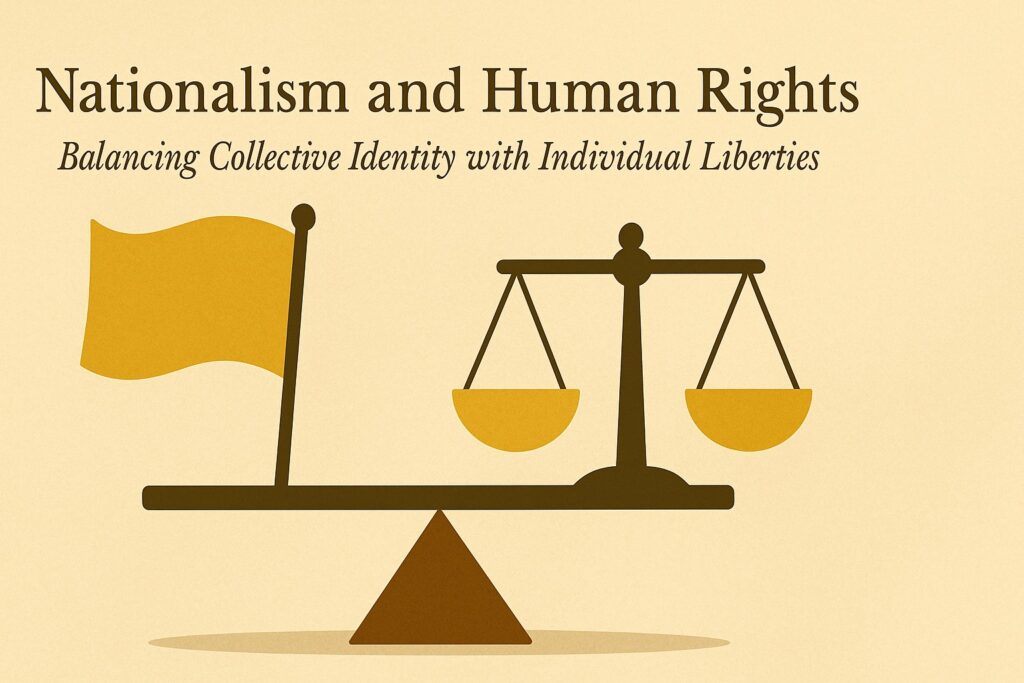
Nationalism unites people under one flag, while human rights remind us we all share one planet. The challenge is harmony—protecting collective pride without crushing personal liberty. These ideas reveal that true patriotism honors both the nation’s identity and the individual’s dignity. Freedom, after all, loses meaning when it isn’t shared.
Nationalism and human rights are two powerful forces shaping the modern world. As I delve into this complex relationship, I find myself reflecting on the tension between these concepts.
Nationalism emphasizes collective identity, often tied to a shared history, culture, or language. Human rights, on the other hand, prioritize the inherent dignity and freedoms of individuals, transcending national boundaries. How can these ideals coexist in a manner that respects both collective identity and individual liberties?
FAQs: Nationalism and Human Rights
1. How do nationalism and human rights connect?
They both seek human dignity—one through shared identity, the other through individual freedom. Balance is key to justice.
2. Why can nationalism sometimes threaten human rights?
When national pride turns extreme, it can justify discrimination, exclusion, or suppression of minority voices.
3. Can nationalism support human rights?
Yes, when it’s inclusive—valuing unity without erasing diversity, and promoting equality within national pride.
4. What challenges exist in balancing these ideals?
Governments often prioritize sovereignty over universal rights, leading to conflicts between cultural identity and moral duty.
5. How can nations uphold both values?
By building systems that protect citizens equally, celebrate cultural uniqueness, and commit to justice beyond borders.
The Roots of Nationalism
Nationalism, as a political ideology, emerged in the late 18th and early 19th centuries during pivotal events such as the American Revolution and the French Revolution. These movements demonstrated the power of a unified national identity in mobilizing populations for collective goals. Nationalism fosters a sense of belonging and solidarity, which can be a source of strength for communities facing external challenges or internal divisions.
However, nationalism is not without its darker side. History provides numerous examples of how fervent nationalism can lead to exclusion, xenophobia, and even violence. In its most extreme forms, nationalism has justified imperialism, ethnic cleansing, and authoritarianism. These darker manifestations of nationalism often conflict with the principles of human rights, which advocate for equality, non-discrimination, and the protection of minorities.
The Foundations of Human Rights
Human rights are grounded in the idea that all individuals are born free and equal in dignity and rights. This concept, enshrined in the Universal Declaration of Human Rights (UDHR) adopted by the United Nations in 1948, provides a universal framework for protecting individuals from abuse and ensuring their basic freedoms.
You might also like: The Ultimate Guide to Political Journalism: Ethics, Challenges, and Impact in the Modern World
The principles of human rights often challenge the exclusivity of nationalist ideologies. For example, while nationalism may prioritize the interests of a specific group, human rights demand that all individuals, regardless of nationality, ethnicity, or religion, receive equal protection under the law. This universalism can clash with the particularism inherent in nationalism.

The Interplay Between Nationalism and Human Rights
As I consider the interplay between nationalism and human rights, I find that their relationship is not inherently antagonistic. Instead, the challenge lies in balancing these forces. When managed thoughtfully, nationalism can support human rights by fostering social cohesion and collective action. For instance, many national movements for independence, such as India’s struggle against British colonial rule, were deeply intertwined with the pursuit of human rights.
However, nationalism can also undermine human rights when it prioritizes the majority’s interests over those of minorities. Consider the plight of stateless individuals or refugees who often find themselves excluded from national protections. Their lack of a recognized national identity renders them vulnerable to human rights abuses, as they fall outside the scope of nationalist frameworks.
Case Studies: Successes and Failures
Examining specific cases can illuminate the complex dynamics between nationalism and human rights. One striking example is the post-apartheid transformation of South Africa. The country’s nationalist movement, led by figures like Nelson Mandela, successfully integrated a commitment to human rights into its vision for a unified nation. The resulting constitution, adopted in 1996, is one of the most progressive in the world, emphasizing equality, freedom, and human dignity.
Conversely, the rise of ethno-nationalism in Myanmar highlights the dangers of an exclusionary nationalist agenda. The persecution of the Rohingya minority, justified by appeals to Burmese national identity, has led to widespread human rights violations, including mass displacement and violence. This case underscores the importance of embedding human rights within nationalist projects to prevent such tragedies.

Strategies for Balancing Nationalism and Human Rights
To harmonize nationalism with human rights, I believe we must adopt several strategies:
- Promote Inclusive Nationalism: National identity should be inclusive, celebrating diversity rather than enforcing homogeneity. Policies that recognize and respect cultural, linguistic, and religious differences can strengthen social cohesion without compromising human rights.
- Strengthen International Frameworks: Multilateral institutions like the United Nations play a crucial role in holding states accountable for human rights violations. Strengthening these frameworks ensures that nationalism does not become a pretext for disregarding international norms.
- Educate and Empower Citizens: Education systems should emphasize both national history and global citizenship. By fostering an understanding of shared humanity, individuals can appreciate the value of both collective identity and universal rights.
- Ensure Legal Protections: Robust legal systems are essential for safeguarding human rights. Constitutions and laws should explicitly prohibit discrimination and protect minorities, ensuring that nationalism does not override individual freedoms.
Personal Reflections
As I navigate the intersection of nationalism and human rights, I’m struck by the need for balance and nuance. Both ideals have their merits, but they must be guided by ethical principles that prioritize human dignity. Nationalism can provide a sense of belonging and purpose, while human rights ensure that this belonging does not come at the expense of others.
You might also like: The Ultimate Guide to Political Journalism: Ethics, Challenges, and Impact in the Modern World
In a world increasingly polarized by identity politics and global challenges, finding common ground between these forces is more important than ever. By fostering inclusive and rights-respecting forms of nationalism, we can build societies that honor both collective identity and individual liberties.
Conclusion
Nationalism and human rights need not be adversaries. Instead, they can complement each other when approached with care and commitment to ethical principles. By promoting inclusive nationalism, strengthening international norms, and prioritizing education and legal protections, we can navigate this complex relationship effectively. It is up to each of us to advocate for a future where collective identity and individual liberties coexist harmoniously.
References
United Nations. (1948). Universal Declaration of Human Rights. https://www.un.org/en/about-us/universal-declaration-of-human-rights
Mandela, N. (1994). Long Walk to Freedom: The Autobiography of Nelson Mandela. Little, Brown and Company.
Taylor, C. (1994). Multiculturalism: Examining the Politics of Recognition. Princeton University Press.
Smith, A. D. (2009). Ethno-symbolism and Nationalism: A Cultural Approach. Routledge.
Arendt, H. (1951). The Origins of Totalitarianism. Schocken Books.
Gellner, E. (1983). Nations and Nationalism. Cornell University Press.