
TL;DR:
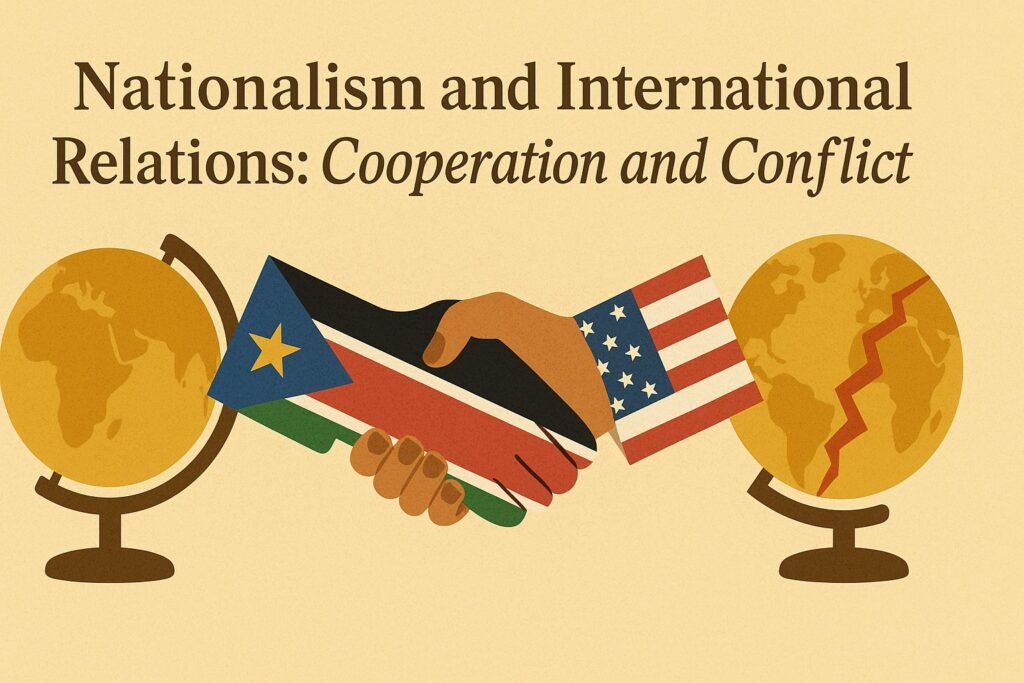
Nationalism can unite nations or pull them apart. This reflection explores how pride, identity, and politics influence how countries relate to one another. When guided by respect and shared values, nationalism can build bridges, but when driven by fear or power, it often fuels division. The challenge is turning national pride into global partnership.
When I reflect on the intricate dynamics of nationalism and international relations, I find myself navigating a complex web of ideologies, historical legacies, and strategic interests.
Nationalism—a deep-rooted allegiance to one’s nation—plays a profound role in shaping the behaviors of states and the international system at large.
As I delve into this topic, I’ll explore how nationalism fosters both cooperation and conflict in the global arena.
Understanding Nationalism in the Modern World
Nationalism can be described as a political ideology that emphasizes the sovereignty, unity, and cultural identity of a nation-state. In its essence, nationalism seeks to protect the interests of a nation, often defining the boundaries of who belongs to that community. While this ideology can inspire unity and resilience, it can also manifest as exclusivism, leading to tensions with other nations.
In the context of international relations, nationalism serves as both a force for cohesion and division. On the one hand, nationalist movements can unite diverse groups within a state, enabling them to pursue collective goals on the international stage. On the other hand, nationalist sentiments often exacerbate rivalries, territorial disputes, and ideological clashes.

FAQs: Nationalism and International Relations — Cooperation and Conflict
1. How does nationalism influence international relations?
Nationalism affects how nations define their interests and engage with others. It can strengthen internal unity but may also create tension if one nation’s pride leads to rivalry or distrust on the global stage.
2. Can nationalism promote international cooperation?
Yes, when nationalism is rooted in mutual respect and shared values, it encourages nations to collaborate on global challenges like peace, trade, and climate change while maintaining their unique identities.
3. Why does nationalism sometimes lead to conflict between nations?
Conflict arises when national pride turns into competition or superiority. When countries see their identity as threatened, they may act defensively or aggressively, often leading to political or military tensions.
4. What role does globalization play in shaping modern nationalism?
Globalization connects economies and cultures but can also spark nationalist backlash as people seek to protect local values. The balance lies in preserving identity while embracing cooperation.
5. How can nations balance nationalism with global responsibility?
By practicing inclusive patriotism. Nations can honor their heritage while working with others for global good, showing that true strength lies in cooperation, not isolation.
Nationalism as a Catalyst for Cooperation
One of the more optimistic aspects of nationalism is its potential to foster international cooperation. This may sound counterintuitive at first—how can a doctrine centered on self-interest lead to collaboration? The answer lies in the mutual benefits that arise when nations recognize shared interests.
Economic Cooperation
Nationalist policies often prioritize economic growth and stability, which can drive states to engage in cooperative economic ventures. Regional trade agreements, such as the European Union (EU) and the North American Free Trade Agreement (NAFTA, now USMCA), demonstrate how nationalist motivations to secure economic prosperity can align with international collaboration.
For instance, the EU was founded in part to prevent future conflicts by intertwining the economies of member states. This economic interdependence not only facilitates prosperity but also reinforces peace and stability within the region.
Diplomatic Alliances
Nationalism can also underpin diplomatic alliances, particularly when nations perceive common threats or share strategic goals. During the Cold War, for example, NATO was formed as a collective defense mechanism against the Soviet Union. Member states recognized that their national security was intertwined with the stability and security of their allies.
Cultural Exchange
Interestingly, nationalism does not always imply isolationism. Many nations take pride in their cultural heritage and seek to promote it on the global stage. Cultural diplomacy, through institutions like the British Council or Goethe-Institut, fosters mutual understanding and collaboration by sharing a nation’s art, language, and traditions with the world.
Nationalism as a Source of Conflict
While nationalism can promote cooperation under certain circumstances, its divisive tendencies often overshadow these benefits. History is rife with examples of nationalism driving international conflicts, and this trend persists in contemporary geopolitics.
You might also like: The Ultimate Guide to Political Journalism: Ethics, Challenges, and Impact in the Modern World
Territorial Disputes
One of the most prominent ways nationalism generates conflict is through territorial disputes. Competing nationalist claims over the same land have fueled conflicts in regions such as Kashmir, the South China Sea, and Palestine. When two or more nations consider a territory integral to their national identity, compromise becomes exceedingly difficult.
Ethnic Nationalism and Internal Strife
Ethnic nationalism—a form of nationalism rooted in shared ethnicity—has been particularly volatile. The breakup of Yugoslavia in the 1990s serves as a tragic reminder of how ethnic nationalism can lead to violence and genocide. As ethnic groups pursued self-determination, long-standing grievances erupted into wars that destabilized the entire Balkan region.
Protectionism and Trade Wars
Economic nationalism, which emphasizes protecting domestic industries from foreign competition, can lead to trade wars and economic isolation. Recent years have witnessed a resurgence of protectionist policies, such as the U.S.-China trade war. These policies often strain international relations, as nations impose tariffs and other barriers that disrupt global supply chains.
Nationalism and Global Governance
Nationalism often challenges global governance initiatives, as states prioritize sovereignty over collective action. This tension is evident in debates over climate change, where nationalist policies can hinder international agreements. The United States’ withdrawal from the Paris Agreement in 2017 highlighted how nationalist agendas can conflict with global efforts to address shared challenges.
Balancing Nationalism and Internationalism
The interplay between nationalism and international relations raises an important question: how can we strike a balance between national sovereignty and global cooperation? While there is no universal answer, a few guiding principles stand out.
Promoting Multilateralism
Multilateral institutions like the United Nations (UN) and World Trade Organization (WTO) provide platforms for nations to address global challenges collaboratively. By fostering dialogue and negotiation, these institutions can mitigate nationalist-driven conflicts and encourage cooperation.
You might also like: The Ultimate Guide to Political Journalism: Ethics, Challenges, and Impact in the Modern World
Encouraging Inclusive Nationalism
Inclusive nationalism, which emphasizes civic identity rather than ethnic or cultural exclusivity, offers a pathway to reduce conflict. By promoting values such as democracy, human rights, and equality, nations can pursue their interests without marginalizing others.
Leveraging Soft Power
Nations can use soft power—the ability to influence others through attraction rather than coercion—to achieve their goals in ways that align with international norms. This approach not only enhances a nation’s global standing but also reduces the likelihood of conflict.
Conclusion
Nationalism remains a double-edged sword in the realm of international relations. Its capacity to inspire unity and drive progress is counterbalanced by its potential to fuel division and conflict. As I reflect on the current global landscape, it is clear that the future of nationalism and international relations hinges on our ability to harness its positive aspects while mitigating its risks. Achieving this delicate balance requires vision, cooperation, and a steadfast commitment to shared humanity.
References
Anderson, B. (2006). Imagined communities: Reflections on the origin and spread of nationalism. Verso.
Gellner, E. (2008). Nations and nationalism. Cornell University Press.
Hobsbawm, E. J. (1990). Nations and nationalism since 1780: Programme, myth, reality. Cambridge University Press.
Kaufmann, C. (1996). Possible and impossible solutions to ethnic civil wars. International Security, 20(4), 136-175. https://doi.org/10.2307/2539045
Smith, A. D. (2010). Nationalism: Theory, ideology, history. Polity Press.
Waltz, K. N. (1979). Theory of international politics. Addison-Wesley.
Wendt, A. (1999). Social theory of international politics. Cambridge University Press.


Really thoughtful piece, John. I like how you highlight that nationalism isn’t inherently good or bad, but depends on how it’s expressed. The examples of the EU and NATO really drive that home. It makes me wonder though, in today’s climate of rising populism and economic tension, do you think nations are leaning more toward cooperative nationalism or drifting back into isolationist tendencies?
Thank you, Jason. I appreciate your thoughtful reflection. You’re right that nationalism itself isn’t the issue; it’s how people choose to express it that shapes whether it unites or divides. Your examples of the EU and NATO are spot on.
Right now, I think the world is walking a fine line between cooperation and isolation. Some countries are rediscovering the power of working together, while others are retreating to protect what feels familiar. The balance keeps shifting with every crisis.
Do you think global institutions can still adapt fast enough to keep that spirit of cooperation alive?
John
Hi there –
What a timely article! The world feels more complex than ever, and nationalism continues to shape how countries approach economic cooperation. Within North America, collaboration between Canada, the U.S., and Mexico in the auto industry remains crucial. Each nation seeks to protect its workforce while ensuring a steady flow of parts and products across borders. On a cultural level, many people long for the kind of exchange that once symbolized goodwill, like China sending pandas to the U.S. years ago. Nationalism expressed through cooperation can unite nations for the common good, yet protectionism often threatens this balance. Global collaboration requires both trust and flexibility to truly succeed.
Thank you, Godwin. I like how you connected nationalism to real-world examples like the North American auto industry. It shows that cooperation and competition often exist side by side. Your mention of cultural exchange, like the pandas from China, is a beautiful reminder that diplomacy isn’t only about trade—it’s also about shared humanity.
I agree that protectionism threatens that balance, especially when fear replaces trust. Still, moments of goodwill prove that collaboration is possible when nations see mutual benefit.
Do you think economic interests or cultural ties play a bigger role in sustaining cooperation today?
John