
TL; DR
Families are not held together only by money, big events, or blood ties. They are held together by the small things we do again and again without thinking much about them, like evening tea, shared jokes, story nights, or simple prayers before sleep.
As a child along the Sobat River, I did not know that our “almost tea” evenings and playful teasing were building something strong inside us. Only later, after war, displacement, and travel, did I realise those tiny habits were a kind of invisible rope tying us to one another. In a noisy digital age, small traditions quietly remind us: we belong, we are not alone, this is our people.
Why Small Traditions Matter More Than We Think
1.1 Tea without tea: my mother’s unshakable rule
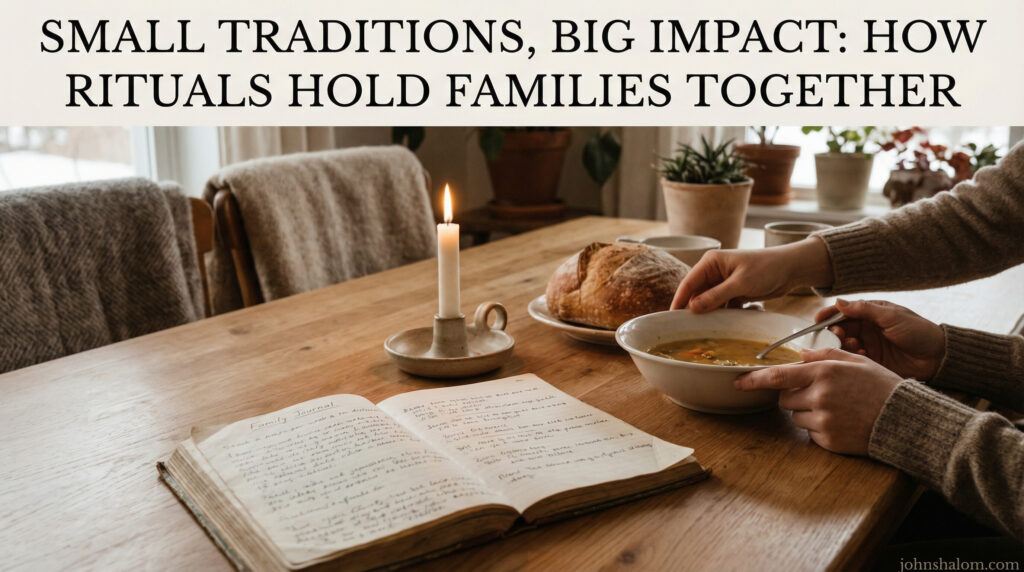
When I was a child, my mother had a rule: no matter how busy, tired, or broke we were, we would sit together in the evening for tea. No, not tea as you know it today. It was anything hot and drinkable; soup, porridge, etc., and it was great.
“Tea” is a generous word here. Sometimes it was proper tea. Many times it was just hot water with a little sugar that pretended to be tea. There were days when even the sugar had gone to visit the neighbours.
But the point was not what was inside the cup. The point was who was around the cup.
We would sit, sometimes on chairs, sometimes on mats, sometimes on bare ground. We laughed, argued, repeated old stories, and commented on the neighbour’s goats as if we were senior goat analysts. Some evenings we just sat quietly. No big speeches, no big plans. Just presence.
Looking back, those evenings were glue. Life outside could be harsh. War could threaten us. Hunger could visit. But that one small ritual said, “We are still here. Together.”
1.2 When war and movement tried to break the rhythm
During conflict, the pattern of life breaks easily. You move from village to village, from place to place. One day you sleep in your house, another day in the bush, another day near a riverbank or under a tree.
There were seasons when we could not keep the tea ritual the way we used to. Still, my mother would look for any way to protect a small sense of normal life. Maybe it was sharing roasted grains, maybe it was telling a short story before sleep, sometimes it was even just saying, “We will talk tomorrow, if we are still alive.”
It sounds heavy, but that little sentence was also a ritual. It was her way of saying, “Even if everything is shaking, our family line continues. We will still be us.”
Those small repeated actions were stronger than the chaos around us.
Why Small Traditions Work Better Than Big Gestures
Big events have their place. Weddings, funerals, Christmas lunches, family reunions where aunties ask you why you are still single, all of this is part of family life.
But it is the small, repeatable things that quietly build belonging.
Think about it:
• A weekly game night where the same sibling always finds a way to cheat at Uno.
• A Friday evening where you eat something simple together, even if it is just beans and bread.
• A bedtime routine where your father or mother tells a story, sometimes the same one, but with small changes that make you laugh.
These small practices are like the background music of your home. You may not notice them when they play, but you feel their absence when they stop.
They are like memes. One meme at a time seems silly. But together they create a shared language and memory bank.
What Rituals Actually Do Inside A Family
3.1 They tell your brain: “These are my people”
Psychologists like to explain that rituals reduce anxiety and increase connection. You do not need a degree to notice this.
When you eat together, pray together, walk together, or even watch a show together, something inside you relaxes. Your mind says, “I am not a stranger. I belong somewhere.”
Later in life, when storms come, these memories act like emotional anchors. You may be in another country or in a crisis, but your heart still carries the sound of those evenings. It whispers, “There is a place in this world where I was known and accepted.”
3.2 They turn failure into shared laughter
In my family, teasing was a ritual.
If I came home with bad grades, my brother might joke, “Do not worry, John, goats do not need math.” If my father slipped in the yard, my mother would say, “Even the ground loves you too much, it wants a hug.”
When I was younger, I thought this was just joking. Later, I realised it was a way of saying, “You failed, but you are safe here. We will not throw you away.”
That tradition taught me to laugh at myself without hating myself. It gave me the courage to face embarrassment, to stand up after falling, and to try again.
You might also like: The Ultimate Guide to Political Journalism: Ethics, Challenges, and Impact in the Modern World
Why Gen Z And Today’s Families Need Traditions Even More
Life today is loud.
Phones buzz. Group chats never sleep. TikTok offers endless videos. Netflix decides that “Next episode” must begin before you even think.
It is very easy for families to live in the same house but exist in separate worlds. Everyone in their own room, with their own screen, eating their own snack, living their own mini life.
Small traditions push against that quiet separation.
They say, “We are not just people using the same Wi Fi. We are a family. We will meet at this table, at this time, with these simple habits, again and again.”
In a world where loneliness is rising, small rituals become acts of resistance. They protect something very old and very human: the feeling of being part of a living circle.
My Own Meme Worthy Moments
5.1 The day I flooded the compound
One day, I tried to carry too much water at once. It was not wisdom, it was ego. I wanted to prove I was strong.
Halfway across the compound, I slipped. The jerrycan tilted and for a moment it felt like the Nile had relocated into our yard. Water everywhere. My clothes wet, the ground slippery, my pride drowned.
I expected scolding. Instead, everyone laughed. For days, they would say, “John, need a boat?” whenever I picked up water. That joke joined our family tradition bank.
Years later, that story still returns when someone does something clumsy. We laugh, not to shame them, but to say, “You are not alone. We all have our ‘flood the compound’ days.”
5.2 The “almost tea” evenings in memory
Even now, when I sit with my own children, relatives, or friends for evening tea, those earlier memories come back. Sometimes the tea is real, sometimes it is more water than tea, but the feeling is the same.
We argue gently. We update each other. We complain about the network. We remember those who have died. We tell the same stories again and pretend they are new.
Those traditions did not stay in my childhood. They travelled with me into adulthood. They keep teaching me that home is not just a place on a map. It is a pattern of repeated kindness.
How To Start Or Renew Traditions In Your Own Family
You do not need money or perfect houses to build traditions. You need intention and repetition.
Here are simple ways to start.
6.1 Pick one shared moment
Choose one time in the week or day that will belong to the family.
It could be:
• Saturday breakfast, where you cook something together, even if it is just pancakes or chapati.
• A short evening tea or juice time.
• A Sunday evening walk around the neighbourhood.
The power is in making it regular, not in making it fancy.
6.2 Create a simple ritual around it
Give that moment a clear shape.
Examples:
• Everyone shares one good and one hard thing from the week.
• One person each time tells a story from their childhood.
• You read a short proverb or verse and talk about what it means.
Keep it short and light. The goal is connection, not a serious lecture.
6.3 Let humor be part of it
Let people bring their funny stories, their most awkward moments of the week, their small failures. Laugh together without biting each other.
Inside jokes are free and powerful. They turn your family into a language group that only you understand.
6.4 Protect the ritual from screens
During that time, try to put phones aside. The world can survive without you for thirty minutes. Let eye contact, not blue light, be the main connection.
The Real Impact Over Time
Small traditions quietly shape character.
• Waiting for everyone before eating teaches patience and respect.
• Listening during story night teaches attention and empathy.
• Laughing together after embarrassment teaches resilience.
• Praying or reflecting together teaches humility and gratitude.
One day, you will be the older person in the room. You will either pass down only your genes or your genes plus gentle traditions that heal.
When you build rituals today, you are designing the emotional home that your future children and grandchildren will remember. That is not a small thing.
If you would like to know more about my path as a writer, including the struggles, lessons, and small signs of progress along the way, you can read the full story on my Wealthy Affiliate blog here: https://my.wealthyaffiliate.com/johnmaluth/blog
Reflection Questions
- What is one small tradition from your past that still makes you feel at home when you remember it?
- If your family does not have clear rituals right now, what simple habit could you start this week without needing a lot of money or planning?
- Which family story or inside joke always makes you laugh, no matter how many times you hear it?
- How do small traditions help you feel grounded when life outside feels chaotic and fast?
- If you could choose one ritual to pass on to the next generation, what would it be and why?
FAQS
- What counts as a “tradition” if my family is very simple or scattered?
A tradition does not need special clothes, decorations, or big meals. Any small action you repeat on purpose can become a tradition, for example a weekly call with relatives, a regular shared meal, a short prayer before sleep, or a specific way you greet each other. - Can we start new traditions even if our old ones were painful or broken?
Yes. You are not trapped by the past. You can decide as a family, or even as two people, to start new, kinder patterns. Over time these new rituals can become stronger than the old memories. - What if my family members are too busy or not interested?
Start small and be consistent. Invite, do not force. If only two people show up for the first few times, keep going. When others see that it is peaceful and not heavy, they may join later. - How can we keep traditions when some family members live in other countries?
Use phone calls, video calls, or shared messages to keep a simple rhythm, for example a weekly family video chat, or everyone sending one photo from their week on the same day. Distance makes it harder but not impossible. - Is it really worth the effort to protect small rituals in a stressful life?
Yes. The stress will always be there. Traditions give you pockets of stability and connection inside the stress. In the long run, those small repeated moments are what people remember most when they think of “home.”

This touches on such a vital point about stability. In a world that feels like it is moving a million miles an hour, I think these small rituals act as anchors that keep the household grounded. It is a great reminder that we don’t need grand gestures to build a strong family culture; we just need consistency. It really changes how I view ‘pizza night’ or ‘bedtime stories’—they aren’t just routines, they are the glue.
Adrian, I agree with you. Those small routines are not “small” when life gets loud. They become the steady place people return to.
I grew up in seasons where everything could change overnight, and what kept us together was not big speeches. It was the simple things we repeated. A shared meal. A familiar story. A moment of laughter.
What is one small ritual in your home that you would fight to protect, even on your busiest week?