TL;DR:
Graphic nonfiction proves that real life can be as gripping as fiction when shown with images and words side by side. These books blend visual storytelling and factual truth so we feel the story, not just read it. When life itself becomes graphic, our understanding deepens and our empathy widens.
When I think about storytelling, my mind often wanders to the classic books I’ve read, films I’ve watched, or even the podcasts I’ve listened to. Yet, in recent years, I’ve found myself increasingly drawn to a medium that lies at the intersection of art and narrative: graphic nonfiction.
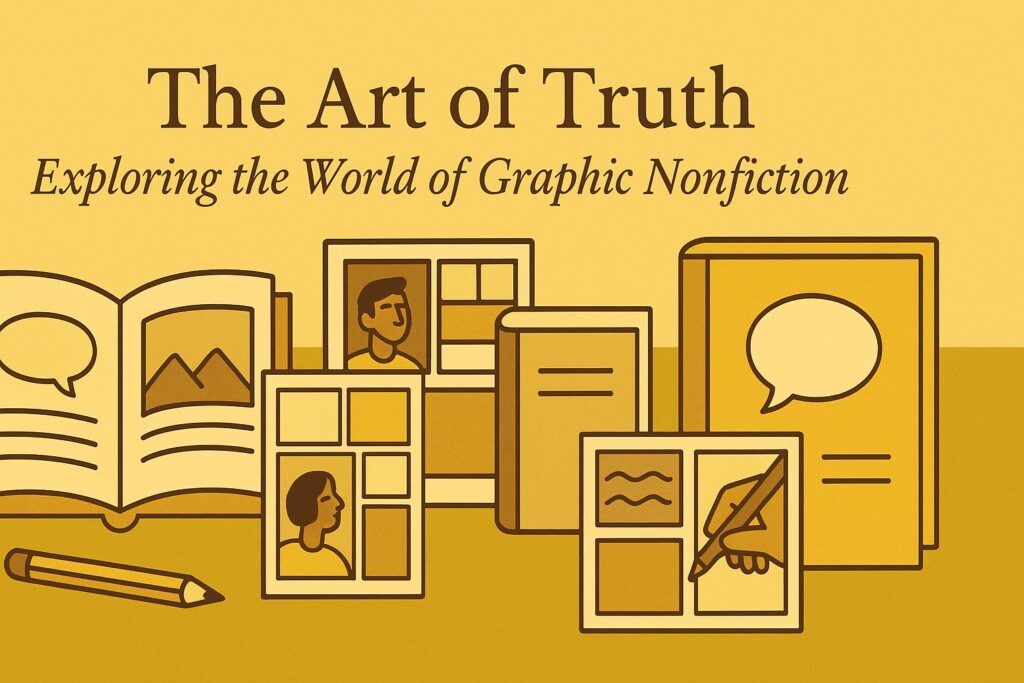
This form of storytelling uses the visual language of comics to convey real events, facts, and ideas in ways that are uniquely compelling. Let me take you on a journey through this fascinating world, where art and truth intertwine.
FAQs: The Art of Truth: Exploring the World of Graphic Nonfiction
1. What is graphic nonfiction?
It’s a genre that combines visual art—like panels, illustrations, and sequential images—with factual storytelling about real events, people, or ideas. Fiveable+1
2. Why is graphic nonfiction effective?
Because it engages both the visual and verbal parts of our minds. It makes complex subjects more accessible and memorable by showing us truth as well as telling it. The Writer
3. What types of stories does graphic nonfiction cover?
It covers biography, history, science, journalism, memoir and social issues—anything real that benefits from both image and text to bring it to life. study.com+1
4. Who should read graphic nonfiction?
Anyone curious about the world, story lovers who prefer visuals, students who like images and text together, and writers or artists looking for creative formats.
5. How can one start exploring this genre?
Pick a well-reviewed graphic nonfiction book, look for works that balance research and art, and reflect on how the visuals changed your understanding of the topic. From there, explore more voices and themes.
What is Graphic Nonfiction?
Graphic nonfiction, simply put, is a genre that blends the visual storytelling techniques of graphic novels with factual content. Unlike traditional comics, which often focus on fictional narratives, graphic nonfiction is rooted in reality. From personal memoirs and historical accounts to scientific explorations and journalistic investigations, this genre covers an expansive range of subjects.
The beauty of graphic nonfiction lies in its ability to distill complex ideas into accessible, engaging formats. Through a combination of illustrations and text, it creates an immersive experience that stimulates both the mind and the senses. But what makes it so special? And why has it gained traction in recent years?
The Rise of Graphic Nonfiction
The growing popularity of graphic nonfiction is no coincidence. It’s the result of a cultural shift toward visual media and the increasing demand for diverse storytelling formats. In an age where attention spans are shrinking, many readers find the combination of visuals and text more engaging than long-form prose.
One of the pioneers of this genre is Art Spiegelman, whose Pulitzer Prize-winning work, Maus (1991), recounts his father’s experiences during the Holocaust. Spiegelman’s use of anthropomorphic characters to depict a harrowing historical reality was groundbreaking, demonstrating the potential of comics to tackle serious subjects. Since then, graphic nonfiction has continued to evolve, with notable works such as Alison Bechdel’s Fun Home (2006) and Marjane Satrapi’s Persepolis (2000) captivating audiences worldwide.

Why Graphic Nonfiction Resonates
As someone who enjoys exploring different storytelling mediums, I find graphic nonfiction particularly powerful for several reasons:
- Accessibility: Illustrations can simplify complex topics, making them more understandable for readers of all ages and backgrounds. Works like Randall Munroe’s Thing Explainer (2015), which uses simple diagrams and language to explain scientific concepts, exemplify this strength.
- Emotional Impact: The combination of visuals and text can evoke emotions in ways that words alone often cannot. For instance, the poignant illustrations in Thi Bui’s The Best We Could Do (2017) deepen the emotional resonance of her family’s immigration story.
- Memorability: Studies suggest that people retain information better when it’s presented visually. This makes graphic nonfiction an effective tool for educational purposes, as seen in works like March (2013-2016) by John Lewis, Andrew Aydin, and Nate Powell, which chronicles the Civil Rights Movement.
- Diverse Perspectives: Graphic nonfiction amplifies underrepresented voices, providing a platform for stories that might otherwise go unheard. For example, They Called Us Enemy (2019) by George Takei sheds light on the Japanese American internment camps during World War II through a deeply personal lens.
Creating Graphic Nonfiction
The process of creating graphic nonfiction is as intricate as the stories it tells. It begins with meticulous research to ensure accuracy and credibility. Writers often collaborate closely with illustrators, as the visual style must align with the narrative’s tone and subject matter. This collaborative process is what transforms a script into a vibrant, cohesive work of art.
Take, for instance, Joe Sacco’s Palestine (1996). Sacco spent years conducting interviews and gathering firsthand accounts before weaving them into a richly detailed graphic narrative. His illustrations capture both the humanity and the devastation of the Israeli-Palestinian conflict, offering readers a nuanced perspective that traditional reporting often lacks.
Challenges in the Genre
While graphic nonfiction offers immense potential, it’s not without challenges. One major hurdle is striking the right balance between accuracy and artistic expression. Illustrators must decide how much creative liberty to take without compromising the story’s integrity. Additionally, the collaborative nature of the medium can lead to creative conflicts between writers and artists.
You might also like: Creative Nonfiction Series: What It Is and Its Importance for You
Another challenge is overcoming the stigma associated with comics. Despite the growing recognition of graphic nonfiction, some still view it as a lesser form of literature. Changing these perceptions requires continued advocacy and education about the genre’s artistic and intellectual merits.
The Educational Value of Graphic Nonfiction
In my experience, graphic nonfiction is an incredibly effective educational tool. Its visual nature makes it particularly well-suited for teaching complex subjects. For example, The Unwritten Rules of the Game (2018) uses illustrations to demystify workplace dynamics, making it a valuable resource for professionals and students alike.
Educators have also embraced graphic nonfiction in classrooms, using works like Understanding Comics (1993) by Scott McCloud to teach visual literacy. By analyzing how images and words work together to convey meaning, students develop critical thinking skills that are essential in today’s media-saturated world.
My Personal Favorites
If you’re new to graphic nonfiction, let me share a few recommendations that have left a lasting impression on me:
- Persepolis by Marjane Satrapi: A deeply moving memoir about growing up in Iran during the Islamic Revolution.
- March by John Lewis, Andrew Aydin, and Nate Powell: A powerful trilogy chronicling the life and legacy of civil rights leader John Lewis.
- The Best We Could Do by Thi Bui: A beautifully illustrated family saga that explores themes of identity, migration, and resilience.
- Logicomix by Apostolos Doxiadis and Christos H. Papadimitriou: An engaging exploration of the life and work of philosopher Bertrand Russell.
Looking Ahead
The future of graphic nonfiction is bright, with the genre continuing to push boundaries and explore new frontiers. Advances in digital technology are opening up exciting possibilities, from interactive webcomics to augmented reality experiences. As creators experiment with these tools, the potential for innovation is boundless.
At its core, graphic nonfiction is about connecting with readers on a profound level, using art to illuminate truths that might otherwise remain hidden. Whether you’re a longtime fan or a curious newcomer, I invite you to explore this extraordinary genre. You might just discover a new way of seeing the world—one panel at a time.
References
Bui, T. (2017). The best we could do. Abrams ComicArts.
Doxiadis, A., & Papadimitriou, C. H. (2009). Logicomix: An epic search for truth. Bloomsbury USA.
Lewis, J., Aydin, A., & Powell, N. (2013-2016). March (Vols. 1-3). Top Shelf Productions.
McCloud, S. (1993). Understanding comics: The invisible art. Harper Perennial.
Munroe, R. (2015). Thing explainer: Complicated stuff in simple words. Houghton Mifflin Harcourt.
Satrapi, M. (2000). Persepolis: The story of a childhood. Pantheon.
Sacco, J. (1996). Palestine. Fantagraphics.
Spiegelman, A. (1991). Maus: A survivor’s tale. Pantheon.
Takei, G., Eisinger, J., Scott, S., & Becker, H. (2019). They called us enemy. Top Shelf Productions.