TL;DR:
Darkness isn’t just absence of light—it’s rebellion against truth. This reflection reminded me that the Kingdom of Darkness works through deception, fear, and division. Yet across faiths and cultures, one truth stands firm: light always wins. Understanding darkness helps us guard our hearts and walk boldly in truth.
In this article, we will explore what the kingdom of darkness means, how we know about its existence, why it is important to study it, and finally, your personal reflections on the subject.
Darkness is often seen as the opposite of light, just as death is the opposite of life. But is there truly such a thing as a dark kingdom? Is it physical, spiritual, or both? Let’s find out below.
FAQs: The Kingdom of Darkness: Christian, African, and Global Views
1. What is the Kingdom of Darkness?
It represents the spiritual realm of evil, sin, and rebellion against God, influencing human thoughts, actions, and societies.
2. How do Christians understand the Kingdom of Darkness?
As the domain of Satan and demonic forces that oppose God’s Kingdom, revealed through Scripture and overcome by faith in Christ.
3. How is the concept viewed in African traditions?
Many African cultures describe darkness through ancestral spirits, witchcraft, and moral disorder, linking it to the struggle between good and evil.
4. What are global perspectives on this idea?
Different religions see darkness as symbolic of ignorance, moral decay, or spiritual imbalance, emphasizing the need for enlightenment and virtue.
5. How can one overcome the influence of darkness?
Through prayer, truth, forgiveness, and living in alignment with God’s light—allowing faith and love to defeat fear and deception.
What Do We Mean by the Kingdom of Darkness?
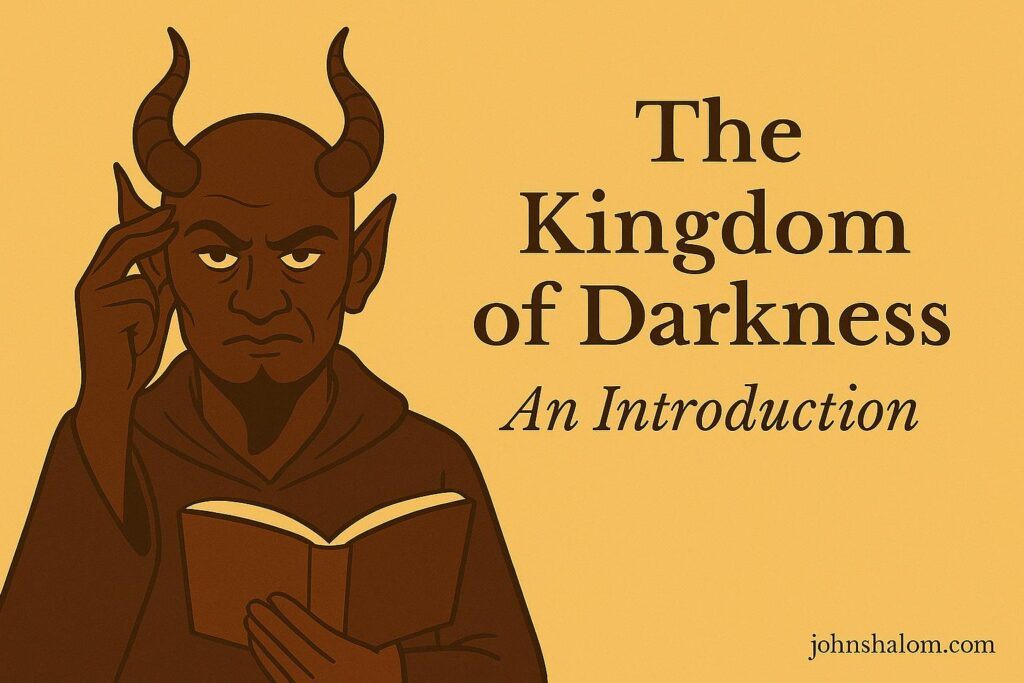
In Christianity, the kingdom of darkness refers to the evil realm where Satan, demons, and fallen angels exercise power. Though spiritual in nature, its effects are seen in the physical world through wars, disasters, hatred, and human suffering.
According to the Bible, sin entered the world through Adam and Eve. This opened the door for suffering and evil, marking the beginning of the dark kingdom’s influence.
In African Traditional Religion, however, God is understood as both the source of good and evil. Blessings are given to those who live rightly, while punishment (evil) is given to those who live wrongly. In this worldview, there is no Satan or separate kingdom of darkness—evil is seen as part of divine justice.
Islam and Judaism, like Christianity, recognize Satan as a fallen angel who rebelled against God. By contrast, many Eastern religions attribute evil not to a personal being but to human desires, cravings, and karma. Darkness is seen as a state of mind rather than a spiritual kingdom.
How Do We Know About the Kingdom of Darkness?
The idea of a dark kingdom comes primarily from Abrahamic religions—Judaism, Christianity, and Islam. In these traditions, Satan was once a glorious angel who became proud and sought to overthrow God. He was cast down to earth with his followers, becoming the ruler of the dark kingdom.
Religious texts such as the Bible and Quran describe Satan as a deceiver, destroyer, and enemy of humankind. Christians believe his final punishment is already sealed—eternal fire prepared for him and his angels.
In Africa, knowledge of Satan and his kingdom came through Christianity and Islam. Traditionally, Africans saw only God as supreme, without a rival. Evil was explained through curses, witchcraft, or God’s will—not a personified Satan. As foreign religions spread, however, the concept of Satan and a dark kingdom became part of African thought.
Is It Important to Know the Kingdom of Darkness?
Yes, because even if one doubts the existence of Satan as a being, the forces of evil in the world are undeniable. Hatred, destruction, oppression, and suffering reflect the influence of darkness, whether personal or impersonal.
In African culture, witchcraft and spiritual harm reflect this awareness of dark forces. In Christianity, Jesus is seen as the light who came to destroy the works of the devil. Understanding the kingdom of darkness helps us recognize evil, resist it, and seek deliverance through God’s light.
You might also like: The Complete Guide to Theology: Faith, Reason, and Modern Interpretations
The concept of spiritual warfare—light versus darkness—reminds us that life is more than what we see. Ignoring the reality of evil, whether personified or systemic, is ignorance. Acknowledging it prepares us to fight it with truth, wisdom, and faith.
What Do You Think About the Kingdom of Darkness?
Do you believe in the kingdom of darkness? Have you ever felt its influence in your life or community? Have you experienced moments where evil seemed overwhelming, or moments where light overcame darkness?
Your reflections matter. Different cultures and religions explain darkness differently, but all agree that evil exists. The challenge is how we face it—through fear, denial, or faith in light.
Conclusion
In summary, the kingdom of darkness in Christianity is the realm of Satan and his demons, influencing the physical world through evil. Abrahamic religions describe it as real, while African Traditional Religion and Eastern worldviews explain evil differently.
Studying it helps us understand the nature of evil, prepare to resist it, and seek the kingdom of light. Whether one accepts Satan as a literal being or not, the presence of evil in the world is undeniable.
What do you believe about the dark kingdom? Do you see it as real or symbolic? Share your thoughts in the comments below. My 1.6k readers and I would love to hear from you.
Thank you for reading. God bless and keep you safe. Shalom!
Further Readings
- The Kingdom of Darkness — amazon.co.uk
- Two Spiritual Kingdoms Chart — simplybible.com
- The Kingdom of Darkness — lonang.com