TL;DR:
Life begins where chemistry meets purpose. John’s look into the Organic Kingdom reminded me that growth and renewal are the language of creation. From plants to microscopic organisms, this kingdom reveals God’s design for nourishment, reproduction, and balance—the living bridge between matter and mind.
In this article, we will explore what the Organic Kingdom is, how we know it exists, why it is important to understand it, and finally, your personal reflections on this subject.
Among the five known kingdoms of life, the Organic Kingdom is considered the second. But why is it placed above the Inorganic Kingdom? Let’s dive deeper and find out.
FAQs: The Organic Kingdom: Definition, Existence, and Importance for Life
1. What is the Organic Kingdom according to John Monyjok Maluth?
It’s the second kingdom, composed of living organisms—plants, fungi, and other life forms that depend on the inorganic for survival.
2. Why is the Organic Kingdom important?
It sustains life on Earth, producing oxygen, food, and energy, and forms the foundation for ecosystems and biological growth.
3. How does this kingdom differ from the Inorganic Kingdom?
While the inorganic provides structure and materials, the organic introduces life, reproduction, and biochemical activity.
4. What spiritual insights does John draw from this kingdom?
That every living thing reflects divine intelligence—designed to grow, adapt, and serve a higher order of creation.
5. Who should read about the Organic Kingdom?
Students of biology, theology, and environmental science, and anyone interested in how life and spirit are intricately connected.
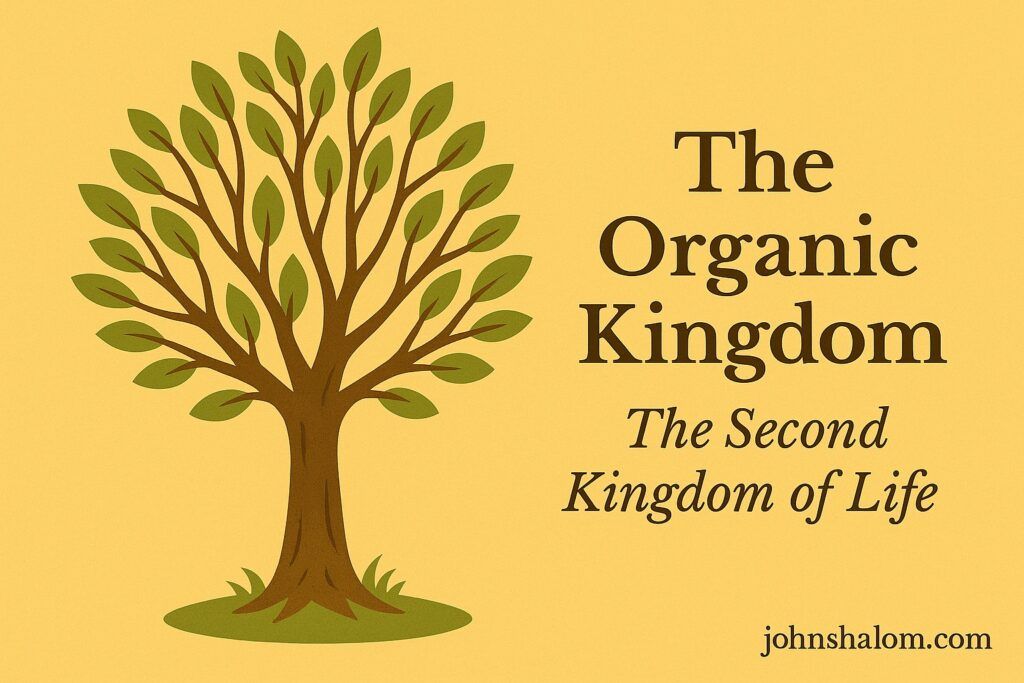
What Is the Organic Kingdom?
The Organic Kingdom is the second of the five known kingdoms of life. It comes after the Inorganic Kingdom, which is made up of nonliving matter such as minerals and salts. Unlike the inorganic, the organic world is carbon-based and extends upward to both the animal and human kingdoms.
From unicellular organisms (like amoebas) to multicellular plants, the Organic Kingdom provides the foundation for biological life. While animals and humans are also organic in structure, this kingdom is often referred to primarily as the plant kingdom because plants are the clearest representation of organic life separate from animal life.
Plants, algae, fungi, and other carbon-based life forms represent this kingdom. They are essential for sustaining life above them because they provide oxygen, food, and energy through photosynthesis and other processes. At the same time, they depend on the mineral world beneath them for nutrients and structure.
In other words, the Organic Kingdom is the vital bridge between the nonliving mineral kingdom below and the animal kingdom above. Without it, higher life forms could not exist.
How Do We Know the Organic Kingdom Exists?
We know the Organic Kingdom exists through scientific discovery (gnosis) and, for some, through revelation knowledge (epignosis).
Scientifically, we can observe it with our five senses:
- We see plants grow, reproduce, and die.
- We taste fruits, vegetables, and grains produced by this kingdom.
- We smell flowers and herbs.
- We touch leaves, stems, and roots.
- We hear the rustle of forests or grass moved by the wind.
Spiritually, some traditions teach that organic life reflects a deeper truth: life comes from life. A seed produces after its kind—a plant produces another plant, never an animal. This principle is echoed in both natural science and spiritual teaching. It suggests that while we can study the organic with physical tools, its origin and purpose point beyond the physical realm.
The Organic Kingdom is both visible and invisible. Microscopic organisms, for example, are unseen with the naked eye but still part of this kingdom. Yet, like the inorganic world, it remains physical, bound by time, space, and material properties.
Why Is It Important to Know About the Organic Kingdom?
Studying and understanding the Organic Kingdom is important for several reasons:
- It sustains higher kingdoms. Plants are the primary producers in ecosystems. Without them, animals and humans would not survive. They provide food, oxygen, and medicine.
- It connects with the inorganic world. Plants absorb minerals and water from the soil, showing how life builds on nonliving matter.
- It illustrates natural laws. Observing how plants grow, reproduce, and adapt gives us insight into cycles of life, energy flow, and balance in ecosystems.
- It prepares us to understand higher kingdoms. By appreciating plants and organic life, we begin to understand the structure of animals, humans, and even spiritual truths represented in nature.
From agriculture to medicine to climate balance, the Organic Kingdom is central to human survival and well-being. Without it, the Earth would not sustain life as we know it.
What Do You Think About the Organic Kingdom?
Reflecting on the Organic Kingdom raises personal questions:
- Do you see plants as simply resources, or as living participants in the cycle of life?
- Have you ever considered how dependent you are on the oxygen, food, and materials they provide?
- Do you believe the organic world points to deeper spiritual realities, as some traditions suggest?
For me, a turning point came after reading The Physical Law in the Spiritual World in 2022. That book helped me see how the physical reflects the spiritual, and how organic life testifies to a higher order of existence. It convinced me that the physical world is itself proof of the spiritual.
You might also like: The Complete Guide to Theology: Faith, Reason, and Modern Interpretations
Perhaps you’ve had similar moments—experiences you couldn’t explain with the five senses alone. If so, they may have opened your eyes to the deeper meaning of life and nature.
Conclusion
In summary, we have explored what the Organic Kingdom is, how we know it exists, why it is important to study it, and your personal opportunity to reflect on it. The Organic Kingdom is more than just plants—it is the bridge between the nonliving mineral world and the higher forms of life.
What did you already know before reading this article? What new insights did you gain? I invite you to share your thoughts in the comment section below. With over 1.5k readers every month, your reflections could help others grow in their understanding as well.
Thank you for taking the time to read this article. Shalom!