TL;DR:
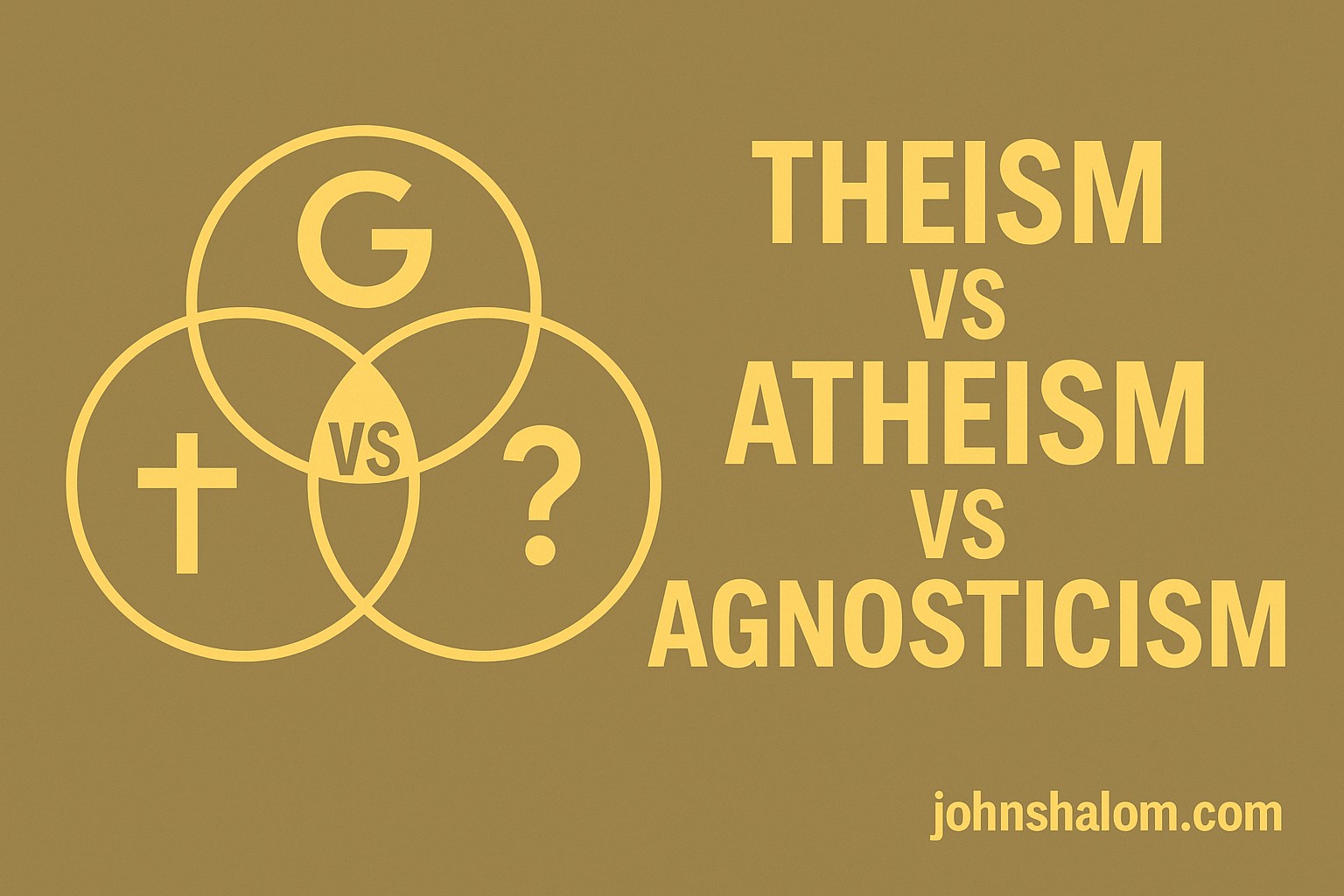
Theism believes in God, atheism denies His existence, and agnosticism remains uncertain. These worldviews define how people see truth, morality, and purpose. Understanding them helps build respect and deeper dialogue in a world full of differing beliefs. It’s not just philosophy—it’s how humans search for meaning.
I used to think I knew everything about God, including his likes and dislikes, his gender, and much more. But as I got older, it hit me that different religions and worldviews see God in all sorts of ways.
This article isn’t about figuring out who’s right. It’s about what I—and maybe you—can pick up from these views, such as theism, atheism, and agnosticism. Honestly, I’ve started leaning towards agnosticism lately, because I realized I don’t know as much as I used to think when I was 100% religious.
Sorting through all the options about beliefs in God or anything supernatural can feel overwhelming. Theism, atheism, and agnosticism might sound pretty similar first, but they actually lay out pretty different ways to see the world. Let’s get into these three views by checking out what they’re all about, the strengths and doubts each one brings, and some extra insights on why folks might choose their labels.
FAQs
1. What is theism?
Theism is the belief in one or more gods who actively engage with creation. It forms the foundation of most major religions, including Christianity, Islam, and Judaism.
2. What is atheism?
Atheism is the lack of belief in any deity. Atheists often rely on science, logic, and human reason to explain existence and morality.
3. What is agnosticism?
Agnosticism is uncertainty about God’s existence. Agnostics neither affirm nor deny, choosing to remain open until more evidence or experience offers clarity.
4. Can someone move between these beliefs?
Yes. Many people shift views throughout life as experiences, knowledge, and reflections shape their understanding of faith and reality.
5. Why is it important to understand these perspectives?
Because belief defines identity and dialogue. Knowing how others think helps build respect, empathy, and peaceful coexistence in a diverse world.
Overview of Theism, Atheism, and Agnosticism
What is Theism?
Theism means believing in one or more gods or deities. Most theists believe in a personal God who is involved in the world. For example, Christians, Muslims, and Jews are often called theists. Hinduism can also count as theistic, depending on which branch you’re looking at. Theism covers a lot—monotheists believe in a single god, while polytheists believe in several.
Who is Theism Best For?
- People searching for meaning, comfort, or guidance from a higher power
- Anyone raised in religious families or communities where belief is key
- Those who get fuel and inspiration from spiritual experiences and rituals
Theism: Pros & Cons
Pros:
- Feeds a sense of purpose, hope, and comfort during tough moments
- Creates strong communities and lasting friendships with others who share your faith
- Offers clear moral or ethical guidelines to follow
Cons:
- Sometimes runs into conflicts with science or more secular views
- May fuel exclusion or judging others who believe differently
- Doubt and tough questions can feel scary or unwelcome
What is Atheism?
Atheism is not believing in any gods or divine beings. Some atheists are very confident and say they’re sure there are no gods. Others just don’t see enough evidence to believe—nothing to disprove, but also nothing that convinces them either. Atheists, though, can be just as moral, thoughtful, and community-minded as anyone else.
Who is Atheism Best For?
- People who put a high value on evidence and scientific reasoning
- Those who find religious explanations unsatisfying or hard to buy into
- Individuals who are okay with uncertainty and see life as something you shape for yourself
Atheism: Pros & Cons
Pros:
- No extraneous religious rules or expectations
- Encourages open-minded questioning and critical thinking
- Removes arguments or confusion between scientific ideas and religious teachings
Cons:
- Could feel lonely, especially in deeply religious societies
- Sometimes lacks a natural sense of community or group rituals
- Finding meaning or purpose without a higher power may feel tough for some
What is Agnosticism?
Agnosticism is about not being sure—basically just saying, “I don’t know” or “there’s not enough evidence to say for certain.” Some agnostics stay open to a possibility of a god, while others lean closer to nonbelief but won’t commit either way. This way appeals to people who see a lot of complexity and are fine living with big, lingering questions.
Who is Agnosticism Best For?
- Folks who think open-mindedness and admitting uncertainty is important
- People who can appreciate both science and spiritual ideas without being fully sold on either
- Anyone who doesn’t need absolute answers to feel comfortable
Agnosticism: Pros & Cons
Pros:
- Embraces asking questions and accepting doubt
- Leaves plenty of room for learning and changing your mind
- Less pressure to “pick a side” or defend a fixed view
Cons:
- Can seem indecisive if you prefer clear-cut answers
- Might get misunderstood by people who are strongly on one end or the other
- May not offer the full sense of community you’d find in more organized religions
Comparing Each View: Key Differences
- Belief in the Supernatural
Why It Matters: What you think exists influences your choices, actions, and what gives you meaning.
Theism: Direct belief in some kind of god or gods.
Atheism: No belief in any gods.
Agnosticism: Doesn’t take a side but stays open to possibilities. - Attitude Toward Evidence and Faith
Why It Matters: The way people handle the unknown shapes how they talk about belief and truth.
Theism: Often accepts faith or personal experience as proof.
Atheism: Looks for scientific or logical evidence before making a call.
Agnosticism: Waits for solid evidence, or just accepts humans have limits in knowing. - Moral Guidance
Why It Matters: Most of us want some system to know right from wrong.
Theism: Morality is usually tied to the teachings of a higher power or religion.
Atheism: Morals are often based on personal conscience, empathy, or cultural rules.
Agnosticism: May pull from both tradition and everyday reasoning, using what makes sense for them. - Community & Ritual
Why It Matters: Humans crave connection, and rituals or group gatherings add happiness and structure.
Theism: Tightly knit together by tradition and shared activities.
Atheism: Less formal, but secular groups and online spaces are popping up for connection.
Agnosticism: Sometimes joins religious or philosophical groups for community, sometimes keeps to themselves. - Handling Uncertainty
Why It Matters: We all have to live with not knowing some things.
Theism: Leans on faith and ancient traditions for answers.
Atheism: Accepts not knowing as just part of the human adventure.
Agnosticism: Is okay with not knowing; sometimes even thinks the mystery itself is worth celebrating.
User Perspectives and Modern Trends
- Theism: Still has a major role worldwide, giving billions a sense of tradition and guidance, but can bump into trouble with new generations who love asking questions.
- Atheism: Growing fast in many regions, especially where science and equality are big; communities are springing up that focus on rational thinking and shared human values.
- Agnosticism: Becoming more common, especially among young people who think truth is messy or always changing.
Bottom line: None of these beliefs fit everyone. Each one lines up differently with people’s needs, their culture, and their personal stories.
You might also like: The Complete Guide to Theology: Faith, Reason, and Modern Interpretations
How to Decide Where You Stand
In my experience, beliefs go way beyond logic—they’re shaped by how you were raised, your community, your life, and the things deep down that make sense just for you. You might even switch views as you grow and figure things out. Asking honest questions and staying curious really help you get a better sense of yourself and what you believe.
- Theism might work if: you get meaning, comfort, or answers from spirituality—or just love being part of a faith community.
- Atheism might work if: you want to build your worldview from evidence and things you can see or test, or just want to figure out life without referencing anything supernatural.
- Agnosticism might work if: you’re drawn to exploring questions and are comfortable living with some uncertainty.
Belief about God or the unknown isn’t just a box to check—they’re real parts of who you are and how you relate to others. Finding a label isn’t always the end goal; often, it’s about living with big questions in a way that feels true to yourself. Stay curious and open: your views can shift, grow, or refine as you learn and walk through life.