
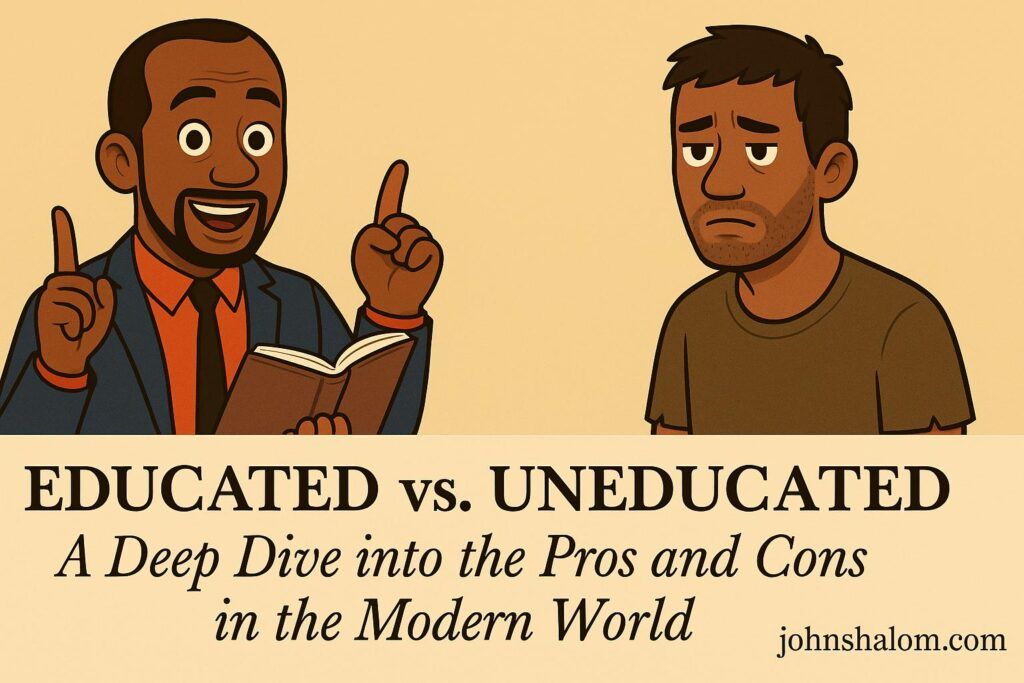
TL;DR:
Education changes how we think, act, and connect—but wisdom isn’t always found in classrooms. The educated build systems; the uneducated often preserve raw experience and practicality. True progress comes when formal knowledge meets lived understanding in harmony.
FAQs: Educated vs Uneducated Explained
1. What defines an educated person?
An educated person has gained structured knowledge, critical thinking skills, and the ability to apply learning in daily life.
2. What are the benefits of being educated?
It opens doors to opportunities, expands perspective, improves communication, and empowers decision-making.
3. Are there advantages to being uneducated?
Yes. Many uneducated people possess emotional intelligence, resilience, and hands-on wisdom gained through experience.
4. Why does the education gap matter today?
It affects equality, job access, and social progress, often widening the divide between the privileged and the poor.
5. How can society bridge the gap between educated and uneducated groups?
By promoting inclusive education, valuing practical knowledge, and encouraging lifelong learning for everyone.
Introduction
In today’s fast-paced, knowledge-driven world, the debate between being educated and uneducated continues to be relevant. Many people assume that education is synonymous with reading and writing, but is that the complete picture? In this article, we will explore the true meaning of education, its importance, and how being educated or uneducated affects individuals in various ways.
We will also examine the advantages and disadvantages of both, while integrating relevant long-tail keywords such as “importance of education in modern society,” “effects of illiteracy on personal development,” “practical skills versus academic knowledge,” and “how education shapes career success.”
Category: Self-Help
What is Education, and Why Does It Matter?
Education is the process of acquiring knowledge, skills, values, and critical thinking abilities. While many define education as the ability to read and write, true education extends beyond literacy—it involves understanding concepts, applying skills, and adapting to new challenges.
In the digital era, education is more accessible than ever before. Online learning, vocational training, and formal schooling provide individuals with opportunities to develop expertise in their chosen fields. The “importance of education in personal and professional growth” cannot be overstated, as it directly influences career prospects, economic stability, and personal fulfillment.
However, education is not confined to traditional academic settings. Many successful people have achieved greatness without formal degrees, proving that “self-education and skill development” can be equally powerful. Whether through university education, vocational training, or self-learning, knowledge empowers individuals to make informed decisions, contribute to society, and adapt to an ever-evolving world.
The Advantages of Being Educated
1. Access to Better Career Opportunities
One of the biggest benefits of education is increased job prospects. Employers prioritize candidates who possess the necessary skills and knowledge to perform efficiently. Those with a higher level of education tend to have more career options and earning potential.
2. Enhanced Critical Thinking and Problem-Solving Skills
Education fosters critical thinking, which is essential for decision-making and innovation. Whether in personal life or the workplace, the ability to analyze situations, weigh pros and cons, and make informed choices sets educated individuals apart.
3. Financial Stability and Economic Growth
Countries with high literacy rates tend to have stronger economies. Educated individuals are more likely to contribute to economic development, start businesses, and drive innovation.
4. Improved Communication Skills
Reading, writing, and comprehension skills allow people to express themselves effectively. Whether in a professional or social setting, strong communication skills enhance relationships and productivity.
5. Increased Awareness and Social Responsibility
Educated individuals are more likely to be informed about social, political, and environmental issues. They tend to participate in civic duties, advocate for positive change, and make ethical choices.
6. Better Health and Well-being
Studies show that educated individuals are more likely to lead healthier lifestyles, understand medical information, and seek healthcare when needed. This contributes to overall longevity and well-being.
The Downsides of Education
While education has numerous benefits, there are also potential drawbacks.
1. Overemphasis on Theoretical Knowledge
Many educational systems focus on memorization rather than practical application. As a result, graduates often lack hands-on experience in their respective fields.
2. Rising Student Debt
Higher education comes with financial burdens. Many students take out loans to finance their education, leaving them in significant debt after graduation.
3. Pressure and Mental Health Struggles
The competitive nature of education can lead to stress, anxiety, and burnout. Academic pressure can take a toll on mental health, affecting overall well-being.
4. Potential Loss of Cultural Identity
In some cases, exposure to global education systems can lead to the loss of cultural traditions and values.
5. Overqualification and Job Market Saturation
Highly educated individuals sometimes struggle to find jobs in their fields due to market saturation. This can lead to underemployment or frustration with career choices.
What Does It Mean to Be Uneducated?
Being uneducated is often associated with illiteracy, but the term can extend to a lack of formal education in general. Many people who lack academic credentials still possess valuable skills and wisdom acquired through life experiences.
While being uneducated might limit career opportunities, some individuals excel in entrepreneurial ventures, manual labor, and artistic fields without formal schooling. The debate between “formal education vs. practical experience” continues to be a topic of interest.
The Advantages of Being Uneducated
1. Practical Skill Development
Many people who lack formal education develop strong hands-on skills in trades such as carpentry, plumbing, and farming.
2. Less Exposure to Stress from Formal Education
Without academic pressure, some individuals experience less stress and enjoy a more relaxed lifestyle.
3. Strong Cultural and Community Bonds
Many uneducated individuals maintain close ties to their cultural roots, traditions, and collective values.
4. Entrepreneurial Success Without Formal Schooling
Many successful entrepreneurs, including billionaires like Steve Jobs and Richard Branson, achieved great success without formal education.
You might also like: The Self-Help Roadmap: Proven Strategies for Personal Growth and Healing
The Disadvantages of Being Uneducated
1. Limited Career Opportunities
Many high-paying jobs require formal education, which can limit employment opportunities for uneducated individuals.
2. Difficulties in Understanding Complex Information
Lack of education may hinder the ability to comprehend legal, financial, or medical documents.
3. Greater Risk of Exploitation
Uneducated individuals are often more vulnerable to misinformation and manipulation.
4. Limited Access to Technological Advancements
In today’s digital age, education plays a crucial role in understanding and utilizing technology effectively.
5. Lack of Financial Independence
Many uneducated individuals struggle with financial stability due to low-paying jobs.
Making a Choice: The Balance Between Education and Practical Knowledge
The choice between pursuing formal education and focusing on practical skills depends on individual goals. Education is undoubtedly beneficial, but practical experience and adaptability are equally crucial in the modern world. Many careers today require a combination of both.
Is Education the Key to Success? While education is a powerful tool, it is not the only factor that determines success. People who blend academic knowledge with practical experience often achieve the best outcomes.
Can You Succeed Without Formal Education? Absolutely. Many individuals succeed through self-education, apprenticeships, and hands-on experience. The key is continuous learning and adapting to industry demands.
Final Thoughts
Whether one is educated or uneducated, personal growth and skill development remain essential. Education provides opportunities, but real-world experience and adaptability determine long-term success. It is important to strike a balance and focus on lifelong learning.
What are your thoughts on this topic? Do you believe education is necessary for success, or do you value practical experience more? Let us know in the comments!
If you found this article insightful, feel free to share it. Follow us on social media for more discussions on “education vs. experience in career growth.”

