TL;DR:
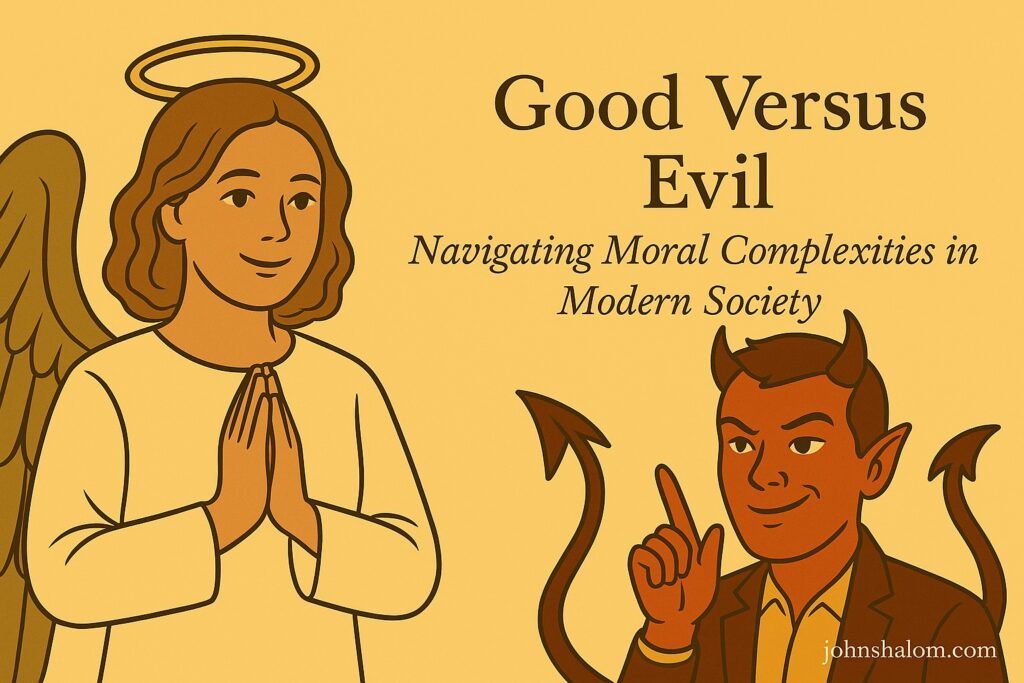
Good and evil are more than opposites—they’re reflections of human choice. In a world shaped by technology, culture, and power, morality isn’t always clear-cut. Understanding both forces helps us act with integrity, empathy, and awareness in a morally complex age.
FAQs: Good vs Evil in Modern Society
1. What defines good and evil?
Good is guided by compassion, justice, and truth, while evil stems from selfishness, harm, and disregard for others.
2. Why is morality complex today?
Modern life blurs moral lines through media influence, cultural diversity, and competing values.
3. How can people choose good over evil?
By reflecting on consequences, seeking wisdom, and acting from empathy rather than impulse or greed.
4. Are good and evil absolute or relative?
They often depend on context and culture, but universal values like honesty and kindness still guide moral judgment.
5. How can society promote moral awareness?
Through education, ethical leadership, and open dialogue about values that sustain peace and justice.
Understanding the concepts of good and evil is essential for personal development and societal harmony. In today’s world, where moral relativism often prevails, discerning right from wrong can be challenging. This article delves into the definitions of good and evil, their significance, and their implications for modern humans.
Defining Good: Its Importance in Human Behavior
Universal Understanding of Good
While interpretations of “good” may vary across cultures, certain actions are universally recognized as positive. For instance, empathy and altruism are widely valued traits. As noted in Psychology Today, “‘Good’ means the ability to empathize with other people, feel compassion for them, and put their needs before your own.” citeturn0search9
Cultural Variations in Perceptions of Good
Cultural backgrounds significantly influence what individuals consider good. Practices deemed acceptable in one society might be frowned upon in another. For example, dietary customs vary globally, and what is a delicacy in one culture might be unappetizing elsewhere. Recognizing and respecting these differences is crucial for fostering mutual understanding.
Pros and Cons of Embracing Goodness
Pros:
- Social Acceptance: Upholding universally recognized good behaviors fosters trust and cooperation.
- Personal Fulfillment: Acts of kindness and empathy often lead to a sense of purpose and satisfaction.
- Positive Societal Impact: Collective good actions contribute to societal progress and harmony.
Cons:
- Subjectivity: What is considered good can vary, leading to potential misunderstandings.
- Potential for Exploitation: Individuals with good intentions might be taken advantage of by those with malicious motives.
- Cultural Clashes: Differing cultural norms can lead to conflicts over what constitutes good behavior.
Understanding Evil: Its Role and Impact
The Nature of Evil
Evil encompasses actions that cause harm, suffering, or injustice. While definitions can be subjective, certain behaviors, such as unprovoked violence or exploitation, are broadly condemned. As highlighted by Psychology Today, “‘Evil’ stems from a lack of empathy.” citeturn0search9
The Universality and Relativity of Evil
Despite cultural differences, some actions are universally recognized as evil. However, perceptions can vary based on societal norms and personal experiences. For instance, practices accepted in one culture might be viewed as evil in another, underscoring the complexity of moral judgments.
Pros and Cons of Recognizing Evil
Pros:
- Moral Awareness: Identifying evil actions helps individuals and societies establish moral boundaries.
- Protective Measures: Recognizing evil enables the development of laws and regulations to safeguard individuals and communities.
- Personal Growth: Understanding the consequences of evil actions can deter individuals from engaging in harmful behaviors.
Cons:
- Moral Ambiguity: Differing perspectives can lead to debates over what constitutes evil.
- Potential for Mislabeling: Misunderstandings or biases might result in unjustly labeling certain actions or individuals as evil.
- Cultural Conflicts: Divergent views on evil can lead to societal tensions and divisions.
The Interplay Between Good and Evil
The Necessity of Balance
Good and evil are intertwined aspects of human existence. Recognizing both allows for a comprehensive understanding of morality. As discussed in the Stanford Encyclopedia of Philosophy, “Moral certainty refers to those aspects of morality…that are beyond doubt, explanation, and justification.” citeturn0search2
The Role of Intent and Context
The morality of an action often depends on intent and context. Actions perceived as good in one situation might be deemed evil in another, highlighting the importance of considering circumstances and motivations in moral evaluations.
Personal Choice in Moral Decision-Making
Autonomy in Defining Morality
Individuals possess the autonomy to define their moral compass, influenced by personal experiences, cultural backgrounds, and societal norms. This personal agency is crucial in navigating moral dilemmas and making ethical decisions.
The Impact of Personal Choices
Personal choices shape one’s character and influence society. Embracing empathy, compassion, and understanding fosters positive relationships and contributes to societal well-being. Conversely, choices rooted in selfishness or malice can lead to personal and communal harm.
You might also like: The Complete Guide to Theology: Faith, Reason, and Modern Interpretations
Navigating Moral Complexities in Modern Society
The Influence of Technology and Globalization
In an increasingly interconnected world, exposure to diverse cultures and perspectives challenges individuals to reassess their moral beliefs. Technology amplifies this exposure, presenting both opportunities for growth and challenges in maintaining moral clarity.
The Role of Education and Dialogue
Education and open dialogue are vital in navigating moral complexities. Engaging with diverse viewpoints fosters empathy and broadens understanding, enabling individuals to make informed moral choices.
Conclusion: Striving for Moral Clarity
Understanding good and evil is a multifaceted endeavor influenced by various factors, including culture, personal experiences, and societal norms. By embracing empathy, engaging in open dialogue, and recognizing the interplay between good and evil, individuals can navigate moral complexities and contribute to a more harmonious society.
Note: This article is a revised and expanded version of the original piece titled “Good Versus Evil: Pros And Cons For Modern Humans,” published on October 26, 2020.