TL;DR
Blockchain protects online transactions by using decentralization, cryptography, and transparent records that cannot be edited or deleted. Every transaction is stored across many computers, making it extremely hard for hackers to attack or manipulate the data. Blockchain also reduces fraud, prevents identity theft, and removes the need for middlemen like banks or payment processors. It powers tools such as cryptocurrencies, smart contracts, and digital identity systems that make online transactions safer, faster, and more reliable. While challenges such as scalability, regulation, and adoption remain, blockchain is becoming one of the strongest technologies for securing digital life.
FAQs
What makes blockchain secure?
It stores the same transaction history on many computers. If someone tries to change one copy, the others reject it. Cryptography adds another layer of protection.
Is blockchain only for cryptocurrency?
No. It is used in banking, online payments, healthcare, supply chain, contracts, and identity systems.
Can blockchain help prevent identity theft?
Yes. Blockchain-based identity tools let you control your personal data instead of giving it to large companies that can be hacked.
Are blockchain transactions anonymous?
They are pseudonymous. Your name is not shown, but your wallet address is visible.
What is a smart contract?
It is a digital contract that executes automatically when conditions are met. It removes middlemen and reduces fraud.
Introduction
Online transactions are now part of daily life. We pay bills. We shop. We send money. We sign documents. We do these things on websites, apps, and digital platforms. But the more we use the internet, the more our information is exposed. Hackers target weak systems. Fraudsters create fake identities. Companies store huge amounts of personal data that can be stolen.
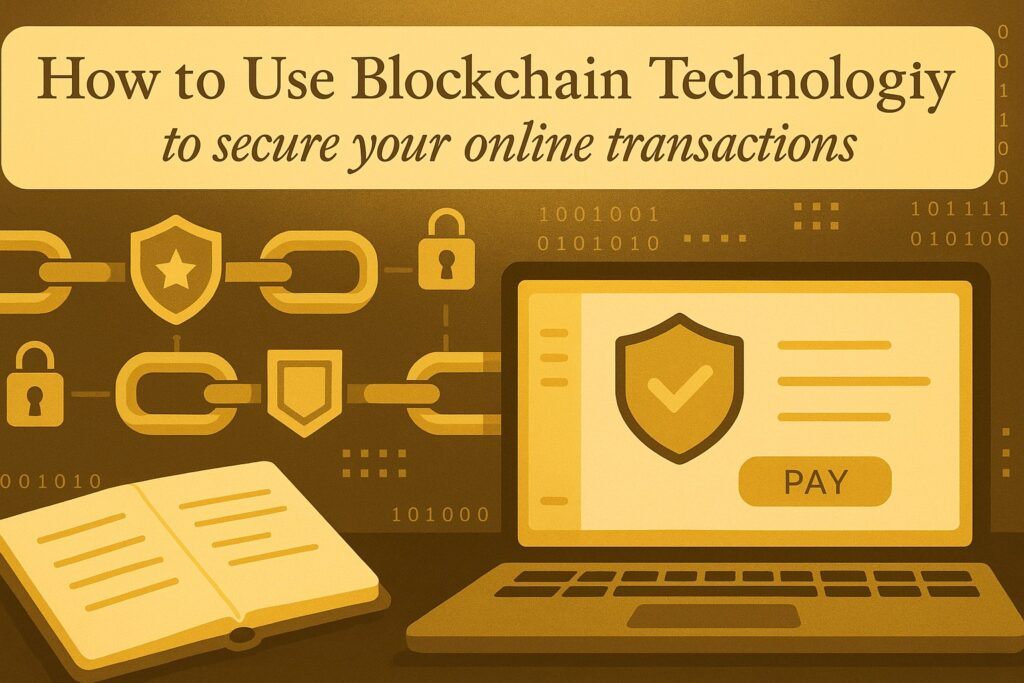
Blockchain technology offers a new way to secure online transactions. It protects data by spreading it across many computers instead of keeping it in one central place. It records transactions in a chain that cannot be edited or erased. It uses cryptography to lock the information. It replaces trust in institutions with trust in math.
This article explains how blockchain works. It shows how it protects online transactions. It gives examples of real tools powered by blockchain. And it looks at the limits and challenges of this technology. The goal is simple: to help you understand how blockchain can keep your online activities safe.
What Is Blockchain Technology?
Blockchain is a type of digital ledger. It records transactions in blocks. These blocks are connected in a chain. Each block has a unique code called a hash. The hash links the block to the one before it. If someone tries to change anything in a block, the hash changes. When the hash changes, it no longer matches the one stored in the next block. The chain breaks. The system notices the break and rejects the change.
Blockchain is also distributed. This means the ledger is not stored in one place. Many computers, called nodes, hold copies of the same ledger. Every time a new block is created, all nodes update their copy. No single node controls the network. Every node checks and verifies transactions.
Blockchain uses cryptography. Cryptography hides information behind mathematical algorithms. It encrypts data so only the right people can access it. It verifies transactions and identities without exposing sensitive details.
Blockchain depends on consensus. Consensus means the nodes in the network must agree on the state of the ledger. If one node tries to cheat, the others reject it. This prevents fraud and manipulation.
You might also like: Essential Computer Skills for the 21st Century: From Basics to Advanced Tips
All these elements come together to create a secure, transparent, and reliable record system.
Why Blockchain Is Hard to Hack
Blockchain is not impossible to hack. But it is extremely difficult. Several factors make it strong.
First, the data is spread across many computers. A hacker would need to attack most of them at the same time. This is almost impossible in large networks.
Second, the data is locked with cryptographic keys. These keys are long strings of characters that cannot be guessed easily.
Third, every change must be approved by the network. Even if one copy of the ledger is changed, the rest will reject it.
Fourth, the cost of hacking is too high. For blockchains like Bitcoin, a hacker would need massive computing power to alter the chain. The energy cost alone would be enormous.
Finally, blockchain is transparent. Anyone can see the transactions. This makes fraudulent changes even easier to spot.
This combination of decentralization, cryptography, consensus, and transparency makes blockchain one of the safest technologies for digital transactions.
How Blockchain Secures Online Transactions
Online transactions face many dangers. Fraud. Hacking. Data leaks. Fake identities. Misuse of personal information. Blockchain can reduce these risks.
Transparency
Every transaction is visible on the ledger. You cannot hide it. You cannot delete it. This makes it easier to prove a transaction happened. It also makes it harder for criminals to forge records.
Immutability
Blockchain transactions cannot be changed. Once a block is added to the chain, it stays there. This protects transaction history. It prevents tampering. It also helps settle disputes because the record is final.
Security
Transactions are encrypted. They are validated by the network. They are stored across many nodes. All these layers protect the transaction from hackers.
You might also like: Entrepreneurship Series: What It Is and Its Importance for You
No Middlemen
You can transfer value directly from one person to another. You do not need a bank. You do not need a payment processor. This reduces fees. It speeds up the transaction. It also reduces the number of places where data can be stolen.
Real Uses of Blockchain for Online Security
Blockchain is already used in many areas to secure transactions.
Cryptocurrencies
Bitcoin and other cryptocurrencies use blockchain to record and validate payments. There is no bank involved. Transactions are peer-to-peer. The ledger is public. This reduces fraud. It also protects users from chargebacks and unauthorized changes.
Smart Contracts
Smart contracts are digital agreements stored on a blockchain. They execute automatically when conditions are met. No one can change the rules. No one can delay or block the process. This creates trust between strangers.
Smart contracts are used for:
- Escrow services
- Online marketplaces
- Insurance payouts
- Subscription billing
- Loan agreements
This reduces fraud and dispute risk.
Digital Identity
Blockchain-based identity tools allow people to control their own personal information. Instead of giving your details to dozens of websites, you use a secure identity stored on a blockchain.
You control what information is shared. You approve access. You revoke access when needed.
This prevents identity theft. It reduces data leaks. It gives people more power over their digital lives.
Supply Chain Verification
Blockchain can track goods from the source to the buyer. Every step is recorded on the chain. This prevents fake products. It stops tampering. It ensures transparency in industries like medicine, food, and electronics.
Secure Records
Healthcare systems are using blockchain to protect patient records. Education institutions use it to verify degrees and certificates. Governments use it to secure voting systems, land records, and licenses.
Benefits of Using Blockchain for Security
Blockchain offers several advantages over traditional digital systems.
Reduced Fraud
Transactions cannot be hidden. They cannot be altered. They cannot be deleted. Fraud becomes harder.
Faster Transactions
No middlemen. No manual verification. No delays.
Lower Costs
Without intermediaries, users save money on fees.
Better Privacy
Users can verify transactions without exposing personal details.
Stronger Trust
The system itself is trustworthy. Users do not need to trust individuals or organizations.
Challenges and Limitations of Blockchain
Blockchain is powerful, but it is not perfect.
Scalability
Some blockchains cannot handle large numbers of transactions quickly.
Energy Use
Proof-of-work blockchains consume huge amounts of electricity.
Regulation
Governments are still learning how to regulate blockchain technology.
Adoption
Many people do not understand blockchain. Many businesses do not know how to use it.
Costs
Setting up blockchain systems can be expensive for companies.
Irreversibility
If you make a mistake on a blockchain transaction, you cannot reverse it.
These challenges slow down adoption but do not stop the technology’s growth.
How to Start Using Blockchain for Online Security
You do not need deep technical knowledge to use blockchain tools.
Here are simple steps to begin:
Use Secure Crypto Wallets
Download a trusted wallet to store cryptocurrency or digital assets.
Try Blockchain-Based Payment Apps
Apps like Bitcoin Lightning wallets or Ethereum wallets offer secure payments.
Explore Digital Identity Platforms
Services like Civic or SelfKey let you control your identity data.
Use Smart Contract Marketplaces
Platforms like Ethereum allow you to use smart contracts for business or personal transactions.
Learn Basic Safety Practices
Never share your private keys.
Use strong passwords.
Enable two-factor authentication.
Keep your wallet offline when possible.
How Blockchain May Shape the Future of Online Security
Blockchain is still growing. Many experts believe it will play a major role in the future of the internet.
Here are likely developments:
Secure Digital Banking
More banks may use blockchain to protect accounts and transfers.
Safer Online Shopping
E-commerce platforms may use blockchain to protect buyers and sellers.
Verified Social Media
Users may own their identity and data on social platforms.
Transparent Elections
Blockchain voting could prevent fraud and manipulation.
Medical Security
Hospitals could use blockchain to protect personal health data.
The technology is evolving, but the direction is clear: more control for users, less control for intermediaries, and stronger protection for everyone.
Conclusion
Blockchain technology is one of the most powerful tools for securing online transactions. It makes digital records almost impossible to alter. It protects users from fraud, hacking, and identity theft. It removes middlemen. It creates transparency. And it gives people more control over their own digital lives.
Blockchain is not perfect. It faces challenges like regulation, energy use, and scalability. But its benefits are strong and growing. More industries are adopting it. More tools are being built. And more people are learning how to use it.
As online life expands, blockchain offers a practical path to safer, faster, and more trustworthy online transactions.