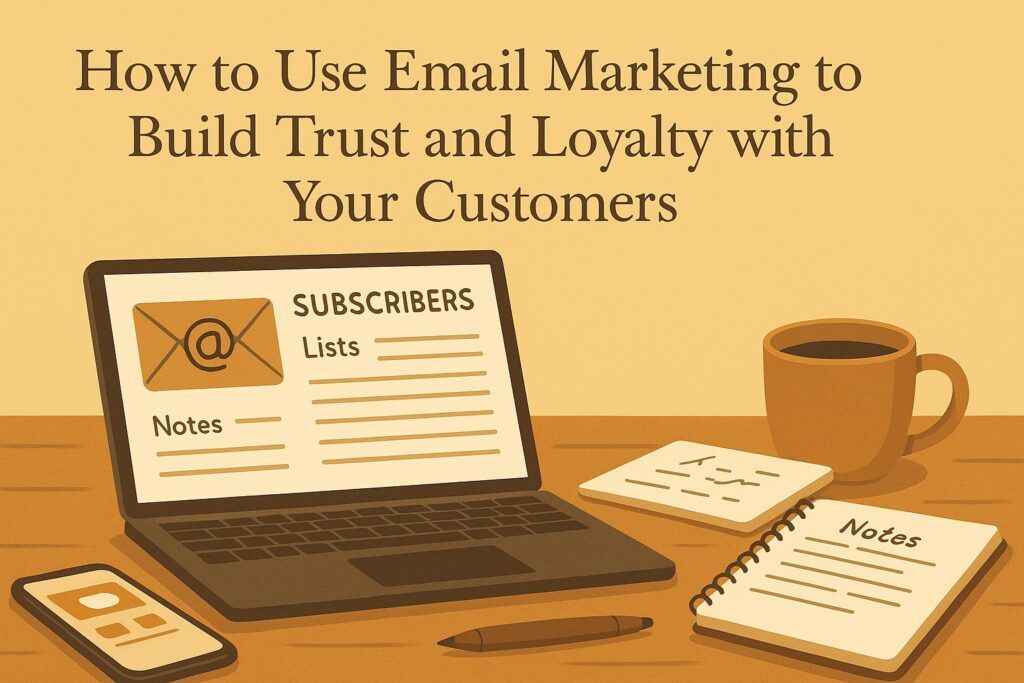
Learn how to use email marketing to build real trust and long term loyalty with your customers today.
TL; DR
You can use email marketing to build trust and loyalty by sending helpful, consistent messages that put your customers’ needs first. Start with permission-based, clear signups. Share useful tips, stories, and offers that match each subscriber’s interests instead of sending the same email to everyone. When you respect their time, protect their data, and show up regularly with real value, people come to see your emails as a welcome part of their week, not spam.
FAQs
1. What is email marketing in simple terms?
Email marketing means sending planned, useful messages to people who gave you permission to contact them, so you can inform, help, and occasionally sell to them.
2. How does email marketing build trust and loyalty?
Trust grows when your emails are honest, reliable, and helpful. Loyalty grows when people feel understood, respected, and rewarded for staying connected to your brand.
3. What should I send in my emails to build trust?
Send practical tips, how-to guides, stories, case studies, and answers to common questions. Mix in offers, but keep most messages focused on helping, not just selling.
4. How often should I email my customers?
Choose a schedule you can keep, such as weekly or every two weeks. Too many emails can annoy people, but long gaps make them forget who you are.
5. How can I personalize my emails without being creepy?
Use the subscriber’s name, segment by interests or past actions, and send content that matches what they signed up for. Avoid overusing personal data or guessing too much about their private life.
6. What is list segmentation and why is it important?
Segmentation means grouping subscribers by traits such as interests, purchase history, or location. It lets you send more relevant emails, which improves trust, engagement, and conversions.
7. How can automation help with trust and loyalty?
Automated welcome series, follow-up sequences, and post-purchase emails ensure timely, consistent contact. When done well, they make customers feel guided and supported at each step.
8. What should a good welcome email include?
Thank the subscriber, set expectations about email frequency and content, deliver any promised free resource, and invite them to reply or click to share preferences.
9. How do I measure if my email marketing builds loyalty?
Track open rates, click rates, replies, repeat purchases, and unsubscribe rates. More opens and clicks, along with steady or growing list size, show that people value your messages.
10. What common mistakes should I avoid in email marketing?
Avoid buying email lists, hiding unsubscribe links, sending only promotions, ignoring replies, and using misleading subject lines. Respect, clarity, and value are essential for long-term trust.
Introduction: From Village Messengers to Email Lists
When I was a boy along the Sobat River, messages did not travel through screens. They moved through people.
If a chief wanted to speak to another village, he sent a trusted messenger. That messenger walked for hours or days. When he arrived, people gathered, because they knew a message was coming that mattered. It was rare, personal, and often serious.
Now I sit in Juba or Nairobi and watch messages fly around the world in seconds. Instead of a boy walking with a stick, we have email service providers. Instead of elders under a tree, we have inboxes.
But one thing has not changed.
People still decide, “Is this message worth my attention or not?”
When I started building email lists for my writing, for my online business, and for organizations like Yo’ Care South Sudan, I made many mistakes. I sent emails that sounded like everyone else. I forgot how it feels to be on the receiving end, flooded with messages I never asked for. I chased clicks before I earned trust.
Over time, through trial and error, unsubscribes and kind replies, I learned something simple:
Email marketing is not about tricking people into opening messages.
It is about building a relationship where people are glad to see your name in their inbox.
In this article, I want to show you how to use email marketing to build trust and loyalty with your customers, not just sales for this week. I will mix practical steps with stories from my own life as an African writer, ICT officer, and pro humanity entrepreneur who works with limited power, unstable internet, and real people who can smell lies from far away.
We will look at three big ideas:
- Ask for permission.
- Provide value.
- Seek feedback.
If you get these three right, your email list can become one of the most honest and powerful assets in your business.
What Trust and Loyalty Really Mean in Email Marketing
Before we talk about tactics, let us define two important words: trust and loyalty.
Trust means:
- People believe you are who you say you are.
- They believe you will do what you say you will do.
- They feel safe opening your messages and clicking your links.
Loyalty means:
- People keep choosing you when they have other options.
- They stay with you when you make small mistakes, because they know your heart.
- They sometimes defend you when others attack you unfairly.
In my own work, I have seen that trust and loyalty show up in small things:
- A subscriber who replies to your email, not just reads it.
- A reader who stays on your list through quiet months.
- A customer who buys again, not just once.
Email marketing, done well, can build this kind of relationship step by step. Done poorly, it can destroy it just as fast.
Let us start with the first step.
Ask for Permission: Do Not Be the Annoying Caller
There was a season in Kenya when my phone number appeared in newspapers because of some work I was doing. Suddenly, my phone became a magnet for calls.
Every few minutes, I received a new call:
“Hello, are you the one from the advert?”
“Can you help me with this?”
“Can you send me money?”
Most of these people had no real connection with me. Many did not even know exactly why they were calling. They just wanted “something.”
It reached a point where I had to block calls from numbers that were not in my contacts. My phone, which was supposed to connect me with meaningful people, became a source of noise and stress.
That is how your customers feel when you send them emails they never asked for.
Permission is the foundation of email trust.
If you do not have genuine permission, everything else becomes manipulation.
What Permission Looks Like in Practice
Permission means:
- The person gave you their email on purpose.
- They know who you are.
- They have a rough idea of what type of emails they will receive.
- They can easily stop receiving them if they wish.
Ways to ask for permission respectfully
- Signup forms on your website or blog
Place forms where they make sense:
- At the end of helpful articles.
- On your sidebar.
- On a dedicated “Join the newsletter” page.
Tell people clearly:
- What they will receive.
- How often they will hear from you.
- Why it is worth their time.
- Lead magnets
Sometimes people need an extra reason to join your list. That is where lead magnets come in:
- A short ebook or guide.
- A checklist.
- A mini email course.
- A discount code.
When I started teaching aspiring African writers, I could offer something like:
“Get my free 7 day email series: From Blank Page to First Chapter. Simple steps you can follow even with limited time and internet.”
The key is to make the gift truly useful, not just a bribe.
- Checkboxes on checkout or registration pages
If you run an online store, a training, or a membership, it is tempting to auto subscribe everyone. Resist that temptation.
Give people a clear checkbox like:
“Email me writing tips and occasional offers.”
Leave it unchecked by default. Let them say yes.
Why Double Opt In Helps
Double opt in means:
- Someone enters their email on your form.
- They receive an email asking them to confirm.
- Only after they click the confirmation link do they join your list.
This:
- Filters out fake or wrong emails.
- Proves the person has access to that inbox.
- Reminds them that they chose to receive your messages.
It is like asking twice, “Are you sure you want this?” It builds stronger trust from day one.
Respecting Privacy and Rights
As someone who works in ICT and communication, I take data protection seriously. You should too.
Practical steps:
- Do not share or sell your email list.
- Store emails safely.
- Include a clear unsubscribe link in every email.
- Respect unsubscribe requests immediately.
- Avoid adding people manually unless you have their clear permission.
When someone trusts you with their email, they are inviting you into a personal space. Treat that privilege as something sacred.
Provide Value: Do Not Waste Their Attention
When I started joining email lists from writers, marketers, NGOs, and tech tools, I noticed a pattern.
Some people sent messages that I waited for.
Others sent messages that I deleted without opening.
What was the difference?
The first group respected my time. They helped me think, act, or feel better. The second group treated my inbox as a rubbish bin for every random thought or offer they had.
I made both mistakes in my own work. There were times I sent emails because “it had been a while” not because I had something meaningful to share. Those emails felt empty. People could sense it.
Value is what makes people happy to stay on your list.
What Value Looks Like in Email
Value depends on your audience, but usually it means some of these:
- Helpful information.
- Clear guidance.
- Honest stories.
- Timely offers that actually fit their needs.
- Encouragement in hard seasons.
Let us look at different types of emails and how they can build trust and loyalty when done well.
Welcome Emails: The First Impression
A welcome email is like meeting a new neighbor. It sets the tone.
When someone joins your list, do not just send them a cold newsletter. Send a warm welcome that:
- Thanks them for joining.
- Reminds them why they signed up.
- Tells them what to expect next.
- Delivers the promised lead magnet.
- Invites them to reply with a small question.
For example, as a writer helping aspiring African authors, my welcome email might say:
“Reply and tell me in one sentence: what stopped you from finishing your last writing project?”
This simple question does many things:
- It shows I care.
- It opens a conversation.
- It teaches me about my audience.
Newsletter Emails: Staying Connected
Newsletters are regular messages you send to keep in touch. They can include:
- New blog posts.
- Short lessons.
- Updates from your projects.
- Links to tools you use.
At Yo’ Care South Sudan, we know that donors and partners do not only want glossy reports. They want to see real progress, real challenges, and real people. A good newsletter can:
- Show how funds are used.
- Share stories from the field.
- Build confidence that you are serious and transparent.
For your own business or brand, a newsletter can:
- Remind people you exist.
- Position you as a trusted guide.
- Prepare them for future offers without constant selling.
Promotional Emails: Selling Without Feeling Dirty
It is not wrong to sell in your emails. Your business must survive. The problem comes when every email is a push to buy something, or when your offer feels unrelated to what people signed up for.
Healthy promotional emails:
- Connect the offer to the reader’s real problem.
- Explain the benefits clearly.
- Are honest about limits and expectations.
- Do not try to scare or shame people into buying.
For example, if I launch a course for aspiring African nonfiction writers, my promotional email can say:
“If you have been reading my free tips for a while and you are ready for a clear, step by step plan to finish your first book, this new course is for you. If you are still figuring out your topic, stay with the free content for now. It will help you get ready.”
Notice that I am still serving people who do not buy yet.
Transactional Emails: Small Moments of Trust
Transactional emails are messages triggered by actions:
- Order confirmations.
- Password resets.
- Registration confirmations.
- Download links.
These are often the most opened emails you will ever send. People expect them and look for them.
You can use these moments to:
- Reassure the person that everything worked.
- Explain the next step clearly.
- Show your brand’s personality.
Do not hide important information behind confusing designs. Make it simple:
“Your order is confirmed. Here is what happens next.”
Educational and Nurturing Emails: Becoming a Trusted Teacher
Some of the most powerful emails I have ever sent and received are the ones that teach.
For example, I can send a 5 part email series on:
- How to collect life stories from elders.
- How to choose a book title.
- How to protect your online accounts as a beginner.
These emails build trust because I am not just asking for something. I am giving something first. Over time, people begin to see you as a teacher, not just a seller.
Loyalty Emails: Remembering Real People
Loyalty emails show that you remember and value the person behind the address. These can include:
- Birthday greetings.
- “Thank you” notes after big purchases or long subscriptions.
- Special discounts for long term customers.
- “We miss you” messages for inactive subscribers.
I still remember the first time an online service sent me a simple birthday email that was not trying to sell anything. It made more sense to me than many long sales pages. It said, “We see you.”
How to Make Your Emails Feel Human
A few habits can keep your emails from sounding like they were written by a robot sitting in a giant building:
- Write like you talk
Imagine you are writing to one specific friend. Use simple sentences. Avoid heavy jargon.
- Use clear subject lines
Instead of:
“News from our ecosystem this quarter”
Say:
“3 lessons I learned from our latest project in Baliet County”
- Keep your promises about frequency
If you said “weekly,” then do your best to show up weekly. If you must change frequency, explain it.
- Make it easy to skim
- Use short paragraphs.
- Use clear headings.
- Highlight the most important sentence in each section by its position, not by fancy formatting.
- Test on mobile
Many readers in Africa and elsewhere use phones, not laptops. Send a test to yourself and read it on your phone before sending to everyone.
- Seek Feedback: Listening as a Loyalty Strategy
One of the most humbling moments in my email journey came when a reader replied to a message I sent to my writing community.
He wrote, “John, I like your work, but this email felt like an advertisement, not like you. Where is your story?”
He was right. I was rushing. I had copied the structure of a Western marketer and forgotten who I was and who my readers were. That one feedback email helped me correct my direction.
Email is not a radio broadcast. It is a conversation.
If you want trust and loyalty, you must invite and respect feedback.
Ways to Seek Feedback Through Email
- Simple questions inside your regular emails
At the end of a newsletter, you can add:
“Hit reply and tell me: what is your biggest challenge with X right now?”
Make the question specific and easy to answer in one or two sentences.
- Short surveys or polls
You do not always need a big survey tool. Sometimes a simple “Click one of these links” works:
- “I prefer weekly emails.”
- “I prefer monthly summaries.”
Or you can send a short survey using tools that integrate with your email service.
- Asking for reviews or testimonials
If someone has bought a product or taken a course from you, send a follow up email:
“I would love to know how this helped you. Can you reply with a short comment or leave a review here?”
Social proof grows, but more importantly, you learn what is working.
- Monitoring replies and complaints
Do not send your emails from a “no reply” address. That already tells people, “We talk. You listen.”
Use a real address and read the replies.
When someone complains:
- Thank them for their honesty.
- Fix the issue if you can.
- Explain briefly what you will change.
When I handle technical or communication issues at Yo’ Care, I have seen how much goodwill you can preserve by responding to concerns quickly and clearly. The same applies to your email list.
- Studying your email numbers
Open rates, click through rates, unsubscribes, and spam reports all tell you something.
- If few people open, maybe your subject lines are weak or your name is not recognized.
- If many people unsubscribe after a certain type of email, maybe that content is not useful or feels pushy.
- If spam complaints rise, maybe your permission process is broken or your messages feel deceptive.
You do not need to worship the numbers, but you should learn from them.
How to Respond to Feedback Without Losing Yourself
When you open yourself to feedback, you will hear different voices:
- Some will love your work.
- Some will hate it.
- Some will be confused.
- Some will be rude.
Your job is to:
- Look for patterns, not isolated comments.
- Learn where your communication is unclear or off.
- Stay faithful to your core values and mission.
If many people say, “Your emails are too long,” you can shorten them or break them into series. If one person says, “You talk too much about Africa,” and your mission is to serve Africans, you smile and move on.
Trust and loyalty grow when people see that you are listening, learning, and still standing for something clear.
Putting It All Together: A Simple Email Journey
Let us imagine a new customer finding you online and joining your list. How can you design their experience so that trust and loyalty grow with each message?
Here is a simple structure.
Day 0: Signup
They join your list to get a specific free resource that speaks to their need.
Day 0: Welcome email
- Thank them.
- Deliver the resource.
- Introduce yourself briefly with one personal story.
- Tell them what to expect next.
- Ask a simple question and invite a reply.
Week 1: Educational series
Send 3 to 5 short, focused emails that:
- Solve small parts of their problem.
- Share your own experiences, both successes and failures.
- Introduce key concepts they need to know.
At the end of the series, you can invite them to:
- Read a full article.
- Watch a video.
- Consider a paid product if it truly fits.
Weeks 2 and beyond: Regular rhythm
Keep a steady rhythm of:
- Helpful newsletters.
- Occasional well crafted promotions.
- Feedback requests.
- Loyalty messages for long term subscribers and customers.
Over months and years, this gentle process can turn a stranger into:
- A reader.
- A customer.
- A partner.
- A friend.
Common Mistakes to Avoid
Let me save you from some errors I have made at different points.
- Adding people manually without clear permission
It may be tempting to take email addresses from business cards, WhatsApp groups, or event lists and add them to your newsletter. Do not do this. It feels like those random callers who got my number from the newspaper.
- Sending too many emails with little value
If every email is a sale, people will treat you like a street hawker who shouts all day in their face. Even in a busy market, the seller who respects people and speaks with sense gets better customers.
- Copying a foreign tone that is not you
Some email templates from big marketers do not fit our culture and daily reality. If you copy them exactly, your readers will feel the gap. Use ideas, but keep your own voice.
- Hiding the unsubscribe link
You do not keep trust by locking people in. You keep it by giving them the freedom to leave and the reason to stay.
- Ignoring replies
If people take time to respond, honor that. Even a short “Thank you, I appreciate your message” can strengthen the relationship.
Conclusion: Email as an Extension of Your Character
At the end of the day, email marketing is not a trick. It is another place where your character shows.
If you are honest, respectful, and generous in life, that will leak into your emails. If you are greedy, careless, and always looking for shortcuts, that will show up too.
For me, as a pro humanity writer who believes in meaning through being and doing, email is one of the tools under my “Tools” pillar. It supports my “Talks” and “Texts” by allowing me to:
- Encourage readers regularly.
- Share lessons from my journey.
- Offer products and services that can help them move forward.
But I always remind myself:
A bigger list without trust is a crowd that will vanish.
A smaller list with trust is a community that can grow.
So as you build your email marketing, remember:
- Ask for permission. Serious, clear, and respectful.
- Provide value. Practical, emotional, and real.
- Seek feedback. Listen, learn, and adjust.
If you follow these three steps steadily, your emails will become more than digital noise. They will become quiet, faithful messengers that carry your voice from your small room in Juba, Nairobi, Kampala, or anywhere else, into the daily lives of people who are glad you wrote to them.