TL; DR
Mobile and SMS marketing let you communicate with customers directly on their phones. These methods are powerful because they offer fast delivery, high open rates, and clear calls to action. To do them well, understand your audience, write short and relevant messages, personalize where possible, automate important touchpoints, and measure your results. SMS works best when it respects consent, timing, and value.
FAQs
What is mobile marketing?
Mobile marketing is any marketing activity created specifically for mobile devices. It includes mobile websites, apps, ads, email, social media, and SMS.
What is SMS marketing?
SMS marketing uses text messages to send updates, offers, reminders, and alerts to people who have opted in.
Why is SMS marketing effective?
SMS has extremely high open rates and delivers messages instantly, even without internet connectivity.
Is SMS marketing legal everywhere?
No. Regulations vary by region. Always get explicit permission, provide opt-out options, and follow all legal guidelines.
How often should I send SMS campaigns?
Start with 2–6 messages per month. Adjust based on engagement and unsubscribe rates.
What messages work best over SMS?
Time-sensitive deals, order updates, appointment reminders, event notices, cart recovery nudges, and short announcements.
Can SMS replace email or social media?
No. It should complement them. Email is better for long content, social media for discovery, SMS for urgency and direct action.
Full Article
Introduction
Mobile marketing uses mobile devices like smartphones and tablets to reach and engage customers. This includes mobile-friendly websites, apps, advertisements, email, social content, and SMS messaging.
SMS marketing is a powerful form of mobile marketing because it delivers short, timely messages directly to someone’s phone. Unlike email, which may or may not be opened, SMS almost always gets seen.
Below are the key reasons mobile marketing and SMS are highly effective, plus the strategies you can use to reach and retain your customers.
What Is Mobile Marketing?
Mobile Marketing Defined
Mobile marketing focuses on meeting customers where they spend most of their time: on their phones. It involves designing experiences and content that are easy to read, click, and use on small screens.
Mobile-First Design Principles
A strong mobile marketing approach includes:
- Fast-loading websites
- Responsive page layouts
- Simple navigation menus
- Large buttons
- Short forms
- Easy checkout
This ensures customers can act quickly without frustration.
What Is SMS Marketing?
SMS Explained
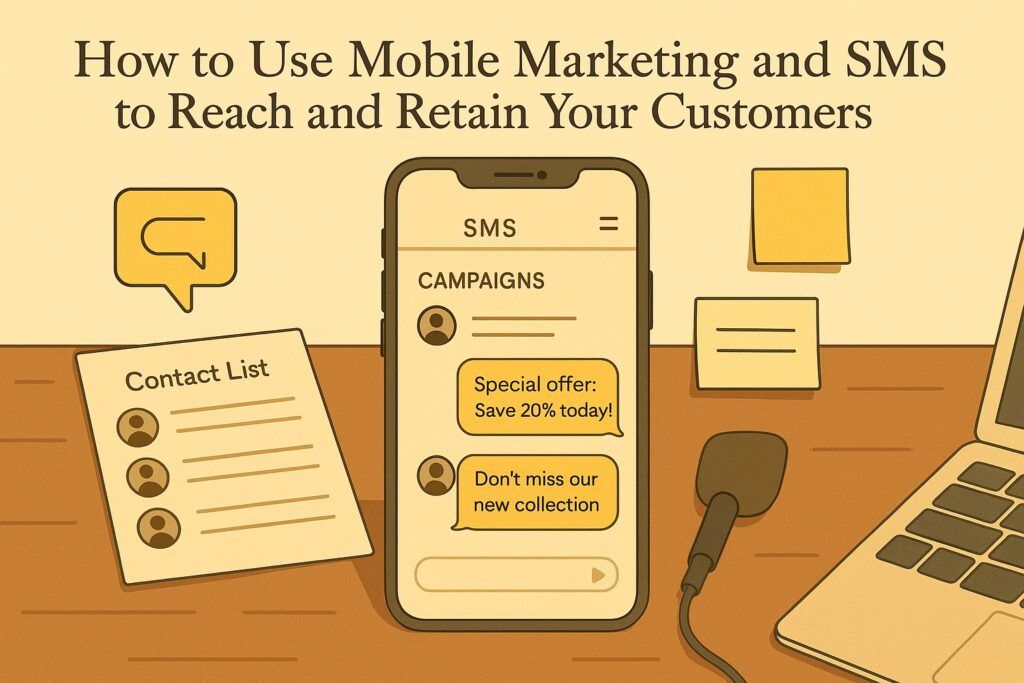
SMS marketing delivers direct text messages to your customers. These messages can include:
- Discounts and promo codes
- Order tracking updates
- Appointment reminders
- Event announcements
- Mini-surveys
- New product alerts
What Makes SMS Work?
- Short, clear communication
- Immediate visibility
- High engagement
- Works on every mobile device
- No internet needed
Benefits of Mobile and SMS Marketing
Reach
Mobile devices are always nearby. SMS works on any phone, anywhere, anytime.
Engagement
People check their phones frequently. SMS notifications cut through the noise and get attention instantly.
Loyalty
Opt-in text lists build trust. Mobile programs help nurture long-term relationships through updates, rewards, and personalized offers.
Conversion
SMS drives quick responses and purchases because it’s actionable and time-sensitive.
Best Practices for Mobile and SMS Marketing
Know Your Audience
Identify:
- Who your customers are
- How they use their devices
- What they respond to
- When they prefer to receive messages
Use surveys, analytics, and customer history to guide you.
Segment Your Audience
Group customers by:
- Demographics
- Location
- Interests
- Purchase history
- Activity level
This ensures each message feels tailored and relevant.
Optimize Your Content
Make sure every message fits the mobile format:
- Clear and short headlines
- Simple sentences
- One main idea per SMS
- Strong call to action
- Trackable short links
- Mobile-optimized landing pages
Personalize Your Messages
Add details such as:
- Name
- Recent purchases
- Location
- Preferred products
Example:
“Hi Lona, your favorite moisturizer is back in stock. Grab it now: [link]”
Automate Your Campaigns
Use automation to schedule:
- Welcome messages
- Birthday or anniversary offers
- Abandoned cart reminders
- Post-purchase thank-you messages
- Delivery or appointment alerts
Automation saves time and increases consistency.
Track and Improve
Measure:
- Opens
- Clicks
- Sales
- Unsubscribes
- Customer replies
Use these insights to adjust timing, frequency, and messaging.
Examples of Mobile and SMS Marketing
Mobile Website
A mobile-optimized website should:
- Load quickly
- Use flexible layouts
- Have easy menus
- Include click-to-call and chat features
Mobile App
Apps increase retention through:
- Rewards programs
- Push notifications
- Personalized recommendations
- Fast in-app checkout
Mobile Advertising
Mobile ads appear in:
- Social feeds
- Mobile search results
- Apps
- Video platforms
Use simple visuals, strong branding, and a direct call to action.
Mobile Email
Emails on mobile must:
- Be easy to read
- Have short subject lines
- Use concise copy
- Include large buttons
Social Media on Mobile
Focus on vertical content:
- Reels
- Stories
- Short videos
- Live streams
Boost engagement through polls, Q&A sessions, and challenges.
SMS Campaigns
Use SMS for:
- Flash sales
- Restock alerts
- Delivery updates
- Event announcements
- Reminders
- Quick surveys
Example:
“Your order is on the way! Track it here: [link].”
Compliance and Respect Rules
Legal Requirements
Always:
- Get explicit opt-in
- Explain message frequency
- Provide easy opt-out
- Respect all privacy laws
Respect Customer Boundaries
Avoid sending messages late at night or too frequently.
Conclusion
Mobile marketing and SMS marketing provide powerful ways to reach customers instantly and personally. With the right strategy—segmenting your audience, personalizing your messages, automating campaigns, and tracking performance—you can build stronger connections and drive real results.
Start with small, simple campaigns. Improve as you learn. Over time, mobile and SMS will become some of your most reliable channels for customer engagement and retention.