
TL;DR:
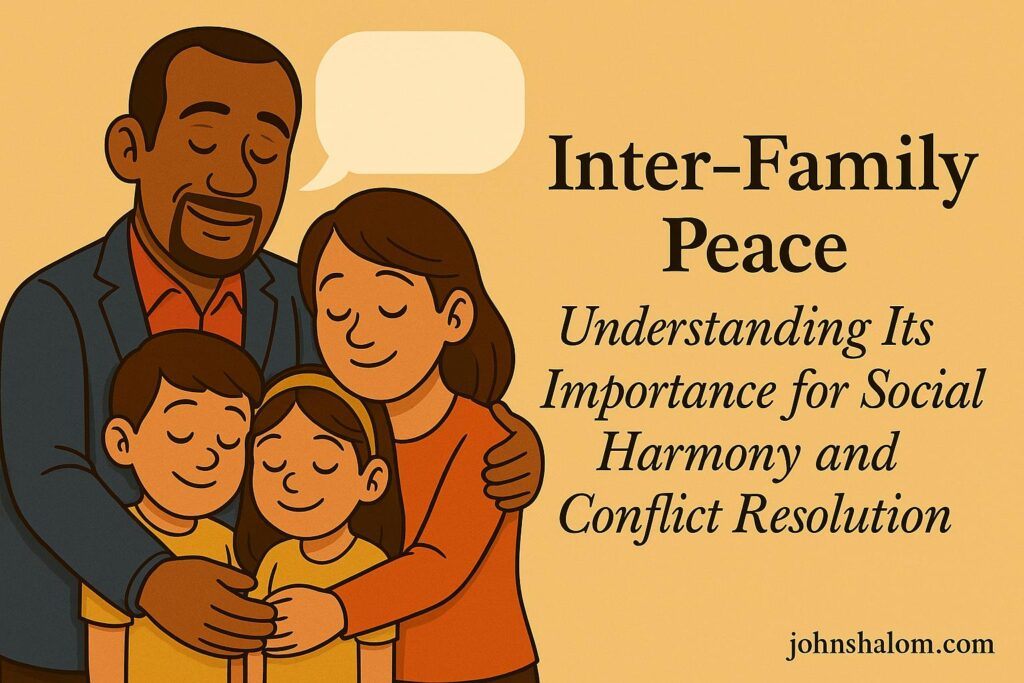
Inter-family peace strengthens the bonds that hold communities together. When families respect, support, and cooperate with one another, society becomes more stable and compassionate. True harmony begins at home—but it grows when families choose dialogue over division.
Introduction: The Power of Peace Between Families
Inter-family peace is a crucial aspect of social stability, yet it is often overlooked in discussions about community development and conflict resolution. In today’s world, where misunderstandings and disputes between families can escalate into long-term feuds, fostering and maintaining peace between families is more essential than ever.
This comprehensive guide explores what inter-family peace means, why it is significant for societal progress, and how families can cultivate and sustain it.
By the end of this article, you will have a deeper understanding of how family relationships influence social harmony and how we can prevent and resolve conflicts at the family level before they escalate into larger societal issues.
FAQs: Interfamily Peace and Social Harmony
1. What is inter-family peace?
It’s the mutual understanding and cooperation between different families that promotes unity and prevents conflict.
2. Why is inter-family peace important?
Because peaceful relationships between families create stronger communities and foster mutual respect and trust.
3. How does inter-family peace affect social harmony?
It reduces tension, encourages collaboration, and sets examples of forgiveness and coexistence for future generations.
4. What causes conflicts between families?
Disagreements over property, pride, cultural differences, or misunderstandings often lead to family disputes.
5. How can families build lasting peace with others?
Through open communication, empathy, fair mediation, and a shared commitment to peace and community well-being.
What Is Inter-Family Peace?
Inter-family peace refers to the absence of conflict, disputes, or hostility between two or more families. Unlike intra-family peace, which focuses on harmony within a single family unit, inter-family peace extends to relationships between separate family groups. This peace is characterized by mutual respect, cooperation, understanding, and effective communication between families.
In many traditional societies, families were interconnected through marriage, trade, or community activities, and maintaining positive relationships was essential for survival and prosperity. However, as societies modernized and family dynamics evolved, new challenges emerged that sometimes led to friction between families.
Today, inter-family peace is not only a cultural or moral necessity but also a practical one. A peaceful relationship between families ensures a healthy environment for raising children, fosters economic collaboration, and enhances social cohesion. When families coexist harmoniously, neighborhoods and entire communities benefit, leading to a more stable and prosperous society.
The Consequences of Family Conflicts
Conflict between families can have far-reaching consequences that go beyond the individuals directly involved. Unresolved disputes can escalate, leading to severe repercussions such as:
- Emotional Distress: Persistent conflicts can cause anxiety, depression, and emotional trauma for both adults and children.
- Economic Impact: Disputes between families can hinder business collaborations and economic growth, especially in communities where family-owned businesses are dominant.
- Social Division: When families are divided, entire communities can be drawn into unnecessary conflicts, weakening social bonds.
- Violence and Legal Issues: Long-standing feuds can sometimes lead to violence, legal battles, and even generational vendettas.
- Negative Impact on Children: Children who grow up witnessing family disputes are more likely to struggle with emotional and social difficulties in adulthood.
Understanding these consequences emphasizes the importance of fostering peace between families for long-term social improvement.
How to Find and Establish Inter-Family Peace
Creating and maintaining peace between families requires deliberate effort, effective communication, and sometimes external intervention. Here are key strategies for fostering inter-family peace:
1. Open and Honest Communication
One of the fundamental principles of resolving conflicts and building peace is maintaining open communication. Families should encourage dialogue to address grievances, clear misunderstandings, and find common ground.
- Practice active listening.
- Avoid assumptions and judgments.
- Encourage face-to-face meetings when possible.
- Use mediators if necessary to facilitate discussions.
2. Respect for Differences
No two families are exactly alike, and differences in values, traditions, and beliefs can sometimes cause misunderstandings. Accepting and respecting these differences fosters peaceful coexistence.
You might also like: The Self-Help Roadmap: Proven Strategies for Personal Growth and Healing
- Acknowledge diverse perspectives.
- Show empathy and understanding.
- Refrain from imposing personal beliefs on others.
3. Forgiveness and Letting Go of Past Grievances
Holding onto past wrongs only fuels resentment and prolongs conflict. Learning to forgive and move forward is crucial for lasting peace between families.
- Encourage reconciliation efforts.
- Avoid revenge and retaliation.
- Focus on building a better future rather than dwelling on the past.
4. Community Involvement and Mediation
Sometimes, involving respected community leaders, religious figures, or professional mediators can help resolve disputes between families more effectively.
- Use conflict resolution experts when needed.
- Seek guidance from elders or spiritual leaders.
- Organize community peace initiatives.
5. Strengthening Social Bonds Through Positive Interactions
Families can strengthen their relationships by engaging in positive activities together, such as community service, family gatherings, or collaborative business ventures.
- Participate in community projects together.
- Organize family-friendly events and celebrations.
- Encourage inter-family friendships.
Maintaining Inter-Family Peace Over Time
Once peace is established between families, it is essential to maintain it through continuous effort and mutual respect. Here are some effective ways to sustain inter-family harmony:
1. Educating the Younger Generation
Instilling values of peace, respect, and cooperation in children ensures that future generations will continue to uphold harmonious relationships between families.
- Teach children conflict resolution skills.
- Encourage them to form friendships with children from other families.
- Lead by example through peaceful interactions with others.
2. Resolving Disputes Early
The sooner a misunderstanding is addressed, the less likely it is to escalate into a full-blown conflict.
- Address issues as they arise.
- Use neutral language to prevent misunderstandings.
- Seek mediation early if necessary.
3. Strengthening Cultural and Religious Values
Many cultural and religious traditions emphasize peace and unity. Upholding these values can serve as a moral compass for maintaining good relationships between families.
- Encourage inter-family religious or cultural gatherings.
- Use traditional dispute resolution methods when appropriate.
- Promote shared values through storytelling and communal events.
The Importance of Inter-Family Peace for Social Improvement
A peaceful society begins with peaceful families. Inter-family peace plays a crucial role in promoting stability, cooperation, and progress in society. Here’s why it is vital:
- Reduces Social Conflicts: When families coexist peacefully, society experiences fewer cases of violence and legal disputes.
- Encourages Economic Growth: Peaceful relationships between families create opportunities for business collaborations and economic development.
- Enhances Community Development: Harmony between families fosters trust, collaboration, and shared goals, leading to stronger and more vibrant communities.
- Improves Mental and Emotional Well-Being: A peaceful environment contributes to lower stress levels, better relationships, and overall well-being.
- Strengthens National Unity: A nation is built on the foundation of strong families. Inter-family peace contributes to national peace and unity.
Conclusion: Building a Peaceful Future Together
Inter-family peace is a fundamental pillar of societal harmony. By fostering understanding, respect, and cooperation between families, we can create a more stable and prosperous society.
It is up to each individual to contribute to this peace by promoting healthy relationships, addressing conflicts early, and educating future generations on the value of unity and mutual respect.
Let’s work together to build a peaceful world, starting with our families. Share your thoughts on this topic in the comments below, and let’s continue the conversation on how we can make our communities more harmonious.
Shalom and peace to you all!

