
TL;DR
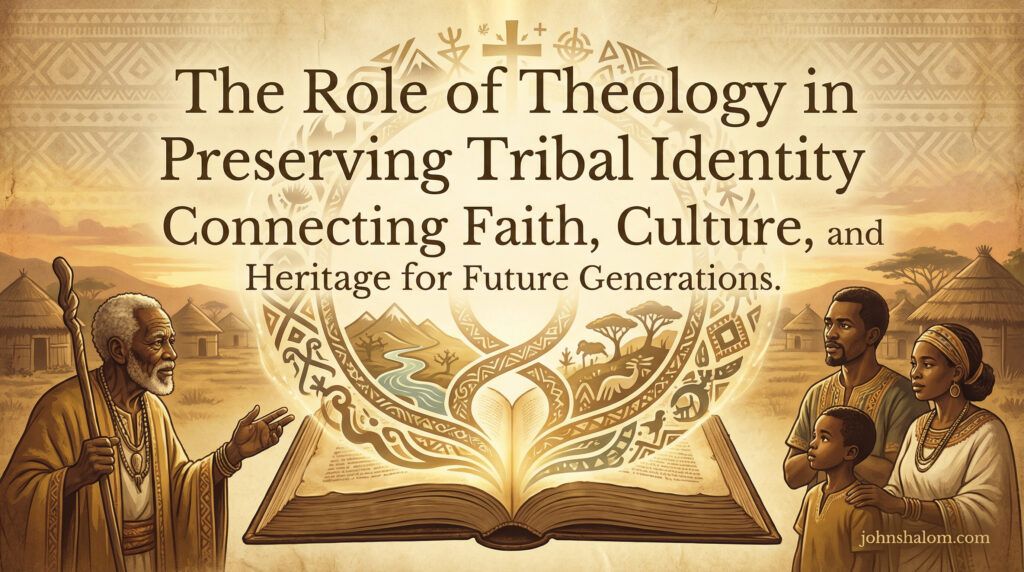
Theology is not just for pastors, professors, or old men with beards. It is simply how we think about God and how we live because of that thinking. For tribes like mine along the Sobat corridor, theology has held our language, songs, and customs together when war, politics, and modern life tried to break us apart.
When our grandparents offered first fruits, followed the moon, and prayed in our mother tongue, they were doing more than “culture.” They were saying, “We belong to God, and He knows us by name, by tribe, and by history.” When theology is rooted in real life, it keeps a tribe from becoming a costume. It turns identity into calling.
Theology Is More Than Church Walls
When most people hear the word “theology,” they see books, sermons, and exams. For many of us, theology became linked to church benches, pulpits, and seminary classrooms.
But before I sat in any Bible school, I had already been shaped by theology without knowing the name for it.
As a boy, I watched elders raise their hands to the sky when rain finally came after a long dry spell. They did not quote verses, but they said, “God has remembered us.” When a cow was born, or a child survived a sickness that had killed others, people would say, “God has spared this one.” Those were simple sentences, but behind them was a whole way of seeing life.
Theology is not just “what we believe about God.”
It is also “how we walk, work, eat, name, and comfort each other because of God.”
It sits in our jokes, our blessings, our warnings, and even in how we bury our dead. It walks with us to the market, sits with us at the cattle camp, and eats with us at the evening fire.
When My Grandparents Preached Without Pulpits
I did not grow up with grandparents who wrote books or gave public lectures, but they were theologians in their own way.
When my people offered the first fruits of the harvest, it was not just culture. It was a confession: “This land, this crop, this strength, this season, all belong to God.” When they slaughtered an animal to mark a big event, they explained which parts to share, which words to say, and which memories to recall. I did not understand it then, but those actions were teaching me about sin, thanksgiving, community, and covenant long before I learned those words in English.
There was a day when an elder refused to start eating until a prayer was said in our mother tongue. Others suggested a quick prayer in Arabic or English, but he shook his head gently and said, “Today we thank God in the language that carried us through famine.”
As a child, I just wanted to eat.
As an adult, I realized: that stubborn old man was guarding more than a prayer. He was guarding tribal identity through theology.
Theology As A Shield Against Cultural Erosion
Colonialism, war, and now the internet have hit our tribal identities from many sides. New languages arrive. New ways of dressing and behaving start to feel more “modern.” Slowly, people begin to feel embarrassed by their own names, accents, or customs.
In that storm, theology has often acted like a shield.
If a ritual is just “what elders used to do,” it can disappear in one generation.
If a language is just “village talk,” it can be silenced in a few years.
But when people say, “We do this because this is how we honor God,” they hold it tighter. They teach it to their children with more care.
I have seen this in worship. When we sing in our mother tongue, it is more than cultural pride. It is theology in practice. It is our soul saying, “God understands my vowels, my tones, my proverbs. Heaven does not need subtitles when I speak.”
I often smile and say, “Google Translate may fail, but God does not.” That is why our chants, proverbs, and tribal prayers refuse to die. Theology gives them weight that outlives empires.
You might also like: The Complete Guide to Theology: Faith, Reason, and Modern Interpretations
My Story: Moonlight, Calendars, And A Hidden Theology
I grew up in communities that watched the moon more than wall clocks. The new moon mattered. Certain activities, celebrations, and community gatherings followed lunar patterns. We did not separate “religious” and “ordinary” days the way many urban calendars do now.
We had river rituals that looked very much like baptism long before Christian missionaries explained the word. Men and women washed in the river at certain times, made promises, and spoke words that marked a clean beginning. As a boy, I thought, “This is just how things are done.” Later, after studying theology, I realized these were deep questions about purity, belonging, and new life.
Even now, when I look at the moon, I do not only see an object in the sky. I see my people counting months, planning harvests, and marking time with God’s creation rather than colonial calendars. That feeling of connection across generations is theology in action. It preserves not only my faith but also my tribal identity.
When Theology Went To War And I Almost Went With It
Tribal identity without careful theology can become a weapon. I have seen it.
During the conflicts in South Sudan, I have watched people use Bible verses or “God-talk” to justify hatred toward other tribes. At those moments, theology was not preserving identity; it was poisoning it.
I remember a relative calling me after one of the violent events in our country. He said, “Why are you not coming to join us in this fight?” Then after a pause, he added, “No, I am joking. Do what you are doing instead. Fight the good fight with the pen.”
That small conversation stayed with me. It reminded me that my tribe does not need me only as a fighter with bullets but as a witness with words. My calling as a writer and theologian is to help my people see that God loves our tribe, yes, but He also loves the tribe across the river.
Theology that begins at home must end at the cross, where tribal pride is corrected and tribal identity is purified.
Tribal Identity Without Theology: Costume Or Calling?
What happens when theology is stripped away from tribal life?
You can still keep the cows.
You can still wear traditional clothes.
You can still dance at cultural events.
But without a “why” rooted in God, much of this becomes fragile. It can turn into performance for tourists, or a theme for festivals, instead of a living inheritance for children.
I have attended events where traditional dances were performed on a stage for visitors, while the younger generation watched with curiosity but no deep connection. After the drums stopped, they went back to phones and foreign songs. The problem was not the modern music itself. The problem was that the old songs had been disconnected from their theological roots.
Without theology, tribal identity becomes costume.
With theology, tribal identity becomes calling.
Theology And Reconciliation Between Tribes
Tribal identity is beautiful, but it can also divide and destroy if it becomes an idol. My country has tasted this many times. The river that should connect us sometimes feels like a border of blood.
Here is where theology must do hard work.
The Bible teaches that God created nations and tribes for His glory. That includes Dinka, Nuer, Shilluk, Bari, and many others. Each carries something unique, like a piece of a larger picture. When I first read the passage in Revelation that describes heaven as filled with tribes, languages, peoples, and nations, I stopped. I imagined faces from my own life in that crowd.
I realized God is not building one “super-tribe.” He is healing tribes, not deleting them.
So when I preach or write, I try to say two things at once:
- Your tribe matters to God.
- Your tribe is not God.
Good theology allows me to love my people fiercely without hating yours. It teaches that my language, songs, and cattle culture are gifts, not weapons. It reminds me that the blood of Christ runs deeper than the blood of clan and section.
Humor, Cows, And The God Who Speaks Our Language
Let me lighten this with a story.
An elder in my community once said, “If heaven has no cows, I am not going.” People laughed, but he was not just joking. Cattle were part of his soul. They represented wealth, beauty, history, and responsibility. He wanted to be sure that the God he worshiped understood that.
The laughter carried a serious question: does God care about what tribes care about?
My answer is yes. God may not run a cattle camp, but He knows why they matter to us. He knows what it means when a family loses its last cow, or when a bride is honored with cattle, or when a herd survives a harsh season.
Humor like that elder’s statement has helped keep theology close to daily life. It reminds us that God is not just the God of seminaries and cities. He is also the God of open skies, muddy paths, and cows that sometimes refuse to behave during prayer.
When we laugh about our own attachment to cattle, fishing, or farming, we keep our hearts soft. We allow theology to include real life rather than forcing it into a narrow religious corner.
Practical Ways To Preserve Identity Through Theology
You do not need a PhD to do this work. Here are simple steps any tribe, community, or family can begin.
- Worship in native languages
Do not abandon your mother tongue in prayer and song. Translate Scripture. Teach children to pray in the language of their grandparents. Let them know that God understands their village accent. - Connect rituals to faith
Instead of dismissing old practices as “pagan” or blindly repeating them, ask: “What truth about God is hidden here?” Some rituals may need to be corrected or left behind. Others can be re-explained in light of Christ and kept as deep expressions of faith. - Tell stories
Theology lives comfortably in stories. Tell how God helped your people in famine, war, or migration. Share testimonies that link your tribe’s history with God’s faithfulness. Children who know these stories stand straighter in the world. - Value diversity
Use theology to remind your tribe that you are not the only one God loves. Teach that other tribes also carry gifts, wisdom, and beauty. This protects identity from turning into arrogance. - Live it daily
Theology is not only in sermons. It appears in how we greet neighbors, share food, forgive offenses, settle disputes, and choose marriage partners. Let what you believe about God be visible in how you treat people.
A Final Reflection: Rooted On Earth, Lifted Toward Heaven
Theology is not a museum piece. It is a living force. It guards language, restores dignity, and ties broken history back to God’s story.
When I think about my own journey from the Sobat River to theology schools and writing desks, I see many threads: the lunar calendar of my childhood, the prayers of my parents, the rituals I did not understand then, the Bible verses that later gave those memories new meaning.
All of that tells me one thing:
God did not forget my tribe.
He did not forget our songs, our tears, or our jokes about cows and heaven.
A nation without tribes is bland, like food with no salt.
A tribe without theology is lost, like a cow without a herder.
But a tribe with theology is different:
Rooted in heritage.
Lifted toward heaven.
If you would like to know more about my path as a writer, including the struggles, lessons, and small signs of progress along the way, you can read the full story on my Wealthy Affiliate blog here: https://my.wealthyaffiliate.com/johnmaluth/blog
Reflection Questions
- How has theology, in any form, shaped the way you see your tribe’s story and worth?
- What traditional practices in your culture might actually be early forms of theology that you can re-examine with fresh eyes?
- Do you see your tribal language as part of your faith journey? If yes, how? If not, what might change if you did?
- How could theology help reconcile two tribes in your area that have been divided by politics, war, or past hurts?
- What role can humor and local jokes play in keeping both theology and tribal identity alive for the next generation?
FAQS
- How does theology practically preserve tribal identity?
Theology gives meaning to language, rituals, and customs. When people believe a practice honors God, they protect it, explain it to their children, and adapt it rather than abandon it. That keeps tribal identity alive with purpose, not just habit. - Can theology become dangerous for tribes?
Yes, if it is twisted to justify hatred, revenge, or superiority. When theology says “God loves only us,” it fuels conflict. Healthy theology says “God loves us and also loves others,” which preserves identity while inviting peace. - What can churches do to support tribal identity in a healthy way?
Churches can encourage worship in local languages, respect wise cultural practices, teach Scripture that affirms tribes, and preach against tribal pride that harms others. They can be places where people honor their roots but do not idolize them. - What if my tribe’s old practices clearly conflict with Christian teaching?
In such cases, some practices need to be abandoned or transformed. The goal is not to keep everything but to ask, “Does this reflect God’s character and truth?” Where the answer is no, theology helps a tribe let go of what destroys and keep what gives life. - How can young people reconnect theology and tribal identity today?
Young people can learn their language, listen to elders’ stories, ask questions about old rituals, and study Scripture seriously. They can write, sing, and create in ways that bring together faith and culture, instead of choosing between them.
John, as I read your words, I felt the Root Chakra of a people speaking—ancestral ground, language, cattle, moon cycles, river memory. What you describe is theology not as theory, but as living energy moving through a tribe’s nervous system. When your elder insisted on praying in the mother tongue, I did not see stubbornness; I saw a guardian of the Root and Throat Chakras, protecting lineage frequency. Language carries vibration. Ritual carries memory. When those are severed from God-consciousness, culture thins into performance. But when they remain tethered to the Divine, identity becomes sacred architecture—heritage aligned with heaven.
I also honor your courage in naming how theology can harden into a weapon. That is what happens when the Solar Plexus overreaches and forgets the Heart. Your statement—“Your tribe matters to God. Your tribe is not God”—is energetic alignment in its pure form. It keeps the Root strong without letting it become an idol. In my work with the 18-chakra system, I often say that preservation without purification leads to pride, but preservation infused with Christ-conscious awareness becomes calling. What you have written is not merely cultural reflection; it is energetic reconciliation—rooted on earth, yet lifted toward the Crown.
Iris, thank you for reading it that way. The part about praying in the mother tongue made more sense to me, because I have watched elders fight for language the way they fight for land. When a prayer is spoken in the language that raised you, it lands deeper. It feels like God is not far away.
And yes, theology can guard a people, but it can also become a club. I have seen how fast pride turns faith into a badge and a weapon. That is why I keep returning to that simple line: your tribe matters to God, but your tribe is not God.
In your own work, how do you help people protect roots and language without letting it grow into contempt for other tribes, especially in online spaces?