
TL; DR
Age lives less in your skin and more in your questions. I have met teenagers who are already old in spirit, certain about everything and bored with life, and I have sat with gray-haired elders whose eyes still sparkle when they hear a new idea.
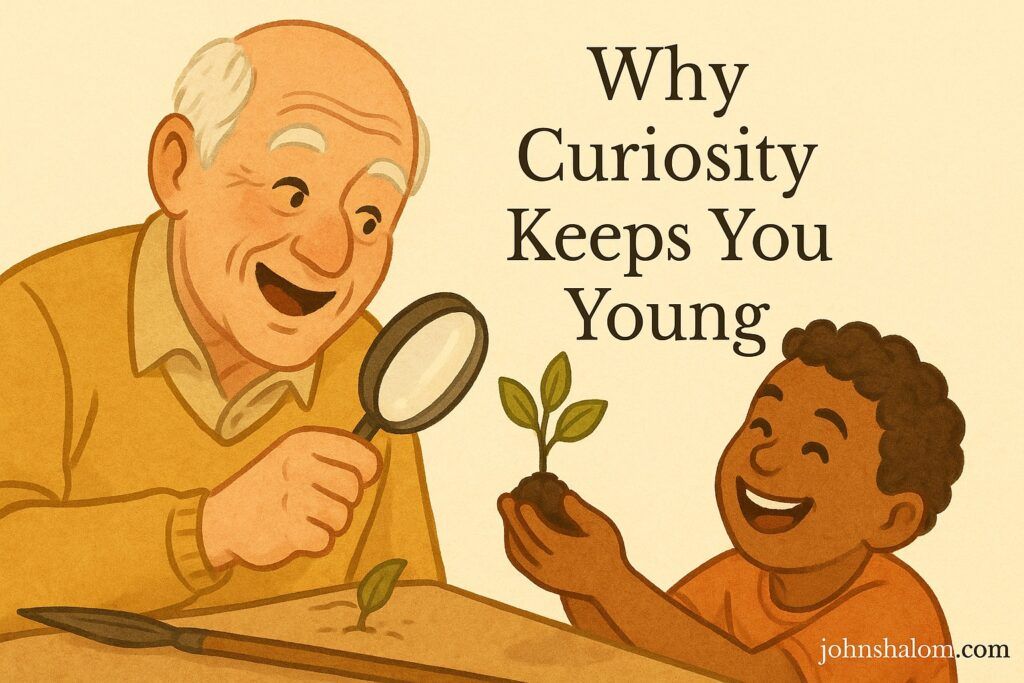
Curiosity is the quiet habit that keeps the heart young. It makes you ask why, how, and what if, even after war, hunger, and disappointment. Wrinkles may mark your face, but boredom is what truly ages your soul. Curiosity is not a child’s toy; it is a life skill for anyone who still wants to grow.
Curiosity As A Different Kind Of Youth
We often think youth is about smooth faces and strong muscles. Yet I have seen bodies grow old while minds and hearts stayed young, simply because curiosity refused to die.
As a boy in Dhuoreding and along the Sobat corridor, I had no nursery, primary, or secondary school waiting for me. My classroom was the river, the cattle, the forest, and the faces of elders. I learned by asking questions. Why is the river rising? Why do some clouds bring rain and others do not? Why are people fighting? Why are others sharing?
Later, when I finally met formal education, I did not arrive as a blank page. Curiosity had already been my teacher long before teachers knew my name. That curiosity kept me awake in life, even when hunger, fear, and loss tried to put me to sleep.
Growing older in years does not mean you must grow tired in questions. Curiosity keeps you alert, even when your body begins to slow down.
The Old Man With Young Eyes
I once visited an old man who could barely walk. His back was bent, his steps were slow, and his hands shook when he lifted a cup. If you looked only at his body, you might say his time had passed.
Then he opened his mouth.
He asked about everything. How does this phone send messages without a wire? Who really benefits from these new roads in our country? Why are people going to space instead of solving problems on earth? He wanted to know about computers, elections, climate change, and young people’s slang.
As we talked, I realized his questions were fresher than those of some teenagers I knew, who spent hours scrolling their phones without any real curiosity. His body was old, but his eyes were young. Life still interested him.
That day, I left his house with a quiet prayer: “Lord, when my legs grow weak, let my questions stay strong.”
When Curiosity Makes You Look Foolish
Curiosity is not always noble. Many times, it makes you look ridiculous, and that is part of its beauty.
As a boy, I once poked a beehive, full of questions about how bees organize their home. I imagined I would stand at a distance and observe a natural lesson in biology. The bees had other plans. They showed me their organization on my face, my arms, and every exposed piece of skin. My siblings laughed until they cried. I cried until I saw the humor later.
That day, curiosity stung me, literally. Yet the story stayed as a reminder: you cannot learn without risk. Sometimes you risk your pride. Sometimes you risk your comfort. Sometimes you risk your face.
Another time, many years later, curiosity around language made me look foolish in a different way. A relative once asked me, “What is ariap?” I thought he was mixing languages and trying to say an English phrase. Proud of my growing vocabulary, I replied, “Do you mean ‘hurry up’?” He smiled and said, “Yes, that one.” We both laughed. Two worlds met in one small word.
You might also like: The Self-Help Roadmap: Proven Strategies for Personal Growth and Healing
In English, I once wanted to say to an audience, “I am excited to be here.” Instead, I confidently announced, “I am exhausted to be here.” The room laughed, and so did I. Curiosity about language will always come with mistakes, but those mistakes become stories. Without them, life would be very quiet and very dull.
Curiosity may embarrass you, but it also enlarges you. Better to look foolish while learning than polished while dying inside.
How Adults Lose Their Questions
Children are natural question machines. “Why is the sky blue? Why do we eat? Why are you angry? Why do people die?” They ask until adults get tired.
Somewhere between childhood and adulthood, many people trade curiosity for pride. They stop asking and start pretending. Instead of “I do not know,” they say, “Of course I know.” Instead of “Teach me,” they say, “Let me show you.” Slowly, they stop learning and start repeating.
My mother used to say, “The one who stops asking questions starts digging his own grave.” I did not fully grasp it when I was young. Now I see it clearly. Once you believe there is nothing new to learn, life becomes a long, slow burial of your own mind.
I have seen this in different settings. People who once wanted to understand the world now only want to defend their opinions. Leaders who once listened with curiosity now speak only to hear their own voices. Writers who once read widely now quote only themselves.
Curiosity keeps you a student. Pride insists on being the teacher, even when you have nothing new to say. Pride dries the heart faster than age.
My Brother’s Endless Questions
Before my elder brother Biel died in the 1989 Nasir battle, he was known not only for his bravery, but also for his questions.
Even as a soldier, he did not stop wondering. He wanted to know how machines worked, why strategies succeeded or failed, how other tribes lived, what people in far countries believed. He could spend long evenings asking elders, visitors, or comrades about their experiences. He did not use questions as a weapon. He used them as a bridge.
As a younger boy, I watched him and copied him. He would ask, “Why do you think that happened?” Then he would wait for an answer. He treated people’s thoughts as things worth exploring, not things to attack.
After his death, I realized that his curiosity had done more than keep him mentally young. It had kept him human in the middle of war. It is hard to fully hate those you are curious about. Questions soften the place where hatred tries to grow.
When I think of staying young in spirit, I think of his face, lit by questions even in a time of guns.
Curiosity As A Bridge Between People
Curious people make better friends, neighbors, and leaders.
A person who asks, “How are you, really?” instead of only talking about themselves, is a person others feel safe with. A leader who asks, “What did we miss?” instead of pretending perfection, is a leader people can trust. A citizen who asks, “Why does that group act that way?” instead of rushing to insult, is a citizen who can help build peace.
Curiosity does not mean agreeing with everything you hear. It means giving other people the dignity of being listened to before being judged. It opens the door for learning from cultures beyond your own. It allows you to enjoy new foods, new music, new ideas, without feeling threatened.
In my own journey, curiosity is what pushed me from a boy in a village with no school, to a man who studied theology, psychology, business, ICT, and more. It was curiosity that made me sign up for extensions of learning, read books I did not fully understand yet, and ask mentors questions that felt too big for me.
Curiosity stretches your world beyond your tribe, your profession, your age group. It keeps your heart open in a time when many hearts are closing.
The Playfulness Of Wonder
Curiosity is not only for serious topics like science, politics, or theology. It also lives in small moments of wonder.
It is laughing when a child asks, “Do fish get thirsty?” and instead of shutting them down, you say, “That is a good question, what do you think?” It is tasting food with strange spices and pretending to be a food critic in your own kitchen. It is looking at the stars and asking, “What else is up there?” even if you will never become an astronaut.
This kind of playful curiosity keeps the child inside you alive. It allows you to enjoy learning for its own sake, not only for exams, certificates, or promotions. It gives you permission to be amazed again by things you have seen a thousand times, like rain on a tin roof or a baby learning to walk.
Without wonder, life becomes a checklist. With wonder, the same life becomes a story.
Choosing Curiosity Each Day
You do not need to travel the world or build a rocket to stay curious. Curiosity is a choice you can practice daily.
You can start by asking more questions than you answer. When someone speaks, resist the urge to immediately give your opinion. Instead, ask, “Tell me more about that.” When you read the news, instead of just reacting, ask, “What is behind this? What can I learn from it?”
Pick up a book outside your usual area. If you always read theology, try a book about economics. If you always read about business, try a book about history or poetry. If you speak one language, learn a few phrases in another.
Learn a new skill. It could be as simple as using a new digital tool, cooking a new recipe, or understanding how a basic machine works. Allow yourself to look foolish in the beginning. That is part of the price of staying young.
Curiosity does not make you perfect. It keeps you alive. As long as you keep asking honest questions, your spirit refuses to retire.
If you would like to know more about my path as a writer, including the struggles, lessons, and small signs of progress along the way, you can read the full story on my Wealthy Affiliate blog here: https://my.wealthyaffiliate.com/johnmaluth/blog
Reflection Questions
- What is the funniest or strangest situation your own curiosity has ever gotten you into, and what did you learn from it?
- How does curiosity protect you from becoming rigid or “old” in spirit, even if your body is aging?
- In what ways can humor make it easier to live with curiosity, especially when you make mistakes or look foolish?
- How could curiosity about other people’s stories help build better relationships in your family, tribe, workplace, or nation?
- What is one new question you can start asking today, about yourself, others, or the world, that could help keep your spirit young?
FAQS
- Is curiosity only for young people or students?
No. Curiosity is for anyone who is still breathing. Children use it naturally, but adults need it even more, because life keeps changing. You can be seventy and still learn new things if you keep asking questions.
- Can curiosity be dangerous or foolish?
Curiosity without wisdom can lead to trouble, like poking beehives or gossiping in the name of “just asking.” Healthy curiosity respects boundaries, avoids harm, and seeks understanding, not drama.
- How can I revive my curiosity if I feel stuck or bored with life?
Start small. Ask one new question a day, read short pieces on topics you know nothing about, talk to someone outside your usual circle, or try a simple new skill. Movement, even small, often wakes up sleeping curiosity.
- What is the difference between curiosity and suspicion?
Curiosity asks, “Help me understand you.” Suspicion asks, “How can I find something wrong with you?” They may both ask questions, but the heart behind them is different. Curiosity is open. Suspicion is closed.
- How does curiosity help leaders and communities grow?
Curious leaders listen, learn, and adjust. They do not pretend to know everything. This makes their decisions better and their followers more trusting. Curious communities explore new ideas, adapt to change, and avoid getting stuck in old mistakes.
{ “@context”: “https://schema.org”, “@type”: “FAQPage”, “mainEntity”: [ { “@type”: “Question”, “name”: “Is curiosity only for young people or students?”, “acceptedAnswer”: { “@type”: “Answer”, “text”: “No. Curiosity is for anyone who is still breathing. Children use it naturally, but adults need it even more, because life keeps changing. You can be seventy and still learn new things if you keep asking questions.” } }, { “@type”: “Question”, “name”: “Can curiosity be dangerous or foolish?”, “acceptedAnswer”: { “@type”: “Answer”, “text”: “Curiosity without wisdom can lead to trouble, like poking beehives or gossiping in the name of “just asking.” Healthy curiosity respects boundaries, avoids harm, and seeks understanding, not drama.” } }, { “@type”: “Question”, “name”: “How can I revive my curiosity if I feel stuck or bored with life?”, “acceptedAnswer”: { “@type”: “Answer”, “text”: “Start small. Ask one new question a day, read short pieces on topics you know nothing about, talk to someone outside your usual circle, or try a simple new skill. Movement, even small, often wakes up sleeping curiosity.” } }, { “@type”: “Question”, “name”: “What is the difference between curiosity and suspicion?”, “acceptedAnswer”: { “@type”: “Answer”, “text”: “Curiosity asks, “Help me understand you.” Suspicion asks, “How can I find something wrong with you?” They may both ask questions, but the heart behind them is different. Curiosity is open. Suspicion is closed.” } }, { “@type”: “Question”, “name”: “How does curiosity help leaders and communities grow?”, “acceptedAnswer”: { “@type”: “Answer”, “text”: “Curious leaders listen, learn, and adjust. They do not pretend to know everything. This makes their decisions better and their followers more trusting. Curious communities explore new ideas, adapt to change, and avoid getting stuck in old mistakes.” } } ] }
