
TL; DR
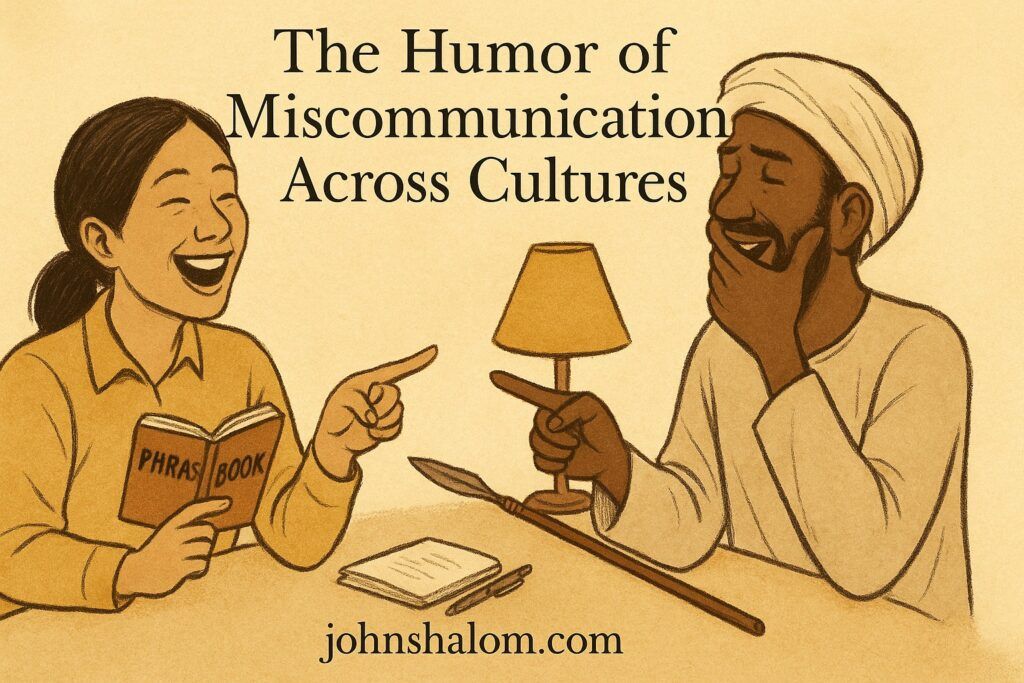
Speaking across cultures can feel like standing on a stage you did not prepare for. You open your mouth, the wrong word comes out, and suddenly everyone is laughing. I have lived between languages and worlds for most of my life: Nuer, Dinka, Arabic, English, village life along the Sobat River, and later cities like Juba and Nairobi.
Along the way, I have said the wrong things, nodded the wrong way, and watched others do the same with me. Miscommunication can sting, but it can also soften hearts. When we are willing to laugh at ourselves, mistakes turn into bridges instead of walls. The humor of miscommunication reminds us that all of us are learners, not owners, of understanding.
Why Miscommunication Makes Us Laugh
If you have ever tried to speak in a language that is not your mother tongue, you know the feeling. Your brain reaches for one word and another one jumps out instead. Faces in front of you change. Sometimes they frown. Sometimes they burst into laughter.
When I was younger, standing to speak in English felt like walking on a rope over a river. One wrong step and I would fall into embarrassment. I worried about grammar, spelling, accent, everything. Yet some of my most meaningful moments with people came from those very mistakes.
Miscommunication is funny because it reveals how fragile we are. We like to look strong and in control, but one wrong vowel in a foreign language can expose us. That exposure can be scary or it can be freeing. If we choose to laugh together, miscommunication becomes shared entertainment instead of humiliation.
When Words Betray You
Languages carry history. A word that sounds normal in one culture can sound foolish or offensive in another.
I once heard of a man who travelled abroad and proudly introduced himself by saying, “My name means cow.” In his culture, cows symbolised wealth, beauty, and status. For him, it was like saying, “My name means prosperity.” His hosts heard something else. To them, calling yourself a cow sounded like an insult. The laughter that followed was loud, but it was not cruel. It was simply human beings discovering that the same word can live two lives.
I have my own long list of language accidents. In one gathering I wanted to say, “I am excited to be here.” Instead, I told the audience, “I am exhausted to be here.” They laughed, then I laughed, and the ice broke. My mistake made me look more human than any polished sentence would have.
Another time, many years ago, a relative asked me in our language, “What is ariap?” I thought he was trying to speak English and I proudly replied, “Do you mean ‘hurry up’?” He said, “Yes, that one.” We laughed over that small moment, but it taught me something bigger. Even within one country, we can stumble over sounds and meanings.
Words betray us. They refuse to behave exactly as we expect when we carry them across borders. But when we allow those betrayals to be funny instead of shameful, they become small stories that connect us.
Gestures That Do Not Translate
Miscommunication is not only about words. Our hands, faces, and silence also speak different languages.
A thumbs up can mean “great job” in one place and something rude in another. Eye contact can show respect in some cultures and disrespect in others. A firm handshake can be a sign of confidence among some people and a sign of aggression among others.
I remember nodding my head during a conversation, thinking I was saying “yes.” Later I discovered that for the other person, that same nod simply meant “I hear you, but I do not agree.” We spent ten minutes believing we had reached agreement. In reality, we were standing on two different islands of meaning. When we realised it, we laughed more than we talked.
I have also visited places where polite silence means deep respect. You let the elder finish without interruption. Then I met people for whom silence felt like rejection. If you do not respond quickly, they think you are angry or bored. Put those two people in one room and you can have a long, warm, quiet misunderstanding.
Gestures and silences have accents too. When we forget that, confusion walks in. When we remember and stay humble, those same moments become stories that we tell for years.
My Brother’s Cross Cultural Jokes
Before my elder brother Biel died in the 1989 Nasir battle, he enjoyed playing with cultural differences. He loved meeting visitors from other tribes at the cattle camps and in the village.
One day, a visitor arrived from another community, a bit shy and curious. My brother offered him milk in a gourd but held it in a way that kept the liquid from reaching his mouth. The man politely tilted the gourd and “drank” nothing, assuming this was some local ritual he did not fully understand.
Everyone watched in silence, then burst into laughter when my brother finally allowed the milk to reach him. The joke was harmless. Nobody was degraded. It was simply a playful reminder that guests often have no idea what is happening and that hosts have power over impressions.
For me, that moment held a lesson I only understood much later. When you step into another culture, it is easy to feel foolish. You drink from empty gourds without knowing. But if everyone is kind, the laughter is shared, not one sided. You laugh at yourself and feel closer to the people who welcomed you.
When Miscommunication Hurts First
Not every misunderstanding is funny at the beginning. Some hurt first before they heal.
Recently, I wrote to an old friend, Art, who has been sick for a long time. Years earlier, in trying to lighten the mood, I had joked in an email, asking if he had “gone upstairs” already. At the time, I thought I was being playful about heaven and death. Later, I realised how insensitive that phrase could sound to a sick man and his family.
That was also a form of miscommunication. It was not about two languages, but about two seasons of life. I was in the mood to joke. He was in the shadow of real suffering. The same words carried two very different weights.
I have had to apologise in my heart and in my words for that. It reminded me that humor in miscommunication must never ignore pain. We can laugh at wrong vocabulary or mixed gestures, but we should be careful with jokes that touch raw wounds.
Even this painful moment, however, taught me something important. Miscommunication shows us where we need more empathy. It invites us to slow down, to ask, “How might this be heard on the other side?”
You might also like: How to Write Your Life Story: A Complete Guide to Autobiography Writing
Why Humor Saves The Day
What makes the difference between a funny misunderstanding and a lasting conflict is often one simple thing: our willingness to laugh, especially at ourselves.
Without humor, miscommunication quickly becomes insult. Someone uses the wrong word, and we decide they are disrespectful. Someone misreads our silence, and we decide they are proud. We move from confusion to judgment in one jump.
With humor, we create a pause. We say, “Wait, maybe this is just a language issue.” We give the other person room to correct themselves. We also give ourselves room to admit, “I do not understand your culture very well.” That kind of humility is powerful.
Humor is not about mocking others. It is about standing together on the same side of the mistake and laughing at it as partners. When I say “exhausted” instead of “excited,” and the audience laughs with me, we are no longer strangers. We have shared a small human failure and turned it into a bond.
In a world where mistrust grows easily, every shared laugh over a harmless mistake is a small act of peace.
Lessons For Nations And Leaders
Miscommunication across cultures does not only happen between villagers and travelers. It happens at high tables too.
Leaders argue over words in treaties, over symbols in flags, even over where each delegation sits at a conference. One misunderstood phrase in a speech can start a diplomatic storm. Sometimes, what one leader meant as a strong statement of respect is heard by another as an insult. Pride then takes over and the misunderstanding grows.
Imagine if leaders had the courage to say, “I am sorry, that is not what I meant. Let me try again,” and then smile. Imagine if they could tell a small joke about their own culture’s strange habits to lighten the atmosphere.
A simple line like, “In my village, this gesture means respect; I only realised today it might look different to you,” could prevent hours of angry debate. A little laughter in a negotiation room could save lives outside that room.
At national level, we often treat cultural difference as a threat. What if we treated it as a comedy school instead, a place where we are all allowed to make mistakes while we learn to live together?
The Gift Inside Confusion
Miscommunication across cultures reminds us that nobody has a perfect grip on meaning. We are all students in this large classroom called Earth.
For me, as a writer and as someone who has moved between tribal cultures, church spaces, humanitarian work, online platforms, and international conversations, this has become clear. I cannot assume people understand me just because I spoke. I cannot assume I understand them just because I heard words I recognise.
The gift inside all this confusion is humility. Every time we laugh over a misunderstanding, we are reminded that we are small and learning. That realization makes us more patient with others and with ourselves.
Unity does not begin with perfect communication. It often begins with imperfect attempts, honest mistakes, and shared laughter. The humor of miscommunication is not a distraction. It is one of the ways God allows us to soften, to listen, and to keep trying.
If you would like to know more about my path as a writer, including the struggles, lessons, and small signs of progress along the way, you can read the full story on my Wealthy Affiliate blog here: https://my.wealthyaffiliate.com/johnmaluth/blog
Reflection Questions
- What is the funniest cross-cultural miscommunication you have ever experienced or witnessed?
- How can humor, when used kindly, turn embarrassing mistakes into moments of connection instead of shame?
- Why do you think pride often makes it hard for people to laugh at their own language or cultural mistakes?
- How might leaders and diplomats use gentle humor to ease tension and correct misunderstandings without losing respect?
- Since miscommunication is unavoidable when cultures meet, how can you prepare your own heart to laugh, learn, and apologise rather than argue the next time it happens?
FAQS
- Why do cross-cultural miscommunications happen so often?
They happen because languages, gestures, and social rules carry different meanings in different places. A phrase or sign that is normal in one culture can mean something else in another. When people assume their own meaning is universal, misunderstandings are almost guaranteed.
- Is it always good to laugh at miscommunication?
It is helpful to laugh when the mistake is harmless and everyone feels safe. But if the misunderstanding touches painful history, grief, or deep trauma, it may not be the right time for jokes. In those cases, careful listening and apology come before humor.
- How can I reduce miscommunication when I travel or work with other cultures?
You can ask questions, listen more than you speak, learn basic greetings and customs, and admit openly when you do not understand. Reading about local habits helps, but staying humble and curious helps even more.
- What should I do if my joke or phrase hurts someone because of cultural differences?
Acknowledge the hurt, apologise clearly, and explain what you actually meant. Do not defend your intention more than you care about their feeling. Use the mistake as a lesson to adjust your language in the future.
- Can humor really help at the level of nations and serious conflicts?
Humor alone cannot solve deep injustices or stop wars, but it can lower tension, humanise opponents, and open the door for honest conversation. Leaders and communities that are able to laugh at themselves are usually more able to admit mistakes and seek peace.
{ “@context”: “https://schema.org”, “@type”: “FAQPage”, “mainEntity”: [ { “@type”: “Question”, “name”: “Why do cross-cultural miscommunications happen so often?”, “acceptedAnswer”: { “@type”: “Answer”, “text”: “They happen because languages, gestures, and social rules carry different meanings in different places. A phrase or sign that is normal in one culture can mean something else in another. When people assume their own meaning is universal, misunderstandings are almost guaranteed.” } }, { “@type”: “Question”, “name”: “Is it always good to laugh at miscommunication?”, “acceptedAnswer”: { “@type”: “Answer”, “text”: “It is helpful to laugh when the mistake is harmless and everyone feels safe. But if the misunderstanding touches painful history, grief, or deep trauma, it may not be the right time for jokes. In those cases, careful listening and apology come before humor.” } }, { “@type”: “Question”, “name”: “How can I reduce miscommunication when I travel or work with other cultures?”, “acceptedAnswer”: { “@type”: “Answer”, “text”: “You can ask questions, listen more than you speak, learn basic greetings and customs, and admit openly when you do not understand. Reading about local habits helps, but staying humble and curious helps even more.” } }, { “@type”: “Question”, “name”: “What should I do if my joke or phrase hurts someone because of cultural differences?”, “acceptedAnswer”: { “@type”: “Answer”, “text”: “Acknowledge the hurt, apologise clearly, and explain what you actually meant. Do not defend your intention more than you care about their feeling. Use the mistake as a lesson to adjust your language in the future.” } }, { “@type”: “Question”, “name”: “Can humor really help at the level of nations and serious conflicts?”, “acceptedAnswer”: { “@type”: “Answer”, “text”: “Humor alone cannot solve deep injustices or stop wars, but it can lower tension, humanise opponents, and open the door for honest conversation. Leaders and communities that are able to laugh at themselves are usually more able to admit mistakes and seek peace.” } } ] }
