TL; DR:
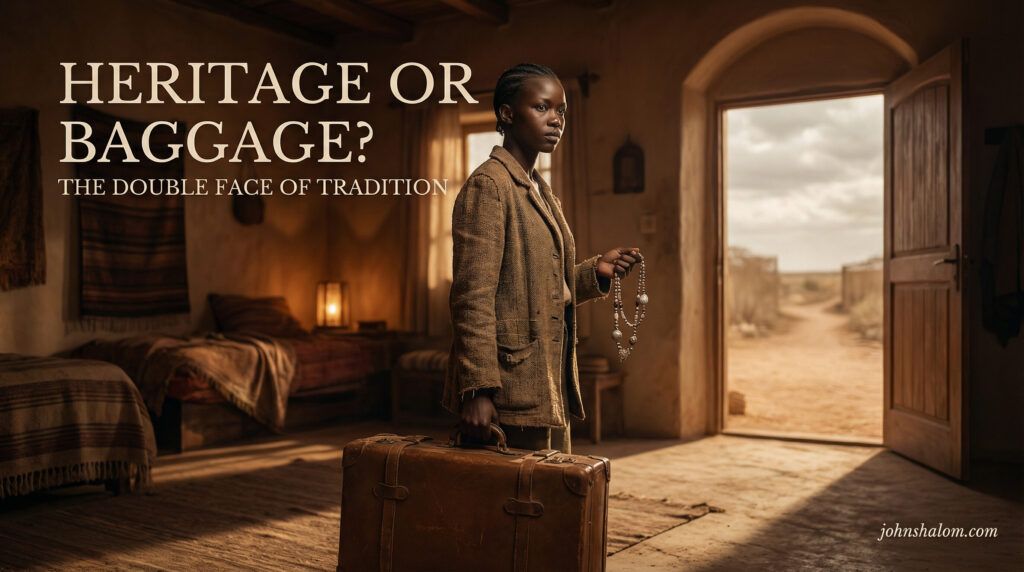
Tradition is not always good and not always bad. It is both a gift and a weight. Heritage is the part of tradition that gives identity, wisdom, memory, and belonging. Baggage is the part that excuses injustice, fuels fear, and blocks growth. Every family, tribe, and nation must learn to separate the two.
The goal is not to throw away our roots, but to cut off the thorns. When we keep the songs, stories, and values that give life, and let go of harmful customs that crush people, tradition becomes a set of wings, not chains. Each generation must decide what to carry forward and what to leave behind.
Introduction: Growing Up Inside Tradition
When I was a boy, I did not think about “culture” or “tradition.”
I simply lived it.
We slaughtered cows at funerals and weddings.
We sat around the fire listening to elders.
We walked in long processions during ceremonies as if everyone knew their role from birth.
Tradition was like air. You did not see it, but it was everywhere. It told you what to wear, how to greet, who to respect, and even who you were allowed to marry. You were not asked for your opinion. You were simply born into a ready-made script.
Only later, as I moved from village life into towns and then into the wider world, did I begin to see something surprising. Tradition could lift people or it could crush them. In one story, it looked beautiful. In another, it looked cruel. That is when I started to ask a hard question:
Is this heritage that should be kept, or baggage that should be dropped?
The Beauty of Heritage
2.1 Stories as inheritance
Heritage is the side of tradition that makes your heart stand up straight.
My grandmother used to tell us stories about how our people survived floods, hunger, and war. Her words made the past feel close. She was not just entertaining us. She was handing over survival skills.
Through her stories, I learned:
- Courage in crisis is normal, not special.
- Families have carried each other for generations.
- We are not the first to face disaster, and we will not be the last.
I did not inherit land or money from her. I inherited memory. That memory became part of my inner strength. That is heritage.
2.2 Songs, dances, and shared joy
Heritage lives in songs and dances.
A wedding dance is more than movement. It is a living picture of unity and joy. A cattle song is more than noise. It is a celebration of history and pride.
When you are far from home and you suddenly hear your mother tongue in a bus station or airport, something in you stands up. You remember where you come from. Your back straightens. That feeling of “I belong somewhere” is heritage at work.
2.3 Values inside old proverbs
Heritage also carries wisdom in short sentences.
Proverbs about sharing, patience, and humility have saved more families than many long speeches.
A simple line like “A house that eats together stands together” can guide a family through conflict better than a thick manual on relationships.
When tradition reminds us to respect elders, care for the poor, honour promises, and welcome guests, it is doing holy work. This is the treasure chest of heritage. It is worth protecting.
When Tradition Turns to Baggage
3.1 Harmful practices in beautiful clothes
Not everything that comes in the name of tradition deserves to stay.
I once attended a ceremony where a young girl was pushed into marriage she clearly did not want. The people sang, danced, and ululated. On the outside, it looked like culture. In her eyes, it looked like a prison.
In that moment, tradition was not heritage. It was baggage. It used community pressure and old words to steal a young girl’s freedom.
Some customs, such as forced marriage, violent initiation, or using girls and boys as bargaining tools between families, damage more than they protect. They carry pain from one generation to the next and then call it “our way.”
3.2 Fear, shame, and silence
Baggage also shows up when tradition produces fear instead of dignity.
If people are afraid to question elders, even when wrong is clear, that is baggage.
If women or young people are silenced by “that is how we do things,” even when they suffer, that is baggage.
If a whole community keeps a violent practice alive only because they fear being called “weak” or “modern,” the tradition has become a jailer.
Heritage gives people a name.
Baggage takes away their voice.
3.3 When loyalty becomes a weapon
Tribal loyalty can be beautiful. It can make people stand together in hard times. But the same loyalty can turn into baggage when it demands blind hatred of other groups, or when revenge is passed down like a family asset.
I have seen quarrels between clans that started before some of the current fighters were born. They inherited anger like they might inherit land. That anger was wrapped in “tradition,” but it was really baggage waiting to explode.
You might also like: The Ultimate Guide to Political Journalism: Ethics, Challenges, and Impact in the Modern World
Humor: The Light Side of Old Ways
4.1 Falling in the middle of the dance
Even when tradition is serious, it loves to laugh.
I once watched a young man try to impress the elders during a traditional dance. He stamped his feet, twisted his body, and tried to show he knew every step. Then his wrapper slipped, his foot caught the edge, and he fell so fast the drum almost stopped.
The elders laughed first. The youth followed.
That fall turned into a story that people told with joy for years.
Humor keeps heritage light. It reminds us that culture is carried by humans, not angels. We stumble. We forget steps. We mix things up. And that is fine.
4.2 Laughing at ourselves to stay human
Being able to laugh at our own customs is healthy.
When we can gently joke about long speeches at ceremonies, about stubborn elders, or about how we always start meetings late, we create room for change without war.
Humor can be a safe way to say, “Maybe this part of our tradition needs to soften,” without turning everything into a direct fight.
Roots or Chains: The Identity Question
5.1 Roots that feed, ropes that choke
Tradition often calls itself “roots.”
Roots are good. They keep a tree standing in storms and draw food from the soil.
But sometimes, what we call roots are more like ropes around the trunk. Instead of feeding, they choke.
A custom may start with a good purpose but later become a tool for control. For example, respect for elders is a good root. Using that same respect to hide abuse or stop questions is a rope.
5.2 “Keep the roots, trim the thorns”
My mother had a simple way of putting it. She said, “Keep the roots, but trim the thorns.”
She meant:
- Do not throw away your people’s wisdom.
- Do not keep the parts that cut and injure.
This is the work every generation must do. We do not honour our ancestors by repeating their mistakes. We honour them by carrying their wisdom further than they could.
5.3 M = {B, D²} and tradition
If meaning comes from Being and repeated Doing, our traditions are part of both.
Being:
Tradition shapes how we answer, “Who am I?” and “Who are my people?”
Doing²:
Tradition shapes the actions we repeat: how we greet, marry, celebrate, mourn, and make peace.
When heritage is strong and baggage is light, our Being feels stable and our Doing becomes life-giving. When baggage is heavy and unexamined, our Being feels trapped and our Doing keeps harming others while calling it “normal.”
Tradition in Diaspora: Carrying Home in a Suitcase
6.1 Home in a plate of food
For people who live far from home, tradition becomes both more precious and more complicated.
A plate of kisra or asida in a foreign city feels like a warm hug from your village. Hearing your mother tongue in a supermarket can make your eyes fill with tears.
In diaspora, people create mini-homes in small apartments. They hang cultural cloth on the walls, play old songs on YouTube, and teach children greetings from the village. This is heritage travelling well.
6.2 When old conflicts cross oceans
But baggage also travels.
Clan rivalries, tribal insults, and old feuds can follow people into new countries. Sometimes community meetings in diaspora repeat the same divisions that caused trouble at home.
You might hear someone say, “We cannot work with those people, our fathers had problems with them.” The soil has changed, the climate has changed, but the old bitterness is still alive.
6.3 Digital drums and online fires
Technology allows diaspora communities to attend weddings, funerals, and meetings through screens. In a way, WhatsApp and Zoom have become new drums and new firesides.
The question remains: what are we carrying into these digital spaces?
Are we sharing proverbs, songs, and wisdom that give life, or are we spreading gossip, hatred, and pressure that crush people?
Diaspora life gives a new chance to filter tradition. You can decide what to keep and what to gently bury.
Families, Elders, and Faith Communities: Filtering Tradition
7.1 Questions every family should ask
Each family can ask simple but powerful questions about any custom:
- Does this practice protect or harm the weak?
- Does it reflect honesty, justice, and respect?
- Would we want this same custom applied to our own daughter or son?
- Does it bring people closer to God and to one another, or does it feed fear and pride?
If the answer is mostly harm and fear, that custom is baggage, not heritage.
7.2 Elders as gardeners, not prison guards
Elders carry great influence. They can either lock tradition in a cage or help it grow.
A wise elder is like a gardener.
He or she prunes what is harmful and waters what is good. They are not afraid to say, “Our fathers did this, but we now see it causes harm, so we must stop.”
An unwise elder is like a prison guard.
They enforce every old rule, even when it destroys children. They fear change more than they fear injustice.
7.3 Where faith can help
For families and communities of faith, Scripture and prayer can help test tradition.
If a custom clearly clashes with love, justice, mercy, or human dignity, then that custom must be questioned, no matter how old it is.
Faith should not be used to freeze culture.
Faith should help us see which parts of culture reflect God’s heart and which parts do not.
Nations Between Heritage and Baggage
8.1 Tribal pride and national unity
A nation like South Sudan is rich in tradition.
Songs, cattle culture, strong family networks, and deep respect for elders are powerful strengths. They can create social support, courage, and communal care in hard times.
Yet the same traditions can also produce strong tribal walls.
When loyalty to tribe is higher than loyalty to truth and justice, then tradition harms the nation. When revenge between clans is justified as “custom,” then tradition is helping conflict, not healing it.
8.2 My brother’s death and double loyalty
When my elder brother died in the 1989 Nasir battle, he died for our people’s identity and survival. That part of tradition, the defence of dignity and land, is heritage.
But he also died in a war shaped by divisions that our traditions helped fuel. That part, where identity becomes a reason to kill rather than a reason to protect, is baggage.
His death forced me to ask:
Which parts of our tradition are worth dying for, and which parts are killing us slowly and need to be buried instead?
8.3 Law, human rights, and culture
Modern law and human rights standards often clash with some old customs.
It is easy to shout, “They are attacking our culture,” whenever harmful practices are challenged. But real culture is not the same as cruelty.
If a custom violates basic human dignity, it is not an attack on culture to question it. It is an act of love for the culture’s future.
Strong nations learn to protect heritage while clearly rejecting baggage.
Practical Ways to Carry Heritage Without Baggage
9.1 Listen to stories, not just rules
Children should not only be told, “This is our tradition.”
They should also hear, “This is why this tradition started,” and “This is what it was meant to protect.”
Once the purpose is clear, you can ask, “Is this still the best way to protect that value, or is there a better way now?”
9.2 Write, record, and adapt
Communities can:
- Record elders telling stories, not just reciting rules.
- Write down proverbs and explain their meaning for modern life.
- Create new rituals that honour old values without repeating harm.
For example, instead of a violent initiation to prove manhood or womanhood, a community might design a season of mentoring, service, and teaching that builds courage without shedding blood.
9.3 Teach children to ask “why,” not just “how”
A healthy culture is not afraid of questions.
Teach children to ask:
- Why do we do this?
- Who benefits from it?
- Who is hurt by it?
If a custom cannot survive honest questions, it may not deserve to survive.
Conclusion: Carrying Our Traditions Like Wings
Tradition is powerful.
It can be heritage that gives us roots, courage, and belonging. It can also be baggage that hides injustice and freezes pain. Most cultures carry some of both.
Our task is not to throw away everything old and pretend we were born yesterday. Our task is to examine what we received, keep the gold, and let go of the chains.
When we keep the songs, stories, and values that affirm life, and release the customs that crush it, tradition becomes a set of wings. It lifts families, tribes, and nations toward a future that still honours the past, but is not imprisoned by it.
The question for each of us is simple:
What will we carry forward as heritage, and what will we finally lay down as baggage?
If you would like to know more about my path as a writer, including the struggles, lessons, and small signs of progress along the way, you can read the full story on my Wealthy Affiliate blog here: https://my.wealthyaffiliate.com/johnmaluth/blog
FAQS
Q1: How can I tell if a tradition is heritage or baggage?
A: Look at its fruit. If a tradition protects the weak, builds dignity, and encourages justice and community, it is likely heritage. If it causes fear, shame, violence, or blocks people from living freely and responsibly, it has become baggage. Ask honestly who is helped and who is harmed by it.
Q2: Is it disrespectful to my elders if I question certain customs?
A: Questioning customs does not have to mean disrespecting elders. You can honour their sacrifices and wisdom while still asking if some practices need to change. Respectful questions such as “Why do we do this?” and “Is this still helping us?” can open important conversations without insulting anyone.
Q3: How can younger people help reshape tradition without losing their identity?
A: Young people can learn the language, stories, and values of their people, then look for new ways to express them. That might mean keeping the songs but changing harmful rituals, or keeping the value of courage while dropping violent tests. Identity is protected when you keep the core values, even if you change the methods.
Q4: What about tradition in diaspora communities far from home?
A: In diaspora, tradition can be a lifeline. Food, language, songs, and ceremonies keep people connected to their roots. At the same time, families must be careful not to carry old conflicts and harmful customs into new societies. Diaspora communities can choose to celebrate heritage that gives life and quietly leave harmful baggage behind.
Q5: What role do faith and spirituality play in filtering tradition?
A: For many, faith provides a higher standard to test culture. If a custom clearly goes against love, justice, mercy, and respect for human dignity, then faith can guide people to change it, even if it is old. Faith is not meant to freeze culture in the past, but to help communities keep what reflects God’s heart and release what does not.