
TL; DR:
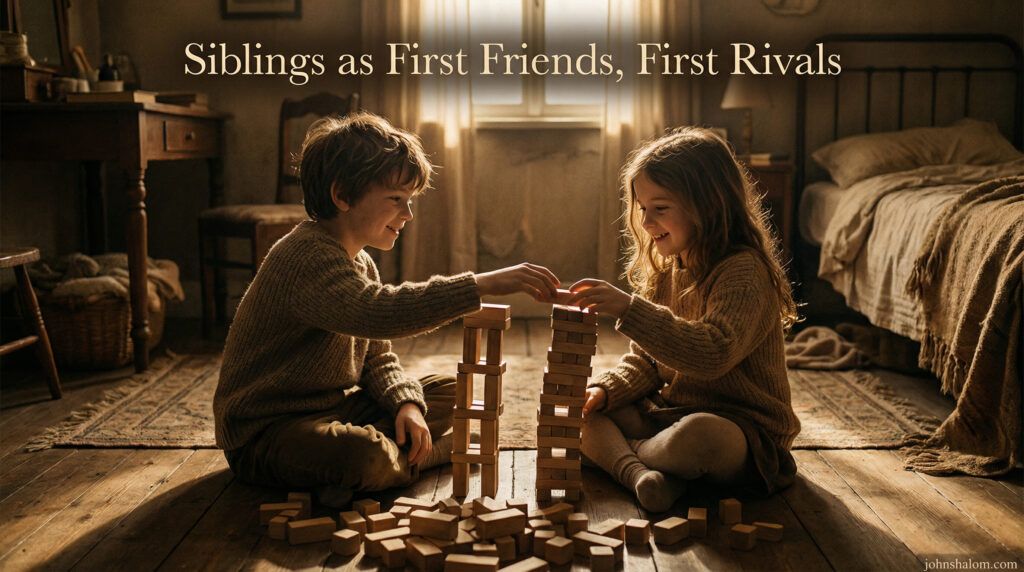
Siblings are usually the first people who teach us how to love, fight, share, and forgive. At home, they become our first friends and our first rivals at the same time. Through games, quarrels, jokes, and even painful losses, siblings shape our character, resilience, and sense of justice.
How we learn to treat brothers and sisters often becomes the pattern we later use with classmates, colleagues, neighbours, and even fellow citizens. If families can guide sibling relationships with wisdom, humor, and forgiveness, they help raise people who can live, lead, and reconcile well in wider society.
Introduction: The Strange Gift of Siblings
When I was growing up, my siblings were my whole world.
They were the ones who stole my food, the ones who defended me from bullies, and the ones who knew exactly which words would annoy me most. They could make me cry in the morning and laugh uncontrollably in the evening.
That is the strange gift of siblings. They are your first friends, but also your first rivals. You compete for food, attention, and space, yet you share secrets, fears, and dreams. You fight today and defend each other tomorrow.
Looking back, I now see that siblings are a training ground for life.
They prepare us for friendship, conflict, leadership, and even nation-building long before we ever hear those big words.
Friendship in Small Beginnings
2.1 One plate, many lessons
In many homes, especially in African villages, friendship starts around a shared plate.
My mother would place one plate of beans in the middle, and suddenly the meal became a lesson in sharing. Who would take the first scoop? Who would push food toward a younger child? Who would always reach for the meat?
Those simple moments taught more than we realized.
We learned to negotiate.
We learned to read each other’s faces.
We learned when to sacrifice and when to speak up.
The plate of beans was not just food. It was a small classroom in fairness, self-control, and generosity. Siblings are often our first partners in that classroom.
2.2 First partners in adventure
Siblings are usually our first playmates.
We invent games with stones and sticks, turn old tins into cars, and create stories that would never fit in a school textbook. We explore rivers, fields, and backyards together.
When we face fear, they often stand beside us.
If there was a strange noise outside at night, I did not go to check alone. I called a sibling. If we planned to sneak an extra mango from the tree, it was a group project.
Through these small adventures, siblings teach us teamwork. They show us that life is easier when you do not walk alone.
Rivalry That Trains Resilience
3.1 The bread and butter incident
Siblings do not only teach friendship. They also train rivalry.
One day, my sister accused me of stealing her piece of bread. I loudly declared my innocence. Unfortunately, the butter on my lips voted against me. When the family saw it, everyone laughed. I learned a clear lesson: never argue against evidence.
Sibling rivalry can be painful, but it can also sharpen honesty.
Even when it tempts you to lie, it eventually exposes you. Over time, you learn that truth is lighter to carry than a secret that everyone already suspects.
3.2 Wrestling, names, and thick skin
For many of us, sibling life includes wrestling matches, name calling, and endless teasing.
Your brother pushes you to the ground again and again. Your sister gives you a nickname you do not like. At the time, it hurts. Later, you realize you were learning resilience.
By the time an outsider calls you a name, you have already survived worse from your own family.
By the time life pushes you down, you already know how to stand up, because you practiced at home.
Rivalry, if guided well by parents and elders, can toughen children without hardening their hearts. It can build courage without turning them into bullies.
Humor in Sibling Life
4.1 Goat Father and other legends
Sibling life is full of comedy.
I once saw my brother bring a goat into the house, insisting it was his new pet. My mother did not approve of this new family member. By the time the goat had chewed half the laundry, my brother’s “pet licence” was cancelled.
We called him “Goat Father” for months.
The joke survived long after the goat forgot us.
These stories become family legends. They are retold at weddings, funerals, and reunions, turning ordinary mistakes into shared laughter. Humor becomes the glue that holds memories together, and siblings are usually at the center of it.
4.2 Laughing as medicine
Humor among siblings is more than entertainment. It is medicine.
When the family struggles with poverty, displacement, or loss, siblings are often the ones who turn tears into laughter. One joke at the right time can make the load feel lighter.
I have seen siblings laugh over torn clothes, burnt food, and embarrassing moments that would have caused shame if faced alone. That shared laughter says, “We are still together. We can still breathe.”
Lessons in Forgiveness
5.1 Hunger beats grudges
One of the strongest lessons from sibling life is that grudges are expensive.
You may be angry with your brother for breaking your toy, but when hunger comes and there is only one pot of food, you need each other again.
Many times in childhood, I found myself forgiving faster than I wanted, simply because I could not eat comfortably while still sulking. Hunger pushed us into forgiveness, and that strange pressure became training.
Over time, you learn that relationships matter more than small victories.
Siblings show you that you can quarrel fiercely and still eat from the same plate an hour later. That is an important skill for adult life.
5.2 Practicing mercy at home
My mother used to say, “If you cannot forgive your own brother, how will you forgive a stranger?”
She understood that family is training for the bigger world.
When siblings are guided to apologize, to listen, and to restore friendship after fights, they are practicing the art of reconciliation. These skills later help them deal with conflicts in school, work, church, and even politics.
If they never learn forgiveness at home, they may grow into adults who end every argument with permanent enemies.
The Pain of Losing a Sibling
6.1 A rival who became a silent mentor
Not all sibling stories end in shared laughter.
My elder brother died in the 1989 Nasir battle, fighting for South Sudan’s freedom. As children, we had competed, joked, and sometimes annoyed each other. After his death, I realized he had been more than a rival in games. He had been part of my foundation.
His sacrifice became part of my own sense of calling.
I could no longer see myself only as an individual. I carried his story with me. He was my first rival in play, but in death he became my silent mentor in purpose.
Loss teaches us that siblings are not “just” brothers or sisters. They are pieces of our identity. When one is removed, something in us is forced to grow up faster.
6.2 Grief, gratitude, and maturity
Losing a sibling can deepen both pain and gratitude.
Pain, because you feel what it means to have shared a childhood that will never be repeated. Gratitude, because you begin to see how much that person shaped you.
Many people who lose siblings start living with a clearer sense of time and responsibility. They know life can be very short. They know that rivalry has an end, but love can continue through memories, choices, and the way they treat others.
Siblings as the First School of Citizenship
7.1 Family as the first parliament
Home is often the first place where we practice politics, even if we do not use that word.
Siblings argue about who gets the bigger piece of meat, who uses the blanket, who sits closer to the fire. Parents become judges, peacemakers, and sometimes “security officers.”
Those small debates teach children about fairness, power, and justice.
When elders insist that everyone gets a share, children learn the idea of equity. When they punish lying or bullying, children learn that some behaviours are not allowed in the community.
By the time those children grow into voters, workers, and leaders, they already carry the lessons they learned in front of the cooking pot.
7.2 From blood ties to national ties
A child who learns to share with siblings is more likely to share in the wider community.
A child who learns to listen, apologise, and forgive at home is better prepared to handle ethnic, political, or religious differences later.
If siblings grow up hating each other, refusing to reconcile, and competing without mercy, that pattern can spread into clans and tribes.
If they grow up learning to fight fairly, forgive quickly, and protect one another, that pattern can also spread.
In that sense, siblings are not only shaping individuals. They are shaping the future citizens of a country.
When Sibling Relationships Go Wrong
8.1 Deep wounds that last
Not all sibling stories are healthy.
Some grow up in homes where jealousy, comparison, or abuse runs deep. One child is constantly favoured, another constantly blamed. Quarrels turn into long separations. Sometimes siblings become strangers, even enemies.
These wounds can last for decades.
A person who was never valued at home may struggle to trust anyone again. Another who was always favoured may grow up feeling entitled, expecting the world to treat them the same way.
Here, parents and elders carry serious responsibility.
The way they handle sibling conflicts, the words they use, and the justice they practice can either heal rivalry or poison it.
8.2 The possibility of repair
Even when sibling relationships are broken, there is still hope.
Sometimes it takes a crisis, like sickness, loss, or displacement, to bring people back to the same table. Sometimes it takes one brave person to say, “I am sorry for how I treated you,” or “Can we start again?”
You might also like: The Self-Help Roadmap: Proven Strategies for Personal Growth and Healing
No one can guarantee that every relationship will be fully restored.
However, many families discover that small steps – phone calls, shared meals, honest conversations – can soften hearts. Even if siblings never become close friends, they can move from hatred to respectful distance, or from constant tension to cautious peace.
How Parents Can Guide Sibling Friendships and Rivalries
9.1 Avoid unfair comparison
One of the fastest ways to damage sibling relationships is to compare them:
“Why are you not like your sister?”
“Your brother is smarter than you.”
These sentences plant bitterness.
They tell one child they are never enough and another that their value depends on staying above others.
Instead, parents can affirm each child’s strengths and help them appreciate one another.
“You are good at fixing things.”
“Your sister is good at explaining.”
“You can help each other.”
9.2 Teach fair sharing and clear boundaries
Children need help to learn what is mine, what is yours, and what is ours.
Parents can:
- Create simple rules for sharing food and toys.
- Involve older siblings in caring for younger ones without turning them into unpaid parents.
- Intervene when rivalry becomes cruel or violent.
The goal is not to remove all conflict. It is to teach children how to handle conflict without destroying each other.
9.3 Use humor and stories to calm storms
Sometimes, instead of long lectures, a simple joke or story can calm a heated argument.
A parent can remind children of an earlier funny incident, or tell a short story about siblings who reconciled and helped each other in old age.
Humor lowers tension. Stories create pictures in the mind.
Together, they help children see that today’s quarrel is not the whole story of their relationship.
Siblings, Faith, and Purpose
10.1 Learning love in close quarters
For families of faith, siblings are the first neighbours we are called to love.
It is easier to love people far away in theory than to love the noisy brother who wakes you early, or the sister who always borrows your clothes without asking.
At home, love is tested in cramped rooms, shared plates, and tight budgets.
When siblings learn to see each other as gifts instead of enemies, faith becomes practical. Forgiveness moves from sermons into daily life.
10.2 M = {B, D²} and family formation
If meaning comes from Being and repeated Doing, then sibling life plays a big part in both.
Being:
You first discover who you are in relationship to brothers and sisters – younger, older, quiet, loud, peacemaker, challenger.
Doing²:
You practice daily actions – sharing, arguing, forgiving, teasing, defending – again and again until they form character.
Over time, these patterns shape how you see yourself and how you treat others. That is why sibling life, when guided well, can become a powerful source of purpose rather than pain.
Conclusion: From Hut to Nation
Siblings are more than just people who share your blood.
They are your first friends, first rivals, and often your first teachers in love, fairness, and resilience. The small stories of bread, beans, goats, jokes, and quarrels create a quiet training ground for future citizens and leaders.
If sibling life is full of bitterness that never heals, those patterns can spread into clans and countries.
If sibling life is guided toward honest conflict, quick forgiveness, shared laughter, and loyal support, those patterns can also spread into communities and nations.
We do not choose our siblings, but we can choose how we relate to them as we grow. We can let rivalry harden into hatred, or we can let it mature into respect and even deep friendship.
When we learn to live with our first friends and first rivals in peace, we are already preparing for a better society beyond the walls of our home.
If you would like to know more about my path as a writer, including the struggles, lessons, and small signs of progress along the way, you can read the full story on my Wealthy Affiliate blog here: https://my.wealthyaffiliate.com/johnmaluth/blog
FAQS
- What if my relationship with my siblings is currently very strained or broken?
A: Strained sibling relationships are common, especially when there has been unfairness, comparison, or past hurt. You cannot fix everything alone, but you can start with small steps, such as sending a message, making a call, or offering an honest apology where needed. Even if full closeness does not return, moving from hostility toward basic respect can still bring relief and healing. - How can parents reduce unhealthy rivalry between their children?
A: Parents can reduce unhealthy rivalry by avoiding constant comparison, setting clear rules for sharing, and correcting cruelty quickly. They can praise each child’s unique strengths, give each one private time when possible, and teach them to solve small conflicts themselves. When parents model fairness, children learn that they do not need to fight for love, because it is not limited. - Are sibling fights always harmful, or can they be useful?
A: Not all sibling fights are harmful. Many small quarrels, if managed well, help children learn negotiation, self-control, and forgiveness. The danger comes when fights become violent, humiliating, or constant, and when no adult guides the children toward repair. In that case, the conflict can leave deep scars. Healthy conflict is followed by apology, understanding, and restored relationship. - How do sibling relationships affect adult life outside the family?
A: Sibling relationships often set patterns for how we deal with friends, colleagues, and even political opponents. A person who learned to share, listen, and forgive at home is more likely to cooperate and seek peace in wider society. A person who grew up in constant rivalry without repair may struggle with jealousy, mistrust, or harsh competition as an adult. - What can I do if I never had siblings, but want to learn these lessons?
A: Even without biological siblings, you can still learn similar lessons through cousins, close friends, classmates, or church and community groups. Look for relationships where you share time, responsibilities, and even disagreements. Be intentional about practicing fairness, humor, forgiveness, and mutual support. In many ways, you can choose “brothers” and “sisters” through how you build and maintain close friendships.

