TL; DR:
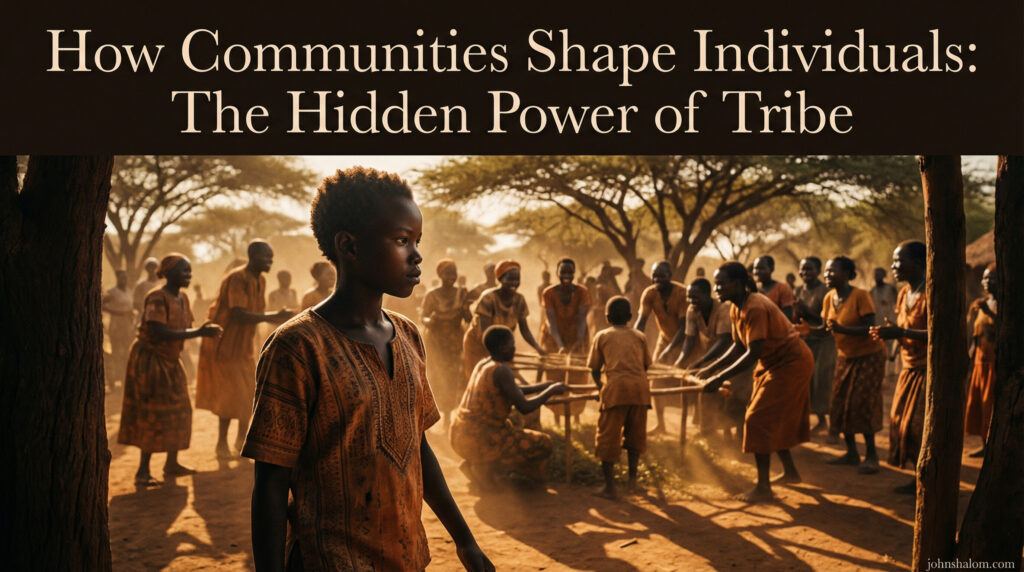
No one grows alone. From birth, you are surrounded by people who teach you what is normal, what is shameful, and what is worth giving your life to. Tribe and community give you language, food, protection, and stories. They also give you habits, fears, and loyalties that you may never question until something breaks.
The hidden power of tribe is that it quietly shapes your identity and choices long before you make big decisions about career, marriage, or citizenship. It can lift you into courage and service, or trap you in bitterness, corruption, and fear.
You cannot change where you were born, but you can decide what you keep, what you heal, and what you build for the next generation. When you honour the best in your tribe and correct what is broken, you become a bridge person. Your life shows that communities can grow, not only repeat old wounds.
Introduction: You Are More Shaped Than You Think
As a boy along the Sobat River, I did not wake up and say, “Today my tribe will shape my future.” I just woke up to cows, to the river, to hunger, to war. I heard the way adults spoke about “our people” and “their people.” I watched who received respect, who was mocked, who was feared.
Only years later, sitting at a desk in Juba and writing about nationalism and citizenship, did I see how deeply that early world formed me. My courage, my fears, my first ideas about justice and revenge all grew in that soil.
The same is true for you. You did not design your first community. You just arrived there. Yet that community has been designing much of you.
What Do We Mean by Community and Tribe?
2.1 The circles that shape you
You live inside several circles at the same time:
- Family and relatives.
- Clan and tribe.
- Village, town, or neighbourhood.
- Church or mosque and other faith groups.
- School and workplace.
- Online communities.
Each circle teaches you something about who you are and how life works. Some circles overlap. Some pull in different directions. Together, they shape your sense of “we” and “they.”
2.2 The invisible rules of your people
Every community has rules, even when nobody writes them down. For example:
- How you greet elders.
- Who speaks first in a meeting.
- How men should act and how women should act.
- How conflict is handled.
- How people talk about money, sex, and power.
You learn these rules by watching, listening, and being corrected. Break them and you feel shame, pressure, or punishment. Follow them and you feel praised, accepted, and safe. That is how community reaches inside your mind and heart.
The Hidden Power of Tribe in Shaping Identity
3.1 The stories you grow up inside
Tribe gives you stories about:
- Where your people came from.
- What they suffered and achieved.
- Who their friends and enemies have been.
These stories give courage, pride, and direction. They can also pass down fear and hatred. A child who grows up hearing only stories of how “they” harmed “us” may learn to fear before he ever meets a person from that group.
3.2 What your tribe praises and what it shames
Every community has heroes and fools. Children quickly see:
- Who is honoured at weddings and meetings.
- Who is laughed at behind their back.
- Which careers are respected and which are despised.
If your tribe praises warriors only, you may learn that the only way to be a man is to fight. If your tribe praises wealth without asking how it was gained, you may learn that money justifies anything. If your tribe praises peacemakers, workers, teachers, and honest leaders, you may learn that quiet service matters more than loud titles.
3.3 The first answers to big questions
Tribe and community offer early answers to questions like:
- Who belongs and who does not.
- Who deserves protection and who can be ignored.
- What makes a person valuable.
These answers are not always spoken. They are shown. For example, if people with disabilities are hidden, children may think they have less value. If girls are always told to keep quiet, they may believe God designed them to be silent.
You might also like: The Self-Help Roadmap: Proven Strategies for Personal Growth and Healing
When Community Lifts People Up
4.1 The strength of shared support
Healthy communities give:
- Practical help in crisis.
- Emotional support in grief and sickness.
- A safety net when jobs or crops fail.
In many African villages and towns, you can see this when people gather quickly after a death, a fire, or displacement. Food appears. Mats appear. Hands carry loads. This support teaches children a powerful lesson: “I am not alone. We carry each other.”
4.2 Values that grow strong citizens
Communities can also teach values that strengthen whole nations. For example, when a tribe:
- Teaches children to respect elders and care for the young.
- Encourages hard work and learning.
- Expects fairness in sharing resources.
- Shames abuse and rewards kindness.
Children from such settings bring those values into school, offices, churches, and government. The hidden power of tribe becomes a blessing far beyond the village.
When Community Hurts People
5.1 Normalised violence and silence
Sometimes the same community that gives support also normalises harm. For example:
- Domestic violence that everyone knows about but nobody challenges.
- Initiation rituals that involve abuse.
- Teaching children that crying is weakness or that talking about pain is betrayal.
A child who grows up in such a climate learns to accept suffering as normal. He may repeat the same behaviour in his own family and public life.
5.2 Corruption and unjust loyalty
Communities can train people to misuse power and resources. Signs include:
- Always protecting a wrongdoer because he is “our son.”
- Expecting public office holders to send money home, no matter how they got it.
- Praising those who “help the clan” even when they steal from the nation.
This teaches the next generation that loyalty to tribe is more important than loyalty to truth and justice. The result is weak institutions and nations that never fully heal.
A Personal Glimpse: How My Communities Shaped Me
I often say that I grew up between war, hunger, and constant change. That is true, but I also grew up inside several communities:
- A family that had already buried children and dedicated me to God.
- Villages that moved with conflict and river seasons.
- Church circles that prayed and preached in the middle of fear.
From these circles I learned many things. I learned courage by watching elders face danger without running. I learned faith by seeing people pray when there was no food. I also learned anger, suspicion, and the temptation to see certain people as enemies before I knew their names.
Later, as a writer and teacher, I had to sit with these lessons and ask: Which ones are from God and which ones are from fear. Which ones should I pass on and which ones should I lay down.
That work is still going on. It will probably last for the rest of my life. The same is true for anyone who has lived through conflict and strong tribal loyalties.
Working With Your Community Instead of Just Reacting
7.1 Honour the good roots
The goal is not to throw away your tribe or community. It is to honour the parts that carry life. Start by naming what your people gave you that is good:
- Hospitality.
- Storytelling.
- Courage.
- Care for the vulnerable.
Be grateful for these gifts. Protect them. Pass them on.
7.2 Name the wounds honestly
Then look at the parts that cause harm:
- Prejudice toward other groups.
- Acceptance of abuse.
- Pressure to lie or steal for the sake of “our people.”
Do not pretend these do not exist. Name them in honest conversations, writing, and prayer. You cannot heal what you refuse to face.
7.3 Build healthier sub-communities
Even if your larger community has serious problems, you can create smaller circles with better patterns. For example:
- A family that treats all guests with equal respect.
- A church group that mixes tribes and shares resources fairly.
- A writers’ or workers’ group that values honesty more than clan.
These smaller circles become training grounds for a different future. They show that another way of being a community is possible.
Practical Steps to Use the Hidden Power of Tribe Wisely
8.1 Listen to the stories you keep repeating
Ask yourself:
- Which stories about “my people” do I tell most often.
- Do these stories only highlight our pain and the evil of others.
- Do they include examples of reconciliation, shared struggle, and shared victories.
Choose to add more stories that build bridges, not only walls.
8.2 Watch your language about “us” and “them”
Notice when you say “we” and when you say “they.” Ask:
- Is my “we” too small.
- Can I widen my “we” to include neighbours, citizens, and even people of other nations.
Language shapes the heart. Small changes in words can open space for new loyalties.
8.3 Expose yourself and your children to other communities
Visit other regions when possible. Build friendships beyond your tribe. Read books and watch films from other cultures.
You do not stop being yourself. You simply learn that your story is one thread in a much larger cloth. That realisation does not erase your tribe. It puts it in a healthier place.
8.4 Connect community to M = {B, D²}
Meaning comes from Being and repeated Doing. Your communities strongly influence both:
Being: They tell you who you are and what you are worth.
Doing²: They train the habits you repeat daily.
When you become aware of this, you can work with God to adjust both. You can let Him reshape your identity and then choose new habits that fit that healed identity, even when your old community pressures you to stay the same.
Conclusion: You Can Shape the Community That Shapes You
The hidden power of tribe and community is real. It can give you courage, identity, and support, or it can feed fear, hatred, and corruption. You did not choose your first community, but you are responsible for how you respond to it now.
You can honour the good you received, face the harm honestly, and build new circles that treat people with more justice and mercy. You can raise children who know their clan name and still see the human being in other groups. You can be loyal to your people without lying for them or harming others.
In the end, communities shape individuals, but individuals also shape communities. Every time you choose a better story, a fairer action, a kinder word, you are adjusting the hidden power that flows through your tribe. That is quiet but real nation building, starting from the inside out.
If you would like to know more about my path as a writer, including the struggles, lessons, and small signs of progress along the way, you can read the full story on my Wealthy Affiliate blog here: https://my.wealthyaffiliate.com/johnmaluth/blog
FAQS
Q1: Is it wrong to love my tribe strongly?
A: No. It is good to love your tribe, language, and culture. It becomes harmful when that love makes you blind to injustice, excusing wrong because it was done by “our people,” or when it leads you to hate others.
Q2: Can one person really change a community?
A: One person cannot fix everything, but one honest life can disturb bad patterns and inspire better ones. Over time, a few people with clear values can influence families, churches, and local leaders more than many loud complaints.
Q3: What if my community is very toxic or violent?
A: You may need to set clear limits for your safety. At the same time, you can quietly live different values, seek healthier circles, and pray and work for change. Sometimes the most powerful step is to stop repeating certain harmful patterns in your own house.
Q4: How can parents use the power of tribe for good?
A: Parents can teach children their language and stories while also teaching respect for other groups. They can praise courage, honesty, and service instead of revenge or easy money. This turns tribal energy toward building strong citizens.
Q5: How does this topic link to my faith and citizenship?
A: Faith reminds you that every person from every tribe is made in God’s image. Citizenship reminds you that you share a country with people unlike you. When you live these truths inside your community, you help your tribe become a better neighbour and a better partner in building the nation.