TL; DR:
When a mother tongue fades, it is not only vocabulary that disappears. A whole way of seeing the world, relating to family, understanding humor, and carrying memory begins to fade with it. Language loss quietly erases proverbs, kinship terms, songs, and emotional depth that translation cannot fully carry. Global languages are useful and necessary, but they should be added to our tongues, not used to replace them. To stay fully human and rooted, families and nations must treat their languages as living homes to be lived in daily, not as museums to be visited only on special occasions.
Language As A Living Home
A language is more than a set of words and grammar rules. It is a house for the soul. When you speak your mother tongue, you are not just communicating; you are inhabiting a place built by your ancestors. The sounds, rhythms, and idioms are like the walls, doors, and windows of that inner house.
When a child stops speaking that tongue, it is as if they move out of that ancestral house and into a rented room owned by someone else. The new room may be comfortable, modern, and useful. But something is missing: the smell of the old firewood, the echo of familiar songs, the jokes only your people understand.
You can survive without that house. Many do. But you lose the feeling of walking barefoot on the soil that remembers your name.
More Than Vocabulary: How A Tongue Shapes Thought
Language shapes how we see relationships, time, respect, and even land. In some languages, you cannot speak to an elder the same way you speak to a child. The grammar itself teaches respect. In others, there are many words for cattle, rain, or soil, because those things are central to life.
When that language disappears, the details fade. You may still use the word “uncle,” but you no longer distinguish between your mother’s brother and your father’s brother. You may still say “love,” but you lose the specific kind of love embedded in a proverb about sharing the last gourd of milk.
I once tried to translate a proverb from my mother tongue into English. In our language, it carried generations of wisdom. In English, it sounded like a joke about confused cows. The room laughed. I laughed too, but inside, I felt a small grief. That laughter was a signal: a whole world had been reduced to a funny sentence.
The Comedy And Pain Of Translation
Translation mistakes can be hilarious. A friend once tried to bless someone in English using an idea from our mother tongue. What came out was, “May your cows never drown in soup.” The intention was noble: “May your wealth always sustain you.” The result was comedy.
We all laughed, and the laughter was good. Humor is one of the ways we survive change. But underneath the joke was a deeper truth: some meanings live well only in the language that gave birth to them. When you force them into another tongue, they arrive deformed or incomplete.
Over time, if children know only the translated version, they inherit the joke but not the depth. It is like giving them a picture of a tree instead of the tree itself.
Family Ties Written In Words
Family is not just people; it is also language. The way your grandmother calls your name is different from how a teacher says it. The phrases your parents use when they are worried, proud, or angry carry layers that no foreign language can fully capture.
A proverb shouted during a quarrel, a nickname used in love, a warning whispered in the dark—all these are part of the family’s emotional vocabulary. When a child stops speaking the mother tongue, they still belong to the family, but the emotional bridge becomes narrower.
A proverb told at bedtime in the mother tongue hits the heart differently. It has music, weight, and familiarity. When you hear the same proverb in a foreign language, you may understand the meaning, but the melody is gone. It becomes a slogan instead of a heartbeat.
My mother used to warn us, “If you forget your tongue, you forget your shadow.” As a boy, I thought she was exaggerating. How can a tongue be a shadow? Now I understand. Your shadow is proof that you are standing in the light. Your language is proof you belong to a people.
Diaspora And The Silent Gap
For families in diaspora, language loss can happen very quickly. Parents speak the mother tongue to their children; the children reply in the language of the host country. Parents say, “Come eat,” in the old tongue; the child answers, “I’m coming,” in the new tongue.
The result is an invisible wall. Grandparents visit or call from home. They smile at their grandchildren. The grandchildren smile back. But soon the smiles run out, and silence arrives. They cannot tell each other stories, share jokes, or ask questions without a human translator. The bond becomes thinner.
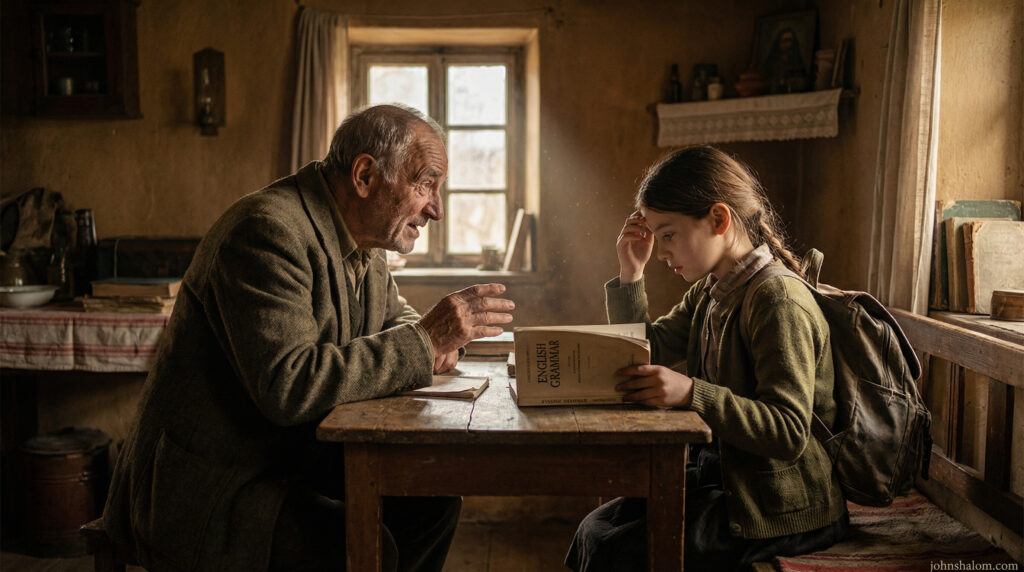
I have seen this: a grandfather with eyes full of stories, and a grandchild full of questions, separated by a language gap that neither chose. The child knows the global language; the elder knows the ancestral one. Love is there, but the bridge of words is broken.
That silence is one of the deepest costs of language loss. It is not only about grammar. It is about generations no longer able to talk to each other without help.
My Brother’s Jokes Locked In A Tongue
Before my elder brother died in the 1989 Nasir battle, he often joked in proverbs and expressions that lived only in our tongue. His humor was sharp, playful, and sometimes mischievous. Many of his best lines depended on local idioms, double meanings, and shared cultural knowledge.
You might also like: The Ultimate Guide to Political Journalism: Ethics, Challenges, and Impact in the Modern World
Years later, I tried to tell some of his jokes to younger relatives who no longer fully understood the language. I translated the words, but the room stayed quiet. The punchline landed like a stone. The warmth was missing. The timing was gone.
In that moment, I realized something painful: part of my brother’s living memory was locked inside a language fewer and fewer people could understand. I had not only lost a brother in war; I was slowly losing parts of him again in peace, as the tongue that carried his voice faded.
Humor As A Lifeline For Language
At the same time, humor is one of the best tools for keeping a language alive. Children remember funny words more than serious lectures. They repeat silly expressions, mimic elders’ jokes, and turn proverbs into playful insults.
If a mother tongue disappears from jokes, it disappears from daily life. That is why families should not use their language only for scolding or serious matters. It must also live in teasing, laughter, and play. When children can laugh in a language, they are more likely to keep it.
I have seen children in markets switching effortlessly between languages. They bargain in the national language, joke in the mother tongue, and count in English. The jokes often stay in the mother tongue. That is a small sign of hope. As long as we are still laughing in a language, it is not fully dying.
What Nations Lose When Tongues Die
A language is a storehouse of problem-solving. Inside it are songs for comforting the grieving, proverbs for calming conflict, and sayings for warning hot-headed youth. When a language dies, those tools often die too.
Nations with many languages have many ways of thinking. One tongue may offer gentle, indirect ways of correcting an elder. Another may have sharp expressions that cut through lies quickly. Together, they provide a wide field of wisdom.
When nations allow their languages to fade, they weaken their own ability to heal, govern, and innovate. They become dependent on borrowed ideas, foreign sayings, imported models. Development becomes shallow because it is not rooted in local memory.
You can build roads and cities while your languages die. It will look like progress from a distance. But underneath, something is hollow. People walk on modern streets without words to fully explain who they are.
Global Tongues: Gift Or Threat?
Global languages are not enemies. English, Arabic, French, Mandarin, and others open doors to trade, education, and diplomacy. They help us read the world and be read by the world. Rejecting them would be foolish.
The problem comes when global tongues are treated as upgrades instead of additions. A child hears adults say, “Speak the big language; ours is useless.” The mother tongue becomes associated with poverty, shame, or backwardness. The global language becomes a badge of status.
But a child who speaks only the global language walks with one leg. A child who speaks both walks with two. One leg reaches the world; the other holds the ground at home.
We should not tell children, “Choose one.” We should tell them, “Use both.” Let global languages be tools for opportunity and local languages be roots for identity.
Practical Ways To Keep A Tongue Alive
Saving a language does not always require big government programs. It often starts in living rooms, kitchens, and WhatsApp chats. Here are simple habits that help:
- Speak it daily at home
Even if the world outside uses another language, decide that certain times—meals, evenings, weekends—are for the mother tongue. Children may resist at first, but consistency turns it into routine. - Tell stories in the original
Bedtime stories, family histories, and silly tales should be told in the mother tongue whenever possible. If you must translate, give some key phrases in the original, then explain them. - Use the tongue for affection, not just correction
If the only time children hear the language is when they are in trouble, they will dislike it. Use it for praise, jokes, and endearments as well. - Record elders
Use phones to record grandparents telling stories, singing songs, or reciting proverbs. These recordings become language banks for future generations. - Write things down
Even if your language has mostly been oral, try to write proverbs, songs, or short stories in it. Send voice notes with translations. Mix text and audio. The goal is not perfection; it is preservation. - Create “language moments” in diaspora
In foreign countries, plan family nights where the mother tongue is required, even if only for a short period. Cook traditional food, play music, and insist on at least some conversation in the old tongue.
Small steps may not impress governments, but they impress children. They learn that the family values its language enough to fight for it.
Language, Faith, And The Inner Voice
For people of faith, language is also spiritual. The tongue you cry in during prayer, or use when you are most afraid, often reveals your deepest self. Many people say their mother tongue is the one they use when they speak to God or when pain is sharp.
If that language fades, something in prayer may feel more distant. You can still talk to God in any language, of course. But there is a special honesty in the tongue that carried your first cries and your mother’s lullabies.
Even without religious language, the inner voice often thinks in the mother tongue. People count, curse, and exclaim in the language that sits deepest inside. Losing it can feel like losing a mirror that tells you who you are when no one is watching.
Keeping The Shadow: A Personal Resolve
My mother’s proverb still rings in my ears: “If you forget your tongue, you forget your shadow.” I have seen that shadow thinning in city children who laugh at rural accents, in diaspora children who understand but cannot reply, in families where elders die with stories that never found young ears.
I have also seen the shadow grow stronger when families choose to fight for their language. When a grandmother insists on speaking only the mother tongue to her grandchildren. When a father switches to the old language to comfort a crying child. When a young person begins to ask, “Teach me that proverb again.”
We cannot stop change. Wars, migration, schools, and media will continue to pull us toward global tongues. But we can decide not to surrender completely. We can carry our languages forward like a torch, lighting the faces of children who will never see the village, but can still hear its voice.
In the end, we do not have to choose between the world and our roots. We can hold a global passport in one hand and our mother tongue in the other. That way, when we stand in the light of history, we will still see our full shadow.
If you would like to know more about my path as a writer, including the struggles, lessons, and small signs of progress along the way, you can read the full story on my Wealthy Affiliate blog here: https://my.wealthyaffiliate.com/johnmaluth/blog
FAQS
- Why is losing a language more serious than just forgetting some words?
Losing a language means losing a way of seeing and organizing life. It erases unique ways of expressing respect, family ties, humor, and wisdom that cannot be fully moved into another tongue. When a language dies, proverbs, songs, prayers, and subtle relationship terms die with it, leaving people with less depth in how they understand themselves and their world. - How does language loss damage family connections across generations?
When grandparents and grandchildren do not share a common language, their relationship shrinks to smiles, gestures, or basic phrases. They cannot tell detailed stories, pass on proverbs, or discuss feelings with depth. This creates an emotional distance, even when love is present, because the bridge of words is weak or missing. - What role does humor play in keeping a language alive?
Humor makes language enjoyable and memorable. Jokes, playful insults, funny proverbs, and comic stories encourage children to use the tongue freely. When a language is present in laughter, not only in serious or angry moments, it becomes a source of joy rather than shame. That joy helps keep it alive in daily life. - How can diaspora families balance global languages with preserving their own?
Diaspora families can decide that global languages are for school, work, and the outside world, while the mother tongue remains active at home in stories, songs, mealtimes, and family gatherings. They can mix languages when needed, but intentionally create spaces and times where the old tongue is honored and practiced, even if imperfectly. - What practical steps can someone take to “keep their shadow alive” in language?
They can speak their mother tongue regularly, teach it to children, record elders’ stories, write down proverbs and songs, and choose to use the language in moments of affection, storytelling, and prayer. Even small habits—like greeting in the mother tongue, or telling one bedtime story each week in it—strengthen the living shadow of identity that language carries.