
TL;DR
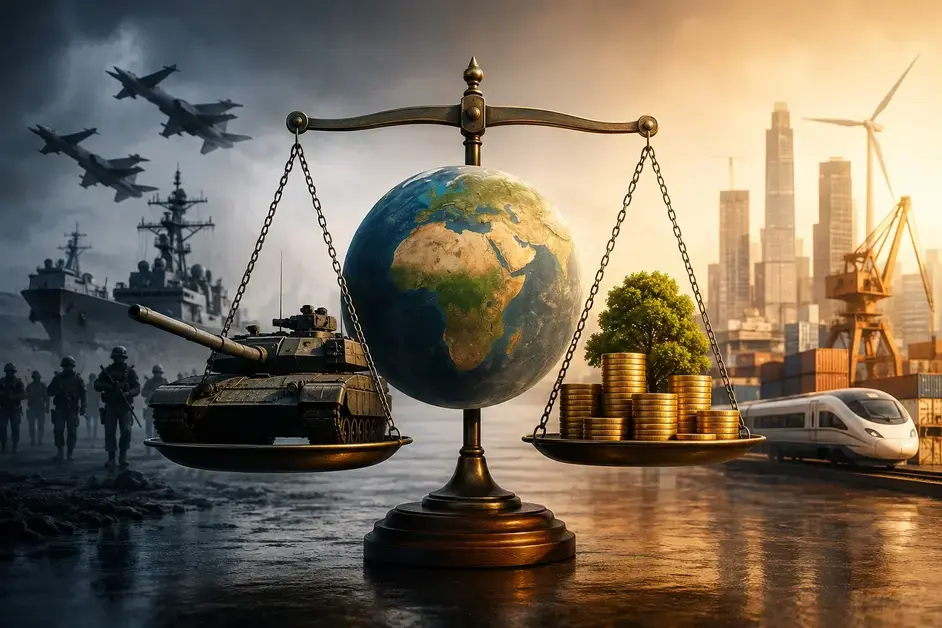
The debate over military power vs economic growth is shaping modern international relations. While the United States has long relied on military alliances and defense capabilities to project influence, China has increasingly expanded its global presence through trade, infrastructure, and economic cooperation. Neither approach is perfect. The best path for nations may be to combine strong national security with sustained investment in economic development, education, innovation, and international partnerships.
Military Power vs Economic Growth: Which Builds Greater Global Influence?
For centuries, powerful nations measured their influence by the size of their armies. Today, another measure is becoming just as important: the strength of a nation’s economy.
This shift raises an important question: Is military power or economic growth the better path to international influence?
The answer is not as simple as choosing one over the other. The experiences of the United States and China suggest that both security and prosperity matter, but long-term influence increasingly depends on creating economic opportunities rather than winning military victories.
The American Approach: Security First
The United States remains the world’s leading military power. Its global network of alliances, overseas military bases, and advanced defense technology has shaped international politics for decades.
Military strength provides several advantages:
- It deters potential aggressors.
- It protects allies and international shipping routes.
- It supports humanitarian and peacekeeping missions.
- It strengthens national security.
However, military operations also come with significant costs. Wars consume enormous financial resources, often result in civilian suffering, and may leave regions politically unstable for years after the fighting ends.
History demonstrates that military victories do not always produce lasting peace.
China’s Approach: Development Through Economic Cooperation
China has chosen a different path to expanding its global influence.
Rather than relying primarily on overseas military interventions, China has invested heavily in infrastructure, manufacturing, trade, energy, and development financing. Roads, railways, ports, bridges, industrial parks, and telecommunications projects have become important tools of Chinese diplomacy.
This strategy offers several benefits:
- Improved infrastructure
- Increased trade
- Greater investment opportunities
- Long-term commercial partnerships
- Economic interdependence that may reduce conflict
At the same time, China’s approach has faced criticism regarding debt sustainability, environmental standards, transparency, and local participation in some projects.
Economic cooperation also requires continuous trust between partners.
Military Power vs Economic Growth: Why the Debate Matters
The discussion is not about declaring one model superior.
Military power provides security.
Economic growth creates opportunity.
Security protects development, while development reduces many of the conditions that lead to conflict. Nations that focus exclusively on one while neglecting the other may struggle to achieve lasting prosperity.
The strongest countries often combine both.
What Can the United States Learn?
The United States can continue benefiting from its strong defense while expanding its leadership through economic partnerships.
Infrastructure investment, scientific cooperation, education, technology, and trade often create goodwill that lasts far longer than military operations.
A bridge or power station may influence lives for generations.
What Can China Learn?
China can strengthen its international partnerships by increasing transparency, supporting local employment, encouraging technology transfer, and ensuring projects meet high environmental and governance standards.
Economic influence grows stronger when communities feel they are genuine partners rather than simply recipients of investment.
What Can South Sudan Learn?
South Sudan should avoid seeing global partnerships as a choice between China and the United States.
Instead, the country should pursue relationships that advance national priorities.
South Sudan needs:
- Better infrastructure
- Reliable electricity
- Modern healthcare
- Quality education
- Digital technology
- Strong institutions
- Transparent governance
Foreign partners can assist with development, but lasting national progress depends on responsible leadership and productive citizens.
What Can Africa Learn?
Africa is increasingly becoming a strategic partner for many global powers.
Rather than choosing one side, African nations can negotiate agreements that promote local industries, skills development, technology transfer, and sustainable investment.
Competition among major powers should become an opportunity for African development rather than a source of political division.
What Can the World Learn?
The debate over military power vs economic growth offers an important lesson for every nation.
Strong defense remains necessary because peace must be protected.
However, economic cooperation often creates stronger and longer-lasting international relationships than military confrontation.
Countries that invest in innovation, education, healthcare, infrastructure, and trade are more likely to build stable partnerships that benefit future generations.
The greatest global influence may belong not to those who possess the largest armies, but to those who create the greatest opportunities.
Final Thoughts
The future of international relations should not be defined by military power alone.
It should also be measured by economic growth, innovation, education, infrastructure, and the ability to improve people’s lives.
The United States and China each offer valuable lessons. One highlights the importance of security. The other demonstrates the power of economic cooperation.
The wisest path is not choosing one over the other.
It is building nations that are secure enough to protect peace and prosperous enough to sustain it.
Frequently Asked Questions
What does military power vs economic growth mean?
Military power vs economic growth compares two major ways countries build international influence. Military power focuses on defense and security, while economic growth emphasizes trade, investment, innovation, and development.
Why is China known for economic cooperation?
China has expanded its global influence largely through infrastructure projects, trade agreements, manufacturing, and development financing rather than large-scale overseas military interventions.
Why does the United States invest heavily in military power?
The United States maintains strong armed forces to protect its national security, support allies, safeguard international trade routes, and deter potential threats around the world.
Should developing countries choose China or the United States?
Developing countries do not necessarily need to choose one partner. They can pursue balanced relationships that advance their own national interests while protecting their sovereignty and promoting sustainable development.
Which is more important: military power or economic growth?
Neither should exist without the other. Military strength protects peace, while economic growth creates prosperity. Successful nations generally invest in both, giving greater attention to long-term economic development.
John Monyjok Maluth
An Independent Author
Email: maluthabiel@mail.com
Website: https://www.johnshalom.com

Thank you for sharing a thoughtful perspective on this topic. One thing that stood out to me is that every country has strengths and challenges, and there is always something we can learn from one another. Whether it’s economic growth, innovation, education, or culture, progress often begins when we’re willing to listen instead of simply compete. I appreciate an article that encourages readers to think beyond one point of view.
Hi Bryce,
Thank you for your thoughtful comment. I’m glad the article resonated with you.
I completely agree that every country has strengths and challenges, and that we make the greatest progress when we’re willing to learn from one another. Competition can certainly drive innovation, but it shouldn’t prevent us from recognizing good ideas wherever they come from.
Your point about listening is especially important. Whether we’re discussing nations, organizations, or individuals, meaningful progress often begins with humility and a willingness to understand different perspectives. I believe that’s one of the keys to building a more peaceful and prosperous world.
Thank you again for reading the article and for contributing such a balanced and encouraging reflection. I truly appreciate your perspective.
Thank you for sharing a thoughtful perspective on this topic. One thing that stood out to me is that every country has strengths and challenges, and there is always something we can learn from one another. Whether it’s economic growth, innovation, education, or culture, progress often begins when we’re willing to listen instead of simply compete. I appreciate an article that encourages readers to think beyond one point of view.
Hi Bryce,
Thank you for your thoughtful comment. I’m glad the article encouraged you to look at the topic from a broader perspective.
I completely agree that every nation has strengths as well as areas where it can improve. One of the main ideas I wanted to communicate is that lasting progress doesn’t come from viewing every difference as a competition. There is great value in learning from one another’s successes while also acknowledging our own shortcomings.
Your point about listening is especially important. Whether we’re talking about individuals or nations, genuine progress often begins with a willingness to understand before judging. I believe that mindset creates more opportunities for cooperation, innovation, and shared prosperity.
Thank you again for taking the time to read the article and contribute such a meaningful reflection. I truly appreciate your perspective.