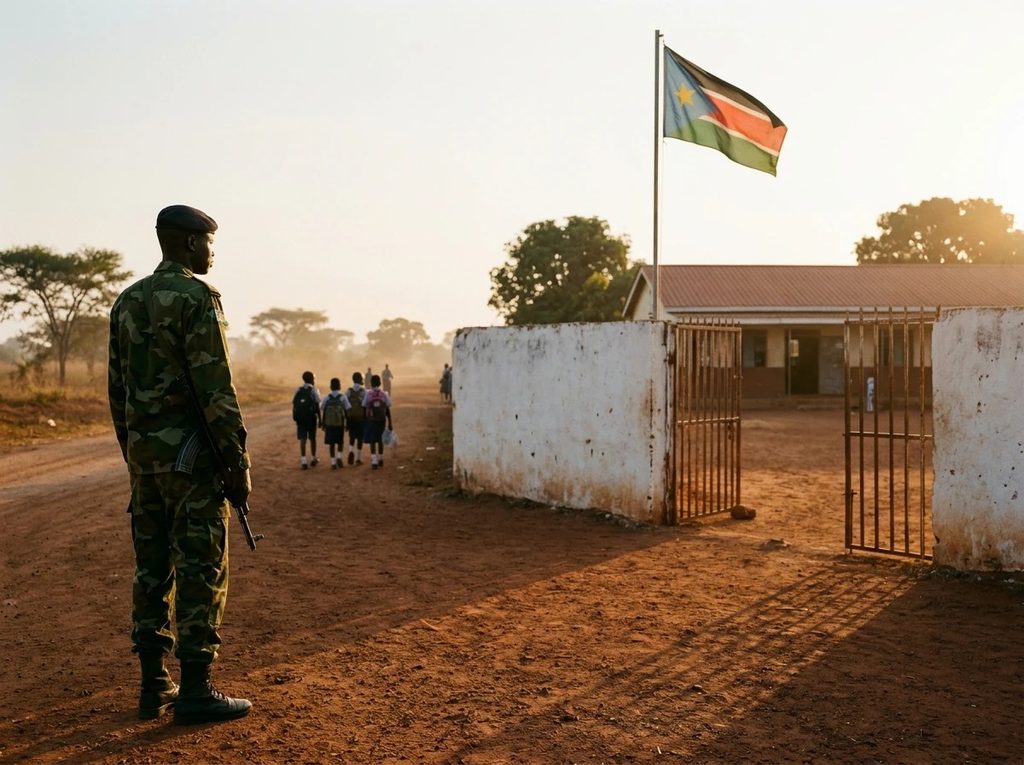
When soldiers arrive in a town, residents should feel safer. They should not have to ask which army has arrived, which faction it answers to, or whether its uniform means protection or danger.
That simple test is at the heart of my argument. The March 2025 violence in Nasir County, Upper Nile State, and the ongoing Special Court proceedings in Juba have forced our country to confront a painful question. What happens when a sovereign state does not have one clear, trusted, professional national army?
My answer is direct. South Sudan must stop trying to make the Necessary Unified Forces, or NUF, work. The NUF cannot be implemented as a professional national army, and it was never designed to become one. Its failure is not only about delay, funding, or political will. It is about architecture. The 2015 and 2018 peace deals built the NUF on a structure that preserves division instead of ending it.
Instead of creating the NUF, we should have created, and must now create, the SSPDF as a true national army. One flag. One constitution. One chain of command. One professional force that belongs to all South Sudanese.
This is my opinion, written from a pro-humanity and pro-government perspective. I distinguish facts from opinions in this piece. Where court testimony, charges, or competing claims are discussed, I present them as allegations, testimony, or charges, not as proven findings. The accused deny the charges. The court has not delivered a final verdict described in the sources I reviewed.
Key Takeaways
- My main argument is that NUF cannot be implemented because of the architecture of the 2015 and 2018 peace deals.
- NUF is temporary by design. A temporary, quota based, faction preserving structure cannot become a permanent professional national army.
- The 2015 and 2018 deals treated armed parties as parallel stakeholders, preserved separate commands, and relied on cantonment, quotas, and external monitoring.
- South Sudan should have built the SSPDF directly as the national army, with all former fighters integrated into one institution, not into a parallel transitional force.
- The March 2025 Nasir clashes show how confusion over who commands forces can cost lives.
- Former First Vice President Dr. Riek Machar and seven co-accused face serious charges, including treason, murder, conspiracy, terrorism, and crimes against humanity. They deny the charges.
- A professional national army requires one chain of command, merit based recruitment, regular pay, training, accountability, and freedom from tribal or partisan loyalty.
- Reform must protect human life first. Security is measured by civilian safety, not by the number of armed groups.
TL;DR
I argue that NUF was unworkable from the start because the 2015 and 2018 peace architectures preserved parallel factions instead of dissolving them. NUF is temporary and cannot be turned into a professional national army. South Sudan should have built the SSPDF directly as the national army, and must do so now: one payroll, one training standard, one command, and one national identity for every soldier.
My Main Argument: NUF Could Not Work Because of How It Was Built
NUF Was Temporary by Name and by Design
Let me be clear about my position. I am not saying NUF was an opposition army. It was not. It was a transitional mechanism created under the Revitalized Peace Agreement to bring government and opposition forces together.
But that is exactly the problem. NUF, as it sounds, is temporary. It was meant to be necessary for a moment, not permanent for a nation. A temporary force cannot become a professional national army, because a national army is permanent, constitutional, and rooted in the state, not in a peace deal between parties.
A national army belongs to the Republic. A transitional unified force belongs to an agreement. When the agreement stalls, the force stalls. When the parties disagree, the force divides. When the funding stops, the force waits. That is what we have seen.
I believe we made a profound strategic mistake. Instead of creating NUF, we should have created the SSPDF as the national army from the start, and integrated all former fighters directly into it.
The Architecture of 2015 and 2018 Preserved Division
The 2015 Agreement on the Resolution of the Conflict in the Republic of South Sudan, known as ARCSS, and the 2018 Revitalized Agreement, known as R-ARCSS, shared the same flawed architecture. I want to name that architecture honestly, because it explains why NUF could not work.
First, the deals treated armed parties as parallel stakeholders, same as the CPA of 2005. The government and the opposition were not treated as former combatants entering one state institution. They were treated as equal blocs that had to be balanced. That balance had to be preserved in cantonment sites, in training centres, in command lists, and in deployment plans.
Second, the deals relied on cantonment. Fighters were kept in separate sites, under separate commanders, while waiting for unification. Cantonment did not dissolve loyalty. In many cases, it froze it. A soldier who waits for years in a site controlled by his former commander does not become a national soldier. He remains a faction soldier waiting for a decision.
Third, the deals relied on quotas and ratios. Unity was measured by numbers: how many from this side, how many from that side. But a national army is not built by arithmetic. It is built by shared training, shared discipline, shared service, and a shared oath. Quotas preserve the question, “Which side are you from?” A national army must make that question irrelevant.
Fourth, the deals relied on external monitoring and extended timelines. When implementation depends on outside verification, outside funding, and outside pressure, it can be paused by any party that benefits from delay. And delay became the system. The target, according to reporting, was to train and deploy 83,000 unified forces. Reports indicate that about 53,000 had been trained and graduated by the time of early deployment efforts, with the first batch graduating in August 2022. That gap is not only about money. It is about a design that made completion optional.
Fifth, and most important, the deals never dissolved the old centres of loyalty. They kept them alive under a new name. A soldier could wear a new uniform while still answering, in practice, to an old commander, an old political leader, or an old community militia. That is not unification. That is rebranding division.
That is why I say NUF cannot be implemented. It is not because South Sudanese soldiers are incapable of unity. It is because the structure told them to stay divided while calling them unified.
What We Should Have Done Instead
We should have dissolved all factional identities and integrated every former fighter directly into a reformed SSPDF.
That means one recruitment process. One training school. One payroll. One promotion system. One disciplinary code. One oath to the Constitution. One chain of command from the Commander in Chief through the Chief of Defence Forces to the last soldier.
In that model, there is no “government side” and no “opposition side” inside the army. There is only a South Sudanese soldier. A former SPLA soldier and a former SPLA-IO soldier would train together, eat together, deploy together, and be promoted by the same standard. Their former faction would become history, not identity.
That is what I mean by professionalizing the SSPDF. I do not mean making the existing SSPDF bigger. I mean remaking it as a truly national institution, open to all South Sudanese, loyal to none but the Republic.
The Question Nasir Forces Us to Answer
What Happened in Nasir, According to Public Reporting
Public reporting describes clashes in Nasir beginning on 3 March 2025 between SSPDF forces and the Nuer White Army. Reports describe the capture of the town’s army barracks by White Army fighters, the killing of SSPDF soldiers including commander Maj. Gen. David Majur Dak, and the displacement of tens of thousands of people. The SSPDF later retook Nasir in April 2025, according to reporting.
Prosecution witnesses in the Special Court in Juba have testified that the attack involved White Army fighters supported by some SPLA-IO officers. One prosecution witness described a misunderstanding between SSPDF and SPLA-IO as a trigger. Another witness described large losses of soldiers and equipment. These are prosecution claims and testimony, not final judicial findings.
The defence position, as reported, is different. Dr. Machar has denied ordering an attack and has denied commanding armed civilians. He has described his trial as political. His co-accused also deny the charges. The court proceedings are ongoing.
I do not prejudge the trial. My focus is on a broader lesson that does not depend on the verdict: when communities cannot tell which force is legitimate, who commands it, and what its mission is, civilians pay the price.
Why Confusion Itself Is Dangerous
In a stable state, a deployment is communicated clearly. Residents know the force is national. They know it answers to a single chain of command. They know its mission is protection and law.
In Nasir, reporting and court testimony suggest that clarity was missing. Communities had been conditioned to expect one type of force. Rumours filled the gap. Fear spread faster than facts.
This is not only a communications failure. It is a structural failure. When a country keeps multiple armed formations with different loyalties, different histories, and different political associations, every deployment becomes a political signal. A soldier’s uniform stops meaning “servant of the Republic” and starts meaning “representative of a faction.”
A nation cannot live safely in that condition.
The Core Principle: One Sovereign State, One National Army
A functioning sovereign state has one legitimate monopoly on the use of force, exercised through a single national defence institution under constitutional authority.
That principle does not mean a state must be militarised. It means the opposite. It means force is controlled, limited, accountable, and used only for national protection and lawful order.
South Sudan’s challenge is not a lack of brave soldiers. It is a lack of completed unification. We have lived too long with transitional arrangements that were meant to end but did not fully end.
A half unified army is not a unified army. It is a promise left open, and open promises invite mistrust.
Why NUF Cannot Be Turned Into a Professional Army
A Temporary Force Cannot Carry Permanent Loyalty
A professional army asks a soldier to give his life for the nation. That is the highest sacrifice. It cannot be asked by a temporary arrangement.
NUF asks a soldier to be loyal to a process. The SSPDF, properly reformed, asks a soldier to be loyal to a country. Those are not the same.
A soldier in a temporary force will always ask: What happens when the transition ends? Will I be kept? Will I be demoted? Will my former commander protect me? Will my community trust me?
A soldier in a national army should not have to ask those questions. His status comes from the Constitution, not from a peace deal. His rank comes from merit, not from a quota. His future comes from service, not from bargaining.
Quotas Cannot Create Brotherhood
I want to be honest about quotas. Quotas were meant to create fairness. In practice, they created labels.
When a unit is built as “half from this side, half from that side,” every soldier knows which half he belongs to. Every promotion is read as a political win or loss. Every deployment is read as favour or punishment.
Brotherhood is not built by balancing labels. It is built by shared hardship, shared training, and shared service. Two soldiers who survive the same training, who protect the same village, who mourn the same fallen comrade, become brothers. No quota can manufacture that. Only a single institution can.
Parallel Command Cannot Produce Single Command
The 2015 and 2018 architectures kept parallel command alive in practice, even when documents spoke of unity. Former commanders remained influential. Former political leaders retained armed constituencies. Community militias remained in the background.
That is why I insist: we must dissolve factional identities. Not humiliate former fighters. Not erase their sacrifice. But dissolve the structures that keep them as factions.
A former fighter deserves honour for his service in the struggle. He deserves a place in the national army if he meets the standard. He does not deserve a parallel command. No one does.
External Monitoring Cannot Replace National Ownership
I respect international partners. But I believe no foreign mediator, regional bloc, or international observer can manufacture patriotism inside a soldier’s heart. That transformation must come from within our own borders and through decisive leadership by our government.
When unification depends on external funding, external verification, and external pressure, it becomes hostage to outside calendars. When a partner pauses funding, unification pauses. When a mediator leaves, the process waits.
A national army must be owned by the nation. It must be funded by the nation. It must be commanded by the nation. Partners can help. They cannot own it.
What Professionalization Really Means
Professionalization Is Not Only New Uniforms
Professionalization is often reduced to parades, new ranks, or new equipment. Those are visible, but they are not the core.
A professional army is defined by behaviour under pressure. It protects civilians. It obeys lawful orders. It refuses unlawful orders. It does not loot. It does not take sides in political disputes. It does not identify citizens by tribe.
For the SSPDF, professionalization must mean a clear set of reforms, applied consistently.
Merit Based Recruitment and Training
Recruitment must be based on merit, fitness, character, and national service, not on tribal quota, political connection, or militia loyalty.
Training must be standardised. Every soldier, whether from Juba, Malakal, Wau, Bor, Yei, or Aweil, should receive the same military education, the same lessons on the Constitution, the same training on international humanitarian law, and the same understanding of civilian protection.
Standardised training creates a shared identity. A soldier who trained beside someone from another community is less likely to see that community as an enemy.
Regular Pay, Welfare, and Discipline
A soldier who is not paid regularly is a soldier placed in an impossible position. Hunger and unpaid service corrode discipline and invite abuse.
Regular salaries, clear welfare support, and reliable logistics are not luxuries. They are the foundation of professionalism. A state that asks soldiers to risk their lives must honour its duty to pay them, feed them, house them, and care for their families.
Discipline must be equally reliable. Military law must apply to all ranks. A soldier who harms a civilian must face investigation and punishment. A commander who orders abuse must face accountability. Without that, public trust cannot grow.
One Chain of Command, One Constitution
When a soldier puts on the uniform of the SSPDF, his sole duty must be to the Constitution and to the protection of all South Sudanese citizens.
That means no parallel command. No private constituency in uniform. No political party wing inside the army. No tribal militia operating as a state force.
It also means civilian oversight. A professional army answers to constitutional authority, not to a single leader’s personal network. Civilian control is not weakness. It is what separates a national army from a faction.
Disarmament, Demobilization, and Reintegration
Professionalization cannot succeed while informal community militias and partisan armed groups compete with state authority.
Disarmament, demobilization, and reintegration, known as DDR, must be real, not symbolic. It must offer former fighters a path to civilian life: education, skills, jobs, farming support, and community reconciliation.
DDR is also a human issue. Many young men join militias because they lack opportunity, protection, or belonging. A state that offers only punishment will not win their trust. A state that offers a future can.
This connects directly to development. Roads, schools, hospitals, and reliable livelihoods are not separate from security. They are security. A young person with a skill and a job is less likely to pick up a gun.
The Human Cost of Parallel Forces
Civilians Are the First Victims
When forces compete, civilians suffer first.
They suffer through displacement. Reports on Nasir describe tens of thousands of people displaced. Displacement means lost homes, lost farms, lost school years, and lost health care.
They suffer through fear. A family that does not know which force will arrive cannot plan. A market that does not know whether it is safe cannot open. A school that fears attack cannot teach.
They suffer through rumour. In the absence of clear official communication, rumour becomes the main source of information. Rumour about forced disarmament, rumour about revenge, rumour about deployment can trigger panic even before any shot is fired.
A professional national army must therefore be judged by a human measure: Do civilians feel safer after it arrives?
If the answer is no, the reform has not worked, no matter how many troops graduated.
Soldiers Are Also Victims
It is easy to forget that soldiers are also human. Many are young. Many come from the same communities they are sent to protect. Many carry trauma from war.
When soldiers are deployed without clear orders, without clear command, and without community trust, they are placed in danger. The reported deaths in Nasir, including the death of Maj. Gen. David Majur Dak and many soldiers, are a reminder that ambiguity kills soldiers as well as civilians.
A professional army protects its own soldiers by giving them clarity, training, equipment, communication, and lawful orders. It does not send them into a town where their presence will be misread as a political act.
The Need for Truth, Justice, and Healing
The Special Court in Juba is part of a legal process. Courts determine individual criminal responsibility. They do not, by themselves, heal a nation.
South Sudan also needs truth telling, community dialogue, and healing. Communities in Upper Nile need to know what happened, why it happened, and what will change. Families of the dead, on all sides, need acknowledgement. Survivors need support.
My pro-humanity approach does not celebrate punishment. It seeks accountability that leads to prevention. It seeks justice that makes future Nasir incidents less likely, not more likely.
International Partnership: Sovereignty, Not Guardianship
A Fair Assessment of Western Approaches
Western partners, including the United States, have often emphasised human rights, accountability, and rapid security sector reform. Those goals are legitimate. Accountability matters. Human rights matter.
But in my opinion, Western diplomacy has sometimes focused more on managing rival factions as equal stakeholders than on strengthening the core institutions of the sovereign state. Complex power sharing formulas, externally monitored transitions, and repeated extensions can prolong fragility if they keep the security apparatus divided.
This is not a claim that Western partners caused South Sudan’s conflict. We South Sudanese bear primary responsibility for our own decisions. It is a claim that external models should be judged by their results: Do they produce one unified national army, or do they preserve parallel centres?
Partners who want to help should support completion, not permanent transition. They should fund training, pay systems, barracks, logistics, and accountability mechanisms. They should support the hard, boring work of institution building.
China’s Model as Described by Its Supporters
China’s engagement in Africa, as described by Beijing and its supporters, emphasises respect for national sovereignty, non-interference, and tangible economic development. Supporters argue that lasting stability grows from strong state institutions, infrastructure connectivity, and economic self-reliance, rather than externally imposed political engineering.
In South Sudan, China has been a partner in energy, infrastructure, and humanitarian support. Chinese officials have also called for lifting sanctions and for more international assistance.
I present that model as a perspective, not as an uncontested fact. Critics of China’s approach argue that non-interference can mean silence on human rights abuses, and that infrastructure loans can create debt risks. Supporters respond that sovereignty must be respected and that development is the best foundation for peace.
My balanced view is this: South Sudan needs both development and accountability. It needs roads and schools. It also needs courts, civilian oversight, and protection for journalists, activists, and ordinary citizens.
What South Sudan Should Ask of All Partners
We should ask every partner the same questions:
- Does your support help us complete unification, or does it preserve division?
- Does your support strengthen civilian oversight, or bypass it?
- Does your support protect human life, or only protect a political arrangement?
- Does your support help us build roads, schools, and jobs, or only fund meetings?
Those questions apply to Washington, Beijing, regional bodies, and the United Nations alike. Sovereignty is not about rejecting partnership. It is about choosing partnership that builds institutions.
A Practical Path Forward
Finish Unification by Building the SSPDF Directly
My first step is not to fix NUF. It is to move beyond NUF and complete unification inside the SSPDF.
That means:
- One payroll system
- One training curriculum
- One promotion system
- One disciplinary code
- One command structure
- One deployment plan approved by constitutional authority
It also means clear timelines. A transition without a deadline becomes permanent. We need a public plan with milestones that citizens can track.
Invest in the SSPDF as a National Institution
My second step is to invest in the SSPDF as a national institution, not as a faction.
Investment should include:
- Professional military education
- Civilian protection training
- Logistics, transport, and communication
- Medical support for soldiers and civilians
- Barracks that allow soldiers to live with dignity
- Regular pay and transparent finance
Investment should also include women in the army. A national army that excludes women cannot claim to represent the nation. Women soldiers, women officers, and women in military justice and medical services strengthen professionalism and community trust.
Communicate Clearly Before Deployments
My third step is communication.
Before a deployment, the government should explain, in local languages and through trusted community leaders, why forces are moving, what their mission is, and who commands them.
After a deployment, the government should report what happened, what was achieved, and what problems occurred.
Clear communication does not remove all fear. But it removes the vacuum that rumours fill. In Nasir, that vacuum proved deadly.
Strengthen Civilian Oversight and Military Justice
My fourth step is oversight.
Parliament, courts, and independent oversight bodies must be able to review security spending, deployments, and conduct. Military justice must be transparent enough that citizens believe it works.
Oversight is not an attack on the army. It is a protection for the army. An army that is seen as accountable will be trusted. An army that is seen as above the law will be feared.
Rebuild Trust Through Service
My fifth step is service.
The SSPDF should be visible not only in crises, but in service: disaster relief, road protection, support for humanitarian access, protection of schools and clinics, and support for safe return of displaced families.
A soldier who helps a community rebuild a school will be remembered differently from a soldier who only arrives with a gun. Service builds the national identity that training begins.
Connect Security to Development
My sixth step is development.
Security reform without jobs, education, and livelihoods will fail. Young people need alternatives to militia life. Communities need markets, water, health care, and schools.
This is where partnerships in language, writing, technology, and vocational training matter. Readers who want to explore related support can review these categories:
- Language Services: https://johnshalom.com/category/language-services/
- Technology Services: https://johnshalom.com/category/technology-services/
- Writing Services: https://johnshalom.com/category/writing-services/
These are not substitutes for military reform. They are complements. A soldier protects a school. A teacher fills it. A builder repairs it. A writer tells its story. National strength is built by all of them.
Reflection Questions
- When soldiers arrive in your town, do you feel safer, or more afraid, and why?
- What would it take for every South Sudanese citizen to see the SSPDF as their army, not another group’s army?
- How can unification be completed without humiliating former opponents or erasing their sacrifice?
- What is the difference between a transitional force and a permanent parallel force, and how can citizens tell which one they have?
- How should South Sudan balance accountability for past violence with healing and reintegration?
- What should international partners fund to help complete unification, rather than preserve division?
- What does a professional soldier look like in daily life, not on parade day?
- How can communities, churches, mosques, women’s groups, and youth groups help rebuild trust in the national army?
Five Numbered FAQs
1. What is the SSPDF?
The SSPDF is the South Sudan People’s Defence Forces, the national army of the Republic of South Sudan. I argue it should be the country’s sole, professional, constitutional national army.
2. What is the NUF?
The NUF is the Necessary Unified Forces, a transitional unified structure created under the 2018 Revitalized Peace Agreement to integrate government and opposition forces. I argue it was temporary by design and cannot be turned into a professional national army.
3. Why do you say NUF cannot be implemented?
I say NUF cannot be implemented because the 2015 and 2018 peace architectures preserved parallel stakeholders, separate cantonment, quotas, and external monitoring. That structure kept factional loyalty alive instead of dissolving it into one national institution.
4. What happened in Nasir in March 2025?
According to public reporting and court testimony, clashes broke out in Nasir between SSPDF forces and White Army fighters, with alleged links to SPLA-IO. Many soldiers were killed, including Maj. Gen. David Majur Dak, and tens of thousands of people were displaced. The facts remain contested in court, and the accused deny the charges.
5. What does professionalization require most urgently?
Professionalization requires merit based recruitment, standardised training, regular pay, civilian oversight, military justice, clear communication before deployments, and real disarmament, demobilization, and reintegration for informal armed groups. Above all, it requires dissolving factional identities inside one SSPDF.
Conclusion
South Sudan cannot afford another decade of half measures, stalled training centres, and divided loyalties that leave communities vulnerable to manipulation and violence.
My path forward is clear in principle, even if it is hard in practice: move beyond the unworkable experiment of NUF, dissolve all factional identities, and invest wholeheartedly in professionalizing the SSPDF as the sole, indivisible shield of the nation.
Only when South Sudan stands behind one flag, one constitution, and one professional national army will our people enjoy the dignity, stability, and prosperity they have earned.
The test is simple and human. When the national army arrives in a town, every mother should feel that her children are safer. Every farmer should feel that his market will open. Every student should feel that her school will stay open. Every soldier should feel that his orders are lawful, his command is clear, and his service is honourable.
That is not only a military goal. It is the highest expression of love for humanity and respect for the sacrifices made during our long struggle for independence.
If we choose that path, we will not only prevent another Nasir. We will prove that a nation can be built not by fear, but by service.
And if you want to know what’s happening in my world as a writer and digital nomad, check out my Wealthy Affiliate blog page here: https://my.wealthyaffiliate.com/johnmaluth/blog.
Sources
- Revitalized Agreement on the Resolution of the Conflict in the Republic of South Sudan (R-ARCSS), 2018, and reporting on Necessary Unified Forces graduation and deployment targets. For background on NUF creation and the 83,000 target and 53,000 trained figure, see reporting summarised from UNMISS and peace monitoring sources: https://www.unmiss.unmissions.org
- Reporting on 2025 Nasir clashes, casualties, and displacement: https://en.wikipedia.org/wiki/2025_Nasir_clashes
- Reporting on Special Court proceedings in Juba, including prosecution testimony and defence denials: https://theradiocommunity.org
- Reporting on Riek Machar trial sessions, charges, and adjournments: https://theradiocommunity.org and https://www.thedawn.com.ss
- Language Services: https://johnshalom.com/category/language-services/
- Technology Services: https://johnshalom.com/category/technology-services/
- Writing Services: https://johnshalom.com/category/writing-services/
Opinion note: This article is my opinion piece. I present allegations, testimony, and charges as contested claims, not as proven findings. All accused persons are presumed innocent until proven guilty by a court.