TL; DR:
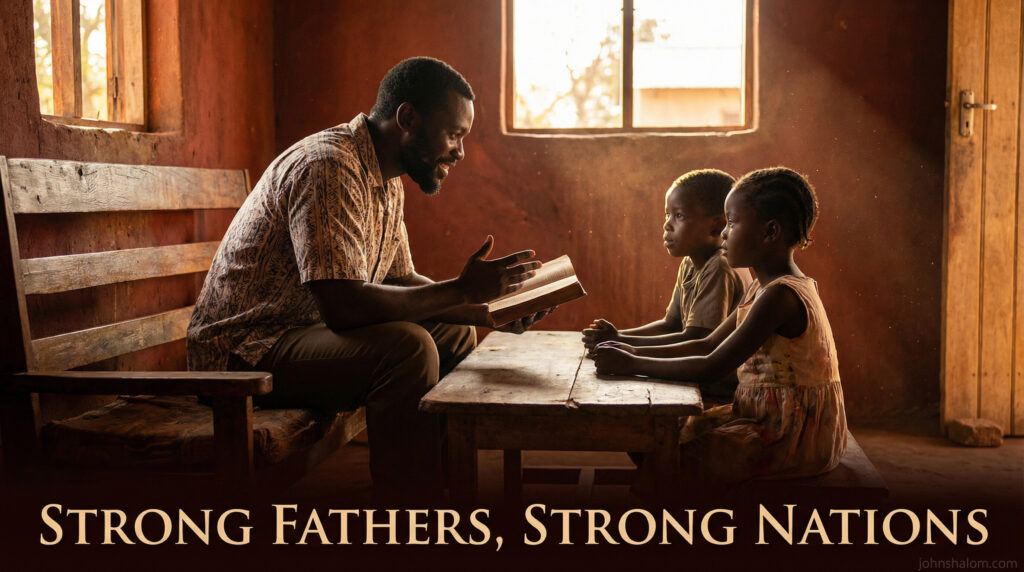
Fathers are not only family providers. They are quiet nation builders. The way a father speaks, works, prays, laughs, disciplines, and loves at home shapes how his children will one day treat neighbours, money, power, and peace. Strong fathers do not need to be perfect or rich. They need to be present, honest, and willing to grow.
When many homes have such men, a country gains citizens who are steady instead of violent, responsible instead of careless, and hopeful instead of bitter. Weak or absent fatherhood does not just hurt children. It weakens the future of a whole nation.
Introduction: Fathers as Hidden Nation Builders
1.1 A quiet man, a strong wall
When I was a boy, my father was not famous, but he was my president. His voice set the morning, his footsteps marked the evening, and his silence after a long day said more than many speeches. He was not perfect. He got tired, angry, and worried. Yet even in those moments, we took our measure of manhood from him.
In our small home, he was the wall that kept everything from falling apart. When food was short, he stretched it. When fear came close, he pushed it away with calm words. When we misbehaved, his eyes alone could restore order. At the time, I thought he was just “my father.” Now I see he was doing something much larger. He was training future citizens without a classroom, without a salary, and without applause.
1.2 Fatherhood is not only private
Many people think fatherhood is a private matter. What happens at home stays at home. But that is not true. What fathers do in silence shows up later in public. A boy who watches his father lie will later lie in the office. A girl who sees her father abuse power at home will later either fear authority or repeat the same pattern.
Governments can pass laws and build schools, but they cannot replace the daily teaching of fathers. Fatherhood is not just a family issue. It is quiet public work. Strong fathers, multiplied across villages and cities, become the hidden pillars of the nation.
What Strong Fatherhood Really Means
2.1 Presence over perfection
Many men avoid fatherhood in their hearts because they feel unqualified. They think a strong father must have a big salary, a large house, and all the answers. So when they cannot reach those dreams, they withdraw, drink, or disappear into work and friends.
But children are not looking first for a perfect man. They are looking for a present man. A father who comes home. A father who listens, even clumsily. A father who admits when he is wrong and tries again.
Presence means:
- You show up even after you fail.
- You stay even when money is tight.
- You keep talking even when you feel ashamed.
Perfection impresses people from far away. Presence shapes lives up close.
2.2 Authority with love, not fear
Some fathers think strength means shouting, beating, and controlling every move. This may produce obedience for a time, but it also produces fear, lies, and distance. Children raised under constant fear learn to hide. Later, they may obey the law only when watched, and break it when no one sees.
Strong fathers use authority with love. They correct, but they also explain. They discipline, but they also embrace. They set rules, but they also listen to questions. A child who is guided firmly and loved deeply learns that power can protect, not only hurt. That child will one day be more likely to use power fairly as a leader, teacher, or officer.
2.3 Humor, weakness, and humanity
One of my favourite memories is of my father chasing a chicken. He ran, slipped, recovered, ran again, and finally surrendered in defeat. We laughed until we could not breathe. In that moment, I saw that strong fathers can look foolish and survive it.
When a father laughs with his children, he teaches them that strength and softness can live together. When he allows them to see his weakness, he teaches that real men can say, “I am tired” or “I am scared” without losing their worth. Children raised by such men learn that leadership is not about pretending to be a stone, but about being a human who stands, falls, and stands again.
When Fathers Shape Citizens at Home
3.1 Small lessons in honesty and responsibility
Citizenship begins long before voter registration. It begins when a father helps a child tell the truth about a broken cup, instead of teaching them to hide it. It begins when he refuses to lie to a teacher or employer “for the sake of the child.”
A strong father:
- Admits when he made a mistake with money or promise.
- Refuses to cheat in business even when no one is watching.
- Teaches children to finish chores before play.
- Keeps his word as much as he can, and apologises when he cannot.
These small choices tell children, “This is how we live in a community.” Later, those children become adults who are less likely to steal public funds, take bribes, or abuse power, because honesty is not just a rule. It is part of their family story.
3.2 Fathers as first teachers of respect and peace
Long before a child meets a policeman or a president, they meet the authority of a father. In that space they learn:
- Whether authority always crushes, or sometimes protects.
- Whether disagreement means war, or can mean discussion.
- Whether respect is given only to some people, or to all.
You might also like: Creative Nonfiction Series: What It Is and Its Importance for You
When a father insults neighbours, tribes, or leaders at home, he trains his children to see others as less human. When he greets the poor, respects his wife, and speaks carefully about leaders even when he disagrees, he sets a different standard.
How a father settles conflict at home is practice for how a whole generation will settle conflict in the streets and parliament.
3.3 Work, discipline, and the meaning of strength
I still remember the sound of my father waking before sunrise. His movements were a kind of morning alarm: “The day has begun. Life will not wait.” He worked with his hands, made hard choices, and carried burdens we only understood later.
Strong fathers teach that strength is not only about fighting, but about finishing what you start. They show that a man’s value is not in how many people fear him, but in how many people can trust him.
Children watch how their father handles tiredness, failure, and pressure. If he escapes through alcohol, violence, or endless jokes, they learn that responsibility is something to run away from. If he pauses, prays, rests, and then returns to the task, they learn that strength is steady and patient.
The Wound of Father Absence
4.1 Wars, poverty, and missing men
In many places, fathers are missing not only by choice, but because of war, illness, migration, or economic pressure. Some die in battle. Some leave to find work and never return. Others are present in body but absent in heart, locked in their own pain or addiction.
The result is the same for the child. A gap. A question. A wound.
Societies with many absent fathers often see:
- Youth looking for identity in gangs, armed groups, or reckless politics.
- Young men proving manhood through violence or risk.
- Young women seeking love from anyone who offers attention, even if it destroys them.
That is why fatherhood is not a small private issue. When fathers are missing in many homes, the nation feels it in crime rates, broken politics, and weak social trust.
4.2 When children look for fathers elsewhere
Children without fathers do not stop needing guidance. They simply look for it elsewhere. They may copy musicians, social media influencers, militia leaders, or corrupt politicians who seem strong.
These substitute “fathers” often promise identity and belonging, but they usually demand a high price: blind loyalty, dangerous actions, and sometimes even a willingness to die for empty causes.
This is how absence at the family table can slowly turn into chaos in the public square.
4.3 Can the wound be healed?
The wound of father absence is real, but it is not the end of the story. Uncles, grandfathers, older brothers, teachers, pastors, and coaches can become father figures. A man who decides to mentor a boy who lost his father is doing national service.
And some men who were once absent can return. A father who admits his failures, asks forgiveness, and starts again, even late in life, can still pass on strength instead of pain. It will not erase the past, but it can redirect the future.
Stories From My Father and Brother
5.1 The broken pot and the lesson of life
One day, as a boy, I broke a clay pot while carrying water. In my mind I saw the coming storm. I prepared myself for anger and blows. Instead, my father looked at me quietly and said, “Next time, hold the pot like you are holding your own life.”
That sentence followed me for years. Later, when carrying responsibilities heavier than clay, I heard his voice again. It was not only about pots. It was about handling trust, promises, and people with care.
Strong fathers turn accidents into lessons, not just into punishments.
5.2 A chicken, a chase, and shared laughter
On another day, I watched the strong man of our house lose a long battle with a chicken. His dignity did not survive that hunt, but our joy did.
That moment showed me that leadership does not mean always winning. It means being willing to look foolish in front of those you love and still remain yourself. A father who can laugh at his own failure teaches his children that failure is not the end of respect.
5.3 My brother’s death and my father’s grief
When my elder brother died in the 1989 Nasir battle, something heavy fell on our family. Grief sat like a stone in the room. My father could have broken under it. Instead, he carried it with quiet dignity. He did not pretend the pain was small. He did not hide his tears. Yet he stayed present for us. He still worked, still guided, still held us together.
From him I learned that strong fathers do not hide from pain. They walk through it. They protect their families from being swallowed by it. That kind of father forms children who face history, not run from it.
Building Stronger Fathers Today
6.1 Helping boys grow into steady men
Strong fathers begin as guided boys. If we raise boys to think manhood is only drinking, fighting, or making others fear them, they will repeat that script as adults.
We can help boys by:
- Giving them age-appropriate responsibility early, not just freedom.
- Praising kindness, honesty, and effort, not only strength or success.
- Letting them see men apologise, pray, work, and serve.
A boy who grows up seeing men wash dishes, comfort crying children, and respect women learns a different story of what a man is.
6.2 Supporting men under pressure
Many fathers are not cruel. They are simply exhausted, ashamed, or confused. They were never fathered well themselves. They carry trauma from war, hunger, or failure.
Society can support such men by:
- Creating spaces where they can talk honestly about their struggles.
- Offering counselling, mentoring, and teaching without mocking their weakness.
- Providing real economic opportunities so they can provide without crime.
When men are supported, they are more able to support others. When they are only blamed and attacked, they often escape further into destructive habits.
6.3 Faith, M = {B, D²}, and fatherhood as calling
For me, faith is the deepest source of strength in fatherhood. If meaning is M, and it comes from Being and repeated Doing, then fatherhood sits right inside that formula.
Being: A father first needs to know who he is – a child of God, a man of worth, not just a wallet or a warrior.
Doing²: Then, day after day, he lives out small actions that match that identity – praying with his family, working honestly, saying no to bribes, listening to his children, asking forgiveness when he fails.
Those repeated actions, guided by a clear sense of being, create meaning. For the father, for the children, and for the wider community. Fatherhood becomes more than duty. It becomes a calling that shapes the nation, one household at a time.
If you would like to know more about my path as a writer, including the struggles, lessons, and small signs of progress along the way, you can read the full story on my Wealthy Affiliate blog here: https://my.wealthyaffiliate.com/johnmaluth/blog
Reflection Questions for Fathers, Families, and Nations
- What is the most powerful lesson you learned from your father, or from the absence of one?
- How do fathers in your community shape the way young people see power, responsibility, and respect?
- In what ways can humor make fatherhood more human and less frightening for children?
- How can families, faith communities, and governments support men to become more present and honest fathers?
- If strong fathers build strong nations, what kind of nation will the next generation inherit from today’s fathers?
FAQS
- What if I grew up without a father? Can I still live a full life?
A: Yes. Growing up without a father is a deep wound, but it does not cancel your future. You can find father figures in uncles, teachers, elders, mentors, and faith leaders. You can also choose to become the kind of father you did not have, to your own children or to younger people around you. Your story can still move from pain to purpose. - Can other men replace a missing father?
A: No one can fully replace a biological father, but other men can fill much of the gap. A caring uncle, stepfather, grandfather, or mentor can offer guidance, correction, and love. When men choose to stand beside children who lost or lack a father, they are doing quiet nation building, one life at a time. - What if I have failed badly as a father? Is it too late to change?
A: It is painful to face failure, but it is not too late to change while you are still alive. Begin with honesty. Admit where you were absent, harsh, or unfaithful. Apologise without excuses. Then start small new habits: regular time with your children, honest work, sober living, steady listening. Trust will not return overnight, but change over time can speak louder than old mistakes. - What can mothers do when fathers are weak or absent?
A: Many mothers are carrying double duty. They can offer stability, love, and guidance, and they often do. They can also invite safe male role models into their children’s lives, such as trusted relatives, teachers, and leaders. At the same time, society should not leave mothers alone. Communities and churches can help carry practical and emotional load, so children receive a wider circle of care. - How does strong fatherhood relate to national development?
A: National development is not only about roads and buildings. It is about the kind of people who will govern, trade, teach, and serve. Fathers who model honesty, respect, hard work, and peace raise children who are more likely to resist corruption, care for public resources, and treat others with dignity. When many homes produce such citizens, a country’s institutions and public life become stronger from the inside out.