Finding qualified interpretation services for Dinka and Nuer languages is challenging. These are vital languages spoken by millions, yet professional interpretation resources are limited and often hard to verify.
I am John Monyjok Maluth, a China-Africa Scholar specializing in China-Africa relations, technology, digital nomads, remote work, writing, publishing, and online services. I am also a native speaker and professional provider of Language Services for Dinka and Nuer interpretation, translation, and editing. Over the years supporting humanitarian organizations, legal teams, researchers, and remote businesses, I have seen how critical accurate interpretation is, and how difficult it can be to find the right interpreter when time matters.
Dinka and Nuer are Nilotic languages spoken primarily in South Sudan, with significant diaspora communities in Sudan, Ethiopia, Kenya, Uganda, Australia, the United States, Canada, and the United Kingdom. They are essential for humanitarian response, asylum and immigration proceedings, healthcare, education, and community engagement. Yet many organizations struggle to find interpreters who are not only fluent, but also trained in professional ethics, confidentiality, and subject matter accuracy.
This guide is written for digital nomads, remote workers, online learners, and independent professionals, as well as NGOs, legal professionals, healthcare providers, and businesses who need reliable Dinka and Nuer interpretation. I will explain where to find services, how to evaluate quality, and how to ensure ethical, accurate communication.
Key Takeaways
- Dinka and Nuer interpretation requires not just fluency, but professional training in ethics, confidentiality, and accurate terminology.
- The most reliable sources for interpreters are specialized language service providers, humanitarian language networks, and verified professional interpreters with proven experience.
- For remote work, you need interpreters who are proficient with remote interpretation technology and understand cross-cultural communication.
- Evaluating an interpreter involves checking language variant, subject matter expertise, credentials, and references, not just price.
- Building a long-term relationship with a trusted interpreter improves quality, consistency, and trust for sensitive assignments.
TL;DR
Finding Dinka and Nuer interpretation services requires looking beyond generic translation marketplaces to specialized providers, humanitarian language networks, and verified native professionals. Focus on interpreters with proven fluency in the correct dialect, professional ethics training, subject matter expertise for your context, and experience with remote interpretation tools. Verify credentials, request references, and prioritize accuracy and confidentiality over lowest cost to ensure effective communication.
Understanding Dinka and Nuer Languages and Why Expertise Matters
Before searching for an interpreter, it is important to understand what makes Dinka and Nuer interpretation specialized.
Dinka, or Thuɔŋjäŋ, is spoken by the Dinka people, the largest ethnic group in South Sudan, with an estimated 4 to 5 million speakers. It has several major dialects, including Rek, Agaar, Bor, Padang, and Twic, which are not always mutually intelligible. A Dinka interpreter who speaks Rek may struggle with deep Bor dialect without preparation.
Nuer, or Thok Naath, is spoken by the Nuer people, the second largest ethnic group in South Sudan, with an estimated 2 to 3 million speakers plus large diaspora communities. Nuer also has dialectal variation across regions in South Sudan and Ethiopia, including Eastern Jikany, Western Jikany, Lou, Gawaar, and others.
For interpretation, dialect matters. If you are working with a community from Bor County, you need a Dinka Bor interpreter, not just any Dinka speaker. If you are working with Lou Nuer refugees, a Lou Nuer interpreter will provide more accurate and culturally appropriate interpretation than someone from a different Nuer subgroup.
Beyond dialect, professional interpretation is different from bilingual conversation. A qualified interpreter understands consecutive interpretation, simultaneous interpretation, sight translation, and remote interpretation protocols. They understand how to maintain neutrality, ensure confidentiality, avoid adding or omitting information, and handle sensitive content without inserting personal opinions.
This is particularly important in legal, asylum, healthcare, and humanitarian settings. Inaccurate interpretation can lead to rejected asylum claims, medical errors, or failed community engagement. For example, in asylum interviews, precise interpretation of dates, locations, and experiences is critical. In healthcare, accurate interpretation of symptoms and treatment instructions can affect health outcomes.
When you search for interpretation services, you are not just searching for someone who speaks the language. You are searching for a trained communication professional who understands both languages and the ethical responsibility of bridging them.
Where to Find Reliable Dinka and Nuer Interpretation Services
There are several channels for finding Dinka and Nuer interpreters, but their reliability varies significantly.
1. Specialized Language Service Providers With African Language Expertise
The most reliable option is a specialized provider who focuses on African languages and has a vetted network of Dinka and Nuer interpreters. These providers typically test interpreters, verify credentials, and provide quality assurance.
At johnshalom.com, I provide Language Services specifically for Dinka and Nuer interpretation and translation. This specialization means I understand dialectal differences, cultural context, and the specific needs of humanitarian, legal, and business clients. Unlike general marketplaces that list thousands of languages without verification, specialized providers offer focused expertise and accountability.
When evaluating a specialized provider, look for: clear information about Dinka and Nuer dialects covered, transparent information about interpreter qualifications, a stated commitment to confidentiality and professional ethics, and the ability to provide references or testimonials from similar assignments.
2. Humanitarian and Nonprofit Language Networks
Organizations such as Translators Without Borders, CLEAR Global, and other humanitarian language service networks maintain rosters of interpreters for crisis response. These networks are particularly strong for South Sudanese languages because they support refugee response in East Africa and beyond.
These networks are ideal if you are an NGO, UN agency, or nonprofit working with South Sudanese communities. They often have interpreters who are trained in humanitarian principles, protection, and community engagement. However, response times may be slower and availability may be limited to humanitarian contexts.
3. Professional Interpreter Associations and Directories
Professional associations such as the International Association of Conference Interpreters, AIIC, or national associations in the US, UK, Australia, and Canada may have directories where you can search for Dinka and Nuer interpreters. While Dinka and Nuer interpreters are less likely to be listed in large conference interpretation associations, they may be listed in community interpreter directories maintained by state courts, healthcare systems, or immigration services.
For example, in the United States, many state court systems maintain lists of certified or qualified interpreters for Dinka and Nuer for legal proceedings. In Australia, the National Accreditation Authority for Translators and Interpreters, NAATI, maintains a directory of credentialed interpreters. In the UK, the National Register of Public Service Interpreters includes some African language interpreters.
4. Remote Interpretation Platforms That Support Rare Languages
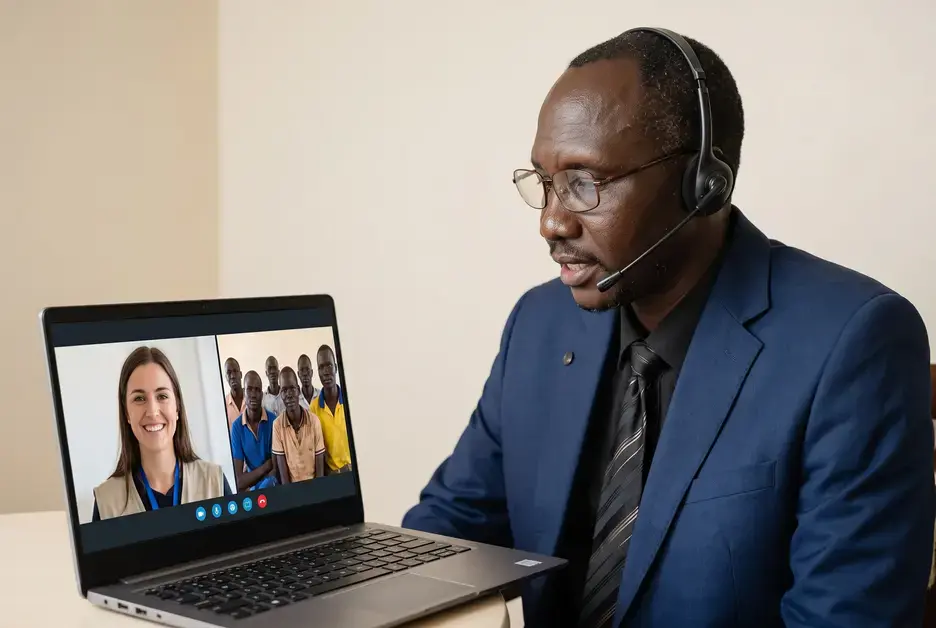
Technology has made remote interpretation more accessible, which is critical for digital nomads and remote workers. Platforms that support video and phone interpretation can connect you with Dinka and Nuer interpreters globally, rather than limiting you to interpreters in your immediate location.
When using remote platforms, verify that the platform actually has Dinka and Nuer interpreters available and that they are qualified. Some large platforms claim to support hundreds of languages but have no active interpreters for Dinka or Nuer, leading to delays and poor quality. Ask specifically about interpreter vetting, dialect coverage, and confidentiality protocols.
For remote work, you also need interpreters who are comfortable with the technology. Through my work in Technology Services, I support remote teams with tools like Zoom interpretation channels, Microsoft Teams language interpretation, and phone conferencing. An interpreter who understands these tools can provide seamless service without technical interruptions.
5. Community Organizations and Diaspora Networks
South Sudanese community organizations in diaspora locations such as Australia, the US, Canada, and the UK often know qualified interpreters. These organizations can be valuable connectors, especially for community events and cultural mediation.
However, be cautious about using informal community interpreters for sensitive assignments such as legal, asylum, or healthcare interpretation without verifying professional training. Community bilinguals may be fluent but lack training in interpretation ethics, confidentiality, and accurate terminology. For sensitive assignments, always prioritize trained professional interpreters, even if they are found through community networks.
Table: Comparison of Sources for Dinka and Nuer Interpretation Services
| Source | Strengths | Limitations | Best For |
|---|---|---|---|
| Specialized Provider | Vetted, dialect expertise, accountability, confidentiality | May have higher cost than informal options | Legal, humanitarian, healthcare, business assignments |
| Humanitarian Language Networks | Trained in humanitarian principles, crisis experience | Limited to humanitarian contexts, slower response | NGOs, UN agencies, refugee response |
| Professional Directories | Credentialed interpreters, often court or healthcare qualified | Limited coverage for Dinka and Nuer in many regions | Legal and healthcare in US, Australia, UK |
| Remote Platforms | Global access, on-demand, supports remote work | Quality varies, some claim coverage without active interpreters | Remote teams, digital nomads, urgent needs |
| Community Organizations | Cultural knowledge, community trust | May lack professional training, confidentiality risks | Community events, cultural mediation |
How to Evaluate Quality and Professionalism
Finding a name is only the first step. Evaluating quality is what ensures accurate communication.
Here is a practical framework I use and recommend to clients seeking Dinka and Nuer interpretation.
1. Verify Dialect and Language Variant
Ask the interpreter which Dinka or Nuer dialect they speak natively and which dialects they can interpret. Ask about their experience with the specific community you are serving. For example, if you are working with asylum seekers from Jonglei State, ask if the interpreter has experience with Bor Dinka or Lou Nuer specifically.
2. Check Professional Training and Experience
Ask about training in interpretation ethics, consecutive and simultaneous interpretation, and subject matter expertise. For legal interpretation, ask about experience with asylum interviews, court proceedings, or immigration interviews. For healthcare, ask about medical terminology training. For humanitarian work, ask about protection and confidentiality training.
Professional interpreters should be able to explain their approach to accuracy, neutrality, and confidentiality. They should be able to describe how they handle situations where they do not understand a term or where there is no direct equivalent.
3. Assess Subject Matter Expertise
Interpretation quality depends heavily on subject matter knowledge. A Dinka interpreter who is excellent for community meetings may not be suitable for a complex medical consultation without medical terminology preparation. Ask about the interpreter’s experience in your specific domain: legal, medical, humanitarian, education, or business.
For remote workers and online learners, this is particularly important. If you are conducting research on China-Africa relations involving South Sudanese communities, you need an interpreter who understands research ethics and can accurately interpret research questions and responses.
4. Verify Confidentiality and Ethics Commitment
Professional interpreters should have a clear commitment to confidentiality and a code of ethics. Ask how they handle confidential information, whether they have signed confidentiality agreements, and how they store or delete notes after assignments. This is critical for legal, healthcare, and humanitarian work where sensitive information is shared.
For clients needing Language Services, I provide explicit confidentiality commitments and follow professional ethics that include accuracy, neutrality, and confidentiality. This should be standard for any professional provider.
5. Test Technology Proficiency for Remote Assignments
If your assignment is remote, test the interpreter’s technology proficiency. Can they use Zoom interpretation channels, Microsoft Teams, or phone conferencing effectively? Do they have a quiet environment, stable internet, and a headset for clear audio? For digital nomads and remote teams, this technical readiness is as important as language proficiency.
Through my Technology Services, I often support clients in setting up remote interpretation workflows that ensure clear audio, secure connections, and minimal disruption. An interpreter who is technically prepared contributes to a smoother experience for all parties.
6. Request References and Sample Work
Ask for references from similar assignments. For example, if you need legal interpretation, ask for references from legal aid organizations or immigration lawyers. If you need humanitarian interpretation, ask for references from NGOs. Professional interpreters should be able to provide references while respecting client confidentiality.
For translation services that may accompany interpretation, such as translating documents related to an asylum case or a research project, you may also want to review sample translations or ask about quality assurance processes. My Writing Services include editing and quality review that can support accurate translation of supporting documents.
7. Discuss Rate and Professionalism, Not Just Price
Professional interpretation is skilled work that requires years of language development, cultural knowledge, and ethical training. Extremely low rates often indicate lack of professional training or quality assurance. While budget is important, especially for nonprofits, prioritize value and accuracy over lowest cost. Inaccurate interpretation can cost far more in failed projects, legal issues, or harmed trust than professional interpretation costs.
Remote vs On-Site Interpretation for Dinka and Nuer
For digital nomads, remote workers, and global organizations, remote interpretation is often the most practical option for Dinka and Nuer languages.
Remote interpretation includes phone interpretation and video interpretation. It allows you to access qualified interpreters regardless of location, reduces travel costs, and enables faster response for urgent assignments.
Phone interpretation is suitable for short, less complex interactions where visual cues are less critical. It is often used for customer service, brief check-ins, and some healthcare triage.
Video interpretation is preferable for more complex or sensitive assignments, such as legal interviews, medical consultations, and community meetings. Visual cues improve accuracy and help build rapport. It also allows the interpreter to see speakers and better manage turn-taking.
On-site interpretation remains important for certain contexts, such as court proceedings, lengthy community workshops, and situations where technology access is limited. For on-site assignments, you need to consider travel, scheduling, and safety, especially in humanitarian contexts.
For remote work, here are best practices for remote Dinka and Nuer interpretation.
Prepare the interpreter in advance. Share the agenda, key terminology, participant backgrounds, and any documents that will be referenced. For example, if you are interpreting a training on remote work tools, share the tool names and key concepts in advance so the interpreter can prepare accurate equivalents.
Ensure good audio and video quality. Both the interpreter and participants should have headsets, quiet environments, and stable internet. Poor audio is the biggest cause of interpretation errors in remote settings.
Brief all participants on how to work with an interpreter. Speak in short segments, pause for interpretation, avoid jargon without explanation, and speak directly to the listener, not to the interpreter. For example, say “What is your experience with remote work” rather than “Ask him what his experience is.”
Allow for debrief. After sensitive assignments, allow a brief debrief with the interpreter to clarify any cultural nuances or communication challenges that arose.
My experience providing remote Language Services while also supporting clients with Technology Services has shown that the combination of language expertise and technology readiness creates the best remote interpretation experience.
How to Prepare for a Successful Dinka and Nuer Interpretation Assignment
Finding the interpreter is only half the work. Preparing properly ensures success.
1. Define Your Needs Clearly
Before contacting an interpreter, define: languages and dialects needed, type of interpretation (consecutive, simultaneous, phone, video, on-site), subject matter, date and duration, location or platform, and confidentiality requirements. The clearer your brief, the more accurate the interpreter assignment.
2. Share Materials in Advance
Share agendas, presentations, documents, and key terminology at least 24 to 48 hours before the assignment. For legal assignments, share relevant case background (without violating confidentiality). For healthcare, share the type of appointment. For research, share research questions and consent forms.
3. Confirm Logistics
Confirm date, time, time zone, platform link, dial-in numbers, and backup contact method. For remote assignments, conduct a brief tech check with the interpreter before the assignment, especially for important or lengthy sessions.
4. Plan for Cultural Mediation
Dinka and Nuer cultures have specific communication norms, concepts of time, and ways of discussing sensitive topics. A professional interpreter does more than translate words. They can provide cultural context when appropriate. Discuss with your interpreter how to handle cultural concepts that have no direct equivalent and how to flag cultural misunderstandings.
5. Ensure Ethical Working Conditions
Professional interpretation is mentally demanding. For assignments longer than one hour, plan for breaks. For assignments longer than two hours, consider using two interpreters who can alternate. Ensure the interpreter has access to water and a comfortable environment. Ethical working conditions improve accuracy.
6. Provide Feedback and Build Long-Term Relationships
After the assignment, provide feedback to the interpreter. What went well? What could be improved? If you found a qualified Dinka or Nuer interpreter, build a long-term relationship. Consistency improves quality because the interpreter becomes familiar with your organization, your terminology, and your community. For NGOs and businesses working regularly with South Sudanese communities, having a trusted interpreter on call is invaluable.
For organizations that also need document translation, such as translating information sheets, consent forms, or educational materials, consider bundling interpretation and translation services with the same provider for consistency. My Writing Services support the editing and publishing of translated materials to ensure they are clear and culturally appropriate.
Common Challenges and How to Overcome Them
Finding and working with Dinka and Nuer interpreters comes with specific challenges.
Challenge 1: Limited availability. There are fewer professional Dinka and Nuer interpreters compared to more widely spoken languages. Solution: Book in advance when possible, build a roster of trusted interpreters, and use remote interpretation to expand your pool beyond your immediate location.
Challenge 2: Dialect mismatch. An interpreter may speak Dinka but not the specific dialect your client speaks. Solution: Always ask about dialect, and if possible, ask the client or community about their specific dialect or region of origin before assigning an interpreter.
Challenge 3: Lack of written resources. Dinka and Nuer are primarily oral languages for many speakers, and standardized written terminology for technical concepts may be limited. Solution: Work with your interpreter to develop glossaries for your specific context, and allow time for the interpreter to explain concepts that have no direct equivalent.
Challenge 4: Technology barriers. Some participants may have limited internet access or low digital literacy for remote interpretation. Solution: Provide simple joining instructions, offer phone dial-in options as backup, and conduct brief tech orientations before important assignments.
Challenge 5: Confidentiality concerns in small communities. South Sudanese diaspora communities can be close-knit, and clients may worry that interpreters know their community. Solution: Discuss confidentiality explicitly, consider using remote interpreters from outside the immediate community when appropriate, and ensure interpreters follow strict confidentiality protocols.
Challenge 6: Quality variation in generic marketplaces. Large freelance marketplaces may list many interpreters for Dinka and Nuer without verifying quality. Solution: Prioritize specialized providers, request references, and test interpreters on smaller assignments before entrusting them with sensitive work.
Reflection Questions
- Does your current process for finding Dinka and Nuer interpreters prioritize verified dialect expertise and professional ethics, or does it focus only on availability and cost?
- How do you currently prepare interpreters for assignments, and what materials could you share in advance to improve accuracy and cultural appropriateness?
- For remote assignments, is your technology setup supporting or hindering accurate interpretation, and what improvements could you make to audio, video, and platform use?
- How can you build long-term relationships with trusted Dinka and Nuer interpreters to improve consistency and trust for your community or clients?
FAQs
1. What is the difference between Dinka and Nuer interpretation and just finding someone who speaks the language
Professional interpretation requires training in accuracy, neutrality, confidentiality, and interpretation techniques, not just fluency. A bilingual person may be fluent in conversation but lack skills in consecutive interpretation, ethical handling of sensitive information, and accurate terminology for legal, medical, or humanitarian contexts. Professional interpreters ensure nothing is added, omitted, or distorted.
2. How do I know which Dinka or Nuer dialect interpreter I need
Ask your client or community about their region of origin in South Sudan, such as Bor, Rek, Agaar for Dinka, or Lou, Jikany, Gawaar for Nuer. If you are unsure, provide the interpreter with information about the client’s background and ask the interpreter to confirm if they can serve that dialect. Specialized providers can help match dialect expertise to your needs.
3. Can Dinka and Nuer interpretation be done effectively remotely
Yes, remote interpretation via phone or video can be highly effective for Dinka and Nuer when done with qualified interpreters and good technology. Video is preferable for sensitive or complex assignments because visual cues improve accuracy. Ensure good audio, quiet environments, headsets, and platform familiarity for best results, especially for remote teams and digital nomads.
4. How much does professional Dinka and Nuer interpretation cost and what affects the price
Cost varies based on type of interpretation, duration, subject matter complexity, on-site vs remote, and urgency. Legal and medical interpretation requiring specialized terminology typically costs more than general community interpretation. On-site interpretation includes travel costs. While rates may be higher than informal bilingual help, professional interpretation protects against costly errors in legal, medical, and humanitarian outcomes.
5. Where can I find Dinka and Nuer interpreters for urgent or humanitarian assignments
For urgent assignments, contact specialized language service providers focusing on African languages, humanitarian language networks like Translators Without Borders, or verified professional interpreters with remote capabilities. Building a roster of trusted interpreters in advance is the best way to ensure availability for urgent needs, rather than searching only when a crisis occurs.
Conclusion
Finding reliable interpretation services for Dinka and Nuer languages requires intentionality, verification, and respect for the professionalism of interpretation.
It is not enough to find someone who speaks the language. You need a trained professional who understands dialectal variation, subject matter terminology, confidentiality, and cross-cultural communication. You need someone who is proficient with remote interpretation technology and who approaches their work with ethical commitment.
For digital nomads, remote workers, humanitarian organizations, legal professionals, healthcare providers, and businesses, investing time in finding and vetting qualified Dinka and Nuer interpreters pays off in accurate communication, trust, and successful outcomes. Whether you work through a specialized provider like my Language Services, a humanitarian language network, or a verified professional directory, prioritize quality, dialect match, and professionalism over lowest cost.
As global mobility continues and South Sudanese communities remain active worldwide, the need for qualified Dinka and Nuer interpretation will only grow. By building relationships with trusted interpreters, preparing properly for assignments, and supporting ethical working conditions, you contribute to more accurate, humane, and effective communication across languages and cultures.
If you have an upcoming assignment requiring Dinka or Nuer interpretation, start by defining your needs clearly, verifying dialect expertise, and reaching out to specialized providers who can offer accountability and quality assurance. Accurate interpretation is not just a service. It is a bridge to understanding, justice, and opportunity.
And if you want to know what’s happening in my world as a writer and digital nomad, check out my Wealthy Affiliate blog page here: https://my.wealthyaffiliate.com/johnmaluth/blog.