
On August 19, 2026, Reuters reported that the US International Development Finance Corporation is backing a pipeline of African rare earth projects as private investors remain reluctant to finance the sector. The DFC has committed 62.8 million dollars to rare earth projects in Malawi, Angola, Madagascar, and South Africa, though none has so far reached production.
A month earlier, on July 28, Reuters reported that the United States is backing the Ampasindava rare earths project in Madagascar as part of its strategy to loosen the dominance of rivals in critical minerals supply chains.
This is the new scramble for African rare earths. It is driven by electric vehicles, wind turbines, consumer electronics, and defence systems that need high powered magnets made from neodymium, praseodymium, dysprosium, and terbium. It is driven by China’s tightened export controls over past couple years and China’s record trade surplus of 1.2 trillion dollars in 2025.
For fifteen years since South Sudan’s independence, I have watched how resource scrambles can either build local jobs or extract value and leave. I am John Monyjok Maluth, a China-Africa Scholar based in Juba. Through Writing Services, Technology Services, and Language Services, I work with digital nomads, remote workers, and independent professionals who support mining communities with documentation, translation, and secure systems.
The question for Africa in 2026 is not whether rare earths matter. They do. The question is what it means for local jobs. Will Africa mine and ship raw clay, or will Africa refine, manufacture magnets, and keep value at home.
Key Takeaways
- DFC has committed 62.8 million dollars to rare earth projects in Malawi, Angola, Madagascar, and South Africa, with about 50 million for Phalaborwa in South Africa backed by TechMet, but none have reached production.
- Flagship Ampasindava ionic clay project in Madagascar, owner Harena Rare Earths, targets 4,000 metric tons rare earth oxides annually including 1,700 tons magnet rare earths, with DFC committing up to 4.84 million dollars for pilot plant work.
- Private investors remain reluctant to fund African rare earth projects despite strategic importance, according to senior DFC executives, due to refining risk and permitting.
- China has long dominated copper, cobalt, and lithium investment in Africa and tightened rare earth export controls, making alternative supply chain central to world politics.
- For local jobs, test is not pit but processing, from pilot plant to refining with MP Materials, USA Rare Earths, Solvay, to magnet manufacturing, with local hiring, skills transfer, and environmental safeguards.
TL;DR
US DFC is funding African rare earths in four countries with 62.8 million dollars including 4.84 million for Ampasindava in Madagascar to counter China dominance, but private capital holds back and no project produces yet. Rare earths are essential for EVs, wind, and defence magnets. New scramble will only benefit local jobs if Africa moves from raw ionic clay to refining and magnet making with transparent contracts and skills transfer.
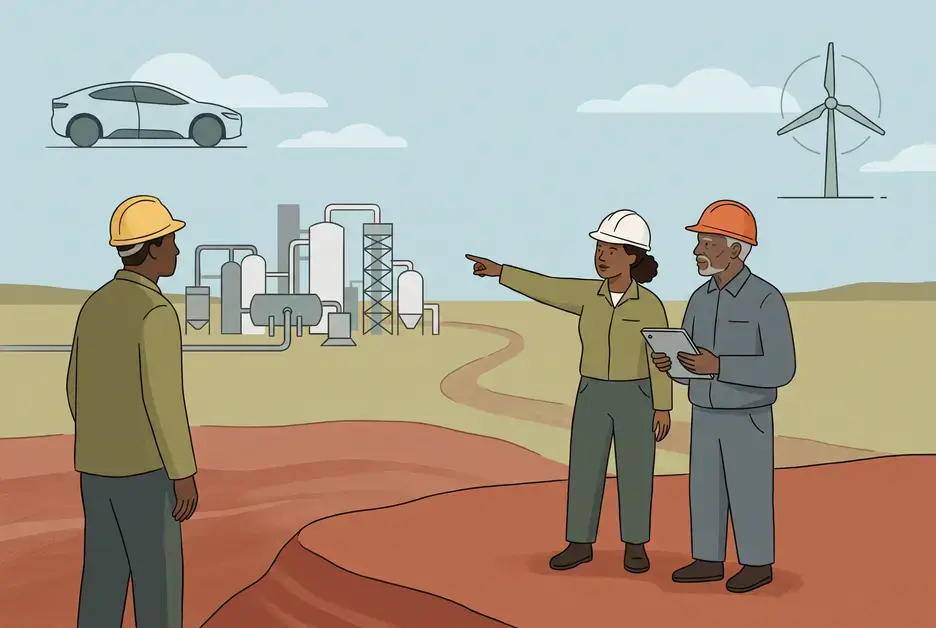
Why Rare Earths Are Now Central to World Politics
Rare earths are not rare in earth crust. They are rare to produce economically and to refine cleanly. Seventeen elements, including neodymium, praseodymium, dysprosium, terbium, are essential for high powered permanent magnets used in electric vehicle motors, wind turbine generators, robotics, electronics, and defence systems like fighter jets and missiles.
China produces almost exclusively refined rare earths and magnet materials. Over past couple years, China tightened export controls, leveraging global dependence on Chinese supply chains. To get Washington to row back on tariffs, Beijing put export controls on rare earths. Industries worldwide, including US firms, cannot function without them.
Africa holds significant deposits. Malawi, Angola, Madagascar, South Africa, Namibia, Tanzania, Democratic Republic of Congo all have projects at various stages. Some are ionic clay, which is attractive because it can be lower cost and lower radiation than hard rock.
When China ended 2025 with record trade surplus of 1.2 trillion dollars, pushing into new markets by offering lower prices, US strategy shifted to securing alternative supply. Africa is 20 to 25 percent of DFC global portfolio, showing importance.
For professionals in Technology Services, this scramble drives demand for secure data handling, environmental monitoring systems, and Windows and antivirus management in remote project offices. For those in Language Services, it drives need for accurate translation of community engagement, resettlement, and environmental impact documents in local languages.
Where DFC Money Is Going and What Stage Projects Are At
DFC funding is early stage and development focused, not yet construction of large mines.
Phalaborwa, South Africa, about 50 million dollars. Backed by Dublin based mining investor TechMet. Largest of DFC rare earth commitments. Project aims to recover rare earths from phosphogypsum stacks, a tailings reprocessing approach that is more circular economy than new pit. Still pre production.
Ampasindava, Madagascar, up to 4.84 million dollars. Owner Harena Rare Earths plc, listed on LSE. DFC’s first mining investment in Madagascar, announced at American Mining Industry event at US Department of State. Funding for pilot plant work, lab testing, environmental programs. Deposit is ionic clay rich in neodymium, praseodymium, dysprosium, terbium. Expected production about 4,000 metric tons rare earth oxides annually, including 1,700 tons high value magnet rare earths. Target startup mid 2028, seeking exploitation permit, evaluating US and EU refining with MP Materials, USA Rare Earths, Solvay.
Other commitments. Malawi, Angola, plus South Africa make up total 62.8 million dollars. None have reached production as of August 2026. Two more applications in Angola and Malawi under review as of August 27, no disbursement date given.
This funding pattern shows US approach, de risk early stage projects with public money because private investors remain unwilling.
Senior DFC executives told Reuters private investors remain reluctant to finance sector. Reasons include price volatility, lack of refining capacity outside China, environmental concerns, and long permitting.
Contrast with Chinese companies that have long dominated investment in copper, cobalt, and lithium in Africa. Chinese firms put machines on ground quickly, finance often faster than Western alternatives, and willingness to work on energy, mining, transport, digital at once.
In Tanzania, Tazara railway modernization backed by China is moving forward to export minerals via Dar es Salaam. In Angola, Lobito corridor dominated by Western companies aims to export Congolese rare earths to Atlantic. Two competing corridors show Africa is now infrastructure that others fight to build.
Why Private Capital Holds Back From African Rare Earths
Understanding why private money holds back helps explain what must change for local jobs.
Refining bottleneck. Mining ionic clay is one step. Refining into separated oxides and then into magnets is where value and technical risk lie. Most refining capacity is in China. Projects evaluating refining with MP Materials, USA Rare Earths, Solvay face questions about cost, technology transfer, and offtake agreements.
Price and offtake uncertainty. Rare earth prices volatile, driven by Chinese export policy. Without long term offtake contracts at bankable prices, banks hesitate.
Permitting and environmental risk. Ionic clay mining can be lower impact than hard rock, but still requires water management, land rehabilitation, and community consent. Projects need exploitation permits and environmental approvals.
Infrastructure gap. Remote deposits need roads, power, water. In Madagascar, project needs port access and reliable energy.
Skills gap. Local workforce needs training for specialized processing, not just manual mining.
For digital nomads supporting these projects, these risks translate into need for better documentation. Environmental and social impact assessments must be written clearly, edited professionally through Writing Services, and translated accurately for communities through Language Services. Secure ICT systems are needed to manage sensitive data.
The Jobs Test From Pit to Processing
The new scramble will be judged by jobs, not by press releases.
Stage 1, exploration and pilot plant, few jobs, high skills. Geologists, lab technicians, environmental specialists. Local jobs limited to support.
Stage 2, construction, many temporary jobs. Civil works, camp building, road repair. This is where local hiring can be significant if contracts require it.
Stage 3, mining and processing, moderate permanent jobs. Operators, maintenance, safety officers, drivers. With training, local employment can be high.
Stage 4, refining and magnet making, high value permanent jobs. Chemical engineers, quality control, logistics, managers. This stage is where value stays and where Africa currently has least capacity.
Today, most African rare earth projects stop at Stage 3 in planning, with refining evaluated in US and EU. That means value leaves.
To change that, Africa must demand local content in contracts, skills transfer with published training plans, and environmental protection monitored independently.
Table: What Local Jobs Look Like at Each Stage
| Stage | Typical Jobs | Local Potential | What to Demand in Contract |
|---|---|---|---|
| Exploration | Geologists, lab techs | Low | Scholarships for local geologists |
| Construction | Builders, electricians, drivers | High temporary | 70 percent local hiring, safety training |
| Mining Processing | Operators, maintenance, HSE | Medium permanent | Technical training center, pay scales public |
| Refining Magnet | Chemists, engineers, QC | High value if local | Refining pilot in Africa, not only US EU |
In Zambia, copper expansions show model. First Quantum S3 at Kansanshi includes processing plant and smelter expansion lifting throughput by 25 percent, extending mine life to 2044 to 2049 and lifting output to 280,000 tonnes per year. Jobs are not just in pit but in plant. Zambia targeting 3 million tonnes by 2030 to 2031 shows scale creates jobs when processing stays.
South Africa plans 14,000 kilometers transmission lines costing 440 billion rand, about 25 billion dollars, to accommodate 53 gigawatts new generation. Team South Africa mission to China aimed at unlocking investment for this, aligning Chinese industrial capability with South Africa pipeline. That energy is needed for processing.
Namibia, during state visit to China, secured deals on uranium, lithium, rare earths, with agreement to strengthen cooperation. Both sides recognized strategic value.
In Congo, officials said on August 27 they would seek other partners if US minerals framework fails, noting rivalry between China and United States is not Africa’s interest, but Africa’s interest is development that creates jobs.
What This Means for South Sudan and for Remote Professionals
South Sudan does not have a rare earth project in production today, but lesson applies directly.
First, do not repeat oil history where crude is exported and refined products imported. For future minerals, insist on processing steps in country.
Second, publish clear mining code, exploitation permit process, and environmental standards that investors can trust.
Third, invest in power and roads that make processing viable. A mine without power cannot refine.
Fourth, build skills pipeline. Partner with universities for geology, chemistry, environmental management.
For remote professionals, new scramble creates opportunity to offer services that help local jobs.
- Writing and editing: Help communities understand technical reports. Translate environmental management plans into Dinka and Nuer through Language Services.
- Technology: Provide secure systems for exploration data, antivirus and Windows management for field offices, and ICT support that keeps data protected.
- Publishing: Help local suppliers document capacity to meet local content requirements through professional profiles via Writing Services.
Three actions now:
- Map rare earth projects in your region and track stage from pilot to production, noting local content clauses.
- Offer to review one environmental and social impact assessment for clarity and translation needs.
- Build partnership with one technical training institution to support skills transfer for processing jobs.
How to Evaluate a Rare Earth Deal as African Stakeholder
Checklist for African agency in rare earth deals 2026:
- Does contract require local hiring percentage with penalties?
- Is there funded training center for processing skills?
- Where will refining happen, and is there plan to bring refining pilot to Africa?
- What are environmental safeguards for water and land rehabilitation?
- Is exploitation permit process transparent and published?
- Does deal include power and transport infrastructure that outlives mine?
If answer is no to most, value will leave.
Reflection Questions
- When you see a new scramble for resources, do you ask who gets jobs at each stage from pit to processing?
- Does your business depend on magnets and electronics that use rare earths, and do you know where they come from?
- Are you building skills that allow you to support high value stages like refining and magnet making, not just mining?
- How can your work in writing, technology, or language help communities negotiate better local content?
- What would change if every mining contract published local hiring and training commitments?
FAQs
1. What is DFC funding for African rare earths in August 2026?
DFC committed 62.8 million dollars to rare earth projects in Malawi, Angola, Madagascar, and South Africa, including about 50 million for Phalaborwa in South Africa backed by TechMet and up to 4.84 million for Ampasindava ionic clay project in Madagascar owned by Harena Rare Earths. None have reached production, with target startup for Ampasindava mid 2028.
2. Why is US backing Ampasindava rare earth project in Madagascar?
US backs Ampasindava as part of strategy to loosen China dominance in critical minerals supply chains, advancing strategically important source of neodymium, praseodymium, dysprosium, terbium for EV and defence magnets, with DFC first mining investment in Madagascar announced at State Department event.
3. Why do private investors hold back from African rare earth projects?
Private investors remain reluctant due to lack of refining capacity outside China, price volatility driven by Chinese export controls, need for long term offtake agreements, permitting and environmental risk, infrastructure gaps, and skills gaps for processing.
4. What does new scramble mean for local jobs in Africa?
Jobs depend on stage. Construction offers many temporary local jobs. Mining and processing offer medium permanent jobs. Refining and magnet making offer high value permanent jobs but currently planned in US and EU with MP Materials, USA Rare Earths, Solvay. To benefit locally, Africa must demand local hiring percentages, training centers, and refining pilots in Africa.
5. How does rare earth race connect to South Sudan and other African states?
South Sudan has no rare earth production yet but lesson from Zambia copper and South Africa transmission shows processing must stay to create jobs. Countries should publish clear mining codes, invest in power and roads, build skills pipeline, and insist on transparency, local content, and environmental safeguards, with support from services like writing, technology, and language translation.
Conclusion
The new scramble for African rare earths is here. On August 19 and July 28, Reuters documented US moves, DFC committed 62.8 million dollars to four countries, with 4.84 million dollars for Ampasindava in Madagascar, aiming to loosen China grip on magnets used in electric vehicles, wind turbines, and defence.
Private capital holds back. No project produces yet. Refining is evaluated in US and EU, not in Africa.
China has long dominated copper, cobalt, lithium investment and tightened rare earth export controls, using leverage when Washington raises tariffs. Two corridors compete, Tazara modernized by China to Tanzania and Lobito by Western companies to Angola, showing Africa is now infrastructure others fight to build.
For Africa, test is not whether scramble happens, but whether jobs stay.
Zambia shows processing can stay with smelter expansions. South Africa shows power investment needed for processing. Namibia shows state visits can secure deals on uranium, lithium, rare earths with cooperation agreements. Congo says if US framework fails, it will seek other partners, because rivalry is not Africa’s interest, development that creates jobs is.
For South Sudan, lesson is to avoid oil history where crude leaves and refined products return expensive. Future minerals must include processing steps, transparent contracts, power and roads, and skills pipeline.
For those of us in Writing Services, Technology Services, and Language Services, opportunity is to support local jobs with accurate documentation, secure systems, and clear translation in Dinka, Nuer, and English that helps communities negotiate better deals and hold partners accountable.
Africa will work with both Washington and Beijing, but will judge both by results on ground, not by press statements. Results mean local hiring percentages met, training centers built, refining pilots in Africa, water and land rehabilitated, and roads and power that outlive mines. That is standard by which new scramble should be measured, and that is work that must continue today.
And if you want to know what’s happening in my world as a writer and digital nomad, check out my Wealthy Affiliate blog page here: https://my.wealthyaffiliate.com/johnmaluth/blog.