
The headline is simple: China grants zero-tariff for 100 percent of tariff lines to African least developed countries since Dec. 1, 2024, and extends to all African diplomatic partners from May 1, 2026. But the headline is not the story.
To expand unilateral opening to the least developed countries, China has granted zero-tariff treatment for 100 percent tariff lines to all the LDCs it has diplomatic relations with since Dec. 1, 2024. For products subject to tariff quota administration, goods within the quota will enjoy zero tariffs. China had already scrapped tariffs on 100 percent of tariff lines for 33 least developed countries in Africa since Dec. 1, 2024. Under the new policy, from May 1, 2026 to April 30, 2028, China will grant zero-tariff treatment to 20 African non-LDCs that have established diplomatic ties with China.
For African solar installers, the question is not whether this is market access. The question is whether this market access reshapes African production toward higher-value processing, whether solar and storage installations accumulate into green industrial ecosystems rather than isolated projects, and whether African actors become rule-shapers rather than rule-takers in the energy transition.
I am John Monyjok Maluth, a China-Africa scholar and remote practitioner across Writing Services, Language Services, and Technology Services. This guide rewrites the zero-tariff story through four lenses you requested: trade and industrial policy, infrastructure and finance, global governance and the Global South, and academic production and knowledge politics, all translated into practical implications for African solar installers.
Key Takeaways
- Zero tariffs are not merely market access. They are an instrument for reshaping African production toward higher-value processing. The institutional vehicle is the Agreement on Economic Partnership for Shared Development, with 38 framework agreements signed.
- The tariff effect is likely limited in sectors where mineral and oil exports already face low duties. The real test is whether green and digital industrial ecosystems, solar panel assembly, battery value chains, data centers, e-commerce platforms, take root in Africa or remain import-dependent.
- Infrastructure and finance have shifted. The China-Africa energy portfolio has shifted decisively toward solar and wind, with an estimated 59 percent of China’s energy projects in Africa in renewables by 2025. This is not just project finance. It is a bet on whether Chinese capital and manufacturing can create green industrial ecosystems rather than isolated installations.
- The central economic question is capacity versus capability. Installing capacity is not the same as accumulating local capability in assembly, maintenance, financing, and standard-setting.
- Global governance matters. China frames AI and clean energy cooperation as public goods for the Global South. The Changsha Declaration explicitly positions China-Africa solidarity as a counterweight to unilateralism and protectionism. African countries are demanding a role as rule-shapers rather than rule-takers.
- Academic production must catch up. Bibliometric analysis of China-Africa research from 2001 to 2025 shows a trajectory from bilateral interpretation to global engagement, with a needed pivot toward African-centered micro-empirical studies and an autonomous knowledge system grounded in South-South cooperation. Another strand notes that policy runs ahead of systematic evaluation. Digital-green cooperation is where this gap is most acute.
TL;DR
China’s zero-tariff for 100 percent of tariff lines for African LDCs since December 2024 and for all 53 diplomatic partners from May 2026 is not just about selling more African products to China. Through the Agreement on Economic Partnership for Shared Development with 38 framework agreements signed, it is an attempt to reshape African production toward higher-value processing.
For African solar installers, the tariff effect alone will be limited for oil and minerals that already faced low duties. The decisive test is whether green and digital industrial ecosystems, solar assembly, battery value chains, data centers, and e-commerce platforms, take root locally.
With an estimated 59 percent of China’s energy projects in Africa in renewables by 2025, the finance shift toward solar and wind is real, but the tension between installing capacity and accumulating capability remains.
Whether these partnerships redistribute standard-setting power or reproduce dependency in new technological forms is the governance question. For scholars and practitioners, the task is African-centered micro-empirical work that closes the evaluation gap where policy currently runs ahead of evidence.
Trade and Industrial Policy: Zero-Tariff as Industrial Instrument
Beyond Market Access
Zero-tariff is often reported as generosity or market opening. For trade and industrial policy analysis, that is incomplete. Zero tariffs are not merely market access. They are an instrument for reshaping African production toward higher-value processing.
The logic is straightforward: if raw cashew, raw sesame, or unprocessed minerals already entered China with low or zero duties, removing the last tariff line does little to change trade structure. The tariff effect is likely limited in sectors where mineral and oil exports already face low duties. The policy only rewires trade if it encourages processing that was previously penalized by tariff escalation, where processed goods faced higher duties than raw materials.
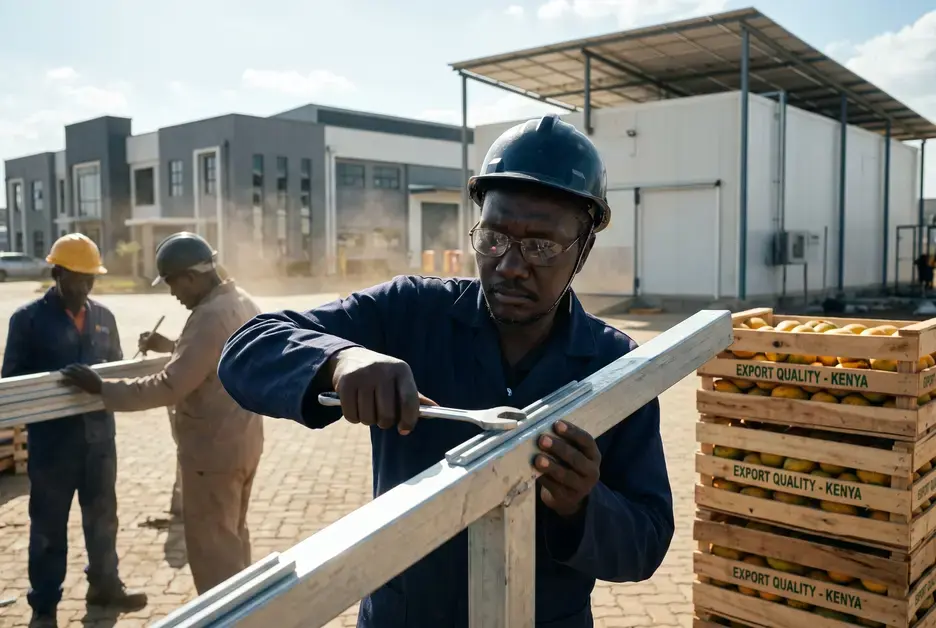
For African solar installers, this matters because processing requires reliable, affordable, and clean power. Solar water pumping that allows double cropping of export horticulture, solar cold rooms that allow grading and packaging to meet Chinese phytosanitary standards, solar dryers that allow moisture control for sesame or chili, and solar-powered milling or pressing units are all industrial policy instruments at micro scale. They shift production from raw export to higher-value export that can actually use zero-tariff.
The Institutional Vehicle: Agreement on Economic Partnership for Shared Development
Zero-tariff does not operate in a vacuum. The Agreement on Economic Partnership for Shared Development, with 38 framework agreements signed, is the institutional vehicle that bundles tariff treatment with investment facilitation, standards cooperation, and industrial park linkages.
For installers, those 38 framework agreements are not abstract diplomacy. They are the source of pipeline. Each framework agreement typically includes sector priorities, implementation committees, and lists of cooperation projects. Where a framework agreement prioritizes agricultural value addition, special economic zones, or green industrialization, solar installers can map their services directly to that text.
Practical steps:
1. Locate your country’s framework agreement summary. Read the sector priorities. If it mentions agro-processing, cold chain, light manufacturing, or renewable energy industrialization, anchor your proposals in that language.
2. Align your kits to value addition. Instead of a generic 10kW system, propose a 15kW solar plus 20kWh storage system for a cashew grading and packaging hub explicitly designed to meet export packaging standards that benefit from zero-tariff. Your proposal language mirrors the agreement’s language about higher-value processing.
3. Document higher-value outcomes. Track kilograms processed, loss reduction, grade improvement, and export readiness. These are industrial policy metrics, not just energy metrics. They make your installation legible to trade ministries and to Chinese partners implementing the partnership agreements.
This is where your own content strategy matters. Publish evergreen guides that explain how solar enables higher-value processing for specific products that benefit from zero-tariff. Link those guides to Technology Services for technical sizing and to Writing Services for professional editing of proposals that will be read by both African and Chinese stakeholders.
The Real Test: Green and Digital Industrial Ecosystems
The real test is whether green and digital industrial ecosystems, solar panel assembly, battery value chains, data centers, e-commerce platforms, take root in Africa or remain import-dependent.
For solar installers, this is the difference between being an importer of finished kits and being a node in an ecosystem.
Import-dependent model: you import panels, inverters, batteries, and controllers, install them, and leave. Warranty is offshore, monitoring data is offshore, financing is offshore.
Ecosystem model: mounting structures are fabricated locally, battery packs are assembled or refurbished locally, data from monitoring platforms is stored and analyzed locally, e-commerce platforms for spare parts and productive-use appliances are operated locally, and finance is structured through local banks that understand productive-use cash flow tied to export earnings under zero-tariff.
Zero-tariff alone does not create the ecosystem model. It creates a window where it becomes more valuable for African governments and firms to insist on local capability accumulation as a condition for market access cooperation. Installers who organize into associations and articulate clear asks, local assembly of balance-of-system, local technician certification, local data hosting for energy monitoring, become participants in industrial policy rather than bystanders.
Infrastructure and Finance: From Isolated Installations to Green Industrial Ecosystems
The Portfolio Shift
The China-Africa energy portfolio has shifted decisively toward solar and wind, with an estimated 59 percent of China’s energy projects in Africa in renewables by 2025. This figure is important not as a precise accounting standard but as a signal of direction. The era of large hydro and thermal dominance in new China-Africa energy finance has given way to solar and wind plus associated storage and grid upgrades.
For installers, this shift shows up in three ways:
- More Chinese EPC firms offering solar plus storage for industrial parks, aggregation centers, and special economic zones.
- More concessional and commercial finance tied to green energy, often bundled with trade facilitation components from the Agreement on Economic Partnership for Shared Development.
- More emphasis on productive-use appliances, from solar pumps to cold rooms, as part of agricultural modernization projects linked to export.
Project Finance vs Ecosystem Bet
This is not just project finance. It is a bet on whether Chinese capital and manufacturing can create green industrial ecosystems rather than isolated installations.
Project finance logic asks: did we install 50MW of solar? Ecosystem logic asks: did that 50MW enable local firms to maintain, finance, replicate, and innovate?
For African solar installers, the ecosystem bet succeeds or fails on capability accumulation:
1. Capability in assembly and manufacturing. Can mounting structures, distribution boards, and eventually panel assembly or battery pack assembly happen in African industrial parks with quality control that Chinese partners trust? Installers with workshop discipline, documented SOPs, and safety records are better positioned to become assembly partners.
2. Capability in maintenance and lifecycle. The tension between installing capacity and accumulating local capability is the central economic question. Installing capacity is measured in megawatts. Accumulating capability is measured in local technicians certified, spare parts available within 48 hours, mean time to repair, and percentage of monitoring data analyzed locally to improve system design.
3. Capability in finance. Ecosystem finance requires understanding of export cash flow. A cooperative that will receive payment from a Chinese buyer in 90 days after shipment under zero-tariff needs a solar lease that matches that cash flow, not a standard 30-day commercial loan. Installers who can structure pay-as-you-go or lease-to-own aligned with export receipts become finance translators.
Practical actions for installers:
- Create a capability portfolio, not just a project portfolio. Document number of technicians trained, certifications, spare parts inventory, response time, and monitoring uptime. This is what ecosystem investors look for.
- Build a data practice. Store monitoring data locally where possible, produce monthly performance and loss reduction reports for clients, and use those reports to support both warranty claims and export certification.
- Offer lifecycle contracts. Instead of one-time installation, offer three-year performance contracts that include maintenance, monitoring, and documentation for export readiness. This aligns your revenue with the ecosystem logic rather than the isolated installation logic.
Your own systems must model this discipline. Secure monitoring data, client export data, and financial records with password management, VPN for remote access, and encrypted backup, as detailed in Technology Services. Capability includes cybersecurity.
Global Governance and the Global South: Rule-Shapers Rather Than Rule-Takers
Public Goods Framing
China frames AI and clean energy cooperation as public goods for the Global South. The language matters. Public goods framing suggests that clean energy technology, standards, and platforms should be accessible and affordable, not subject to weaponized interdependence.
The Changsha Declaration explicitly positions China-Africa solidarity as a counterweight to unilateralism and protectionism. For scholars, the Changsha Declaration is a primary source that articulates how China wants its Africa policy to be read in global governance terms: as South-South solidarity against fragmentation.
For installers, this framing has practical consequences. When clean energy cooperation is framed as a public good, there is more space to negotiate for technology transfer, training, and open monitoring platforms rather than closed proprietary systems. Use the language in your proposals: reference public goods, Global South solidarity, and countering protectionism when you advocate for local assembly and open data standards. This is not rhetoric. It is aligning your business ask with the stated governance narrative of the partnership.
The Rule-Shaper Demand
African countries, meanwhile, are demanding a role as rule-shapers rather than rule-takers in the energy transition and AI governance.
This is perhaps the most important sentence for solar installers who want to avoid reproducing dependency in new technological forms.
Rule-taker model: you adopt Chinese or Western monitoring platforms with terms set elsewhere, data stored elsewhere, and standards for what counts as a high-quality installation defined elsewhere. You are certified by external bodies with little input.
Rule-shaper model: African installer associations, standards bureaus, and universities co-define what a high-quality productive-use solar system is for African export conditions, what data must be stored locally, what battery safety standards apply in hot climates, and how e-commerce platforms for solar appliances should handle warranties.
The question for scholars is whether these partnerships actually redistribute standard-setting power or reproduce dependency in new technological forms. For practitioners, the question is more immediate: are you participating in standard-setting?
Concrete steps:
- Join or form a national solar association working group on productive-use standards and monitoring data governance.
- Propose that projects funded under China-Africa green industrial ecosystem cooperation include a requirement for local technician certification and local data hosting.
- Document and publish African-centered performance data: how solar cold rooms perform in high humidity, how batteries degrade in high temperatures, how pay-as-you-go repayment correlates with export seasons. This data is governance power.
Your ability to produce clear, bilingual documentation matters here. Through Language Services, you can translate technical standards and training materials for local technicians and farmers, ensuring rule-shaping is not limited to English or Chinese.
Academic Production and Knowledge Politics: Closing the Evaluation Gap
From Bilateral Interpretation to Global Engagement
A bibliometric analysis of China-Africa research from 2001 to 2025 identifies a trajectory from bilateral interpretation to global engagement, with future research needing to pivot toward African-centered micro-empirical studies and an autonomous knowledge system grounded in South-South cooperation practice.
That trajectory describes your work as a solar installer as well. Early China-Africa energy work was bilateral interpretation: China builds, Africa receives. The current moment is global engagement: China-Africa green cooperation is discussed in terms of global public goods, WTO reform, and AI governance.
The needed pivot is African-centered micro-empirical studies. For solar installers, that means rigorous, small-n studies of your own installations: not just testimonials, but measured data on loss reduction, quality improvement, income uplift, and capability accumulation.
Policy Runs Ahead of Evaluation
Another study on China’s aid to Africa notes a persistent gap: policy runs ahead of systematic evaluation, and descriptive work outweighs rigorous assessment. Digital-green cooperation is precisely where this gap is most acute and most consequential.
Zero-tariff and the 38 framework agreements are policy running ahead. The evaluation gap is whether these policies actually lead to higher-value processing, green industrial ecosystems, and rule-shaping.
For installers and scholars, this is an invitation to collaborate:
1. Design micro-empirical studies. Partner with a university to track 20 aggregation centers with solar cold rooms versus 20 without, measuring export rejection rates, price premiums, and repayment performance over 24 months. Publish methodology and data.
2. Build autonomous knowledge system. An autonomous knowledge system grounded in South-South cooperation practice means knowledge produced from African practice, not imported frameworks. Your installation logs, maintenance records, and business case templates are primary sources for such a system.
3. Close the evaluation gap for digital-green. Digital-green cooperation includes solar plus data platforms, e-commerce for spare parts, and AI for predictive maintenance. Document whether these digital layers redistribute power or reproduce dependency. Are platforms open? Is data portable? Are fees fair? These are evaluation questions that require both technical and governance analysis.
This is where Writing Services becomes research infrastructure. Professional editing, clear citation, and ethical publishing of micro-empirical studies make your field experience legible to policymakers negotiating the next phase of zero-tariff and green industrial ecosystem cooperation.
Synthesis for African Solar Installers: A Practical Framework
Bring the four lenses together into a single installer strategy:
Trade and Industrial Policy Lens: Identify one export product in your area that benefits from zero-tariff and requires higher-value processing. Design a solar kit that enables that processing. Reference the Agreement on Economic Partnership for Shared Development framework agreement for your country in your proposal.
Infrastructure and Finance Lens: Move from selling capacity to selling capability. Offer lifecycle contracts, local assembly where feasible, and finance aligned with export cash flow. Track capability metrics, not just megawatts.
Global Governance Lens: Insist on rule-shaper practices. Demand local data hosting options, local technician certification, and open monitoring platforms. Use the public goods and Changsha Declaration language that frames China-Africa solidarity as a counterweight to unilateralism and protectionism to legitimize your ask.
Knowledge Politics Lens: Conduct and publish African-centered micro-empirical studies of your own projects. Close the gap where policy runs ahead of evaluation. Your data on green industrial ecosystems is governance.
Reflection Questions
- In your service area, where does zero-tariff have limited effect because mineral and oil exports already face low duties, and where could it drive higher-value processing that solar can enable?
- How does your current business model reflect isolated installations versus green industrial ecosystems, and what would need to change to accumulate local capability in assembly, maintenance, and data governance?
- How are you participating as a rule-shaper rather than rule-taker in standards for productive-use solar, battery safety, and monitoring platforms?
- What African-centered micro-empirical study could you design from your own installations to evaluate whether China-Africa green cooperation redistributes standard-setting power or reproduces dependency?
- How will you document and publish your findings as evergreen content that supports both your clients and the autonomous knowledge system grounded in South-South cooperation practice?
FAQs
1. Is zero-tariff just market access for African products in China?
No. Zero tariffs are not merely market access. They are an instrument for reshaping African production toward higher-value processing, with the Agreement on Economic Partnership for Shared Development, including 38 framework agreements, as the institutional vehicle.
2. Why is the tariff effect limited for minerals and oil?
Because mineral and oil exports already face low duties in China. Removing a low duty to zero creates little price change. The real industrial policy potential lies in processed agricultural and light manufactured products where tariff escalation previously penalized value addition, and where solar enables that value addition.
3. What does the 59 percent renewables figure mean for installers?
The estimated 59 percent of China’s energy projects in Africa in renewables by 2025 signals a decisive shift toward solar and wind in China-Africa energy finance. It is not just project finance but a bet on green industrial ecosystems. The central question is whether capacity installation translates into local capability accumulation.
4. How does the Changsha Declaration affect solar installers?
The Changsha Declaration explicitly positions China-Africa solidarity as a counterweight to unilateralism and protectionism, framing clean energy cooperation as a public good for the Global South. Installers can use this framing to negotiate for technology transfer, training, local assembly, and open data standards rather than closed dependency.
5. What is the academic gap in digital-green cooperation?
Policy runs ahead of systematic evaluation, and descriptive work outweighs rigorous assessment. Digital-green cooperation, including solar panel assembly, battery value chains, data centers, and e-commerce platforms, is where this gap is most acute. The need is for African-centered micro-empirical studies that build an autonomous knowledge system grounded in South-South cooperation.
Conclusion
Zero-tariff rewires China-Africa trade only if it rewires African production.
The policy facts are clear: 100 percent of tariff lines duty-free for 33 LDCs since December 2024, expanding to all diplomatic partners from May 2026 to April 2028 within quota rules. But facts alone do not create ecosystems.
The deeper tests you asked to foreground are industrial, financial, governance, and epistemic. Will higher-value processing take root, or will Africa remain raw exporter where tariffs were already low? Will solar and wind portfolios create green industrial ecosystems or isolated installations? Will African countries become rule-shapers in energy and AI governance, or will partnerships reproduce dependency in new technological forms? Will knowledge production pivot to African-centered micro-empirical studies that evaluate rather than just describe?
For African solar installers, the answer lies in how you design, document, and govern your systems. Build kits that enable processing, contracts that accumulate capability, data practices that support rule-shaping, and research collaborations that close the evaluation gap.
That is how zero-tariff becomes more than market access. That is how it becomes industrial transformation you can install, maintain, and own.
And if you want to know what’s happening in my world as a writer and digital nomad, check out my Wealthy Affiliate blog page here: https://my.wealthyaffiliate.com/johnmaluth/blog.