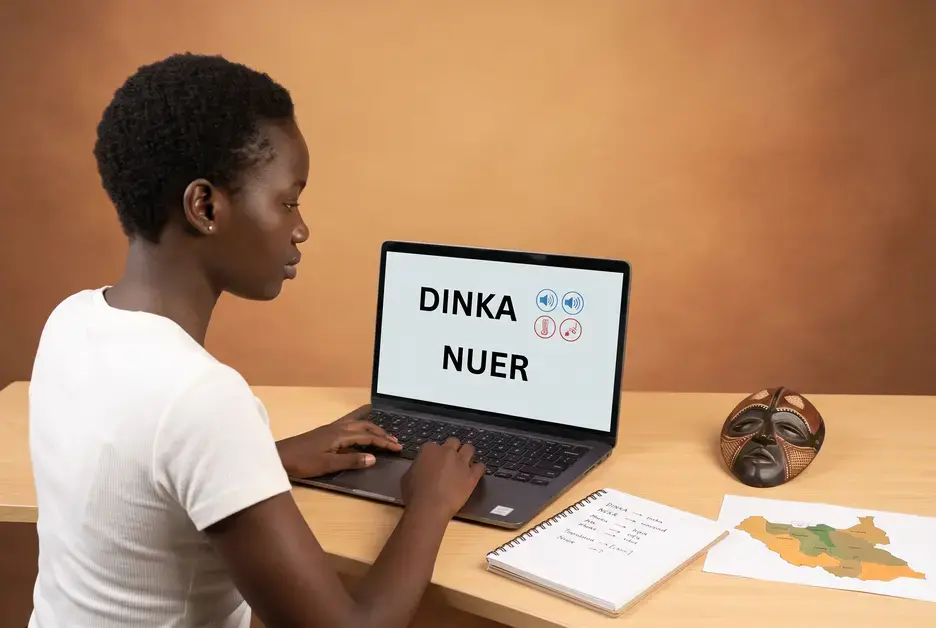
Finding professional editing services for Dinka and Nuer languages is essential if you want your translated materials, manuscripts, and community content to be accurate, clear, and culturally appropriate.
I am John Monyjok Maluth, a China-Africa Scholar specializing in China-Africa relations, technology, digital nomads, remote work, writing, publishing, and online services. I am also a native professional provider of Language Services for Dinka and Nuer interpretation, translation, and editing, and I offer Writing Services for editing, publishing, and self-publishing support. Over the years supporting humanitarian organizations, legal teams, researchers, authors, and remote businesses, I have seen how good editing transforms a rough translation into a professional document that builds trust.
Dinka, Thuɔŋjäŋ, and Nuer, Thok Naath, are spoken by millions in South Sudan and across large diaspora communities. Many organizations and authors translate materials into these languages, but translation alone is not enough. Without editing by a qualified native editor, translated documents often contain dialect mismatches, inconsistent terminology, spelling variations, and unclear phrasing that reduces usability and credibility.
This guide is written for digital nomads, remote workers, online learners, and independent professionals, as well as NGOs, legal professionals, healthcare providers, researchers, and authors who need reliable Dinka and Nuer editing. I will explain what editing involves, where to find services, and how to evaluate quality.
Key Takeaways
- Editing for Dinka and Nuer is a separate professional skill from translation and requires native fluency, dialect awareness, and subject matter expertise.
- Professional editing improves accuracy, consistency, readability, and cultural appropriateness of translated materials.
- The most reliable sources for editors are specialized language service providers focused on African languages and verified native editors with proven experience.
- For Dinka and Nuer, editing must address evolving orthographies, dialectal variation, and limited standardized terminology for technical concepts.
- Building a long-term editing workflow with glossaries, style guides, and trusted editors improves quality for ongoing projects.
TL;DR
Finding Dinka and Nuer editing services requires looking beyond generic marketplaces to specialized providers and verified native editors. Prioritize editors with native fluency in the correct dialect, proven experience in your subject area such as legal, medical, or humanitarian, a clear editing process, and strong confidentiality practices. Focus on accuracy, consistency, and cultural appropriateness over lowest cost, and build long-term relationships for better results.
What Editing Means for Dinka and Nuer Languages
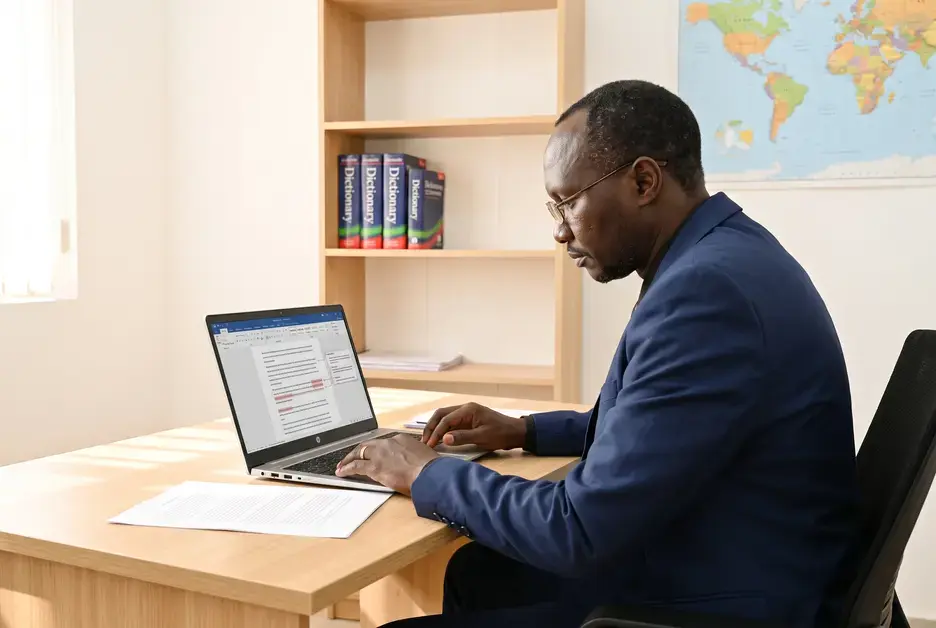
Editing for Dinka and Nuer is not just checking spelling. It is a comprehensive quality assurance process that ensures your written materials are accurate, consistent, readable, and fit for your audience.
In professional language services, editing typically includes several layers.
First, bilingual editing, where an editor who knows both the source and target languages compares the translation against the original to ensure nothing was added, omitted, or mistranslated. This is critical for legal, medical, and humanitarian documents where accuracy directly affects outcomes.
Second, monolingual editing, where a native Dinka or Nuer editor reviews the translated text on its own for naturalness, clarity, grammar, and cultural appropriateness, without necessarily comparing to the source. This improves readability for the end audience.
Third, proofreading, which is the final check for spelling, punctuation, and formatting errors before publication or distribution.
For Dinka and Nuer, editing has additional specialized considerations.
Dialect consistency. Dinka has major dialects including Rek, Agaar, Bor, Padang, and Twic. Nuer has dialects including Eastern Jikany, Western Jikany, Lou, Gawaar, and others. A document may be translated by someone from one dialectal background but intended for a community that uses another variant. An editor ensures consistency and appropriateness for the target dialect. For example, a term common in Rek Dinka may need adjustment for Bor Dinka readers.
Orthography and spelling. Dinka and Nuer have orthographies, but written standards are still evolving and may vary between communities and countries. Professional editors understand these variations and can standardize spelling according to accepted conventions or your organization’s style guide.
Terminology consistency. For technical concepts in health, law, technology, and education, there may be no established equivalent. Different translators may translate the same English term in different ways. An editor creates consistency by ensuring the same term is translated the same way throughout a document or across a set of documents. This is where glossary development becomes important.
Cultural appropriateness. Editing ensures that examples, idioms, and concepts are culturally appropriate for Dinka and Nuer audiences. A literal translation of an English idiom may be confusing. An editor with cultural expertise can adapt it for better understanding.
When you search for editing services, you are searching for a professional who can perform this quality assurance to transform a draft translation into a publishable, trustworthy document.
Where to Find Reliable Dinka and Nuer Editing Services
There are several channels for finding Dinka and Nuer editors, but reliability varies.
1. Specialized Language Service Providers With Editing Workflows
The most reliable option is a specialized provider who offers translation plus editing, often called TEP: Translation, Editing, Proofreading. These providers have vetted networks of translators and editors and follow a structured quality process.
At johnshalom.com, I provide Language Services for Dinka and Nuer editing as part of my translation workflow and as a standalone service. I also provide Writing Services for editing, publishing, and self-publishing support, which includes editing of Dinka and Nuer materials for clarity and readiness for publication. This dual expertise in language and publishing means I understand both linguistic accuracy and how to prepare documents for print and digital distribution.
When evaluating a specialized provider, look for: clear information about Dinka and Nuer dialects covered, a defined editing process that includes bilingual or monolingual review, transparent qualifications of editors, a stated commitment to confidentiality, and the ability to provide references from similar editing assignments.
2. Humanitarian and Development Editing Networks
Organizations such as Translators Without Borders and CLEAR Global not only translate but also have community reviewers and editors who ensure humanitarian content is clear and accessible. These networks are particularly valuable for health communication, community education, and crisis response materials in Dinka and Nuer.
If you are an NGO, UN agency, or nonprofit, these networks can connect you with editors who are trained in plain language and accessible communication for low-literacy audiences. However, availability may be limited to humanitarian contexts.
3. Professional Editor Associations and Academic Networks
Professional editor associations and academic networks can be useful for finding qualified editors, especially for research, educational, and publishing projects. Researchers who have worked with South Sudanese communities often know editors who understand research ethics and accurate representation of qualitative data.
For digital nomads, remote workers, and online learners involved in research on China-Africa relations, migration, or humanitarian work, an academic connection is valuable. An editor who understands research context can ensure that translated research instruments, consent forms, and interview transcripts maintain accuracy and cultural sensitivity.
4. Technology-Enabled Editing With Translation Memory
For organizations that regularly produce materials in Dinka and Nuer, technology-enabled editing that uses translation memory and terminology management improves consistency. Translation memory stores previously translated and edited segments to ensure consistent use of approved terminology. This is valuable for organizations that produce regular health updates, legal information sheets, or educational materials.
When using technology-enabled services, verify that human editing by qualified Dinka and Nuer editors is central, not just machine translation post-editing. For low-resource languages like Dinka and Nuer, machine translation quality is very low and should not be the basis for any critical content.
Through my work in Technology Services, I support clients with file handling, formatting, secure file transfer, and publishing workflows that ensure edited documents retain proper layout and are delivered ready to use.
Table: Comparison of Sources for Dinka and Nuer Editing Services
| Source | Strengths | Limitations | Best For |
|---|---|---|---|
| Specialized Provider | Vetted editors, dialect expertise, structured TEP process, accountability | May cost more than informal review | Legal, humanitarian, healthcare, business, publishing |
| Humanitarian Networks | Plain language expertise, community review, crisis experience | Limited to humanitarian contexts | NGOs, health communication, community education |
| Academic Networks | Research ethics, qualitative data, publishing knowledge | Limited availability, not commercial focused | Research, academic publishing, China-Africa studies |
| Technology-Enabled Services | Consistency via translation memory, handles large volumes | Must verify human expertise, avoid raw machine editing | Ongoing projects needing consistent terminology |
How to Evaluate Editing Quality and Professionalism
Finding an editor is only the first step. Evaluating quality ensures your materials meet professional standards.
Here is a practical framework I recommend for Dinka and Nuer editing.
1. Verify Native Fluency and Dialect Expertise
Ask the editor which Dinka or Nuer dialect they write natively and which dialects they can edit. Native fluency is essential for natural, readable editing. Ask about experience with your target community. For example, if your materials are for Lou Nuer refugees, a Lou Nuer editor will provide more appropriate editing than someone from a different Nuer subgroup without preparation.
2. Check Editing Experience and Process
Ask about the editor’s process. Do they perform bilingual editing comparing to source, monolingual editing for naturalness, or both? What do they check for: accuracy, consistency, spelling, punctuation, cultural appropriateness, formatting? Professional editors should be able to describe their process clearly.
Also ask about tools they use. Do they use editing checklists, style guides, or translation memory to ensure consistency? Do they track changes so you can see what was edited?
3. Assess Subject Matter Expertise
Editing quality depends on subject matter knowledge. An editor who is excellent for general community information may not be suitable for complex medical or legal documents without preparation. Ask about experience in your domain: legal, medical, humanitarian, education, technology, or publishing.
For example, editing a medical information sheet requires understanding of medical terminology and plain language principles. Editing a legal document requires attention to precise dates, names, and legal terms. For remote workers producing Technology Services content, editing ensures technical instructions are clear and safe to follow.
4. Verify Confidentiality and Data Protection
Professional editors should have a clear commitment to confidentiality. Ask how they handle confidential documents, whether they have signed confidentiality agreements, how they store files, and how long they retain files after delivery. This is critical for legal, healthcare, and unpublished manuscripts.
For clients needing Language Services and Writing Services, I provide explicit confidentiality commitments and follow professional ethics that include accuracy and confidentiality. This should be standard.
5. Check File Format and Publishing Capability
Editing often involves more than text. You may need editing of PDFs, Word documents, InDesign files, websites, or e-learning modules. Ask if the editor can handle your file formats, work with tracked changes, and return edited files in the same format with proper layout.
If you need publishing support after editing, such as formatting for print or digital distribution, consider bundling editing with publishing services. My Writing Services include self-publishing support that ensures edited Dinka and Nuer materials are professionally formatted and ready for distribution.
6. Request Samples, References, and a Trial Edit
Ask for references from similar editing assignments or samples of previous editing work with confidential information removed. Many professional editors also offer a short trial edit of 200 to 300 words so you can evaluate quality before committing to a larger project. This is a practical way to assess fit.
7. Discuss Style Guide and Glossary Development
For ongoing projects, discuss whether the editor can help develop a style guide and glossary for Dinka and Nuer for your organization. A style guide defines preferred spelling, dialect, tone, and formatting. A glossary ensures consistent translation of key terms such as organization names, program names, or technical terms. This investment improves quality and efficiency for all future projects.
The Difference Between Translation, Editing, and Proofreading for Dinka and Nuer
Many clients confuse these services. Clarifying what you need ensures you find the right professional.
Translation is creating a new text in Dinka or Nuer from a source text in another language. It is the first draft.
Editing is reviewing and improving that draft for accuracy, consistency, clarity, and cultural appropriateness. It may involve comparing to the source text and improving the target text on its own. Editing is where quality is built.
Proofreading is the final check for spelling, punctuation, and minor formatting errors before publication. It is the last quality gate.
For high-stakes documents such as legal affidavits, medical instructions, or published books, you need all three steps: translation, editing, and proofreading, performed by qualified professionals. For lower-stakes internal drafts, editing may be sufficient.
Often, clients come with materials that were translated by a non-professional, a community volunteer, or machine translation. In these cases, you need editing that may be closer to rewriting. Be transparent about the origin of the materials so the editor can provide an accurate quote and timeline. Editing poor machine translation often takes as long as translating from scratch.
For authors writing in Dinka or Nuer, editing may also include developmental editing, which looks at structure and content, not just language. My Writing Services include this type of editing support for authors who want to publish books in Dinka, Nuer, or English.
How to Prepare for a Successful Editing Project
Proper preparation improves editing quality and efficiency.
1. Define Your Editing Needs Clearly
Before contacting an editor, define: source and target languages including dialects, type of document, word count, file formats, purpose and audience, whether you need bilingual or monolingual editing, deadline, and confidentiality requirements.
2. Provide Source and Translated Files
Provide both the original source document and the translated draft in editable formats like Word or Google Docs whenever possible. If you only have PDFs, mention this in advance. Also share any reference materials, previous edited translations, glossaries, or style guides that should be followed for consistency.
3. Clarify Purpose and Audience
Explain who will read the final document and for what purpose. A legal document needs precise, formal editing. A health education leaflet needs plain language and accessibility. A book needs engaging, natural flow. Purpose affects editing decisions.
4. Share Key Terminology and Background
Share key terms, organization names, program names, and background information. For example, if you are editing materials about remote work technology, share the tool names and key concepts. If you are editing materials about China-Africa cooperation, share background on the specific programs. This helps the editor ensure consistency and accuracy.
5. Plan for Review and Feedback
Include time for review and feedback in your timeline. After receiving the edited version, review the tracked changes and provide feedback. This collaborative approach improves quality and builds a long-term relationship with your editor.
6. Consider Publishing and Distribution
Think about how the edited document will be used. Will it be printed, posted online, or shared via mobile? Dinka and Nuer texts may be longer or shorter than English, affecting layout. Discuss formatting needs with your editor. If you need professional layout and publishing, consider bundling editing with publishing support.
Common Challenges in Dinka and Nuer Editing and How to Overcome Them
Editing Dinka and Nuer comes with specific challenges.
Challenge 1: Limited availability of qualified editors. There are fewer professional Dinka and Nuer editors than for widely spoken languages. Solution: Book in advance, build a roster of trusted editors, and use remote collaboration tools to expand your pool.
Challenge 2: Dialect and orthography variation. Different editors may prefer different spelling conventions or dialectal terms. Solution: Develop a style guide for your organization that specifies preferred dialect, spelling conventions, and terminology. Use this guide for all editing projects.
Challenge 3: Inconsistent source translations. Documents translated by different translators or machine translation may have inconsistent terminology and quality. Solution: Provide glossaries and previous edited translations as references, and allow extra time for editing inconsistent materials.
Challenge 4: Limited standardized terminology. For technical concepts, there may be no established equivalent, leading to varied translations. Solution: Work with your editor to create a glossary of approved translations for key technical terms, using explanatory translation where needed for clarity.
Challenge 5: File format and layout issues. Edited Dinka and Nuer texts may have different lengths than English, affecting layout, and some fonts may not support Dinka and Nuer special characters properly. Solution: Discuss formatting upfront, use Unicode-compliant fonts, and include layout check as part of proofreading.
Challenge 6: Confidentiality in small communities. South Sudanese diaspora communities can be close-knit, and clients may worry about confidentiality. Solution: Discuss confidentiality explicitly, use professional editors who follow strict confidentiality protocols, and consider using remote editors from outside the immediate community when appropriate for sensitive documents.
Through my combined work in Language Services, Writing Services, and Technology Services, I have found that addressing these challenges proactively with clear processes and communication results in higher quality edited materials.
Reflection Questions
- Does your current process for Dinka and Nuer translation include professional editing by a qualified native editor, or does it stop at initial translation?
- How do you currently ensure dialect consistency and terminology consistency across multiple Dinka and Nuer documents for the same audience?
- For your specific context, whether humanitarian, legal, healthcare, or publishing, what type of editing, bilingual, monolingual, or proofreading, is most critical for your needs?
- How can you build long-term editing workflows with style guides, glossaries, and trusted editors to improve quality for ongoing Dinka and Nuer projects?
FAQs
1. What is the difference between Dinka and Nuer translation and editing?
Translation is creating a new text in Dinka or Nuer from a source text. Editing is reviewing and improving that translated draft for accuracy, consistency, clarity, cultural appropriateness, and formatting. Translation produces the first draft, editing improves it to publishable quality, and proofreading is the final check for minor errors.
2. Do I need editing if my Dinka and Nuer translation was done by a native speaker?
Yes. Even native speakers benefit from editing. Translation involves complex decisions about accuracy, consistency, and style that benefit from a second pair of eyes. Professional editing catches errors, ensures consistency, improves readability, and ensures cultural appropriateness, especially for important documents.
3. How do I know which Dinka or Nuer dialect editor I need?
Ask your target audience about their region of origin, such as Bor, Rek, Agaar for Dinka, or Lou, Jikany, Gawaar for Nuer. If you serve a broad audience, discuss with your editor which variant is most widely understood or whether you need multiple versions. Specialized providers can help match dialect expertise to your audience.
4. Can editing fix poor machine translation for Dinka and Nuer?
Editing can improve poor machine translation, but it often takes as long as translating from scratch because machine translation quality for Dinka and Nuer is very low. For critical documents, it is more efficient and accurate to have qualified human translation followed by professional human editing, rather than trying to edit raw machine output.
5. Where can I find Dinka and Nuer editors for urgent or official documents?
For urgent or official documents, contact specialized language service providers focusing on African languages, professional editor associations, or verified professional editors with remote capabilities. Building a roster of trusted editors in advance is best for urgent needs, and ensure the editor can provide certification if required for official documents.
Conclusion
Finding reliable editing services for Dinka and Nuer languages is essential for ensuring your translated materials are accurate, consistent, and professional.
Editing is not an optional extra. It is a core part of professional translation workflow that transforms a draft translation into a document that builds trust and achieves its purpose. For Dinka and Nuer, where dialectal variation, evolving orthographies, and limited standardized terminology present additional challenges, professional editing by a qualified native editor is even more critical.
For digital nomads, remote workers, humanitarian organizations, legal professionals, healthcare providers, researchers, and authors, investing in professional editing pays off in clearer communication, stronger credibility, and better outcomes. Whether you work through a specialized provider like my Language Services and Writing Services, or a verified professional network, prioritize quality, dialect expertise, subject matter knowledge, and confidentiality over lowest cost.
As global mobility continues and South Sudanese communities remain active worldwide, the need for high-quality Dinka and Nuer written materials will only grow. By building relationships with trusted editors, developing style guides and glossaries, preparing properly for editing projects, and ensuring ethical working conditions, you contribute to more accurate, humane, and effective written communication across languages and cultures.
If you have existing Dinka or Nuer translations that need review, or upcoming translation projects that will need quality assurance, start by defining your editing needs clearly, verifying dialect expertise, and reaching out to specialized providers who can offer structured editing workflows and accountability. Professional editing is the bridge between translation and trust.
And if you want to know what’s happening in my world as a writer and digital nomad, check out my Wealthy Affiliate blog page here: https://my.wealthyaffiliate.com/johnmaluth/blog.