South Sudan’s relationship with foreign powers has often been examined through the activities of Western governments, international development agencies, and diplomatic institutions. The United States, the United Kingdom, Norway, and the European Union played important roles in the peace process that preceded independence. Their involvement also shaped the country’s early experience of international assistance, institutional development, and security-sector reform.
However, another international relationship has had a major influence on South Sudan’s economic and political development: its partnership with China.
Since before independence, China has maintained substantial interests in South Sudan’s petroleum industry. Following independence in 2011, Beijing became an important diplomatic partner, infrastructure contractor, development financier, and participant in peacekeeping efforts. Its relationship with Juba therefore extends beyond ordinary commercial exchange.
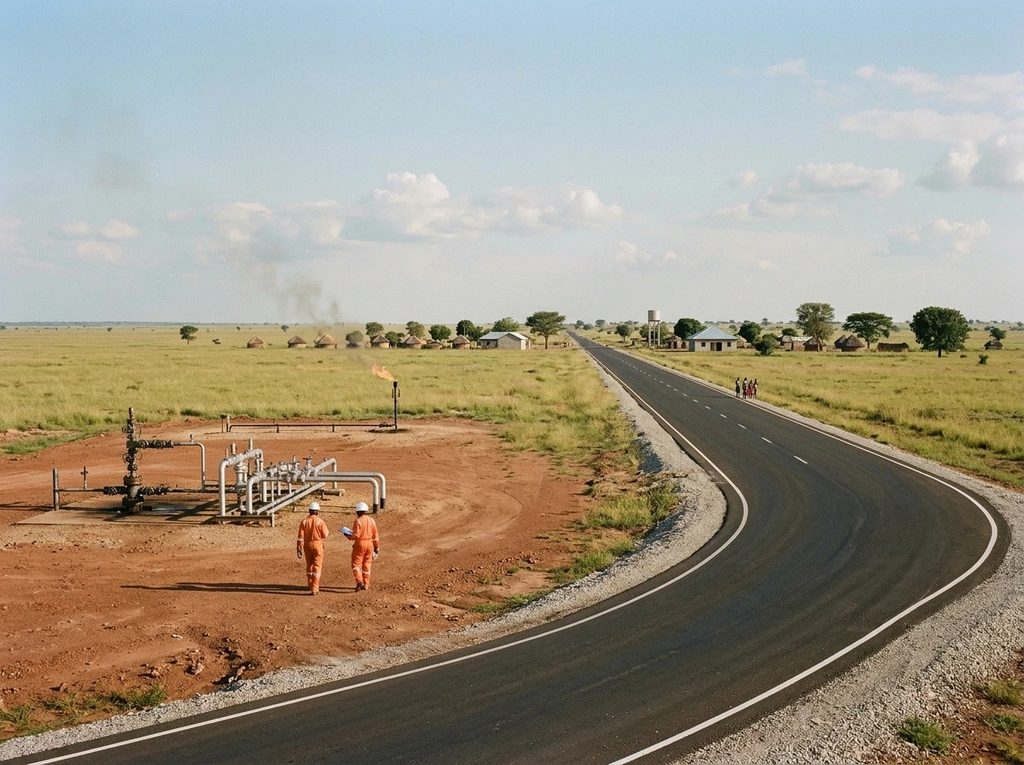
One of the most significant expressions of this relationship is the oil-for-infrastructure arrangement associated with the Juba-Terekeka-Yirol-Rumbek Road. The project promised to connect the capital with communities in the country’s interior. Its financing, however, raised serious questions about oil revenue management, public accountability, contractual transparency, and the long-term costs of borrowing against future petroleum income.
South Sudan’s experience raises a difficult question: can a country achieve meaningful economic development when it commits substantial portions of its future natural-resource revenues to financial arrangements that citizens and public institutions cannot adequately scrutinise?
The issue is not whether China should cooperate with South Sudan. Infrastructure financing and international economic partnerships can support national development. The central question is whether these arrangements strengthen South Sudan’s economic independence or increase its exposure to debt, revenue losses, and political dependence.
Key Takeaways
- China’s economic relationship with South Sudan is strongly connected to petroleum, infrastructure, and diplomatic interests.
- The Juba-Rumbek Road became a major example of South Sudan’s oil-for-infrastructure financing model.
- AidData records a China Exim Bank financing arrangement involving oil-sale proceeds and a lender-controlled escrow account.
- South Sudan’s National Audit Chamber reported that it could not establish how much of the oil shipped between 2019 and 2022 had financed the road.
- The World Bank’s 2026 Public Finance Review identifies oil-backed borrowing, advance crude sales, and off-budget transactions as major weaknesses in public revenue management.
- Chinese infrastructure cooperation has produced projects and services, but financing arrangements require transparent contracts, competitive procurement, and measurable local benefits.
- South Sudan needs stronger public financial management, economic diversification, parliamentary oversight, and protection of future oil revenues.
TL;DR
China has become one of South Sudan’s important economic partners, particularly through petroleum and infrastructure cooperation. However, the oil-for-infrastructure arrangements associated with the Juba-Rumbek Road exposed weaknesses in the country’s management of public revenue and borrowing. The National Audit Chamber reported difficulties tracing oil shipments and financing flows, while the World Bank’s 2026 Public Finance Review identified oil-backed borrowing and off-budget transactions as continuing fiscal risks. The problem is not simply Chinese lending. It is South Sudan’s weak ability to negotiate, disclose, monitor, and manage agreements involving its most valuable natural resource.
1. China’s Strategic Relationship with South Sudan
China’s relationship with South Sudan did not begin with the country’s independence in 2011. Its petroleum interests developed during the period when the territory was still part of Sudan.
Chinese state-owned petroleum companies invested in Sudan’s oil industry, including operations in what later became South Sudan. When independence arrived, the new country inherited much of the oil-producing territory, while important export infrastructure remained in Sudan.
This created an unusual economic relationship. South Sudan controlled substantial oil resources but depended on pipelines, processing facilities, and export routes located outside its borders.
China consequently had significant economic interests in the stability of South Sudan and the continued operation of its petroleum industry.
The relationship also developed beyond oil. Chinese companies became involved in infrastructure construction, telecommunications, engineering, and other commercial activities. Chinese government assistance supported public institutions, medical cooperation, and development projects.
This relationship should not be reduced to a single description of exploitation or friendship. China has pursued legitimate commercial and strategic interests while also participating in projects that have supported South Sudan’s development. The important question is whether the terms and results of that cooperation serve the long-term interests of the South Sudanese population.
A partnership between two sovereign countries should be evaluated through its agreements, financial obligations, economic results, and effects on ordinary citizens.
2. China’s Diplomatic and Peacekeeping Role
The outbreak of South Sudan’s civil war in December 2013 created serious challenges for China’s economic interests and diplomatic position.
Chinese petroleum operations faced security risks, and the conflict threatened the stability of the country’s oil-producing regions. Beijing therefore became more actively involved in diplomatic efforts aimed at reducing violence and supporting political negotiations.
China participated in discussions at the United Nations and supported the Intergovernmental Authority on Development (IGAD)-led peace process. It also developed contacts with different South Sudanese political actors, including representatives of the opposition.
Its participation in United Nations peacekeeping was another important development. China deployed combat troops to the United Nations Mission in South Sudan (UNMISS), marking a significant step in its overseas military engagement. Chinese peacekeepers participated in civilian protection and other security responsibilities under the United Nations mandate.
China’s involvement demonstrated an adaptation in its approach to international affairs. Although Beijing continued to emphasise sovereignty and non-interference, it increasingly recognised that diplomatic engagement and peacekeeping could help protect its citizens, investments, and international reputation.
This development is important because it shows that China’s relationship with South Sudan cannot be understood through commercial lending alone.
However, diplomatic participation and peacekeeping do not automatically establish that the economic relationship is fair or sustainable. Those questions must be examined separately through the financial arrangements and their results.
3. The Juba-Rumbek Road and the Oil-for-Infrastructure Model
One of the most visible examples of China’s infrastructure cooperation with South Sudan is the Juba-Terekeka-Yirol-Rumbek Road project.
The proposed road was designed to connect Juba with Terekeka, Yirol, and Rumbek, improving access between the capital and communities in the country’s interior. It was also expected to contribute to trade, transportation, agricultural development, and national connectivity.
The project became associated with the oil-for-infrastructure approach discussed during the 2018 Forum on China-Africa Cooperation summit in Beijing.
In March 2019, South Sudan entered into a financing arrangement involving China Exim Bank and the Chinese construction group Shandong Hi-Speed. AidData documents a financing commitment of approximately US$736 million for the first phase of the road project.
The arrangement involved depositing proceeds from the sale of 30,000 barrels of crude oil per day into a lender-controlled escrow account to meet repayment obligations associated with infrastructure financing.
The government had presented the project as an opportunity to convert petroleum wealth into physical infrastructure without relying exclusively on immediate cash payments from the national budget.
In principle, this approach has an understandable economic rationale. A country with substantial natural resources but limited access to affordable financing may use future resource revenues to support infrastructure investment.
However, such an arrangement requires accurate production forecasts, realistic repayment schedules, transparent contracts, independent monitoring, and clear safeguards for the government’s remaining revenue.
Without these protections, the promise of building infrastructure with future oil income can become a commitment that restricts the government’s ability to finance other public responsibilities.
4. When Oil Revenue Becomes a Future Financial Obligation
Oil-backed financing is not automatically harmful. Governments around the world use natural-resource revenues to support infrastructure, manage borrowing, and finance long-term development.
The problem arises when borrowing arrangements are negotiated without adequate disclosure, realistic repayment calculations, or effective public oversight.
South Sudan depends heavily on petroleum income. This makes its public finances vulnerable to changes in international oil prices, production disruptions, pipeline problems, and domestic instability.
The country also depends on Sudan’s export infrastructure to transport much of its crude oil to international markets. Political disagreements, insecurity, technical problems, and disruptions along the export route can therefore affect government revenue.
When a government commits future oil-sale proceeds to debt repayment or infrastructure financing, it reduces the amount of revenue available for other purposes.
The financial pressure becomes more serious when several commitments operate simultaneously. A government may have to manage infrastructure financing, advance crude sales, debt repayments, security expenditure, public-sector salaries, and essential services from a limited and unpredictable revenue stream.
The World Bank’s 2026 South Sudan Public Finance Review identifies heavy dependence on oil, oil-backed borrowing, advance crude sales, and off-budget financial flows as major weaknesses in the country’s public financial management.
The report also explains that oil revenue earmarked for infrastructure, advance payments, and debt servicing has reduced the resources reaching the Consolidated Fund.
This is the central fiscal problem: South Sudan has substantial petroleum resources, but the government does not consistently convert those resources into predictable public revenue.
A country can export millions of barrels of oil and still struggle to pay teachers, medical workers, and civil servants when its revenue is already committed, diverted, or poorly managed.
5. The Juba-Rumbek Audit: What Happened to the Oil?
The Juba-Rumbek Road project provides a particularly important example of the accountability problems surrounding oil-for-infrastructure financing.
In 2023, South Sudan’s National Audit Chamber presented findings from a performance audit of the road project.
The audit examined the construction arrangements, project costs, implementation progress, and financing records. It identified several concerns.
The original contract was valued at approximately US$711.1 million. Following an amendment, the amount increased to approximately US$736.5 million.
The project was initially expected to be completed in July 2023. However, by February 2023, the audit reported that only 63 kilometres, approximately 16 percent of the planned road, had been completed.
The audit also identified weaknesses in the procurement process, project design, supervision, and financial arrangements.
One of its most important findings concerned oil shipments.
According to records from the Ministry of Petroleum, approximately 21.78 million barrels of crude oil worth about US$1.56 billion had been shipped between 2019 and 2022. However, the auditors reported that they could not establish how much of that oil had actually been allocated to financing the Juba-Rumbek Road.
This finding does not establish that the entire value of those shipments was intended for the road. It demonstrates that the audit team lacked sufficient information to trace the relevant financial flows and determine the project’s financing position.
That distinction matters.
When public natural resources are committed to major infrastructure projects, the government should be able to identify the quantity of oil allocated, the value received, the accounts through which the money moved, the payments made to contractors, and the outstanding obligations.
The National Audit Chamber’s findings demonstrate why transparent financial records are essential.
The public should not have to rely on political statements or unofficial estimates to understand how national oil wealth is being used.
6. The Road’s Delays and the Question of Project Value
The Juba-Rumbek Road was presented as a major national development project. Its completion was expected to improve transportation and economic activity across several communities.
However, the project’s implementation faced delays, cost revisions, and concerns about construction quality.
The National Audit Chamber reported that inadequate drainage structures contributed to water accumulation and damage to sections of the road. The design was subsequently revised, adding approximately US$25.4 million to the contract value.
The audit also raised concerns about the procurement process. It found that the contractor had been selected through single sourcing rather than open competitive tendering, raising questions about whether the government had obtained the most reasonable market price.
The project’s progress also attracted public criticism.
In May 2025, China’s Ambassador to South Sudan, Ma Qiang, told Radio Tamazuj that construction on the remaining sections had been suspended because of overdue payments. He confirmed that the first section, connecting Juba to Terekeka, had been inaugurated in December 2022.
This development illustrated the connection between financial management and infrastructure delivery. Even when a project has a financing agreement and a contractor, delays in payments can prevent construction from progressing.
There was another important development in 2026. In an interview published by China’s Ministry of Foreign Affairs on 2 April 2026, Ambassador Ma Qiang stated that work on the Juba-Rumbek project had resumed in January and that the contractor was preparing for construction.
This update means that the project’s status should not be described simply as permanently suspended. It also reinforces the need to evaluate the actual progress, remaining costs, financing arrangements, and completion timetable.
A road should not be judged only by the size of its contract or the number of kilometres announced. Its value depends on whether it is completed, whether it meets technical standards, whether it remains usable, and whether the economic benefits justify the public resources committed to it.
7. Transparency, Parliamentary Oversight, and Public Accountability
One of the most serious problems surrounding South Sudan’s oil-backed financing arrangements is the limited availability of reliable public information.
Citizens and legislators need access to the terms of major borrowing agreements, including interest rates, fees, repayment schedules, collateral arrangements, and the institutions responsible for monitoring payments.
Without this information, parliament cannot effectively scrutinise government borrowing, and the public cannot determine whether the country is receiving reasonable value for its natural resources.
The United States Department of State’s 2024 Fiscal Transparency Report on South Sudan identified serious weaknesses in public disclosure. It noted that information about debt obligations, including liabilities associated with major state-owned enterprises, was not publicly available.
The report also raised concerns about loans collateralised against future oil sales and off-budget accounts that were not subject to adequate parliamentary or civilian oversight.
The World Bank’s 2026 Public Finance Review reached similar conclusions about oil revenue management. It identified non-competitive crude oil sales, advance crude sales, oil-backed borrowing, and off-budget transactions as major weaknesses.
These findings demonstrate that the accountability problem extends beyond one Chinese infrastructure agreement.
South Sudan has entered into different forms of oil-related financial arrangements with multiple institutions, companies, and buyers. These arrangements should not all be treated as identical loans, but they must all be disclosed and properly recorded when they create public financial obligations.
A government cannot protect national sovereignty while allowing major commitments involving public resources to remain beyond effective public scrutiny.
Transparency is not a favour to foreign governments or international financial institutions. It is a responsibility owed to the citizens whose natural resources finance the state.
8. China, Local Employment, and the Development of Domestic Capacity
Infrastructure projects should produce more than physical structures. They should also create employment, develop technical skills, support local businesses, and strengthen the national economy.
This is especially important for South Sudan, where unemployment, limited industrial capacity, and inadequate technical training remain major development challenges.
Chinese construction companies bring engineering experience, machinery, technical personnel, and project-management capacity. Their participation can help deliver infrastructure that domestic companies may not yet have the ability to construct independently.
However, foreign expertise should contribute to the development of domestic capacity rather than create permanent dependence.
The Juba-Rumbek project experienced public criticism over its construction quality and employment practices. In December 2020, AidData records that the Chinese contractor and South Sudan’s Ministry of Roads and Bridges agreed that 80 percent of the project workforce would be sourced locally.
That commitment was important because local employment should be a measurable part of major infrastructure agreements.
Nevertheless, the number of local workers employed is only one measure of economic benefit. South Sudan should also assess whether local engineers, technicians, contractors, and businesses receive opportunities to acquire skills, participate in supply chains, and take on increasingly responsible roles.
A road built by an international company can create long-term value if it improves trade, reduces transport costs, connects agricultural producers to markets, and supports economic activity.
But the benefits will be limited if the project operates as an isolated construction activity without meaningful links to the domestic economy.
Future agreements should therefore include clear provisions for local recruitment, technical training, subcontracting, technology transfer, and maintenance capacity.
9. The Human Cost of Fiscal Weakness
The consequences of weak oil revenue management are not limited to financial statements, government budgets, or international loan agreements.
They affect ordinary people.
South Sudanese teachers, medical workers, civil servants, police officers, and other public employees depend on government revenue for their salaries. When public finances become unstable, these workers experience delayed payments, reduced purchasing power, and increasing economic hardship.
The World Bank’s 2026 Public Finance Review describes widespread salary arrears and the collapse of average public wages in real terms. It also notes that public spending remains heavily directed toward administration, security, and rule-of-law functions, while health, education, and social protection remain severely underfunded.
These conditions reveal a contradiction in a country with significant petroleum resources.
Oil wealth is supposed to support public services and national development. Yet when revenue is committed to debt obligations, diverted through off-budget arrangements, or lost through weak financial management, the government has fewer resources to meet its responsibilities.
It would be inaccurate to attribute every unpaid salary or service-delivery failure directly to Chinese financing. South Sudan’s fiscal difficulties also involve domestic governance failures, oil production disruptions, dependence on Sudan’s export infrastructure, exchange-rate instability, and other borrowing arrangements.
However, oil-backed commitments form part of the wider problem when they reduce the government’s access to future revenue without producing sufficient economic returns.
A country cannot achieve meaningful development if its public finances repeatedly fail to support the people responsible for educating children, treating patients, maintaining infrastructure, and delivering essential services.
10. The Way Forward: Reclaiming Public Control Over National Resources
South Sudan does not need to end its economic relationship with China. It needs to manage that relationship through stronger institutions, clearer financial rules, and agreements that produce measurable national benefits.
China remains an important economic partner. Its companies possess experience in infrastructure construction, engineering, petroleum, and other sectors that can support South Sudan’s development.
However, cooperation should be based on transparent agreements and a clear understanding of the country’s ability to repay its obligations.
The government should take several practical steps.
First, all major oil-backed loans, advance sales, and infrastructure financing agreements should be disclosed to the National Legislative Assembly and made available for public scrutiny, subject to legitimate commercial confidentiality protections.
Second, the government should publish regular information about oil production, government entitlements, export volumes, sales prices, deductions, debt repayments, and the destination of oil revenue.
Third, all public borrowing should follow the country’s legal requirements, including parliamentary approval and the review procedures established for public debt management.
Fourth, South Sudan should commission independent audits of major oil-for-infrastructure projects and publish the findings. These audits should establish the total value of oil allocated, payments received, money transferred, construction completed, and outstanding financial obligations.
Fifth, future infrastructure contracts should require competitive procurement, independent engineering supervision, local employment, skills transfer, and realistic maintenance arrangements.
Sixth, the country should reduce its dependence on petroleum by investing in agriculture, livestock, manufacturing, education, energy, and domestic enterprise. Agricultural development deserves particular attention because South Sudan possesses significant land and water resources that could support food production, employment, and exports.
Finally, the government should strengthen the institutions responsible for managing national revenue. Oil income should pass through transparent public financial systems, with clear allocations for debt servicing, infrastructure, salaries, and essential public services.
The World Bank’s 2026 Public Finance Review specifically recommends transferring oil revenues into the National Revenue Fund, publishing regular oil-sector data, strengthening budget discipline, and avoiding new oil-backed or non-concessional borrowing arrangements that threaten future revenues.
These are not merely technical recommendations. They concern the country’s ability to exercise meaningful control over its natural resources.
Reflection Questions
- Should South Sudan continue using future oil revenues to finance large infrastructure projects?
- What information should the government publish about oil-backed loans and advance crude sales?
- How can Chinese infrastructure projects create more employment and technical capacity for South Sudanese citizens?
- What role should the National Legislative Assembly and National Audit Chamber play in monitoring oil-related financial agreements?
- How can South Sudan reduce its dependence on petroleum while maintaining productive international partnerships?
Frequently Asked Questions
1. What is an oil-backed loan?
An oil-backed loan is a financing arrangement in which a borrower commits future oil revenues or oil deliveries as security for repayment. Such arrangements can provide immediate financing but may reduce the government’s access to future revenue.
2. What is the Juba-Rumbek Road project?
The Juba-Rumbek Road project is an infrastructure initiative intended to connect Juba with Terekeka, Yirol, and Rumbek. It became a major example of South Sudan’s oil-for-infrastructure financing arrangements involving China Exim Bank and Shandong Hi-Speed.
3. Did China receive 30,000 barrels of South Sudanese oil every day as repayment?
The documented arrangement involved depositing the proceeds from the sale of 30,000 barrels per day into a lender-controlled escrow account for repayment obligations associated with infrastructure financing. This should not be confused with a claim that all those barrels were physically delivered to China as direct repayment.
4. What did South Sudan’s Auditor General discover about the Juba-Rumbek Road?
The National Audit Chamber’s 2023 performance audit identified concerns about procurement, construction quality, delays, cost increases, and unclear financing records. It reported that it could not establish how much of the oil shipped between 2019 and 2022 had financed the road.
5. How can South Sudan protect its oil wealth?
South Sudan can strengthen oil revenue management through public disclosure of contracts, parliamentary oversight, independent audits, transparent crude oil sales, responsible borrowing, and investment in non-oil sectors such as agriculture, education, energy, and manufacturing.
Conclusion
South Sudan’s relationship with China demonstrates both the opportunities and the risks of international economic cooperation. Chinese investment, infrastructure construction, petroleum cooperation, medical assistance, and diplomatic engagement have contributed to the country’s development efforts. However, the financing arrangements associated with oil-backed infrastructure projects have also exposed serious weaknesses in the management of public resources.
The Juba-Rumbek Road illustrates the problem. A project intended to connect communities and support national development became associated with unclear financial records, delayed construction, cost increases, and questions about the use of oil revenues.
The responsibility for managing these arrangements rests primarily with South Sudan’s own government. Foreign creditors and contractors have their contractual interests, but national leaders must protect the public interest when committing resources that belong to the country.
South Sudan should not reject China, just as it should not reject cooperation with Western governments, African institutions, or other international partners. It should reject financial arrangements that cannot withstand public scrutiny or demonstrate reasonable economic value.
The country’s oil wealth must finance more than government obligations and infrastructure contracts. It must support schools, hospitals, agriculture, roads, electricity, technical education, and productive employment.
Sovereignty is not simply the right to own natural resources. It is the responsibility and capacity to manage those resources transparently for the benefit of present and future generations.
And if you want to know what’s happening in my world as a writer and digital nomad, check out my Wealthy Affiliate blog page here: https://my.wealthyaffiliate.com/johnmaluth/blog.
Sources and Further Reading
- AidData. (2026). South Sudan: Profile of Chinese Development Finance, 2000–2023. William & Mary. Documents China’s financing portfolio, the Juba-Rumbek project, and the oil-backed financing arrangements.
- National Audit Chamber of South Sudan. (2023). Performance Audit Report on the Juba-Rumbek Road Construction Project. Provides findings on project costs, construction progress, procurement, and oil financing records.
- World Bank. (2026). South Sudan Public Finance Review. Examines oil revenue management, debt, advance sales, off-budget flows, and public financial management.
- United States Department of State. (2024). Fiscal Transparency Report: South Sudan. Discusses the limited public disclosure of government debt obligations and oil-backed financing.
- United Nations Security Council. (2020). Final Report of the Panel of Experts on South Sudan, S/2020/342. Examines oil sales, government finances, and borrowing arrangements.
- United Nations Security Council. (2024). Report of the Panel of Experts on South Sudan, S/2024/343. Provides further information about oil-backed financial obligations and proposed borrowing arrangements.
- Radio Tamazuj. (2025). Juba-Rumbek Road Project Halted Over Unpaid Dues, Chinese Envoy Says. Interview with China’s Ambassador Ma Qiang concerning the project’s payment difficulties.
- Ministry of Foreign Affairs of the People’s Republic of China. (2026). Transcript of Chinese Ambassador Ma Qiang’s Exclusive Interview with The City Review. Reports the ambassador’s statement that construction on the Juba-Rumbek project resumed in January 2026.
- Lowy Institute. (2017). Explaining China’s Involvement in the South Sudan Peace Process. Examines China’s diplomatic engagement, IGAD cooperation, and participation in peacekeeping.
- AidData. (2019). China Exim Bank Provides Financing for the Juba-Terekeka-Yirol-Rumbek Road Project. Provides project-level information about the financing arrangement, escrow mechanism, implementing organisations, and construction history.