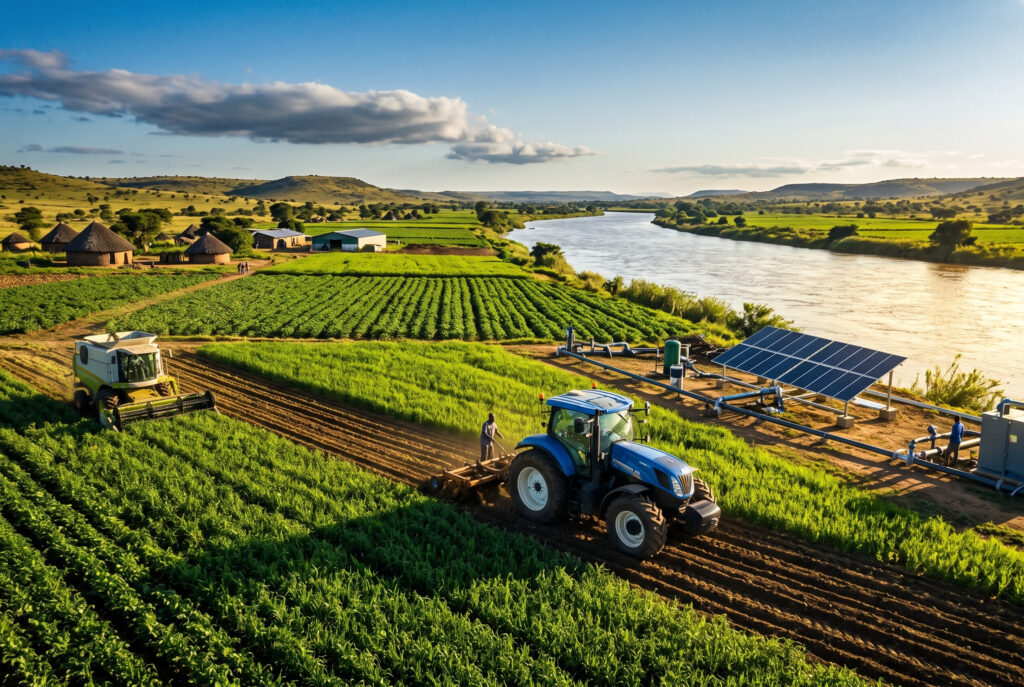
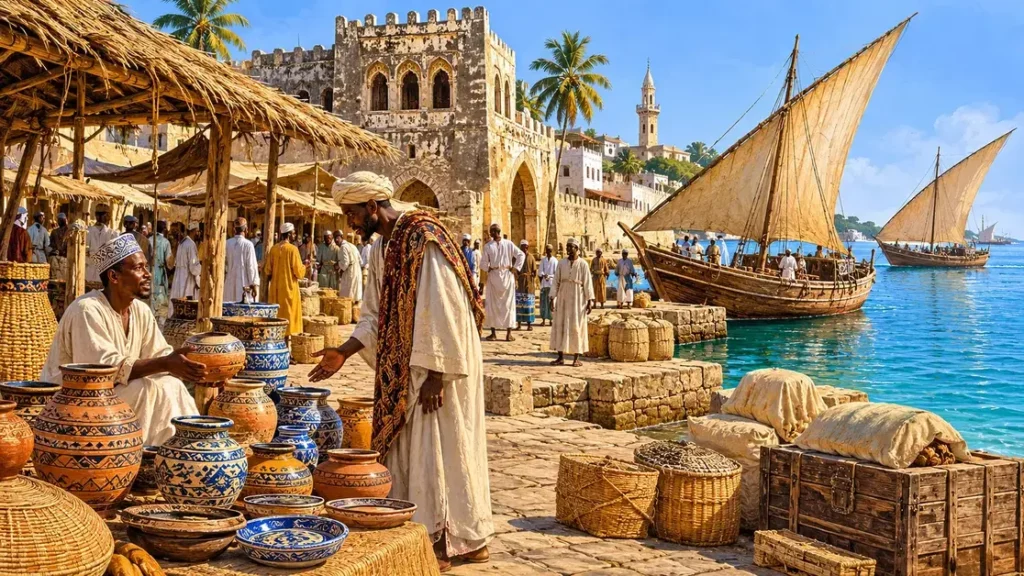
Few topics in global affairs produce as much heat and as little shared evidence as China-Africa relations. One person says China is building the continent’s roads, ports and power lines. Another says it is locking governments into debt and taking their resources. Both can quote a real project to support their case, and both leave out a lot.
This piece answers the six questions I hear most. Is China good for Africa? Why does it invest there? Is it exploiting the continent? How does it influence African countries? What does cooperation actually mean? How much does it trade? I try to keep documented facts apart from opinion, and I mark which is which as I go.
It is written for people who work across borders: remote professionals, digital nomads, online learners and independent consultants. If you work, travel or do business in Africa, Asia or both, this relationship affects your payments, your connectivity, your clients and the rules you work under. Where I have written a deeper piece on a subtopic, I link to it instead of repeating it.
What China-Africa cooperation actually means
“Cooperation” is the word both governments use, so it is worth saying what it covers. In practice it is a set of separate channels: government loans, grants, construction contracts, trade, private investment, technical training, scholarships, medical teams and some security work, including participation in UN peacekeeping.
The main forum is the Forum on China-Africa Cooperation, known as FOCAC. It was launched in 2000 and meets roughly every three years, alternating between China and an African host. At each meeting China announces a package of commitments, and African governments present their own priorities. The announcements are public, which makes FOCAC a useful primary source.
Cooperation describes the channels, not who gains from them. A railway built under a Chinese loan counts as cooperation. So does a scholarship, and so does a mining contract. Each has its own terms, its own winners and its own costs, and treating them as one thing leads to bad arguments in both directions.
The Chinese government’s preferred phrase is “win-win,” which is a political description and not a measurement. Critics who say the relationship is one-sided are also making a claim that needs evidence. I treat both as positions to test.
The relationship also has a long history. If you want the background on how earlier diplomatic ties shape today’s alliances, my piece on historical networks and modern alliances in China-Africa relations covers it.
How much China trades with Africa, and what the numbers do and do not tell us
Two facts are well documented. China has been Africa’s largest single-country trading partner since 2009, and annual trade in recent years has been in the hundreds of billions of US dollars. Chinese customs publishes the headline figures, and UNCTAD and national statistics offices publish African-side data. Check the latest release for the current number, because it changes every year.
The totals leave out a lot, so here is what they do not tell you.
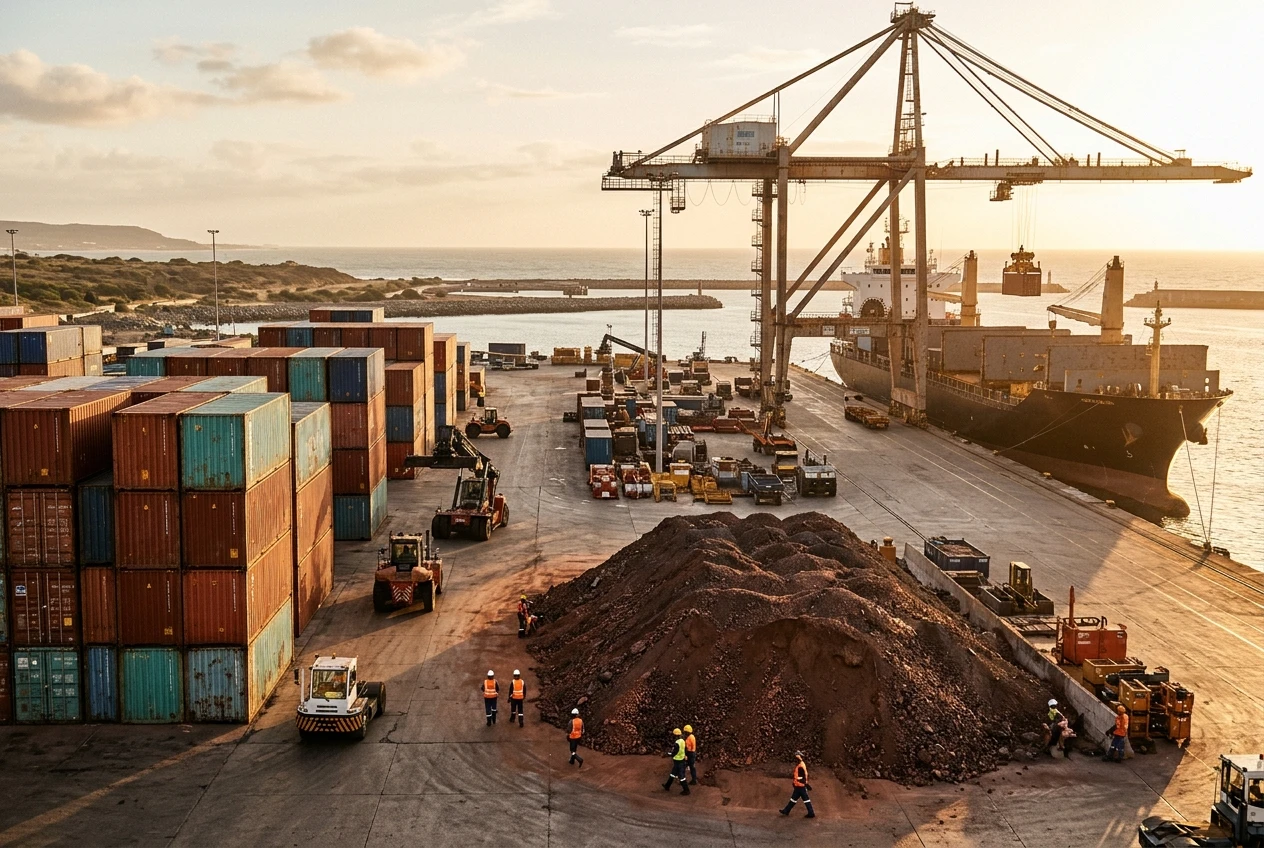
- The mix of goods matters. African exports to China are dominated by raw materials such as crude oil, iron ore, copper, cobalt and other minerals, plus some agricultural products. Imports from China are mostly manufactured goods: machinery, electronics, vehicles, textiles and construction materials.
- The balance varies by country. In many recent years Africa as a whole has bought more from China than it has sold. Oil and mineral exporters can run surpluses in some years, while countries with little to sell run large deficits.
- The partner comparison depends on counting. China is the largest single country, but the European Union counted as a bloc has been a larger trading partner in many years’ accounts, depending on how the bloc is defined.
- Trade volume is not development. A country that sells unprocessed ore and buys finished goods can post rising trade figures without building industry at home. Whether trade helps depends on what is exported, what is imported and what the revenue is spent on.
China has announced tariff reductions for African goods in recent years. What matters in practice is whether African producers can meet Chinese quality, safety and volume requirements, and whether they can afford the shipping and certification.
The fair reading is that the volume is large and the structure is the debate. Anyone who quotes a single trade total as proof of either benefit or harm is skipping that debate.
Why China is investing in Africa: Belt and Road, Chinese companies and shared interests
Several motives overlap, and they are not all government strategy.
State policy. Xi Jinping announced the Belt and Road Initiative in 2013, and many African governments have signed cooperation documents under it. It gives a political frame to projects that include ports, railways, roads, power plants and industrial parks. Because the scheme is loosely defined, Chinese and African officials often attach the label to projects that began separately.
Chinese companies. Much of the activity comes from state-owned and private firms looking for contracts, markets and returns. A construction company that has saturated its home market bids for African projects, and a manufacturer builds a factory abroad to serve local demand. These are commercial decisions, so the sector is less centrally directed than headlines suggest.
Resources and markets. China imports oil, minerals and agricultural goods, and African markets absorb Chinese manufactured goods. Both facts are open and well documented. Resource security is a real Chinese interest, and it is also a real source of export income for African states.
Diplomatic interests. China values African votes and support in international bodies. It also values the One China policy, under which nearly every African country recognizes Beijing. Eswatini has been the only African country to recognize Taiwan.
African demand. This is the motive most often left out. African governments want infrastructure, and many have found Chinese financiers faster, less conditional on governance reforms and more willing to fund large physical projects than some traditional lenders. Governments choose these partners, they are not simply recipients.
China’s current policy direction is set in its five-year plans. The 15th plan covers 2026 to 2030, and I have written about what it signals for the continent in China’s 15th Five-Year Plan and the future of China-Africa cooperation.
How China influences Africa beyond money
Money is the visible part. The rest runs through institutions, people and technology.
- Diplomacy and forums. FOCAC gives China a regular, organized channel with all the African governments it recognizes. It also has an unusually strong policy of non-interference in domestic politics, which many African leaders value and some civil society groups criticize.
- Education and exchange. China funds scholarships, runs training courses for officials and professionals, and supports Chinese-language teaching, including through Confucius Institutes. Many African graduates of Chinese universities now work in government, business and media.
- Media. Chinese broadcasters and operators are active in Africa. StarTimes sells digital television services, and CGTN has an Africa presence. Their effect on public opinion is hard to measure and is argued about.
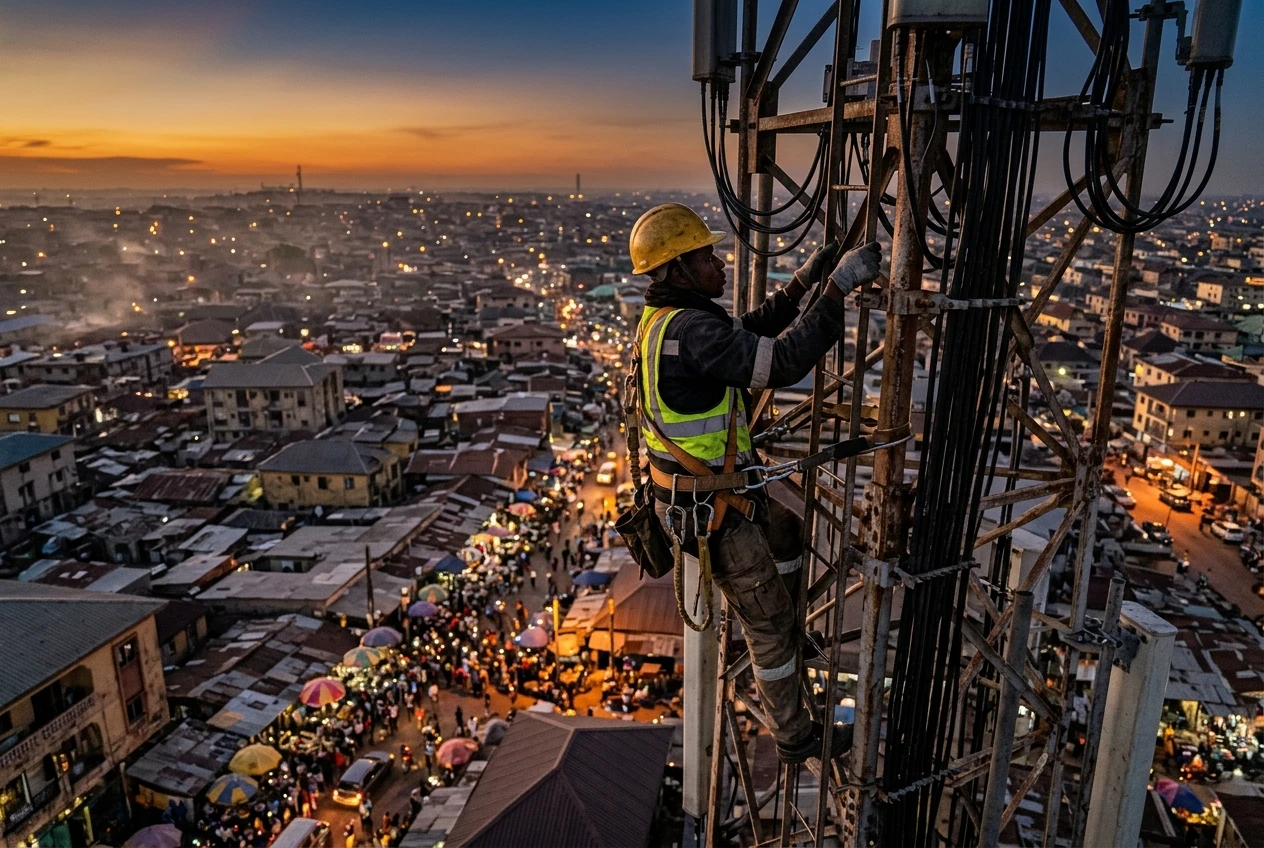
- Technology. Chinese firms, Huawei in particular, built a large share of Africa’s mobile and internet infrastructure. That gives them a long-term position in the networks millions of people use, which is why data governance and security are live questions.
- Security and presence. China has a military support base in Djibouti, opened in 2017, and contributes personnel to UN peacekeeping missions in Africa.
Some influence claims are documented and some are only alleged. China built the African Union headquarters in Addis Ababa, which opened in 2012. A 2018 media report alleged that data from its systems was being sent abroad. Both the AU and China denied it. When you read about influence, ask whether the claim comes with evidence or only with suspicion.
Public opinion is also data. Afrobarometer surveys have found that many Africans view China’s influence favorably, though views differ by country and many people also hold positive views of other powers. African publics are not one bloc, and they do not simply echo official positions in any capital.
China-Africa loans and debt: testing the debt trap claim
The “debt trap” claim says China lends more than countries can repay in order to seize strategic assets. To test it, split it into three smaller claims and check each one.
Claim 1: Chinese lending is a major source of African debt. Partly true. China became a major bilateral creditor to many African governments, especially for large infrastructure. But Africa’s external debt also includes large shares owed to multilateral institutions and to private bondholders, and these vary by country. For each country, you need the actual composition, which the World Bank’s International Debt Statistics and national debt offices publish.
Claim 2: The loans are designed to cause default and seize assets. The case cited most often is Hambantota port in Sri Lanka, leased to a Chinese state-owned firm for 99 years in 2017. That case is in South Asia, not Africa, and researchers disagree about how to read it. Researchers at Johns Hopkins SAIS’s China Africa Research Initiative, led by Deborah Brautigam, have documented Chinese lending to Africa for years. Their findings do not show a pattern of asset seizures in Africa. Chatham House analysis of the Sri Lanka case also concluded it did not fit the trap story well.

Claim 3: The terms are hidden and unfavorable. There is stronger evidence here. A 2021 study by AidData and partner institutions examined 100 Chinese loan contracts and found confidentiality clauses and the use of revenue accounts as security. These terms are legal and not unique to China, but secrecy makes it harder for citizens and other creditors to assess a country’s obligations.
What happened when countries struggled to pay? Zambia defaulted in 2020, and Chinese institutions were among the official creditors in the restructuring talks that followed. Chinese lenders have extended maturities and renegotiated in some cases, and China has also announced cancellation of some interest-free government loans on several occasions. Critics argue the process is slow and inconsistent. Both points can be true at once.
Lending from Chinese institutions to Africa also fell sharply after the middle of the 2010s, according to the Boston University Global Development Policy Center’s database. The picture is moving, not fixed.
My assessment: the strong form of the debt trap claim, deliberate seizure of assets, has little documented support in Africa. The weaker claim, that opaque terms and large borrowing created real repayment pressure, has solid support. A fair reader holds the second without needing the first.
Is China exploiting Africa? Separating evidence from opinion
“Exploitation” is a charge, not a measurement, so define it before you test it. A workable definition is that one side gains at the other’s expense through unfair terms, coercion, or harm to workers and environment. That can be checked against specific cases.
Documented concerns. Labor and safety complaints have been recorded at some Chinese-run mines and construction sites. In the Democratic Republic of the Congo, Chinese companies hold a large share of industrial cobalt and copper mining, and human rights organizations have documented harsh working conditions in parts of the cobalt supply chain, including artisanal mining. Environmental damage from mining and large projects is also documented. Some countries have complained about weak local procurement, with Chinese contractors using Chinese suppliers.
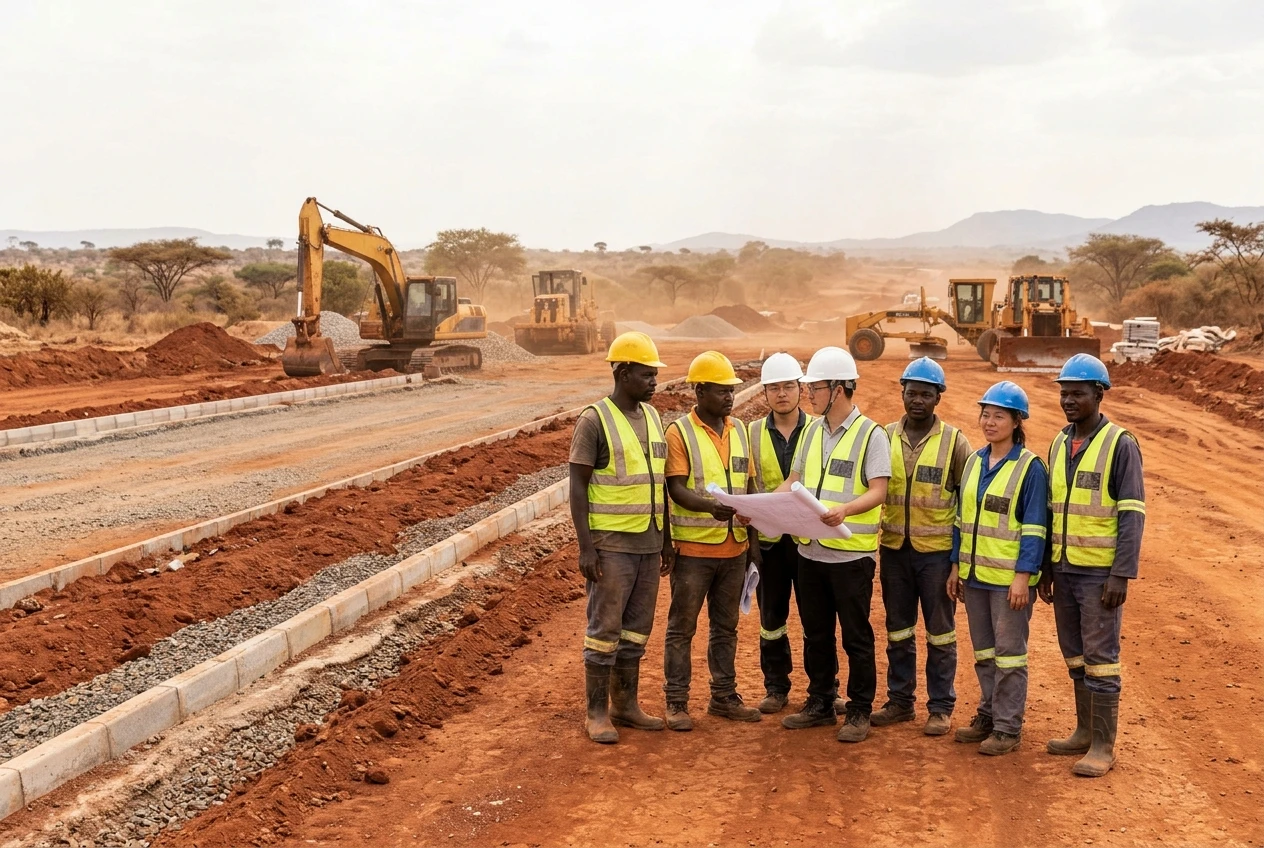
Documented complexity. Studies of Chinese firms in Africa, including a 2017 McKinsey survey, found that the large majority of their employees are African. Chinese firms have built roads, railways, power stations and ports that African governments requested and that did not exist before. Many African leaders describe the relationship as more respectful than past colonial or aid relationships.
Where evidence is thinner. Claims about intentions are mostly opinion. “China wants to colonize Africa” and “China only wants to help” are both statements about motives, and neither can be proven from a loan contract.
A fair comparison. Mining and resource extraction by Western and other firms has also produced labor, environmental and tax disputes across the continent. Exploitation is not unique to any one investor. The more useful question is whether African governments negotiate good terms and enforce their own laws.
That last point is the center of it. Contract terms, local content rules, environmental enforcement and transparency are mostly set by African institutions and the governments that run them. Weak enforcement is a problem regardless of which company is on the other side.
The history of unequal external relationships on the continent explains why this question is charged. I explore it in the colonial record and the sovereignty question in China-Africa partnership.
Is China good for Africa? A fair answer for a mixed picture
The honest answer is that it depends on the country, the project and the terms, and that the same relationship has produced both clear gains and real harms.
Gains with strong support:
- Infrastructure that African governments wanted and could not easily finance elsewhere, including railways, ports, roads, power plants and telecom networks
- Large trade volumes that give African exporters a major market
- Jobs, training and technology transfer in some projects
- A second major financing source, which gives governments more bargaining options than one lender would
Risks with strong support:
- Opaque loan terms and repayment pressure in some countries
- Export structures that remain tied to raw materials
- Labor, safety and environmental problems in some projects
- Uneven benefits between capital cities, elites and ordinary workers
What decides the outcome is mostly African capacity: how well a government negotiates, whether contracts are published, whether local firms can win subcontracts, and whether revenue goes into productive investment. China is a large partner, but results depend on choices made in African capitals.
This also connects to a wider question: what development lessons can be drawn from China’s own experience of policy, financing and institutions? I examine that in how China actually made things happen. Those lessons are for Africans to adapt, not to copy wholesale.
Anyone who answers this question with a flat yes or no is giving you an opinion. The evidence supports a conditional answer.
What the China-Africa relationship means for remote workers and independent professionals
For people who work across borders, this relationship shows up in practical ways.

Connectivity. Chinese-built networks and equipment carry a large share of African mobile and internet traffic. If you rely on stable connections in Africa, you are likely using infrastructure with Chinese involvement. Use secure connections and strong passwords wherever you work, as you would anywhere.
Business opportunities. Companies working between China and Africa need translators, editors, writers, researchers, web developers and consultants. Remote professionals who understand both regions are well placed. My site’s Language Services, Technology Services and Writing Services categories cover areas where that kind of work is needed.
Payments and currency. Cross-border payments, exchange rates and local regulations can change. Check current rules for the specific countries you work with, since I do not give financial advice here.
Reading the news. Headlines on this topic are often written to confirm a position. Use the habits in this article: separate the documented fact from the interpretation, check who is quoted, and look for the original data.
Tools. Research, translation and project tools make cross-regional work easier, and you can find the tools I use and recommend on my digital nomad tools and resources page.
A scholarly habit helps here: read primary sources when you can, such as FOCAC declarations, customs data and debt statistics, and read credible analysts when you cannot.
Key Takeaways
- Cooperation covers loans, trade, investment, training and diplomacy, and each channel has different terms and outcomes.
- China has been Africa’s largest single-country trading partner since 2009, but Africa’s exports are still weighted toward raw materials.
- Investment comes from state policy, company decisions and African demand for infrastructure.
- Influence runs through forums, education, media, technology and security presence, with some claims documented and others only alleged.
- The strong debt trap claim has little documented support in Africa, while concerns about opaque terms and repayment pressure are well supported.
- Whether China is good for Africa depends on the country, the project and how well the terms are negotiated and enforced.
TL;DR
China-Africa relations are large, varied and contested. The trade is real, the infrastructure is real, and so are the debt pressures and labor and environmental problems. Deliberate asset seizure is not documented in Africa, but loan secrecy is. The outcome depends heavily on African governments’ ability to negotiate and enforce good terms.
Main Points
- Cooperation: a set of channels, not one policy, coordinated partly through FOCAC.
- Trade: the volume is large and the structure is the debate.
- Investment: driven by Beijing, Chinese firms and African governments together.
- Influence: exercised through education, media, technology and diplomacy.
- Debt: test the three smaller claims separately.
- Exploitation: define the term, then check specific cases.
- Overall: a conditional answer is more accurate than yes or no.
- Remote work: connectivity, services demand and source habits matter most.
Reflection Questions
- Which claims about China-Africa relations have you accepted without checking the source?
- Which African country’s relationship with China do you know best, and what evidence do you have for how it works?
- How would you separate fact from opinion in the last article you read on this topic?
- How could your skills support work between China and Africa?
FAQs
- Is China good for Africa? It depends on the country, project and terms. Infrastructure, trade and financing options are documented gains, while opaque loans, raw-material dependence and labor and environmental problems are documented risks.
- Why does China invest in Africa? Reasons include access to resources and markets, commercial opportunities for Chinese companies, diplomatic support and the Belt and Road policy frame. African governments also actively seek the investment.
- Is China exploiting Africa? Specific cases of poor labor and environmental practice are documented. A general claim of exploitation is harder to prove and applies to investors from many countries, and outcomes depend heavily on how African governments negotiate and enforce contracts.
- Is the China debt trap real? Deliberate seizure of assets in Africa is not documented. Real concerns exist about confidential terms and repayment pressure, as in Zambia’s restructuring.
- How much does China trade with Africa? Annual trade has been in the hundreds of billions of US dollars in recent years, and China has been Africa’s largest single-country trading partner since 2009. Check the latest Chinese customs figures for the current total.
Conclusion
China-Africa relations deserve neither slogans nor dismissal. The strongest position is to hold the documented gains and the documented risks together, then ask which African institutions are shaping the outcome.
If you want new pieces on China-Africa relations, remote work and online publishing, join my email list. You can also read more on my Wealthy Affiliate blog: https://my.wealthyaffiliate.com/johnmaluth/blog
Sources
- Forum on China-Africa Cooperation (FOCAC), official declarations and action plans: https://www.focac.org.cn/eng/
- General Administration of Customs of China, trade statistics: http://english.customs.gov.cn/
- UNCTAD, trade and development data: https://unctad.org/
- Johns Hopkins SAIS China Africa Research Initiative, research on Chinese loans and investment: https://www.sais-cari.org/
- Boston University Global Development Policy Center, Chinese loans to Africa database: https://www.bu.edu/gdp/
- AidData, research on Chinese lending contracts: https://www.aiddata.org/
- World Bank, International Debt Statistics: https://www.worldbank.org/en/programs/debt-statistics/ids
- Chatham House, analysis of Chinese lending and the Hambantota case: https://www.chathamhouse.org/
- Afrobarometer, surveys of African public opinion: https://www.afrobarometer.org/
- McKinsey & Company, research on Chinese firms in Africa: https://www.mckinsey.com/