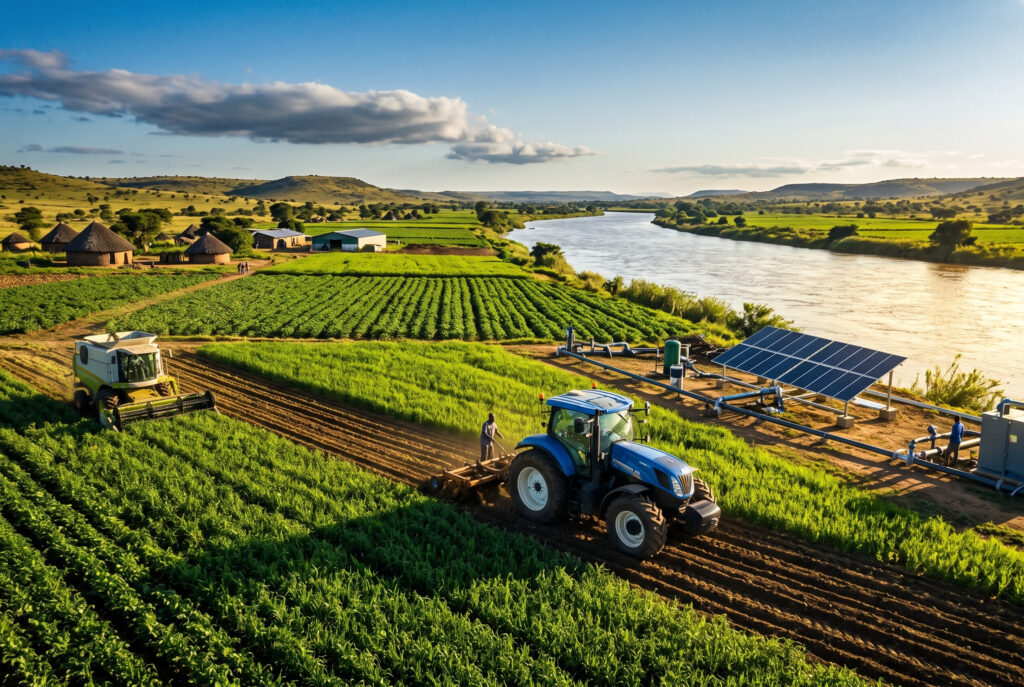
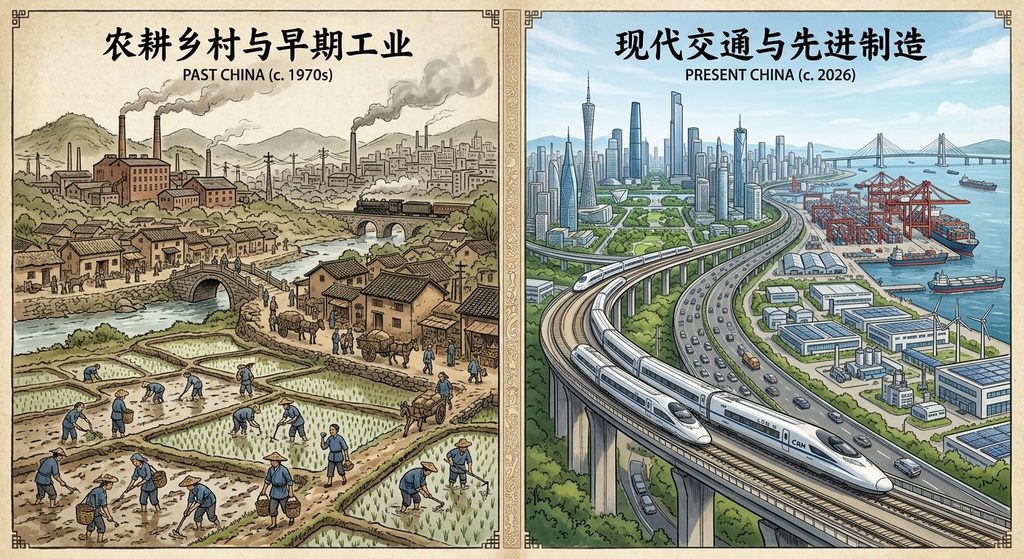
When people look at China today, they see high-speed trains, modern cities, advanced factories, enormous ports, sophisticated telecommunications networks, and one of the world’s largest economies. They often describe this achievement as the Chinese economic miracle.
But what actually happened?
Who paid for the factories? Where did the money come from? How did the government organize millions of workers? How did farmers become more productive? How did China acquire foreign technology and eventually develop its own? How did a poor country build the infrastructure that now supports its global economic position?
These are more important questions than simply asking whether China followed socialism, capitalism, or a mixture of both.
China’s development was not a single event, one government programme, or one economic theory. It was a series of political decisions, institutional arrangements, investments, experiments, and policy adjustments carried out over several decades.
To understand the process, we must begin before the People’s Republic of China was established in 1949. We must then examine the Mao Zedong era (1949–1976), the reform and opening-up period beginning in 1978, and the subsequent expansion of Chinese industrial, financial, technological, and infrastructure capabilities.
This article examines the actual mechanisms behind that transformation. It asks what governments did, how they financed their decisions, who implemented them, what changed, and what other developing countries, particularly African countries, can learn.
The objective is not to portray every Chinese policy as successful. China experienced serious mistakes, economic disruptions, political campaigns, famine, inequality, environmental damage, and financial difficulties. Understanding its achievements requires examining those failures as well.
The central argument is straightforward: development happens when political decisions are converted into institutions, financing arrangements, productive activities, infrastructure, and measurable improvements in people’s lives.
1. China Before 1949: Understanding the Starting Point
Before the establishment of the People’s Republic of China on October 1, 1949, the country had experienced decades of political instability, foreign intervention, civil war, economic disruption, and Japanese invasion.
The Qing dynasty had collapsed in 1911. The following decades brought competing governments, warlord conflicts, the Nationalist government, Communist expansion, and the Second Sino-Japanese War.
By 1949, the economy was severely damaged. Industrial facilities had been destroyed or were operating below capacity. Transportation networks had suffered extensive damage. Inflation had weakened the currency, and many businesses struggled to operate.
Most people lived in rural communities and depended on agriculture. Industrial employment was limited, and access to modern healthcare and education was highly unequal.
The government inherited several immediate problems:
- Restoring economic stability.
- Rebuilding agricultural production.
- Controlling inflation.
- Reconstructing transportation and communication systems.
- Establishing functioning national institutions.
- Developing domestic industrial capacity.
- Improving public health and education.
China did not begin its development journey with unlimited money, advanced technology, or an established industrial economy.
It began with a large population, substantial agricultural resources, a damaged economy, and a government determined to centralize national authority and reorganize production.
This starting point matters because the policies that worked in later decades depended partly on the institutions, infrastructure, and human capabilities developed during the earlier years.
2. The Mao Era (1949–1976): Building the Initial Foundations
The Mao era was neither an uninterrupted development success nor a period of complete economic failure. It produced important institutional and industrial foundations, alongside catastrophic policy failures.
Four major developments deserve particular attention.
2.1 Land Reform: Changing Who Controlled Agricultural Production
One of the new government’s earliest major economic interventions was land reform.
Before the Communist revolution, agricultural land ownership varied considerably across Chinese regions. Many rural households cultivated land they did not own, while landlords and other landowners controlled significant agricultural resources.
In 1950, the government introduced the Land Reform Law. The campaign redistributed land and other agricultural assets to peasant households.
How did it work in practice?
Government teams entered villages, identified landownership arrangements, classified households, organized public meetings, and redistributed land, livestock, tools, and buildings.
The immediate objective was to change rural ownership and weaken the political and economic power of landlords.
For millions of peasant families, the reform meant gaining access to land they could cultivate.
However, this process also involved coercion, persecution, executions, and extensive political violence. It should not be described as a peaceful redistribution programme.
What changed?
- Many peasant households acquired land-use and production rights.
- Traditional landlord power was substantially weakened.
- The new government strengthened its authority in rural communities.
- Agricultural production was reorganized under the new political system.
The important economic point is that the government began by changing the ownership and control arrangements governing one of China’s most important productive resources: agricultural land.
2.2 Agricultural Collectivization: Organizing Production Differently
After land redistribution, the government gradually moved away from independent household farming.
Farmers were first encouraged to form mutual-aid teams and agricultural producers’ cooperatives. These arrangements developed into larger collective farming organizations.
By the late 1950s, the People’s Communes had become the dominant rural organizational structure.
The intended advantages included:
- Pooling agricultural labour.
- Sharing equipment and resources.
- Organizing irrigation and water management.
- Coordinating agricultural production.
- Mobilizing labour for public infrastructure.
- Facilitating state procurement and distribution.
However, collective production also weakened individual incentives and concentrated decision-making.
The Great Leap Forward, launched in 1958, attempted to accelerate industrialization and agricultural production simultaneously through mass mobilization and unrealistic production targets.
The campaign contributed to economic disruption and the catastrophic famine of 1959–1961.
This is an essential part of China’s development history. The ability to mobilize large numbers of people does not automatically produce development. Mobilization without accurate information, realistic targets, accountability, and economic incentives can produce disaster.
2.3 Industrialization: How China Acquired Its First Modern Industrial Base
China understood that agricultural production alone could not support its ambition to become an industrial power.
It needed steel, electricity, machinery, chemicals, transportation equipment, and technical expertise.
The government therefore introduced centralized economic planning, beginning with the First Five-Year Plan (1953–1957).
The Soviet Union became an important development partner.
On February 14, 1950, China and the Soviet Union signed the Treaty of Friendship, Alliance and Mutual Assistance. Their economic cooperation subsequently included the development of major industrial facilities.
The well-known 156 Projects became central to the industrialization programme.
These projects covered industries such as:
- Steel production.
- Coal mining.
- Electricity generation.
- Machinery manufacturing.
- Chemicals.
- Non-ferrous metals.
- Military production.
Where did the money and technology come from?
China used several mechanisms.
First, the government directed public revenue and state-controlled investment towards industrial construction.
Second, it imported machinery, equipment, and industrial technology from the Soviet Union.
Third, Soviet specialists helped design factories, install equipment, and train Chinese personnel.
Fourth, Soviet credit helped finance equipment purchases. China subsequently repaid the credit under agreed arrangements.
Fifth, the government prioritized heavy industry when allocating scarce investment resources.
This was not simply a matter of announcing that China wanted to industrialize. It involved financing agreements, engineering plans, machinery imports, technical personnel, construction organizations, and industrial operating systems.
What changed?
China developed a stronger domestic industrial foundation. It acquired factories, technical knowledge, industrial workers, engineers, and production capabilities that became important for subsequent economic development.
However, industrialization remained uneven, consumer production was restricted, and agricultural resources were frequently directed towards state industrial priorities.
The Sino-Soviet split in the late 1950s and early 1960s also disrupted technical cooperation. China had to develop greater domestic capabilities under difficult conditions.
2.4 Public Health and Education: Investing in Human Capabilities
Another important development during the Mao era was the expansion of public health and basic education.
China’s government organized vaccination programmes, sanitation campaigns, disease prevention, rural medical services, and literacy initiatives.
The rural healthcare system developed through several levels of service:
- County hospitals.
- Commune health facilities.
- Village-level medical workers.
The barefoot doctor programme, particularly developed from the mid-1960s, trained local people to provide basic medical services in rural communities.
They were not substitutes for fully qualified physicians. Their work included preventive healthcare, basic treatment, health education, and referrals.
The significance was practical: healthcare services began reaching communities that had previously been poorly served.
The results were substantial. Life expectancy, approximately 32 years before 1949 according to historical estimates, had reached approximately 63 years by 1978. Public health measures and improvements in education contributed significantly to the decline in mortality.
Education also expanded, although access and quality varied across regions and political periods. The Cultural Revolution (1966–1976) severely disrupted universities, research institutions, and educational careers.
The lesson is that human development can advance even in a poor country when governments establish basic public services and direct resources towards underserved populations. However, political interference can also damage the very educational institutions required for long-term progress.
The Mao-Era Development Record
| Policy or programme | How it was implemented | What it produced | Major limitations |
|---|---|---|---|
| Land reform | Redistribution of agricultural land and assets | Changed rural land relations and strengthened the new government | Political violence and persecution |
| Agricultural collectivization | Mutual-aid teams, cooperatives and communes | Organized large-scale rural production | Weakened household incentives |
| First Five-Year Plan | Central planning and public industrial investment | Steel, machinery, electricity and industrial capacity | Heavy emphasis on capital-intensive industry |
| Soviet cooperation | Equipment imports, technical assistance and credit | Industrial plants and engineering knowledge | Dependence on external technical support |
| Rural healthcare | Clinics, public health campaigns and barefoot doctors | Wider access to basic healthcare | Unequal quality and limited medical resources |
| Literacy campaigns | Public education and adult literacy programmes | Expanded basic educational access | Interrupted educational development during the Cultural Revolution |
The Mao era therefore left China with important assets, including an expanded industrial base, greater literacy, improved public health, national institutions, and experience in large-scale infrastructure construction.
But these achievements must be considered alongside the Great Leap Forward famine, political persecution, the Cultural Revolution, and the economic limitations of central planning.
3. The 1978 Turning Point: Changing the Economic Incentives
When China began its reform and opening-up programme in 1978, it did not abandon every institution established since 1949.
Instead, the government began changing how economic decisions were made, how production was rewarded, and how domestic and international markets operated.
Deng Xiaoping became the most influential political figure associated with this transformation.
The December 1978 Third Plenum of the 11th Central Committee marked a major political turning point.
Rather than attempting to reform everything simultaneously, China introduced changes gradually.
This approach allowed the government to test policies, observe their results, and expand successful experiments.
3.1 The Household Responsibility System: Giving Farmers a Reason to Produce More
One of the earliest and most consequential reforms occurred in agriculture.
Under collective farming, households did not independently control all their production decisions or retain all the benefits of additional production.
The Household Responsibility System changed this arrangement.
The famous early experiment took place in Xiaogang Village, Anhui Province, in 1978. Local farmers agreed to divide collective production responsibilities among households.
Under the emerging system:
- Collective land remained collectively owned.
- Individual households received contractual rights to cultivate allocated plots.
- Families made more production decisions independently.
- They fulfilled agreed state procurement obligations.
- They could retain or sell permitted surplus production.
The government initially permitted experimentation in selected areas before expanding the system.
What happened to agricultural production?
According to historical World Bank figures, national grain output increased from approximately 305 million tonnes in 1978 to 407 million tonnes in 1984.
Farm household incomes also rose sharply during the early reform period.
This was not achieved simply by telling farmers to work harder. The government changed the relationship between production, responsibility, and economic reward.
A farmer who could benefit from producing additional crops had a stronger incentive to improve productivity.
3.2 Township and Village Enterprises: Turning Rural Communities into Production Centres
Agricultural reforms increased productivity and released labour that was no longer required full-time on farms.
China faced an important question: what would these additional workers do?
Rather than depending exclusively on large urban factories, rural governments and communities encouraged Township and Village Enterprises (TVEs).
These businesses produced goods such as:
- Bricks and construction materials.
- Textiles and clothing.
- Agricultural machinery.
- Household products.
- Processed foods.
- Industrial components.
Some enterprises were collectively owned, while others operated under different ownership arrangements as the system developed.
Local governments helped establish businesses, mobilize capital, provide facilities, and connect producers with markets.
How were they financed?
Financing came from several sources, including retained collective earnings, local savings, bank credit, enterprise profits, and investment from business operators.
The important difference was that production was increasingly connected to market demand rather than being determined exclusively by central production quotas.
Rural industrialization created employment closer to people’s homes and contributed to the growth of domestic manufacturing.
This was an important bridge between agricultural reform and China’s later industrial expansion.
4. Special Economic Zones: How China Attracted Foreign Capital and Technology
China could not become a leading industrial economy using domestic resources alone.
It needed foreign investment, machinery, international markets, technical expertise, and management experience.
However, opening the entire economy immediately would have been politically and economically difficult.
The government therefore established Special Economic Zones (SEZs).
The first four were:
| Special Economic Zone | Province | Main geographical advantage |
|---|---|---|
| Shenzhen | Guangdong | Direct proximity to Hong Kong |
| Zhuhai | Guangdong | Proximity to Macao and access to coastal trade |
| Shantou | Guangdong | Coastal location and overseas Chinese connections |
| Xiamen | Fujian | Maritime access and links to Taiwan |
These zones were established in 1980.
How the Special Economic Zones Worked
The government created more favourable conditions for investment and international business inside the designated areas.
These included:
- Tax incentives for qualifying foreign-invested enterprises.
- Easier access to imports and exports.
- More flexible business regulations.
- Infrastructure developed for industrial and commercial use.
- Opportunities for joint ventures.
- Greater flexibility in employment and business management.
Foreign investors could bring capital, production equipment, technical expertise, and international customers.
Chinese partners provided access to the domestic market, local labour, industrial facilities, and government-approved investment opportunities.
Shenzhen became the most famous example.
Its location beside Hong Kong made it particularly attractive to manufacturers seeking lower production costs and access to international trade.
Factories were established, workers migrated from other parts of China, infrastructure expanded, and manufacturing activities grew.
The government subsequently extended opening-up policies to additional coastal cities and economic development zones.
An important correction: China did not simply require every foreign investor to transfer all its technology. Technology acquisition happened through several channels, including joint ventures, equipment purchases, licensing, technical cooperation, training, research, and the development of domestic suppliers. The results varied between industries and companies.
The practical lesson is that China created institutions through which foreign investment could contribute to domestic productive capacity.
5. How China Actually Financed Its Development
This is one of the most important questions in understanding China’s economic transformation.
Building railways, ports, highways, airports, electricity networks, industrial parks, and modern cities requires enormous financial resources.
China did not finance all these projects through one source. Its financing arrangements changed across different periods.
5.1 Government Revenue and State-Controlled Investment
During the early industrialization period, the government controlled important parts of the economy.
It collected revenue through taxation, state enterprise profits, agricultural procurement arrangements, and other public resources.
It then directed substantial investment towards priority sectors.
The First Five-Year Plan is an example of this approach.
The government did not wait for private investors to independently construct an industrial system. It established state priorities, allocated resources, organized construction, and imported the machinery and technical assistance required.
5.2 Domestic Savings and the Banking System
As China’s economy expanded, domestic savings became an increasingly important source of investment finance.
Households deposited money in banks. Businesses accumulated profits. State-owned enterprises retained earnings. Financial institutions mobilized these resources.
The banking system, particularly state-controlled commercial banks, became an important channel for financing industrial expansion and infrastructure.
This arrangement allowed the government to influence the allocation of credit towards strategic sectors.
It also created risks, especially when political priorities encouraged lending to projects with weak commercial returns.
5.3 The 1994 Tax-Sharing Reform
In 1994, China restructured its central-local fiscal arrangements.
The reform clarified tax assignments and increased the central government’s share of important tax revenues, including a 75 percent central share of value-added tax under the original arrangement.
Local governments, however, continued carrying substantial expenditure responsibilities.
This created a financial pressure: local governments needed to provide infrastructure and public services while having more limited access to certain tax revenues.
They increasingly explored alternative financing arrangements.
5.4 Land-Use Rights and Urban Development Finance
One distinctive feature of China’s urban development model was the use of land-use rights as a source of government revenue.
Under China’s land system, urban land is state-owned, while rural land is generally collectively owned.
The government could grant time-limited land-use rights for development, subject to applicable laws and procedures.
Commercial and residential land-use rights were transferred through arrangements that increasingly included competitive auctions and other market-based transactions.
The terms differed by use. Residential land-use rights could extend up to 70 years, while commercial and industrial uses generally had shorter maximum terms.
Local governments could use land-related revenue to support urban development and infrastructure construction.
For example:
- A city planned an industrial development area.
- It invested in roads, electricity, water supply, and transport connections.
- The surrounding area became more attractive to businesses and property developers.
- The government transferred land-use rights for development.
- The resulting revenue supported further urban investment.
This system became particularly important in the 2000s.
It also created problems, including incentives for excessive land conversion, property speculation, displacement disputes, and dependence on real estate revenue.
It is important not to claim that land sales immediately became China’s main infrastructure financing mechanism after the 1994 tax reform. Their national importance increased substantially in the early 2000s.
5.5 Policy Banks and Local Government Financing Vehicles
China established three major policy banks in 1994:
- China Development Bank.
- Export-Import Bank of China.
- Agricultural Development Bank of China.
These institutions were designed to support policy priorities through specialized financing.
The China Development Bank became particularly important in long-term infrastructure and development finance.
Local governments also established Local Government Financing Vehicles (LGFVs).
These were companies owned or controlled by local governments that borrowed money and financed infrastructure projects.
A simplified example explains how the system operated.
Suppose a city wanted to build a new industrial road.
The municipal government established or used a financing company. The company obtained bank loans and arranged construction. The road improved access to nearby industrial land. Development increased the value of surrounding property, and land-use revenue could help service the debt.
This arrangement enabled local governments to undertake projects even when their ordinary budget revenues were insufficient.
However, it also created significant debt risks because some projects generated insufficient income to repay their financing.
China’s Main Development Financing Sources
| Financing source | How the money was obtained | What it financed |
|---|---|---|
| Government revenue | Taxes, public income and state enterprise earnings | Public infrastructure and industrial priorities |
| State-owned enterprise profits | Earnings retained or reinvested by state enterprises | Industrial expansion and modernization |
| Soviet assistance and credit | Equipment imports, technical assistance and loans | Early heavy industrialization |
| Household savings | Bank deposits mobilized by financial institutions | Business investment and infrastructure lending |
| Foreign direct investment | Capital from international companies and investors | Factories, industrial facilities and export production |
| Export earnings | Revenue from selling Chinese goods internationally | Imports, reserves and domestic investment |
| Land-use transfers | Payments for time-limited development rights | Urban infrastructure and local development |
| Policy bank financing | Long-term loans from specialized financial institutions | Strategic infrastructure and development projects |
| Local financing vehicles | Bank loans and bond financing through local government-owned companies | Roads, transport, utilities and urban construction |
The most important point is that China combined several financing channels. Its development was not paid for entirely by foreign aid, land sales, domestic savings, or government taxation.
It was the result of a changing financial system that mobilized public revenue, domestic savings, foreign capital, enterprise earnings, and borrowing.
6. How China Turned Infrastructure Plans into Physical Projects
Financing alone does not build infrastructure.
A government can obtain billions of dollars and still fail to deliver a functioning railway, electricity network, port, or road.
China’s infrastructure expansion involved coordination between national planning institutions, provincial governments, municipal authorities, state-owned enterprises, construction companies, engineering institutions, and banks.
Consider a hypothetical industrial development project.
The process could work as follows:
Stage 1: Identify the economic need.
The government identifies a region where businesses need better transportation and electricity.
Stage 2: Prepare the development plan.
Planning authorities identify the proposed location, technical requirements, land needs, estimated costs, and expected economic benefits.
Stage 3: Arrange financing.
Funding may involve government budgets, policy bank lending, commercial bank credit, enterprise investment, or a combination of these.
Stage 4: Assign implementation responsibilities.
Government agencies approve the project, while designated construction companies and engineering institutions carry out the work.
Stage 5: Connect infrastructure to productive activity.
Roads, electricity, water, telecommunications, and industrial facilities are coordinated to support actual production.
Stage 6: Evaluate performance.
Authorities and operators assess construction costs, usage, economic returns, maintenance requirements, and the project’s wider effects.
This coordination helps explain why infrastructure development became closely connected to industrial policy.
A railway was not simply a transportation project. It could also support industrial supply chains, urban development, tourism, employment, and regional trade.
However, not every project delivered sufficient economic returns. Some infrastructure investments created debt, unused capacity, or excessive maintenance obligations.
The lesson is that infrastructure must be evaluated according to its actual economic function, not simply its size or appearance.
7. Technology Acquisition: How China Learned to Manufacture What It Previously Imported
China’s industrial transformation involved more than importing finished products.
The country progressively developed the ability to manufacture equipment, components, machinery, and advanced products domestically.
Several mechanisms contributed to this process.
7.1 Importing Industrial Equipment
In the 1950s, Soviet assistance helped China establish factories and industrial facilities.
Foreign equipment gave Chinese workers and engineers access to technologies that would have been difficult to develop independently at the time.
7.2 Joint Ventures and Technical Cooperation
During the reform period, Chinese enterprises worked with foreign companies through joint ventures, licensing agreements, equipment purchases, and other forms of cooperation.
These arrangements exposed Chinese engineers and managers to international production methods.
7.3 Training Domestic Engineers
Universities, technical institutions, research centres, and enterprises trained specialists who could operate, maintain, modify, and eventually improve imported technologies.
7.4 Developing Domestic Suppliers
As manufacturing expanded, Chinese companies developed networks of suppliers producing components, materials, machinery, and supporting services.
This enabled manufacturers to source more inputs domestically.
7.5 Moving into Higher-Value Industries
Over time, China expanded from labour-intensive manufacturing into more technically demanding sectors, including telecommunications, electronics, railway equipment, electric vehicles, batteries, and renewable energy technologies.
The process was not automatic or uniform. Some industries developed domestic technological leadership, while others continued to rely on foreign technology and imported components.
The important distinction is between purchasing a finished product and developing the industrial capability to manufacture, maintain, improve, and eventually export that product.
8. China’s Entry into the World Trade Organization: Expanding the Market
China joined the World Trade Organization on December 11, 2001.
This was another major turning point.
Membership brought China into a more predictable system of international trade rules and expanded its access to global markets.
It also increased competitive pressure on domestic enterprises.
Manufacturers expanded production to serve international customers. Foreign companies established or expanded operations in China. Chinese exporters developed international distribution networks.
The export sector generated employment, foreign exchange earnings, and demand for domestic industrial inputs.
China’s participation in global value chains also allowed domestic companies to learn from international buyers, suppliers, engineers, and production standards.
However, WTO membership was not the beginning of China’s export development. Export-oriented reforms and foreign investment had already been expanding for more than two decades.
The significance of 2001 was that China entered a new stage of deeper integration into the global trading system.
9. Targeted Poverty Alleviation: Identifying Problems Household by Household
China’s development was not limited to industrial cities and coastal manufacturing centres.
Millions of people continued living in poor rural communities, particularly in remote mountainous areas.
Beginning in 2013, the government intensified its Targeted Poverty Alleviation campaign.
The policy attempted to identify poor households and match assistance to their particular problems.
Rather than treating poverty as one general condition, local officials collected household-level information.
They examined factors such as:
- Household income.
- Access to education.
- Health conditions.
- Agricultural productivity.
- Access to roads and markets.
- Housing conditions.
- Employment opportunities.
Different households received different forms of assistance.
How Targeted Poverty Alleviation Worked
| Identified problem | Government intervention | Intended practical result |
|---|---|---|
| Low agricultural productivity | Seeds, training, livestock and agricultural support | Higher farm production and income |
| Lack of employment | Vocational training and employment programmes | Access to paid work |
| Remote geographical location | Infrastructure development and, in some cases, relocation | Better access to services and markets |
| Poor educational access | Schooling assistance and education subsidies | Greater educational participation |
| Medical expenses | Expanded health insurance and medical assistance | Reduced financial pressure from illness |
| Limited market access | Agricultural industry development and e-commerce connections | Better opportunities to sell products |
The government also deployed large numbers of officials and cadres to work with local communities.
By the end of 2020, China officially reported that 98.99 million rural residents living below its then-current national poverty line had been lifted out of poverty.
This was a major national achievement, although the poverty line used, the sustainability of income improvements, and the remaining forms of deprivation should be considered when evaluating the result.
The important operational lesson is that poverty programmes can become more effective when governments identify specific barriers affecting individual households and connect assistance to practical solutions.
10. What China Did Differently: A Comparison of the Development Stages
China’s transformation was not driven by one policy. Different policies addressed different economic constraints at different times.
| Historical period | Main problem | Government response | Observable change |
|---|---|---|---|
| Before 1949 | War, inflation, weak institutions and damaged production | National reconstruction after 1949 | Restoration of economic administration |
| 1949–1952 | Rural inequality and economic instability | Land reform and economic stabilization | Changed land relations and restored production |
| 1953–1957 | Limited industrial capacity | First Five-Year Plan and Soviet cooperation | Development of heavy industrial facilities |
| 1958–1962 | Attempts to accelerate production | Great Leap Forward | Severe economic disruption and famine |
| 1960s–1970s | Weak rural healthcare and limited industrial reach | Public health, education and industrial expansion | Improved health indicators and wider public services |
| 1978–1984 | Weak agricultural incentives | Household Responsibility System | Increased agricultural output and rural incomes |
| 1980s–1990s | Limited foreign capital and export capacity | Special Economic Zones and opening-up | Increased investment and export manufacturing |
| 1980s–1990s | Underemployment in rural communities | Township and Village Enterprises | Expansion of rural industrial employment |
| 1990s–2000s | Infrastructure and urban development requirements | Banking reform, land-use revenue and local financing | Large-scale infrastructure expansion |
| 2001 onward | Need for larger international markets | WTO membership and export integration | Deeper participation in global trade |
| 2013–2020 | Persistent rural poverty | Targeted Poverty Alleviation | Large reductions in officially measured rural poverty |
This chronology demonstrates something important: China did not apply the same development policy throughout its history.
It changed its methods as its economic needs changed.
11. The Costs, Failures, and Unresolved Problems
An honest examination of China’s development must also examine what went wrong.
11.1 The Great Leap Forward
The Great Leap Forward produced a catastrophic famine between 1959 and 1961.
Unrealistic production targets, distorted reporting, coercive procurement, agricultural disruption, and policy failures contributed to the disaster.
It demonstrates the dangers of political pressure replacing reliable information and practical economic management.
11.2 The Cultural Revolution
The Cultural Revolution disrupted universities, research institutions, professional careers, public administration, and economic management.
It caused lasting damage to education and institutional development.
11.3 Environmental Pollution
Rapid industrialization relied heavily on coal and energy-intensive manufacturing.
China experienced severe air pollution, water contamination, and environmental degradation.
Subsequent investment in renewable energy, pollution controls, and environmental regulation has addressed some of these problems, but environmental pressures remain.
11.4 Local Government Debt
Local financing vehicles and land-related revenue helped finance infrastructure, but excessive borrowing created financial risks.
When property markets slowed, some local governments faced declining land revenues while still carrying substantial debt obligations.
11.5 Inequality and the Hukou System
China’s household registration system restricted access to certain public services for people living outside their registered locations.
Rural migrant workers contributed significantly to urban development but did not always enjoy equal access to education, healthcare, and other public services.
These problems demonstrate that economic growth and social development do not automatically advance at the same rate.
12. What African Countries Can Learn from China’s Experience
China’s development offers useful lessons for African governments, researchers, businesses, educators, and development institutions.
However, African countries should not attempt to reproduce China’s entire political or economic system.
China’s population, political institutions, historical conditions, land administration, financial system, and international circumstances differ considerably from those of African states.
The useful lessons are practical.
First, establish a productive agricultural sector.
Agriculture should not be treated merely as a source of subsistence. It can support food security, agro-processing, industrial inputs, exports, and employment.
Second, connect education to economic production.
Schools, universities, technical colleges, and vocational institutions should help develop the skills required by agriculture, manufacturing, technology, construction, healthcare, and other productive sectors.
Third, mobilize domestic resources.
Governments need credible tax systems, functioning financial institutions, responsible public expenditure, and policies that encourage domestic savings and investment.
Fourth, build infrastructure that supports production.
Roads, electricity, water systems, ports, telecommunications, and railways should be connected to real economic needs.
Fifth, use international partnerships strategically.
Foreign investment should contribute to local skills, employment, industrial development, technology acquisition, and domestic business participation.
Sixth, support local manufacturing.
Small and medium-sized enterprises should be able to produce goods, supply larger industries, employ people, and gradually improve their technical capabilities.
Seventh, evaluate policies by their actual results.
A government should measure whether a policy increased production, improved income, created employment, reduced poverty, or expanded access to essential services.
Announcing a development programme is not the same as implementing one.
For African countries, the central challenge is to build institutions capable of converting national resources and development ambitions into measurable improvements in people’s lives.
13. Final Reflection: Development Is the Conversion of Policy into Results
China’s rise did not happen because someone announced that the country would become rich.
It happened through decades of institutional construction, public investment, agricultural reform, industrial planning, foreign cooperation, technological learning, infrastructure development, and changes in economic incentives.
The country also experienced serious failures. Some policies produced extraordinary suffering, while others generated lasting economic benefits. Its development history therefore offers both lessons in effective implementation and warnings about the consequences of poor policy design.
The most important question for African policymakers is not whether China is socialist or capitalist.
It is how a country can organize its people, institutions, financial resources, technology, and productive capacity to achieve specific national development objectives.
A country becomes economically stronger when its people can produce more, its businesses can grow, its institutions can function, its infrastructure supports economic activity, and its government can turn public resources into lasting value.
That is how development moves from political promises to practical results.
China’s experience deserves to be studied not simply for what it has become, but for what it actually did to get there.
Frequently Asked Questions
1. How did China finance its early industrialization?
China used government revenue, state-controlled investment, domestic resources, Soviet credit, imported machinery, and technical assistance. Its First Five-Year Plan directed substantial resources towards heavy industry and industrial infrastructure.
2. Did China’s economic transformation begin with Deng Xiaoping?
Deng Xiaoping was central to the reform and opening-up programme beginning in 1978. However, China’s earlier development included national reconstruction, land reform, industrial investment, public health programmes, and the establishment of state institutions.
3. How did China increase agricultural production after 1978?
The Household Responsibility System gave farming households greater control over production decisions and allowed them to benefit from surplus production after fulfilling their obligations. This strengthened incentives and contributed to rapid agricultural growth.
4. How did China attract foreign investment?
It introduced Special Economic Zones, investment incentives, joint ventures, more flexible business regulations, export-oriented infrastructure, and opportunities for foreign companies to operate in designated areas.
5. How did China finance modern highways, railways, and cities?
It combined government budgets, domestic bank savings, state-owned financial institutions, policy bank loans, enterprise investment, land-use revenue, foreign investment, and local government financing vehicles.
6. What role did the Soviet Union play in China’s industrial development?
The Soviet Union provided machinery, technical expertise, industrial designs, training, and credit. Its assistance was particularly important during the First Five-Year Plan.
7. Can African countries follow China’s development model?
African countries can study and adapt specific policies, such as agricultural incentives, industrial development, technical education, infrastructure planning, domestic resource mobilization, and targeted poverty reduction. They should adapt these policies to their own institutions and economic conditions.
And if you want to know what’s happening in my world as a writer and digital nomad, check out my Wealthy Affiliate blog page here: https://my.wealthyaffiliate.com/johnmaluth/blog.
Recommended Further Reading
- Barry Naughton, The Chinese Economy: Adaptation and Growth.
- Justin Yifu Lin, Demystifying the Chinese Economy.
- Yuen Yuen Ang, How China Escaped the Poverty Trap.
- World Bank and Development Research Center of the State Council, China 2030: Building a Modern, Harmonious, and Creative Society.
- Dwight H. Perkins, research on China’s industrialization and Soviet economic assistance.