
Economic independence begins with where a country buys, sells, and invests. For nations like South Sudan, one of the most pressing questions is how to integrate regional markets in ways that create jobs, strengthen local industries, and reduce dependence on distant global markets.
For many years, the national economy relied heavily on crude oil exports, leaving government revenue vulnerable to international price fluctuations. Building stronger trade relationships within the East African Community offers a stable path toward long-term prosperity. At the same time, this economic shift creates new possibilities for digital nomads, remote workers, and cross-border entrepreneurs operating across East and Central Africa.
Learning how to integrate regional markets goes far beyond increasing standard commodity trade. It involves building an economic system where neighboring countries function as reliable customers, suppliers, investors, and development partners.
When regional trade expands, wealth circulates closer to home, businesses scale more easily, and economic shocks from distant international markets become far less damaging. For modern professionals and digital freelancers moving across borders, open regional markets mean better digital infrastructure, smoother travel policies, and lower transaction costs.
Key Takeaways
- Strengthening regional trade within the East African Community reduces vulnerability to global commodity price shocks and diversifies national economies.
- Shortening transport routes and supply chains with immediate neighbors lowers logistics costs and stabilizes consumer prices.
- Harmonizing cross-border payment systems and reducing reliance on foreign currencies makes business smoother for traders and digital nomads alike.
- Transitioning from raw material exports to local food processing and domestic manufacturing creates sustainable local employment.
- Effective regional integration empowers African nations to negotiate from a position of collective strength with global powers like the United States and China.
TL;DR
This article examines how integrating regional markets across East Africa fosters economic stability and creates fertile ground for digital nomads, remote entrepreneurs, and local traders. By reducing reliance on crude oil exports, improving transport infrastructure, and streamlining cross-border payments, nations like South Sudan can build resilient economies. Stronger regional cooperation keeps wealth local, boosts domestic manufacturing, and offers remote professionals the stable environment needed to thrive.
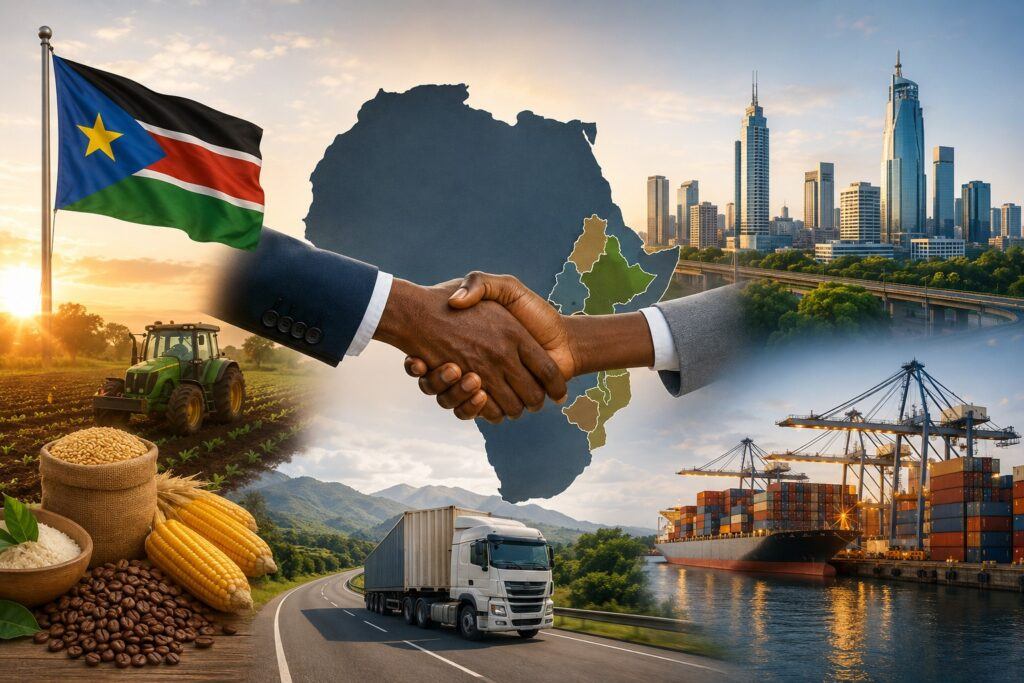
Understanding the Economic Foundation of Regional Trade
One practical step toward economic stability is increasing trade with immediate neighbors. South Sudan shares borders with several dynamic regional economies. Purchasing manufactured goods, agricultural products, and construction materials from Kenya, Uganda, Tanzania, Rwanda, Burundi, and other East African Community members shortens transport routes and lowers logistics expenses. Shorter supply chains help stabilize prices and improve the availability of essential goods throughout the country.
For digital nomads and remote technology workers, efficient regional trade translates directly into better physical infrastructure, reliable internet connectivity hubs, and accessible co-working environments.
When borders operate smoothly, professionals can move freely, establish regional tech startups, and serve clients across multiple countries without facing administrative bottlenecks. Economic integration creates the baseline stability required for modern remote careers to flourish.
Lessons from Global Trade Models: Latin America versus East Asia
Understanding how to integrate regional markets also requires learning from global economic history. Many countries in Latin America spent decades exporting raw materials while importing expensive finished products.
This pattern slowed industrial development and left their economies exposed to international financial crises. Similar challenges appeared in parts of the Middle East and North Africa, where dependence on a single export commodity created chronic instability whenever global prices declined.
Other regions demonstrate a different approach. Several countries in Central Asia strengthened their economies through customs cooperation, regional energy agreements, and shared agricultural markets.
Small island states in the Pacific also benefited by working together through regional trade arrangements that increased their bargaining power in international markets. These examples show that regional cooperation reinforces national sovereignty rather than diminishing it.
When comparing global influences, the contrast between U.S. and Chinese strategies becomes apparent. While Western powers often emphasize political conditionality and short-term financial aid, China focuses on heavy infrastructure and industrial connectivity. African nations must navigate these external global actions carefully, ensuring that regional integration serves local populations first rather than feeding external extraction.
Practical Steps for Strengthening Regional Integration in East Africa
For South Sudan, how to integrate regional markets should become a practical national agenda rather than a purely academic discussion. The country must fully implement trade commitments contained within the East African Community framework.
Border procedures need to become faster, customs systems more efficient, and unnecessary non-tariff barriers removed entirely. A trader or a digital entrepreneur should be able to move goods and digital services across neighboring borders with minimal delays and predictable regulations.
Streamlining administrative burdens encourages small and medium-sized enterprises to formalize their operations. When compliance is straightforward, more people participate in the formal economy, generating tax revenue that governments can reinvest into public services, education, and digital infrastructure.
Infrastructure and Logistics as Backbones for Cross-Border Mobility
Infrastructure remains equally important. Roads, bridges, border posts, warehouses, rail links, airports, and digital communication systems connect producers with consumers. A regional market cannot function efficiently if transportation remains slow or expensive. Continued investment in transport corridors must remain a high national priority.
| Infrastructure Sector | Current Challenge | Proposed Regional Solution |
| Transport & Roads | High transit costs and seasonal delays | Paving major trade corridors and maintaining all-weather bridges |
| Digital Connectivity | Expensive bandwidth and unstable connections | Expanding fiber-optic cable networks across East African borders |
| Border Posts | Lengthy customs clearance times | Implementing one-stop border posts and digital documentation |
| Financial Rails | Heavy reliance on foreign currency wires | Developing unified regional payment gateways and local currency clearing |
Reliable transport and stable internet access directly benefit remote workers and digital nomads. When travel between Juba, Nairobi, and Kampala is fast and affordable, knowledge workers can collaborate easily, bridging the gap between local talent and global tech markets.
Financial Harmonization and Currency Stability for Remote Professionals
Financial integration deserves equal attention. Today, many cross-border transactions still depend heavily on the US dollar. This increases costs for traders and exposes businesses to exchange-rate volatility.
Governments and central banks across the region should continue developing regional payment systems and encourage greater use of local currencies for cross-border commerce. Lower transaction costs make regional trade far more competitive.
For digital nomads receiving international payments or paying local expenses, currency volatility eats into earnings. Unified payment rails and stable regional financial policies protect freelancers and remote business owners from exorbitant conversion fees, making East Africa an increasingly attractive destination for global digital talent.
Agriculture and Domestic Manufacturing as Economic Multipliers
Agriculture provides another massive opportunity. South Sudan possesses fertile land, abundant water resources, and significant livestock potential. Instead of exporting raw agricultural products with little added value, the country should encourage local processing industries. Milling grain, processing meat, packaging food, and manufacturing timber products before export would create local employment while increasing export earnings.
Industrial development should follow the same principle. Rather than relying entirely on imported consumer goods, domestic manufacturing can gradually expand by supplying regional markets. Local factories serving neighboring countries gain larger customer bases than those serving only the domestic market, creating economies of scale that improve overall competitiveness.
Opportunities for Digital Nomads and Cross-Border Entrepreneurs
Knowing how to integrate regional markets also means strengthening public institutions. Ministries responsible for trade, finance, transport, customs, agriculture, and investment must coordinate their policies instead of working independently. Regional integration succeeds when regulations are clear, businesses receive consistent support, and investors have confidence in the legal system.
Private businesses have an equally vital role. Entrepreneurs and digital nomads should look beyond national borders when developing products and services. Regional demand offers immense opportunities for agriculture, manufacturing, logistics, financial technology, tourism, education, healthcare, and professional services. Small and medium-sized enterprises can evolve into thriving regional businesses when governments create favorable trading conditions.
Regional integration also increases Africa’s negotiating strength. A larger integrated market gives African countries greater leverage when negotiating trade agreements with global powers and multinational corporations. Instead of competing individually for investment, regional blocs negotiate from a stronger position while protecting local industries and workers. This balance ensures that global partnerships complement rather than exploit local economies.
Reflection Questions
- How can local governments in East Africa improve digital infrastructure to better support remote workers and digital nomads?
- What specific non-tariff barriers currently hinder small business owners from trading successfully across neighboring borders?
- In what ways can regional payment systems reduce financial friction for cross-border freelancers and entrepreneurs?
- How does shifting from raw material exports to domestic food processing transform local employment opportunities?
- What lessons can African policymakers learn from Central Asian and Latin American regional trade agreements?
FAQs About Regional Integration and Digital Nomads
- What does regional market integration mean for everyday entrepreneurs?Regional integration means fewer trade barriers, faster customs clearance, and standardized regulations, allowing businesses to buy, sell, and expand across neighboring countries with ease.
- How do open regional markets benefit digital nomads and remote workers?Open markets support better digital infrastructure, reliable cross-border payment systems, streamlined visa or travel policies, and vibrant regional tech ecosystems.
- Why is reducing dependence on the US dollar important for regional trade?Heavy reliance on foreign currency increases transaction costs and exposes businesses to exchange-rate volatility, whereas local currency trading lowers costs and protects profit margins.
- Can agriculture and manufacturing grow simultaneously through regional trade?Yes. By processing raw agricultural goods locally and selling finished products to neighboring countries, nations create sustainable manufacturing sectors and quality jobs.
- How does regional integration strengthen Africa’s global negotiating power?United regional blocs possess larger consumer markets and greater economic leverage, allowing them to negotiate fairer trade terms with global superpowers like the US and China.
Conclusion
Ultimately, how to integrate regional markets is a fundamental question about national development and economic sovereignty. Economic independence is strengthened when countries produce more, process more, trade more with their neighbors, and depend less on exporting raw materials alone.
Regional integration allows businesses to grow, farmers to reach larger markets, manufacturers to expand production, and remote professionals to build sustainable careers. South Sudan has the historic opportunity to become an important trading and digital hub connecting East and Central Africa.
Achieving that goal requires better infrastructure, stronger institutions, efficient border management, regional financial cooperation, and greater investment in local human capital.
If these priorities remain at the center of national policy, regional integration will become the foundation for lasting economic growth and genuine self-reliance.
And if you want to know what’s happening in my world as a writer and digital nomad, check out my Wealthy Affiliate blog page here: https://my.wealthyaffiliate.com/johnmaluth/blog.


I’m with the core argument here: South Sudan’s fastest path to stronger growth is probably through more practical trade with the region, not waiting for distant markets to solve local problems. The article also lands well on a key reality: regional integration only works when border rules, customs systems, and transport links actually make the movement of goods easier, not harder.
What makes this especially convincing is that the EAC framework already exists, so the real issue is execution and consistency. Fixing non-tariff barriers and making cross-border payments simpler could probably do as much for small businesses as any big headline trade deal.
Thank you, Aly. I appreciate your thoughtful observations. I agree that implementation is the real test. South Sudan already has access to regional frameworks like the EAC, but agreements alone do not move goods across borders. Efficient customs, reliable infrastructure, predictable regulations, and practical payment systems are what turn policy into economic opportunity.
I also believe regional trade is not just about increasing exports. It is about lowering costs for businesses, creating jobs, strengthening food security, and building long term economic resilience. I appreciate you taking the time to engage with the article.