Digital nomads are often associated with freedom. They choose where to live, when to work, and how to build their careers without being tied to a traditional office. This independence attracts freelancers, entrepreneurs, writers, designers, developers, consultants, and other professionals who value flexibility and personal choice.
Yet independence tells only part of the story. Every successful digital nomad depends on relationships. Clients provide income, professional networks create opportunities, local communities offer support, and friendships help transform unfamiliar places into temporary homes. While individual effort creates opportunity, collaboration often sustains long-term success.
Learning how digital nomads balance individualism and collectivism can help anyone build a rewarding location-independent career without sacrificing meaningful human connections. This is very important for any digital nomad regardless of gender or place of birth, even though different culture tend to lean toward one side.
Quick Answer
Digital nomads balance individualism and collectivism by pursuing independent careers while actively building professional networks, respecting local cultures, collaborating with others, and contributing to the communities where they live and work. Success comes from combining personal responsibility with meaningful relationships.
TL;DR
Digital nomads thrive when they combine independence with community. Individualism encourages creativity, entrepreneurship, and self-reliance. Collectivism promotes collaboration, networking, cultural awareness, and mutual support. Balancing both creates a career and lifestyle that are productive, resilient, and personally fulfilling.
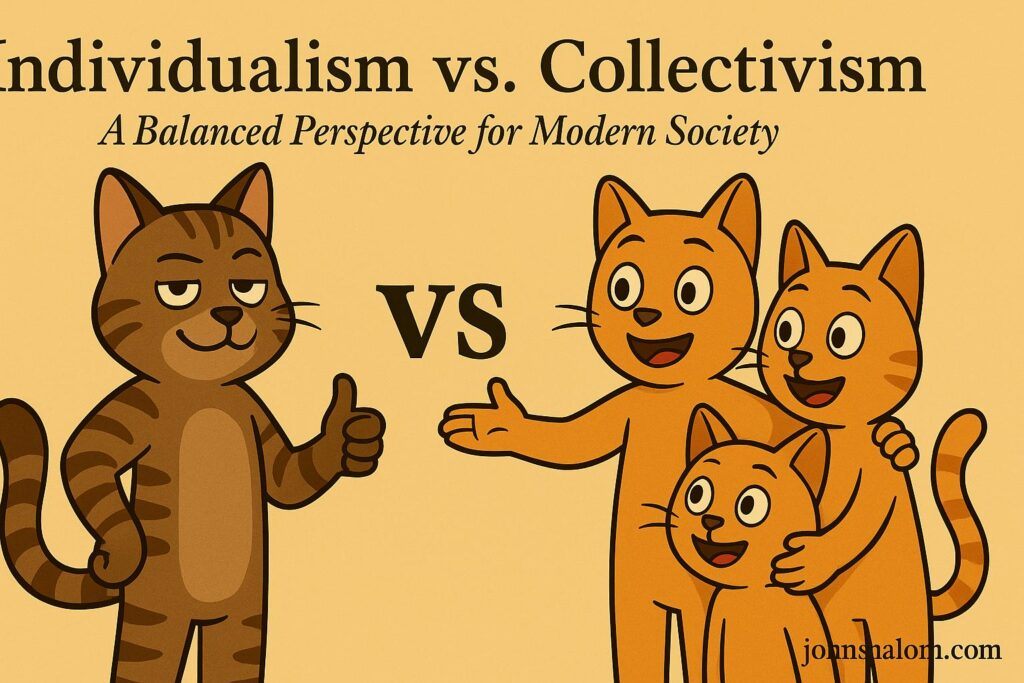
Table of Contents
- Why Balance Matters for Digital Nomads
- Understanding Individualism
- Understanding Collectivism
- Benefits of Individualism
- Benefits of Collectivism
- Common Challenges
- Practical Ways to Balance Both
- Real-World Example
- Frequently Asked Questions
- Final Thoughts
Why Balance Matters for Digital Nomads
Unlike traditional employees, digital nomads regularly move between cities and countries while working online. They experience different cultures, business practices, languages, and social expectations throughout their journeys.
An independent mindset allows them to adapt quickly, solve problems, and make confident decisions. At the same time, strong relationships help them discover new opportunities, collaborate with others, and integrate into local communities.
The ability to balance both perspectives often separates thriving digital nomads from those who struggle with isolation or limited professional growth.
However, personality is key in all these. It dawned on me that people are built differently, and this is very important to know, not to be ignored. Regardless of tribe or upbringing, individuals are either introverted or extroverted, and this affects their lives and works.
The West is known for leaning a lot towards individualistic side mainly because people are independent and have their basic needs met. However, Africa, Asia and other parts of the world are known for their collectivistic lives because people need each other still to survive.
Understanding Individualism
Individualism emphasizes personal freedom, independence, and responsibility. It encourages people to make their own decisions, pursue their goals, and accept responsibility for the outcomes.
This concept is almost nonexistent in Africa and South Sudan where people mostly believe they are because of others, and others are because of them—Ubuntu. Here, individuality is considered selfish, and there’s a good reason to this view.
People tend to depend on each other for life and survival whenever they can’t meet their personal needs alone. This life has created too much dependency that when to think of what you can do yourself in this part of the world, people suspect you don’t like them.
For digital nomads, individualism includes:
- Choosing where to live
- Selecting clients and projects
- Managing work schedules
- Building a personal brand
- Developing new skills
- Creating independent income streams
These qualities give digital nomads the flexibility to design careers around their own goals rather than traditional employment structures. This is very important because this is where the world is in 2026 and beyond.
Today, I work anywhere, at any time, as long as I’m healthy and have a place to work. I can do virtual court interpretation for someone in one of the states in the United States of America while in Juba, Nairobi, or Beijing. I can have multiple income streams I might not have if I have to be physically present.
But there are always risks, just as there are risks in physical jobs and workplaces. One risk is identity issues, especially when one comes from the world’s newest and youngest nations like the Republic of South Sudan. Naming conventions could be an issue, as well as economic sanctions by the US to some countries.
Understanding Collectivism
Collectivism emphasizes cooperation, shared responsibility, and the importance of community. It recognizes that long-term success often depends on healthy relationships and mutual support.
But these are just a few facts about the topic, not the whole story or truth. Even individuals cooperate and work together to achieve their intended goals. But as I said earlier in this post, every human civilization can become either individualistic or collectivistic depending on the needs at hand.
Digital nomads practice collectivism when they:
- Join coworking spaces
- Participate in professional communities
- Collaborate with other creators
- Respect local customs and traditions
- Support local businesses
- Mentor fellow remote workers
- Build lasting friendships while traveling
These habits strengthen both personal well-being and professional success. And these are two important elements that must work together to help us achieve our goals. Health is nonnegotiable. Personal well-being is part of health.
Professional success is nothing without personal well-being, and this is why health is more than physical. It’s mental, physical, psychological, and spiritual. It’s both visible and invisible, tangible and intangible.
Even if I have to work alone as I always do, it doesn’t mean I won’t need your support. And if you are reading this right now, you know that I need you more, and that’s collectivistic in nature. We support each other in different ways. We then needed each other.
Benefits of Individualism for Digital Nomads
Individualism offers several important advantages. Below are just a handful of them since this post can’t list all the benefits available to us. But again, it depends on the individual to take advantage of these benefits or leave them on the table in this post and on other posts online.
Freedom to Choose
Digital nomads decide where they work, whom they work with, and how they structure their daily lives. This is good, but it can become a trap for some people since we are not wired the same. We should be. But this is good for my type of personality, not because I hate others, but because I love freedom.
Freedom here is personal. It could mean something else to someone else as well. To me, it means working whenever and wherever you want. This is not lawlessness since I’m not breaking any rules or laws here.
I am writing this when in Nairobi, Kenya, and I come from South Sudan. When the Kenyan police asked me whether I am working in Nairobi or not, I usually tell the truth. Since work means employment, I’m not working here in that sense, and I don’t need a work permit to write this post.
I might or might not make money each month or week by writing on this medium, and that’s perfectly fine for me. It’s still freedom in my own terms. I work. Money comes or not, and I keep doing what I love, or loving what I do.
Personal Responsibility
Independent professionals develop discipline by managing their own schedules, finances, and business decisions. This is called self-management. I am a self-motivated individual, a self-starter and a self-manager. I find it hard to manage other people, either through influence or force.
Maybe I manage you through influence as you read my posts? But I have no idea until and unless you share that in the comments to this post. Yet, I hope you are getting the point now. It gives me personal responsibility to do what I do, responsibly.
Creativity
Freedom encourages experimentation with new ideas, services, and business models. Yes, and I do this, all the time. Today, people draft or even write whole blog posts with AI. I do the same thing, and it is indeed some kind of creativity.
However, an AI-generated text is smelled miles away. I just realized that I was not making relevant traffic for a year now because I did not take time to review my created content. This means creativity comes with responsibility as well.
I have to relate to what I write, not matter if it’s in what topic. Yes, creativity is natural, but what I create must relate to what I have experienced, and that’s the only time it will connect and make sense to whoever is consuming the product, article or book.
Adaptability
Independent thinkers often respond more quickly to changing markets and technologies. We do, and I love this. Sometimes, things fail overnight, and I have to find a way to continue doing what I love. That’s resilience. That’s adaptability in a nutshell.
Whenever a system needs to verify my identity, I have to do so. But in some cases, systems don’t know South Sudan is neither Sudan, nor Southern Sudan. It’s a new country on earth. For that reason, I always have to adapt and comply with the systems.
Continuous Learning
Digital nomads regularly develop new skills to remain competitive in an evolving digital economy. This happens all the time. Systems also change overnight. Even the Amazon Kindle Direct Publishing website is never the same with its 2012 version in 2026.
But it’s me to continue to learn how to work with the new website, like where to find things I’m looking for at a time, and much more. Learning never ends for those of us who love to learn and work on the go. SEO is now GEO or something.
Benefits of Collectivism for Digital Nomads
Community adds value that independence alone cannot provide. And as we have seen earlier in this post, these too are just a handful of benefits that come with community. However, it depends on the individual. We can either see these as benefits or as something else, and that’s fine with me.
Professional Networking
Relationships frequently lead to referrals, partnerships, and new clients. And from my experience, this is important to note if it happens. As a writer, only writers like me know what needs to be done right when it’s not yet done right.
Many might want to advise, but most of that advice is out of their own knowledge and experience, not related to the profession that I am a part of. Yet, regardless of their wrong but well-intended advice, people recommend you and your work to those in their world.
This only happens because you too linked up with them and recommended them to your network. We humans are just who we are; selfish creatures. We love to benefit first before we help others benefit, and that’s our nature.
Emotional Well-Being
Friendships help reduce loneliness and create a stronger sense of belonging while living abroad. This also depends on the individual involved. I’m not saying it’s not important. Far be it! I’m just acknowledging universal facts here.
Some of us thrive in solitary places, even though we still need a dose of community gatherings, once in a while. Some of us can’t do without the community. We say in Dinka, “Yɛn ci nyin kuëël” to say that I feel bored whenever alone.
Yet, some people thrive anywhere. They do just fine when they are alone. They are great when they are with people. These are known as ambiverts. I seem to be an ambivert, but also more introverted, and this matters. It helps me become a better digital nomad.
Cultural Awareness
Learning from local communities helps digital nomads become respectful guests rather than temporary visitors. Oh yes! This is very important. We have to mix and mingle with the people in order for them to know we are but part of their community.
It helps us learn more about the people when we live and work with them or among them. But this too can’t be forced. If one does not feel comfortable socializing with people, it doesn’t automatically mean they are selfish or hate people. We should know that’s their nature, or nurture.
Shared Knowledge
Communities encourage collaboration, problem-solving, and continuous improvement. This is true with any work, remote or physical. We humans learn and share knowledge through work and life. As we learn to work with others, we learn from them, and they too learn from us.
That’s how we are able to share valuable knowledge, experiences, and lessons. I sometimes leave my room just to chat with people, if they are ready to talk to me for a short while. I came to realize that people would love to share when you’re open.
Whenever possible, I share more than stories and knowledge with others. I could buy them something. Anything they need. It can be as little as a cigarette or a glass of good wine, and they love it! This is sharing. No condemnation here.
Long-Term Success
Many successful remote businesses grow through trusted relationships rather than individual effort alone. This is true for many of these businesses. A business needs a community support system regardless of what kind of business it is.
Even my writing doesn’t survive without word-of-mouth marketing. This leads to a long-term success over time. Remote means I can use internet to work anywhere, at any time. But it doesn’t always mean having no friends to link up or connect with.
Common Challenges
Balancing individualism and collectivism is not always easy. It is not. This is because people have different perspectives and personality traits. A personality is not a trait, but each one of us has traits that do determine how we live and work, regardless of where we come from.
Even though culture and upbringing contribute to our development and personality types, nature leads in making us who we are. If not, we can simply be copies of each other. A good example is me. I was born and raised in a community with special characteristics.
But I was always unique and different from the rest of the kids since childhood. Where I lived, most people don’t read much, even when they know how to read. I read books. I could always find time and place to read. That’s related to a personality type.
Allow me to just mention a few of these common challenges below in bullet points to help us move faster. Ah, I know. This age of information fluctuation. Even the attention span is narrowing by the day!
Too much independence can lead to:
- Isolation
- Burnout
- Weak professional networks
- Difficulty asking for help
Too much dependence on community can lead to:
- Reduced independence
- Peer pressure
- Overcommitment
- Difficulty setting personal boundaries
Recognizing these risks allows digital nomads to make healthier choices. And I’d love to also say that it all depends on you, the individual. These are just warning signs to help you take care of yourself and your work whenever you spot these issues.
People sometimes accuse me of overworking, and they might be right. But work for me is life. Yet, too much of anything can be harmful. Yes, I want to finish writing an article or book. But my mental health matters as much, or even more.
Practical Ways to Balance Both
Digital nomads can combine independence with community by adopting intentional habits. Life is all about choices. But those choices are also dependent on personality types. We can’t ignore this universal truth, though rarely taught nowadays in school.
All I do here is give advice, not just to you, but to myself as well. I do read my own work more than anyone else. But life has its own ways of making us think, feel, speak, and act. We need to admit this hard truth. However, we need to learn how to balance work and life.
- Build your own business while investing in professional relationships.
- Join coworking spaces when visiting new cities.
- Attend networking events and meetups.
- Participate in online communities within your field.
- Respect local customs and contribute positively to local economies.
- Continue learning while sharing your knowledge with others.
- Schedule focused solo work alongside regular social interaction.
- Maintain relationships with family, friends, clients, and colleagues regardless of where you travel.
Small, consistent actions often produce stronger results than dramatic lifestyle changes. This means writing one post a day or even a week or a month, is much better than writing ten or one hundred posts at one sitting.
Even though we plan and things don’t always turn out as expected, we must plan, and we must also act. Nothing happens especially when it comes to business success unless we work for it. Yes, chance is real, but we don’t build businesses on it.
Chance or luck comes with work, in most cases. It’s rare for one to be so lucky and find success without real work. This is why any online business that promises success overnight is a scam. But Wealthy Affiliate does the opposite. It teaches you what to do to earn real money online.
Real-World Example
Consider two freelance graphic designers.
The first works entirely alone, rarely networks, and communicates only with existing clients. Although technically skilled, new opportunities are limited because few people know about their work.
The second also values independence but regularly attends coworking events, participates in online design communities, collaborates on projects, and builds genuine relationships with clients. Their professional network generates referrals, partnerships, and long-term business growth.
Both designers are independent, but only one balances independence with community.
Frequently Asked Questions
Why is individualism important for digital nomads?
Individualism helps digital nomads make independent decisions, adapt to change, build businesses, and take responsibility for their careers.
Why does collectivism matter for remote workers?
Collectivism encourages collaboration, networking, knowledge sharing, and emotional support, all of which contribute to long-term success.
Can digital nomads be both independent and community-oriented?
Yes. Many successful digital nomads combine self-reliance with strong professional relationships, cultural respect, and active participation in local and online communities.
How can digital nomads avoid loneliness?
Joining coworking spaces, attending local events, building friendships, and participating in professional communities help create meaningful social connections.
What is the best balance between individualism and collectivism?
The ideal balance depends on personal goals and circumstances, but most digital nomads benefit from maintaining independence while intentionally investing in relationships and community.
Final Thoughts
Freedom gives digital nomads the opportunity to design their own careers, but relationships give those careers lasting strength. Individualism encourages initiative, creativity, and personal responsibility. Collectivism reminds us that growth often happens through collaboration, trust, and shared experiences.
I am somehow in between the two. My African culture places me in collectivism camp, while my Western self always screams for an individualism camp. What a wonderful world!
But digital nomads do not have to choose between independence and community. By balancing both, they can build careers that are flexible, resilient, and rewarding while making positive contributions wherever their journeys take them.
And if you ever want to know more about what’s happening in my part of the world as a writer, and a digital nomad, please check out my Wealthy Affiliate blog page here: JohnMaluth’s Blogs | Wealthy Affiliate.
Thank you for sharing your perspective. I enjoyed reading how you explored both individualism and collectivism rather than presenting them as opposites. It reminded me that we often grow as individuals, but our greatest progress comes when we share what we’ve learned with others. Finding that balance seems especially important in today’s connected world. I’m curious—have you found that digital nomads naturally lean toward one mindset over the other, or does it depend more on the person than the lifestyle? Thanks again for an enjoyable read.
Thank you for sharing your perspective. I enjoyed reading how you explored both individualism and collectivism rather than presenting them as opposites. It reminded me that we often grow as individuals, but our greatest progress comes when we share what we’ve learned with others. Finding that balance seems especially important in today’s connected world. I’m curious—have you found that digital nomads naturally lean toward one mindset over the other, or does it depend more on the person than the lifestyle? Thanks again for an enjoyable read.
Hi Bryce,
Thank you for your thoughtful comment. I’m glad you enjoyed the article and that the balanced approach resonated with you.
I really like your observation that personal growth becomes even more meaningful when we share what we’ve learned with others. That’s exactly the kind of balance I hoped to encourage. We all develop as individuals, but we also have a responsibility to contribute to the communities and people around us.
To answer your question, I think it depends more on the person than the lifestyle. Digital nomads often value independence because of the freedom their work provides, but the most successful ones I’ve observed also recognize the importance of collaboration, community, and mutual support. Independence and connection don’t have to compete—they can complement each other.
Thank you again for reading the article and for adding such a thoughtful perspective to the discussion. I truly appreciate it!