As a boy growing up along the Sobat River, I did not wake up thinking about civic duty or national governance. My daily reality consisted of cattle, riverbanks, hunger, and the constant threat of conflict. I listened closely to how adults spoke about our people versus their people.
I watched who earned respect, who faced mockery, and who was feared. Only years later, sitting at a desk in Juba writing about nationalism, did I realize how deeply those early experiences shaped my outlook on peace and division.
Every young person today stands at a similar junction, inheriting stories of pain while trying to forge a future. Promoting peaceful citizenship among youth requires confronting these old wounds and choosing a shared destiny over endless cycles of tribal hostility.
Key Takeaways
- Youth in post-conflict regions stand at a critical crossroad between continuing destructive tribal battles or building unified national citizenship.
- Tribal loyalty provides a sense of belonging and cultural identity, but it turns toxic when manipulated as a weapon against other groups.
- True citizenship expands individual identity to encompass the entire nation, prioritizing shared prosperity, justice, and the rule of law.
- Everyday cultural tools like humor, sports, and shared music serve as practical bridges across historical ethnic divides.
- Investing in education, vocational skills, and ethical leadership turns young energy away from conflict and toward sustainable nation-building.
TL;DR
Young people in South Sudan and across Africa face a choice between repeating historical tribal wars or becoming active citizens who build stable nations. While tribal loyalty offers cultural grounding, it becomes dangerous when weaponized by self-serving elites. True citizenship broadens this perspective, uniting diverse groups under a shared future. By channeling youthful energy into education, peaceful community service, and cross-cultural friendships, nations can break free from cycles of violence and foster lasting stability.
The Crossroad Facing This Generation
Every generation receives a specific historical narrative. For many young South Sudanese and Africans, that narrative features displacement, broken agreements, and deep ancestral grievances. Children grow up hearing detailed accounts of which clan attacked whom and which names belong to friends or enemies.
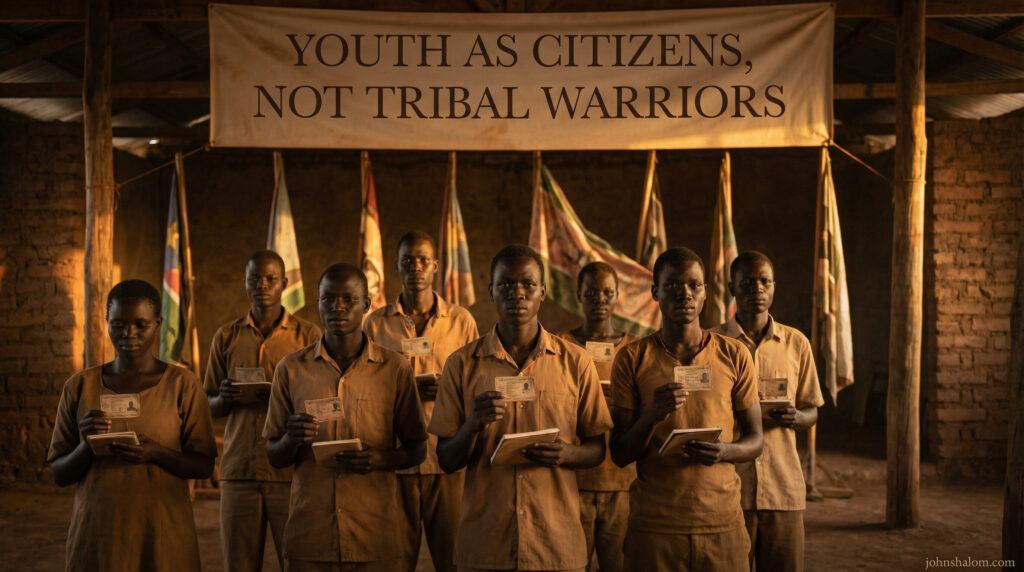
When these youth reach adulthood, they encounter a stark fork in the road. One path urges them to maintain the traditional feud, fighting blindly for their specific group. The second path calls them to rewrite the story, demanding justice and opportunity for all citizens regardless of background.
These choices are complicated. Ancestral ties provide genuine support during economic hardship, and familial loyalty runs deep. Young people often wrestle with whether choosing peace amounts to betraying their heritage or showing weakness. Acknowledging these internal conflicts openly is the essential first step toward meaningful social change.
Unlike external global actors—such as foreign powers or international funding bodies that often impose rigid economic models without understanding local realities—true grassroots stability must emerge from the internal choices of the citizens themselves.
The Seduction and Trap of Tribal Loyalty
Tribal loyalty feels natural because it forms the bedrock of early childhood. Lullabies, traditional songs, and family gatherings teach children who belongs to their community. This early grounding fosters healthy pride and security.
However, this same loyalty frequently includes whispered lists of grievances and warnings about outsiders. Children learn whom not to trust and whose ancestors committed past wrongs.
When protection turns into exclusion, the tribe transforms into a prison. Young people are pressured to restrict their bravery, kindness, and dreams strictly within ethnic borders. Hearing someone declare a readiness to fight because an elder fought before them highlights a tragic cycle. If every generation repeats past wars, freedom remains out of reach.
Healthy tribal pride recognizes personal heritage without demanding hatred toward neighbors. Toxic tribalism, by contrast, restricts human potential and fuels perpetual instability.
Citizenship as a Bigger Identity
Embracing citizenship does not mean erasing tribal roots. Instead, it expands identity to encompass a wider circle governed by law and shared responsibility. A citizen looks beyond local cattle camps or regional boundaries to ask critical questions about national well-being. Are schools safe for all children? Are trade routes open for every merchant? Does the justice system protect vulnerable populations equally?
My mother often captured this principle through a simple village metaphor. She noted that while a single family owns a particular cow, the path the animal walks upon belongs to everyone.
Personal identity is private property, but the national pathway is a shared responsibility. Expanding our loyalty to include neighbors from different backgrounds transforms how we approach governance, social harmony, and economic development.
Humor in Tribal Rivalries
Ethnic tensions often carry immense gravity, yet everyday interactions frequently reveal absurdity and humor. I remember hearing two men debate the endurance of their respective cattle herds.
One boasted that his cows could walk for weeks without water, while the counterargument joked that his animals were simply too thin to weigh themselves down. The surrounding crowd dissolved into laughter. For that brief moment, tension evaporated.
Laughter cannot erase deep injustice, but it softens rigid hostility. When young people from different backgrounds share jokes, play football together, or tease one another about regional accents, they reject the notion that outsiders are permanent enemies. Humor disarms pride and reminds everyone of shared human frailty.
How Leaders Use Tribal Warriors
Militant groups do not materialize from thin air. Political figures frequently recruit and manipulate frustrated youth, offering protection and purpose in exchange for blind loyalty. Promising rewards and appealing to past grievances, these leaders deploy young people as tools for personal gain.
The tragedy of this dynamic is that brave individuals risk their lives for leaders who ultimately secure their own families in safety. When youth recognize this manipulation, they can redirect their courage. Instead of fighting other marginalized citizens over political ambitions, they can challenge poverty, corruption, and systemic injustice.
Youth as Builders, Not Bullets
The energy required to sustain conflict can easily fuel construction and innovation. A young person drawn toward activism or leadership can channel that passion into teaching, nursing, journalism, or small business ownership. These roles lack the superficial drama of militarism, yet they create the structural foundation of a thriving society.
Classrooms, local clinics, transparent media outlets, and fair marketplaces hold nations together far more reliably than temporary military victories. Encouraging youth to view themselves as builders transforms national productivity.
My Brother’s Sacrifice and the Question It Raises
When my elder brother died during the conflict in Nasir, he was a young man with immense potential. He did not lose his life to defend a single clan; he fell believing in a broader pursuit of freedom. His sacrifice mirrors thousands of others who sought dignity and justice across South Sudan.
Yet hard-won freedom is fragile and easily squandered. If youth convert that sacrifice into fresh internal disputes, they dishonor the fallen. Standing before today’s generation, my brother would likely urge us to turn past grief into functioning schools, accessible roads, and equitable institutions. Honoring those who suffered before us means finishing their work rather than repeating their battles.
Reshaping Identity from Bloodline to Common Good
Promoting peaceful citizenship requires an intentional rearrangement of personal priorities. Humanity comes first, followed by national identity, and finally regional or tribal affiliation. Reversing this hierarchy creates chronic instability. When tribal pride supersedes national law, every political disagreement escalates into an existential crisis.
Shifting toward the common good means evaluating decisions based on national welfare rather than narrow group advantage. Asking whether a policy protects all citizens or merely benefits a specific clan helps young people transition from partisan actors to guardians of justice.
Practical Steps for Youth Who Want to Be Citizens
Actionable habits build lasting cultural change. Young people striving to foster national unity can adopt several practical approaches:
- Build intentional friendships across ethnic lines through school, work, and community projects.
- Push back calmly against hate speech by sharing counter-examples and fostering constructive dialogue.
- Utilize digital media responsibly to amplify reconciliation efforts rather than spreading unverified rumors.
- Engage in volunteer service that supports mixed populations and addresses shared community needs.
- Study diverse regional histories to understand the struggles and contributions of fellow citizens across the nation.
The Role of Families, Elders, and Institutions
Individual youth cannot shoulder the burden of cultural transformation alone. Families, community elders, educational institutions, and faith organizations share the responsibility of cultivating peaceful values.
Parents must move away from glorifying historical revenge and instead celebrate peacemakers. Educators must enforce fairness in classrooms, while religious leaders preach unity that transcends ethnic boundaries. When societal institutions model integrity, young people find it much easier to embrace constructive citizenship.
Choosing What the Next Generation Inherits
Every young person eventually becomes an elder. Decades from now, the coming generation will ask what actions were taken when the opportunity for peace presented itself. Choosing tribal vengeance guarantees an inheritance of fear and ongoing destruction.
Choosing citizenship leaves behind functional infrastructure, equitable courts, and a healing national memory. The decision rests squarely in the hands of today’s youth. For further insights on writing and personal growth, visit my blog at Wealthy Affiliate Blog.
Reflection Questions
- What specific tribal bias or stereotype do you notice influencing your own daily thoughts, and how can you challenge it?
- How can you actively build a meaningful friendship with someone from a different background this week?
- In what ways do political leaders in your region exploit ethnic divisions, and how can citizens resist this manipulation?
- What role can everyday cultural practices like music, sports, or shared meals play in healing local community divides?
- If the next generation evaluates your life choices regarding peace and unity, what legacy do you want to leave behind?
FAQs About Youth Citizenship and Peace
- How do tribal loyalties influence the choices of young people today? Tribal loyalties shape how youth perceive friends and enemies, creating intense social pressure to prioritize group defense over national unity, even when that involves supporting injustice or conflict.
- What does it actually mean to be a citizen instead of just a tribal member? Being a citizen means valuing the safety, rights, and dignity of every person within the national borders, ensuring that laws and institutions serve the entire population equally rather than favoring one specific clan.
- How can humor help ease tribal tensions rather than fuel them? Humor defuses tension when it targets universal human flaws rather than demeaning a specific group. Friendly banter and shared laughter build rapport and reduce hostility between diverse groups.
- What real opportunities exist for youth to become builders instead of warriors? Youth can pursue education, vocational training, entrepreneurship, healthcare, journalism, and community peacebuilding initiatives that strengthen local infrastructure and foster cooperation.
- What practical steps can individuals take to ensure future generations inherit peace? Individuals can reject hate speech, build cross-cultural friendships, practice integrity in their daily work, and support leaders who govern fairly for all citizens.
Conclusion
The hidden power of community and tribal identity is profound, offering either a source of deep strength or a catalyst for division. While no one chooses their birthplace, every individual holds responsibility for their response to those origins.
By honoring positive cultural roots, confronting historical harms honestly, and committing to national unity, young people can transform their societies from the ground up. Choosing citizenship over tribal animosity is the ultimate form of nation-building, ensuring a stable and prosperous future for all.
And if you want to know what’s happening in my world as a writer and digital nomad, check out my Wealthy Affiliate blog page here: https://my.wealthyaffiliate.com/johnmaluth/blog.

Excellent article, this made some very fine reading to get my morning started with a large hot chocolate.
Thanks for reading and leaving this honest review/feedback, Michael. Keep reading, keep commenting, like, and share the stories. More is yet to come!
Very interesting indeed.
“honor their tribes, but not be imprisoned by them”
I am sure this is a major challenge in your culture. How exactly do they accomplish this without upsetting others around them?
Youth today are easy to shape as their minds grow. One wrong move can influence them for better or worse.
I really enjoyed this read.
Thank you a lot for reading and leaving a comment, Mike. Thanks for the critical thinking behind this question. I think it takes self-discovery and discipline for one to accept defeat for the benefit of the whole. No accepting defeat or compromise is what drives people to conflict they don’t need. Again, thanks a lot for reading!