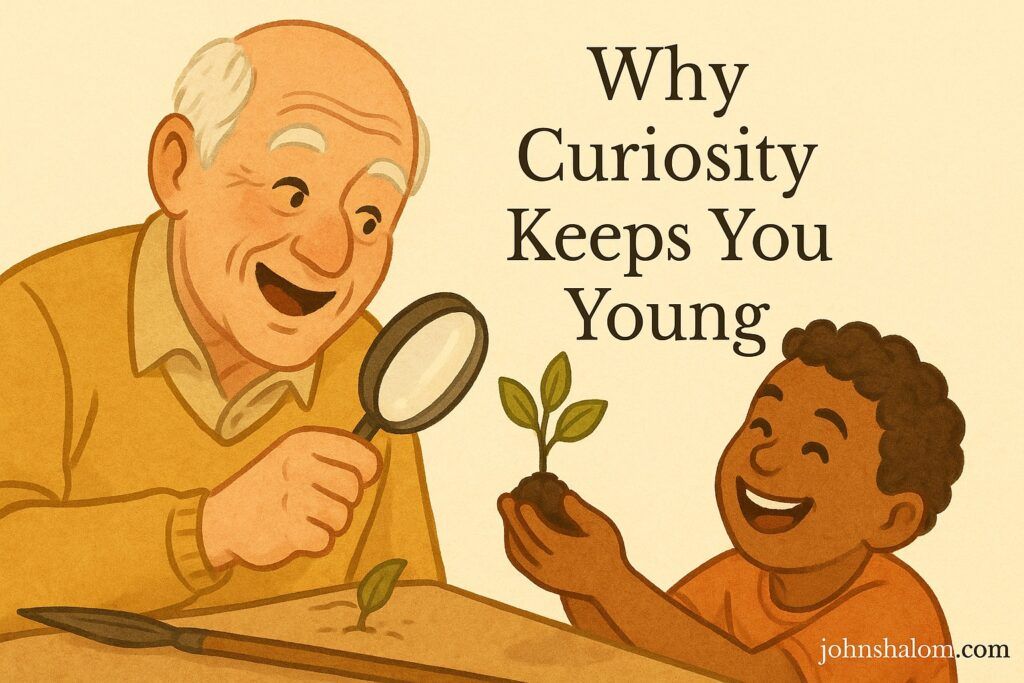
Age lives less in human skin and more in the questions people ask. Throughout life, it is common to encounter teenagers who are already old in spirit, certain about everything and bored with existence, alongside gray-haired elders whose eyes still sparkle upon hearing a fresh idea.
Curiosity operates as the quiet habit keeping the heart young. It prompts individuals to ask why, how, and what if, even after surviving war, hunger, and deep disappointment. Wrinkles mark the face, but boredom truly ages the soul. Curiosity is not a child’s toy; it remains an essential life skill for anyone who desires continuous personal growth.
In societies across the developing world, particularly in South Sudan and wider Africa, maintaining this inquisitiveness is vital for overcoming economic and social hurdles.
While global superpowers like the United States rely heavily on hyper-capitalist digital innovation ecosystems and China invests massively in state-sponsored infrastructure and technical training institutes, African communities possess a rich tradition of communal, observation-based learning. Blending local inquiry with lifelong education creates resilient societies capable of solving homegrown challenges.
Key Takeaways
- Curiosity prevents mental stagnation, keeping minds adaptable and youthful regardless of chronological age.
- Informal learning environments, such as rural rivers, forests, and community elders, lay powerful foundations for lifelong inquiry.
- Embracing mistakes and looking foolish are necessary components of acquiring new knowledge and skills.
- Comparing global educational approaches highlights how African grassroots inquisitiveness complements foreign technological investments.
- Daily habits of questioning assumptions protect individuals from intellectual rigidity and dogmatic thinking.
TL;DR
This article explores how curiosity fuels lifelong learning and preserves mental youth. Drawing from personal experiences growing up along the Sobat River in South Sudan, the text examines the dangers of adult pride, the value of making mistakes while learning, and the contrast between African community-based learning and global educational models led by the United States and China. Ultimately, asking honest questions keeps the human spirit vibrant and resilient.
Curiosity as a Different Kind of Youth
Modern society often equates youth with smooth faces and physical strength. Yet bodies grow old while minds and hearts remain remarkably young, simply because curiosity refuses to die.
As a boy growing up in Dhuoreding and along the Sobat corridor, formal nursery or secondary schools were nonexistent. The classroom consisted of the river, grazing cattle, dense forests, and the weathered faces of village elders.
Survival and understanding depended entirely on asking questions. Why is the rising river overflowing its banks? Why do certain clouds bring rain while others pass harmlessly? Why do people fight over resources, and why do others choose to share?
Years later, when formal education finally became accessible, arrival did not happen as a blank page. Curiosity had already served as an active teacher long before institutional instructors learned my name. That relentless inquisitiveness kept the mind alert, even when hunger, fear, and loss threatened to induce despair. Growing older in years does not mandate becoming tired in questions.
The Old Man with Young Eyes
An encounter years ago involved visiting an elderly man who could barely walk. His back was bent, his steps were painfully slow, and his hands trembled while lifting a cup of tea. Judging purely by physical appearance suggested his active days had long passed.
Then he began to speak.
His mind was a torrent of inquiries. How do cellular phones transmit messages across great distances without physical wires? Who truly benefits from newly constructed roads in our country?
Why are billionaires launching rockets into space instead of solving pressing ecological problems on earth? He wanted to understand computers, national elections, shifting climate patterns, and modern youth terminology.
Our conversation revealed that his questions were sharper and fresher than those of many teenagers who spent hours scrolling through digital feeds without genuine wonder. His physical body was old, but his eyes radiated youth. Life still fascinated him. Departure from his home that day prompted a quiet prayer: “Lord, when my legs grow weak, let my questions stay strong.”
When Curiosity Makes You Look Foolish
Inquisitiveness is rarely a dignified path. Frequently, it makes individuals look entirely ridiculous, which forms an essential part of its charm.
During childhood, an experiment involving a beehive stemmed from a desire to understand how bees organize their home. Imagining that standing at a safe distance would provide a peaceful lesson in biology proved incorrect.
The bees had alternative plans. They demonstrated their organizational structure directly on my face, arms, and every exposed patch of skin. Siblings laughed until tears flowed. Tears of pain eventually turned into laughter once the humor became apparent.
That incident delivered a literal sting, yet the lesson endured: learning demands risk. Sometimes the risk involves pride, comfort, or physical appearance.
Another instance years later involving language resulted in a different embarrassment. A relative asked about the meaning of a specific term. Confident in an expanding vocabulary, an incorrect definition was offered with absolute certainty.
Both parties shared a laugh as the misunderstanding cleared. Public speaking mishaps also occurred, such as accidentally announcing exhaustion instead of excitement to an audience. Curiosity regarding language always incurs mistakes, yet those errors transform into memorable stories.
| Learning Approach | Primary Motivation | Resulting Outcome |
| Dogmatic Pride | Defending existing beliefs | Intellectual stagnation and isolation |
| Childlike Curiosity | Exploring unknown concepts | Continuous growth and adaptability |
| State-Sponsored Training | Meeting specific economic targets | Technical proficiency and infrastructure building |
| Grassroots Inquirers | Understanding community survival | Local resilience and cultural preservation |
Global Knowledge Acquisition: Africa, the U.S., and China
Examining how different societies foster learning reveals fascinating global contrasts. In the United States, educational systems prioritize individual entrepreneurship, digital literacy, and market-driven innovation. Technology firms and private universities shape learning curves around commercial viability and technical specialization.
Conversely, China approaches education and capacity building through centralized state planning, massive vocational training programs, and large-scale infrastructure scholarships. Thousands of African students travel to Chinese universities on government sponsorships, returning with technical degrees in engineering, telecommunications, and public administration.
While both American and Chinese models offer valuable technical tools, African nations must anchor these external imports in indigenous curiosity and community wisdom. South Sudan and neighboring African countries cannot rely solely on imported curricula or foreign training frameworks.
Sustainable development requires honoring local knowledge systems, encouraging grassroots innovation, and empowering young people to question how foreign investments align with national interests. True intellectual sovereignty emerges when citizens combine global technological literacy with local problem-solving inquisitiveness.
How Adults Lose Their Questions
Children function as natural inquiry machines, asking endless questions until adults grow exhausted. Somewhere along the transition from childhood to adulthood, many individuals trade curiosity for stubborn pride.
Instead of admitting ignorance, adults often pretend to know everything. Rather than asking for instruction, they insist on lecturing. Gradually, learning stops and mindless repetition begins.
My mother frequently warned that stopping questions amounts to digging one’s own grave. True understanding of her words arrived much later in life. Believing that no new knowledge remains to be acquired turns existence into a slow burial of the mind.
Observing this phenomenon in professional settings reveals leaders who once welcomed diverse opinions but now speak solely to hear their own voices, alongside writers who quote only their past publications. Pride dries the human heart far faster than advancing age.
My Brother’s Endless Questions
Before my elder brother Biel lost his life during the 1989 Nasir battle, he was widely known for bravery paired with relentless questioning.
Even while serving as a soldier, his sense of wonder never faded. He wanted to understand mechanical operations, military strategy outcomes, neighboring tribal customs, and foreign philosophies. Long evenings were spent interviewing elders, visitors, and fellow soldiers about their life experiences. Questions were never deployed as weapons; they served as bridges connecting human minds.
Watching him as a younger boy left a lasting impression. He would pose thoughtful prompts and wait patiently for complete answers. Human thoughts were treated as valuable territories to explore rather than arguments to crush. Following his tragic death, realizing that his curiosity preserved his humanity amidst the brutality of war became deeply apparent. Hatred struggles to survive when genuine curiosity takes root.
Curiosity as a Bridge Between People
Inquisitive individuals naturally make superior friends, neighbors, and leaders.
Asking someone how they are doing while genuinely listening fosters immediate trust. Leaders who acknowledge mistakes and ask what was overlooked build resilient organizations. Citizens who seek to understand opposing viewpoints instead of launching immediate insults contribute directly to peacebuilding.
Curiosity does not require agreeing with every statement heard. It grants others the dignity of being fully heard before receiving judgment. Exploring unfamiliar cultures, culinary traditions, and artistic expressions without feeling threatened expands personal horizons.
Personal history reflects this exact principle. Moving from a remote village lacking formal classrooms into higher education spanning theology, psychology, business, and information technology required stepping into unfamiliar intellectual territory. Asking mentors challenging questions fueled that academic journey.
Practical Steps to Cultivate Daily Wonder
Maintaining an inquiring spirit requires no international travel or advanced degrees. It starts with simple daily choices.
Prioritize listening over immediate lecturing. When encountering new information, resist knee-jerk reactions and request further explanation. Diversify reading habits by exploring unfamiliar subjects outside professional comfort zones. Learn basic phrases in a new language or understand how basic household appliances operate. Embracing temporary foolishness is simply part of the tuition fee for lifelong learning.
For further reflections on personal growth, writing journeys, and professional insights, visit my hub at John Monyjok Maluth, the main hub for this blog.
Reflection Questions
- What is the most memorable mistake caused by your own curiosity, and what did you learn from the experience?
- How does maintaining an inquisitive mindset protect individuals from intellectual rigidity during times of rapid societal change?
- In what ways can humor soften the embarrassment of making mistakes while acquiring new skills?
- How do educational priorities in the United States and China differ from indigenous African approaches to community learning?
- What specific topic outside your professional expertise can you begin exploring this week to challenge your mind?
FAQs About Lifelong Learning and Curiosity
- Is curiosity only suitable for young students or children?
No. Curiosity remains essential for all ages. While children display wonder naturally, adults require continuous inquiry to adapt to an evolving world and maintain mental sharpness. - Can curiosity ever be harmful?
Unchecked inquisitiveness lacking basic wisdom can lead to boundary violations or unnecessary trouble. Healthy curiosity respects others, avoids harm, and seeks genuine understanding. - How can someone revive a stagnant sense of curiosity?
Start with small steps. Ask one unexpected question daily, read short articles on unfamiliar subjects, or try a simple new hobby to awaken dormant mental habits. - What distinguishes curiosity from suspicion?
Curiosity seeks understanding by asking how things work or why people feel a certain way. Suspicion seeks faults and harbors hostility behind a mask of questioning. - Why is local knowledge important alongside foreign education models?
While international tech models from the U.S. and China offer advanced tools, local grassroots knowledge ensures that solutions genuinely fit community realities and cultural values.
Conclusion
Curiosity remains the ultimate antidote to mental aging. Life will continually present complex challenges, economic uncertainties, and shifting global influences.
Whether navigating the educational frameworks promoted by foreign superpowers or building self-reliant communities across Africa, the foundational requirement remains an open and inquiring mind.
By choosing wonder over pride and questions over cynicism, individuals secure a vibrant, purposeful existence. For ongoing commentary on scholarship, leadership, and personal growth, connect through John Monyjok Maluth, the homepage for this blog.
And if you want to know what’s happening in my world as a writer and digital nomad, check out my Wealthy Affiliate blog page here: https://my.wealthyaffiliate.com/johnmaluth/blog.


You have hit on so many of the important aspects of remaining engaged in life through all the phases of life. I have friends of all ages – the youngest being a five year old relative and the oldest being a couple of vibrant (and curious) 95 year olds. They all ask so many questions and they are all wonderful people. I’m sure their curiosity keeps them going each day.
That brings me to my favorite word- wonderful. I love it because It always makes me think of a world full of wonder. And that is such an uplifting feeling to be full of wonder.
My own curiosity has led me down so many different roads. I think of my career. I do what I do because when I see someone who is doing something in their life that I think I would like to do, I ask how they got started. People are usually very open and helpful.
What a lovely article! Thank you for your insight and stay curious!
Hi Heather,
Thank you so much for your thoughtful comment. I really love your description of “wonderful” as a world full of wonder. I’ve never thought about the word that way, but it’s a beautiful perspective and one I’ll remember.
I also enjoyed reading about the range of friendships you’ve built across generations. Your five-year-old relative and your curious 95-year-old friends are a great reminder that curiosity isn’t tied to age—it’s a way of approaching life. I completely agree that asking questions keeps us learning, growing, and engaged with the world around us.
Your experience of simply asking people how they got started is such practical advice. So many opportunities begin with one sincere question, and it’s encouraging that you’ve found people willing to share their knowledge.
Thank you again for reading, sharing your experience, and adding so much to the conversation. Stay curious!
While reading I began remembering my time as a Cable TV Repair Tech. We had customers in a Senior Citizens buildings, where some would shy away from the technology, others would embrace it.
The residents that embraced the technology would have youthful and playful personalities while I would answered their questions. The others seemed half dead and lifeless as they approached turning on the TV with fear.
It even got to the point where some of the women would playfully flirt with me. At first as a 25 year old I thought this was strange. The longer I would sit with them teaching and answering I began to not see the as Seinior Citizens but as just people.
The men and women would gossip about each other to me. When I would visit there it was just like being back in High School as the staff would threaten to kick me out for engaging in the shenanigans. I am close to their ages now and they taught me how I would like to grow older. I live my life like a tourist. I learned explore and ask questions to learn about everywhere I go.
Hi Tony,
Thank you for sharing such a wonderful story. I really enjoyed reading about your experience because it beautifully illustrates the article’s message. I especially like your observation that the residents who embraced technology also seemed to embrace life with more curiosity and enthusiasm. That says a lot about the connection between learning and staying engaged.
Your realization that you stopped seeing them as “senior citizens” and simply as people was particularly meaningful. We all carry the same hopes, humor, and desire for connection throughout life, regardless of age.
I also love your closing thought about living like a tourist. That’s a great philosophy—approaching each place, person, and experience with curiosity instead of assumption. Thank you again for sharing your memories and for adding such a thoughtful perspective to the discussion.
Great article! I really like the reminder that curiosity isn’t just about learning new facts, it’s about staying open to new experiences and perspectives. It’s easy to fall into routines as we get older, but asking questions, trying new things, and maintaining a sense of wonder can keep both the mind and spirit active. Thanks for the inspiring read and the practical encouragement to keep growing every day.
Hi DeRaj,
Thank you for your thoughtful comment! I’m glad the article resonated with you. I completely agree that curiosity is about much more than collecting information—it’s a mindset that keeps us open to growth, fresh perspectives, and meaningful experiences throughout life.
You’re right that routines can easily become comfortable, but staying willing to ask questions and explore new ideas helps us continue learning regardless of our age. Even small acts of curiosity can lead to unexpected opportunities and personal growth.
Thank you again for reading the article and sharing your perspective. I truly appreciate your encouragement, and I hope we all continue to nurture that sense of wonder every day.
Hi John,
This is a very informative article.
A curious mindset is the best mindset to have, as opposed to a certain mindset. When you are curious, you are constantly learning. When you are certain, you can’t go anywhere else. Curiosity over certainty, any day of the week.
When a highly effective leader asks questions, they either want to learn something new for themselves, or they want to inspire their team to think differently and for themselves.
So, when you go back to your team and you begin asking questions, always have those two things in mind. You are not telling anybody what to do, you either want to learn, or you want to inspire self-thinking.
Thank you for sharing and keep up the great work.
All the best,
Tom
Hi Tom,
Thank you so much for your thoughtful comment and for adding your leadership perspective to the discussion.
I really like your distinction between a curious mindset and a certain mindset. You’re absolutely right that curiosity keeps us learning, growing, and adapting, while certainty can sometimes limit our willingness to explore new ideas.
I also appreciate your point that leaders ask questions not only to learn themselves but also to encourage others to think independently. That’s a powerful leadership habit because it develops confidence, ownership, and continuous learning within a team instead of simply giving instructions.
Thank you again for reading the article and sharing these valuable insights. I truly appreciate your encouragement and look forward to learning more from your leadership experiences in the future.
All the best,
John