
Many people spend a significant portion of their lives working, yet few stop to ask why their work truly matters. Careers often become associated with income, promotions, or personal achievement, but the Christian faith offers a much broader vision. It teaches that work is not simply something we do to survive. It is one of the primary ways we serve God, contribute to society, and develop our character.
Over the years, I have explored many books that examine the relationship between faith and work. They have challenged me to see my daily responsibilities not as interruptions to my spiritual life but as expressions of it. Whether you’re an entrepreneur, teacher, healthcare worker, public servant, or full-time parent, these books demonstrate that every honest vocation has value when offered to God.
This guide highlights some of the most influential books on faith and work and the practical lessons they offer for finding lasting purpose in your career. The aim is never to turn into a Christian if you don’t want to. You surely don’t have to. I just realized I am a stoic, not a Christian at all. I didn’t know this for over 20 years.
Quick Answer
You find purpose in your work through faith by viewing your vocation as a calling to serve God and others. Christian teaching emphasizes that every honest profession has value when practiced with integrity, excellence, compassion, and a desire to glorify God rather than simply pursuing personal success.
TL;DR
Faith transforms work from merely earning a living into living with purpose. The best books on faith and work teach that every vocation can become an act of worship when guided by biblical principles, ethical leadership, servant-heartedness, and a commitment to serving others.
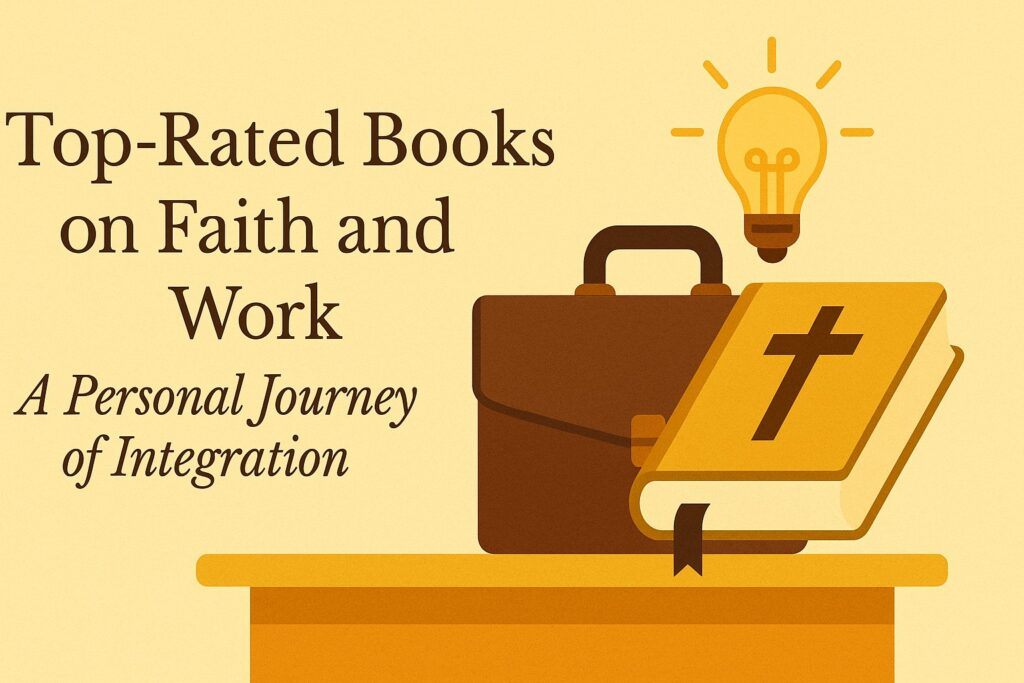
Table of Contents
- Why Faith Gives Work Meaning
- Every Good Endeavor
- Work Matters
- The Gospel at Work
- The Call
- Faith and Work
- Frequently Asked Questions
- Final Thoughts
Why Faith Gives Work Meaning
The Bible presents work as part of God’s design from the beginning. Before human rebellion entered the world, Adam was given meaningful work in the Garden of Eden. This reminds us that work itself is not a curse. Rather, the struggle associated with work resulted from humanity’s fall.
When viewed through faith, work becomes an opportunity to:
- Serve others.
- Reflect God’s character.
- Develop integrity.
- Exercise stewardship.
- Contribute to the common good.
- Glorify God through excellence.
Purpose grows when success is measured not only by income but also by faithfulness. This is also the hardest part because we are naturally human. Being human means being selfish and jeopardizing ourselves. We become happy when we are better than others. We easily become jealous when others thrive.
Every Good Endeavor
Timothy Keller’s Every Good Endeavor remains one of the finest books on Christian vocation.
Rather than separating “church work” from “ordinary work,” Keller explains that every legitimate profession participates in God’s ongoing care for creation. Whether someone teaches children, repairs vehicles, writes books, or manages businesses, their work can become an extension of God’s goodness.
Key lessons
- Every vocation has dignity.
- Excellence honors God.
- Work serves people before profits.
- Faith belongs in every workplace.
This book especially helped me understand that there is no divide between sacred and secular work. Every task can become meaningful when offered to God.
Work Matters
Tom Nelson’s Work Matters uses the biblical example of Boaz to demonstrate how work reflects justice, stewardship, and compassion.
Boaz did not simply operate a successful business. He cared for vulnerable people, treated workers fairly, and managed his resources responsibly.
The book shows that Christian leadership is measured not only by financial success but also by how people are treated.
Key lessons
- Business can demonstrate compassion.
- Work provides opportunities to serve others.
- Ethical leadership reflects God’s character.
- Justice belongs in everyday business.
The Gospel at Work
Sebastian Traeger and Greg Gilbert focus on how the gospel reshapes our attitude toward daily work.
Instead of asking whether a particular job is “important,” they ask whether we are faithfully serving Christ through whatever responsibilities we have today.
Their approach encourages Christians to pursue excellence without making work their identity.
Key lessons
- Every task can become worship.
- Success should never replace faithfulness.
- Work relationships should reflect Christian character.
- Excellence points others toward Christ.
The Call
Os Guinness explores one of Christianity’s deepest questions:
“What has God called me to do?”
His answer is refreshing.
Calling is larger than career.
A person’s identity is found first in belonging to God, not in a job title.
Careers may change throughout life, but God’s calling to faithful service remains constant.
Key lessons
- Calling is greater than career.
- Faithfulness matters more than status.
- Purpose is found in obedience.
- Every season of life has meaning.
For anyone struggling with career direction, this book provides lasting wisdom.
Faith and Work
Gene Edward Veith Jr. presents one of the strongest theological foundations for vocation.
He explains that Christian vocation extends far beyond paid employment.
Parents.
Volunteers.
Students.
Retirees.
Community leaders.
All participate in God’s work through their various responsibilities.
Rather than asking, “How can I become more successful?” Veith encourages readers to ask, “How can I faithfully serve those God has placed around me?”
Key lessons
- Vocation includes every area of life.
- Ordinary work has eternal value.
- Service matters more than recognition.
- Faith shapes every responsibility.
Frequently Asked Questions
Why should Christians read books about faith and work?
These books help believers understand that work is part of God’s design and can become an expression of worship, service, and faithful stewardship.
Which books best explain Christian vocation?
Some of the strongest introductions include Every Good Endeavor by Timothy Keller, The Call by Os Guinness, The Gospel at Work by Sebastian Traeger and Greg Gilbert, Work Matters by Tom Nelson, and Faith and Work by Gene Edward Veith Jr.
Can faith improve workplace culture?
Yes. Faith encourages integrity, humility, servant leadership, honesty, forgiveness, and respect for others, all of which contribute to healthier workplaces.
Is every profession a calling?
Christian teaching generally recognizes that any honest profession can become a calling when practiced with integrity and a desire to serve God and others.
How do I discover purpose in my work?
Purpose grows when you see your work as serving people rather than simply earning income. Excellence, compassion, stewardship, and faithfulness transform ordinary responsibilities into meaningful service.
Final Thoughts
Finding purpose in work begins with changing how we define success. Careers rise and fall. Job titles change. Income fluctuates. But faithful service has lasting value.
The books discussed here remind us that work is far more than a means of making a living. It is an opportunity to reflect God’s character, serve our neighbors, develop our gifts, and participate in His ongoing work in the world.
Whether you’re just beginning your career, leading an organization, building a business, or serving quietly behind the scenes, your work matters. When faith shapes your vocation, every task, no matter how ordinary, can become an act of worship and a testimony to God’s grace.
And if you want to know what’s happening in my world as a writer and digital nomad, check out my Wealthy Affiliate blog page here: https://my.wealthyaffiliate.com/johnmaluth/blog.

Books that address faith and business are crucial. I’d argue that it’s one of the last pieces needed to get over the hump that takes you from good to great! There’s a marathon theme that’s present with doing anything worth while. And what I mean by that is there’s more to achieving business success than doing something really quick and never addressing it. One of my favorite books that I feel addresses this concept well is Psychocybernetics by Maxwell Maltz. Great read on sports, business, and faith.
Hi Adrian, I agree with you. Faith and work is one of those “final miles” conversations that can take a person from good to great, because it deals with character, consistency, and what you do when nobody is clapping. And you are right about the marathon theme. Anything worthwhile tests patience, motives, and discipline. Quick wins can happen, but lasting impact usually comes from long obedience in the same direction.
Thank you for mentioning Psycho-Cybernetics. That book has helped many people take mindset seriously, especially the way self-image shapes behavior over time. I also like that you connected it to sports and business, because both require training, not just talent.
Adrian, if you had to name one practice that keeps you steady in the “marathon” season, what would it be?
I really appreciate this list! To be honest, I’m not much of a reader—I usually find it hard to sit down with a thick book after a long day of work. If you had to pick just one of these that is the ‘easiest’ to get through, or perhaps one that works well as an audiobook, which would you recommend for someone trying to jump-start their reading habit?
Hi Leah, thank you for saying that, and you are not alone. After a long workday, the easiest one to get through is the most practical, shortest book on the list, the one written in short chapters with real workplace examples you can apply fast.
If you prefer audio, choose the one from the list that has a good audiobook version and listen in small pockets of time, like a commute, a walk, or while doing chores, 10 to 15 minutes is enough to build the habit. Leah, do you listen to audio more during commuting, or at home in the evening?