
Nationalism and social movements have shaped some of history’s most significant political and social transformations. Independence struggles, civil rights campaigns, democratic reforms, and liberation movements have all drawn strength from people’s shared identities and common aspirations.
Although nationalism and social movements are different concepts, they often work together. Nationalism provides a sense of belonging and shared purpose, while social movements organize people to pursue change. Together, they can strengthen democracy, inspire reform, or, if misused, deepen political divisions.
This guide explains how nationalism and social movements interact, why they matter, and what lessons they offer for today’s societies. I will also share what I think about each of these naturally. Watch or read between the lines to get the message because you need it.
Quick Answer
Nationalism and social movements often reinforce one another by using shared identity to mobilize citizens around political, social, or cultural goals. When guided by justice and inclusion, they can strengthen democracy and nation-building. When driven by exclusion or extremism, they can create division and conflict.
TL;DR
Nationalism gives people a shared identity, while social movements turn that identity into collective action. Throughout history, these forces have contributed to independence movements, civil rights campaigns, and democratic reforms. Their long-term impact depends on whether they promote inclusion, equality, and the common good.
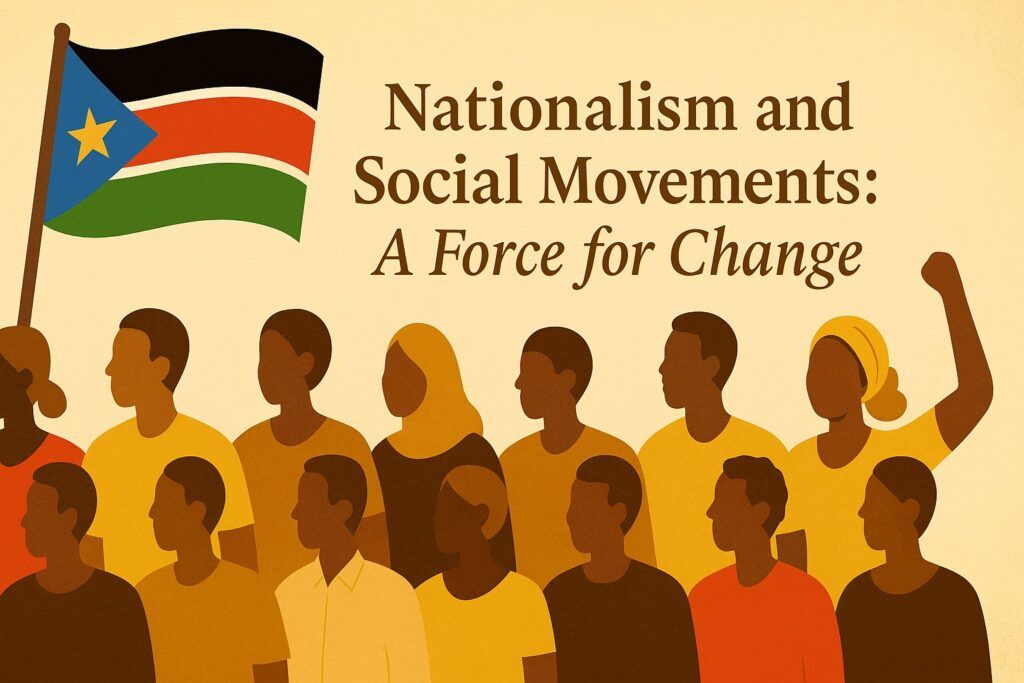
Table of Contents
- What Are Nationalism and Social Movements?
- Why Nationalism Inspires Collective Action
- How Social Movements Create Change
- When Nationalism and Social Movements Work Together
- Nationalism in the Digital Age
- Challenges and Risks
- Frequently Asked Questions
- Final Thoughts
What Are Nationalism and Social Movements?
Nationalism is the belief that people sharing a common national identity should work together to protect their culture, sovereignty, and future. This can be one language or whatever brings people together to become one nation or country, especially in the modern state nations.
Social movements are organized efforts by groups of people seeking political, economic, cultural, or social change through collective action. These can be militarized or not depending on the country or nation’s situation. When this succeeds, the people get what they want, and they become a nation they want.
Although different in purpose, both rely heavily on shared identity, common values, and public participation. This identity once again can mean ethnic or civic depending on the country and its nature. In most African nations, it is mostly civic. All nations in one country become automatically one modern state nation.
Together they often influence:
- Political reform.
- National independence.
- Democratic participation.
- Social justice.
- Cultural preservation.
- Public policy.
Their relationship has shaped nations for centuries. They can achieve all these in different ways. They can use war or negotiations. When they become a nation, they then use civic education and training to strengthen these ideologies so that societies know what nations are.
Why Nationalism Inspires Collective Action
National identity gives people a reason to unite around common goals. The first goal here is the idea of a nation itself. A national identity is what unites the people under that nation or country. But nations are previously known as tribes, not as we know them today.
Throughout history, nationalism has encouraged citizens to defend their freedom, preserve their heritage, and pursue self-government. South Sudan was and is one of these modern nations who did this through its liberators and people. We are now an independent nation from 9th July 2011.
Nationalism has inspired movements that sought:
- Independence from colonial rule.
- Constitutional reforms.
- National development.
- Protection of cultural identity.
- Democratic participation.
- National reconciliation.
When rooted in shared citizenship rather than ethnic exclusion, nationalism becomes a powerful source of unity and civic responsibility. We didn’t fight a colonizer but the mother nation, Sudan. The idea was New Sudan. But we didn’t manage to get that done. We ended up with a piece the cake called South Sudan as if this is just a geographical location, not a nation of its own.
How Social Movements Create Change
Social movements emerge when citizens believe existing systems no longer address important social or political concerns. This is historical because we have facts and evidence of such unities that brought or failed to bring the changes expected.
Rather than relying solely on governments, ordinary people organize to influence public opinion and encourage reform. This is not without cost though. Even today, it’s still risky to influence public opinion as an individual and as a group of enlightened people with goals. Even writing opinion articles is not without trouble.
Successful social movements often use:
- Peaceful demonstrations.
- Community organizing.
- Public education.
- Legal advocacy.
- Civil dialogue.
- Grassroots leadership.
These methods allow citizens to participate directly in shaping the future of their societies. Others like me use writing as a tool for social change. We write to inform, empower, and integrate ourselves and others into social change. Some of us are sponsored, and this can harm their writing. But many of us write for the people, not for elites or ourselves.
You might also like: What Is Political Journalism for Content Creators
When Nationalism and Social Movements Work Together
History provides many examples of nationalism supporting positive social change. India’s independence movement united diverse communities around the goal of self-rule while promoting nonviolent resistance under Mahatma Gandhi.
South Africa’s anti-apartheid movement combined national identity with demands for justice, equality, and democratic participation under leaders such as Nelson Mandela.
Across Africa, Asia, and Latin America, many independence movements drew strength from national identity while pursuing political freedom and self-determination.
In each case, nationalism provided motivation, while organized social movements transformed shared aspirations into coordinated action. The strongest movements focused not only on independence but also on building more inclusive societies after political change.
Nationalism in the Digital Age
Technology has transformed how social movements organize and communicate. Digital platforms now allow citizens to share information, coordinate campaigns, and reach global audiences within minutes.
Modern social movements increasingly rely on:
- Social media campaigns.
- Online communities.
- Digital fundraising.
- Citizen journalism.
- Virtual advocacy.
- International collaboration.
These tools strengthen civic participation but also introduce new risks. Misinformation, political polarization, and online extremism can spread rapidly when digital platforms amplify emotionally charged nationalist messages without careful verification.
Responsible digital citizenship has therefore become an essential part of modern civic engagement. South Sudan needs its people to trust each other and its government to use these digital tools respectfully and responsibility for nation-building. I’m one of those who write to bring positive change.
Challenges and Risks
While nationalism and social movements can promote positive change, they also present significant challenges when misused. The challenges below are just a handful, and South Sudan can only avoid these risks through civic education and service delivery. Both the people and the government have roles of their own to play.
Common risks include:
- Exclusion of minority groups.
- Political polarization.
- Ethnic nationalism.
- Populist manipulation.
- Disinformation campaigns.
- Political violence.
Healthy societies encourage citizens to distinguish between patriotism that serves the common good and nationalism that seeks superiority over others. Inclusive civic identity strengthens democracy far more effectively than exclusionary politics. And South Sudan, my country, has a long way to go to achieve this understanding. Will I be there?
Frequently Asked Questions
What is the relationship between nationalism and social movements?
Nationalism provides a shared identity, while social movements organize people around common goals. Together they can mobilize citizens to pursue political and social change.
Can nationalism create positive change?
Yes. Inclusive nationalism has supported independence movements, democratic reforms, national development, and civic participation throughout history.
How do social movements influence governments?
They raise public awareness, encourage civic participation, influence legislation, and pressure leaders to address social concerns through peaceful collective action.
What dangers arise when nationalism becomes extreme?
Extreme nationalism can promote exclusion, discrimination, political polarization, and conflict by defining national identity too narrowly.
How has technology changed modern social movements?
Digital communication allows movements to organize faster, reach larger audiences, and coordinate internationally, although it also increases the spread of misinformation and political extremism.
Final Thoughts
Nationalism and social movements remain powerful forces in shaping modern societies. Together they have inspired independence, expanded civil rights, strengthened democratic participation, and encouraged citizens to pursue meaningful political change.
Their greatest achievements occur when shared identity is rooted in justice, equality, and service rather than exclusion or hostility. National pride becomes most constructive when it encourages citizens to improve their communities while respecting the dignity of others.
As societies continue to navigate political, cultural, and technological change, understanding the relationship between nationalism and social movements helps citizens build stronger democracies, promote peaceful reform, and work toward a future that benefits everyone.
And if you want to know what’s happening in my world as a writer and digital nomad, check out my Wealthy Affiliate blog page here: https://my.wealthyaffiliate.com/johnmaluth/blog.

This was such a compelling and insightful exploration of how nationalism and social movements intertwine in the digital age. I love how you connected historical revolutions to modern ones like the Arab Spring and Black Lives Matter. It really highlights the evolving yet cyclical nature of collective action. Your point about inclusive nationalism being a force for unity rather than division truly resonated with me. It’s a timely reminder of our shared responsibility in shaping narratives online. Do you think social media today still has the same power to inspire genuine change, or has misinformation weakened its impact over time?
Thank you, Kavitha. I’m glad that part resonated with you. The digital age still holds immense power to spark real change, but I think the landscape has shifted. Early on, platforms were fresh ground for truth and connection. Now, with the flood of misinformation and algorithm-driven noise, that spark needs more care to keep burning.
Real impact today comes from intention and authenticity. Movements that stay grounded in truth, empathy, and lived experience still break through the noise. It just takes more effort and discernment to separate light from glare.
As an African proverb says, “Even the best cooking pot will not produce food.” The tool is powerful, but it’s how we use it that feeds the world.
John
Hey John,
Great article! I agree with you especially on the topic of The Digital Age. Readers must use their common sense to navigate through all the misinformation that is out there today. With that being said, this is a time like no other in history where we can communicate instantly around the globe and share what is going on in our back yards with anyone in the world. I think this is more positive than negative in most cases. We all do have a responsibility to use common sense and not spread propaganda or bad information.
Thank you, Robin. I couldn’t agree more. The digital age is both a gift and a test; it gives everyone a voice but also challenges us to use it wisely. I like how you framed it as a responsibility—because freedom of speech without discernment can easily become noise instead of knowledge.
It’s true that this instant connectivity lets us share truth faster than ever before, but it also means our values and intentions must guide what we post or believe. When truth travels with integrity, technology becomes a bridge rather than a weapon.
As an African proverb says, “Wisdom is like fire; people take it from others.” May we keep that fire burning with care.
John